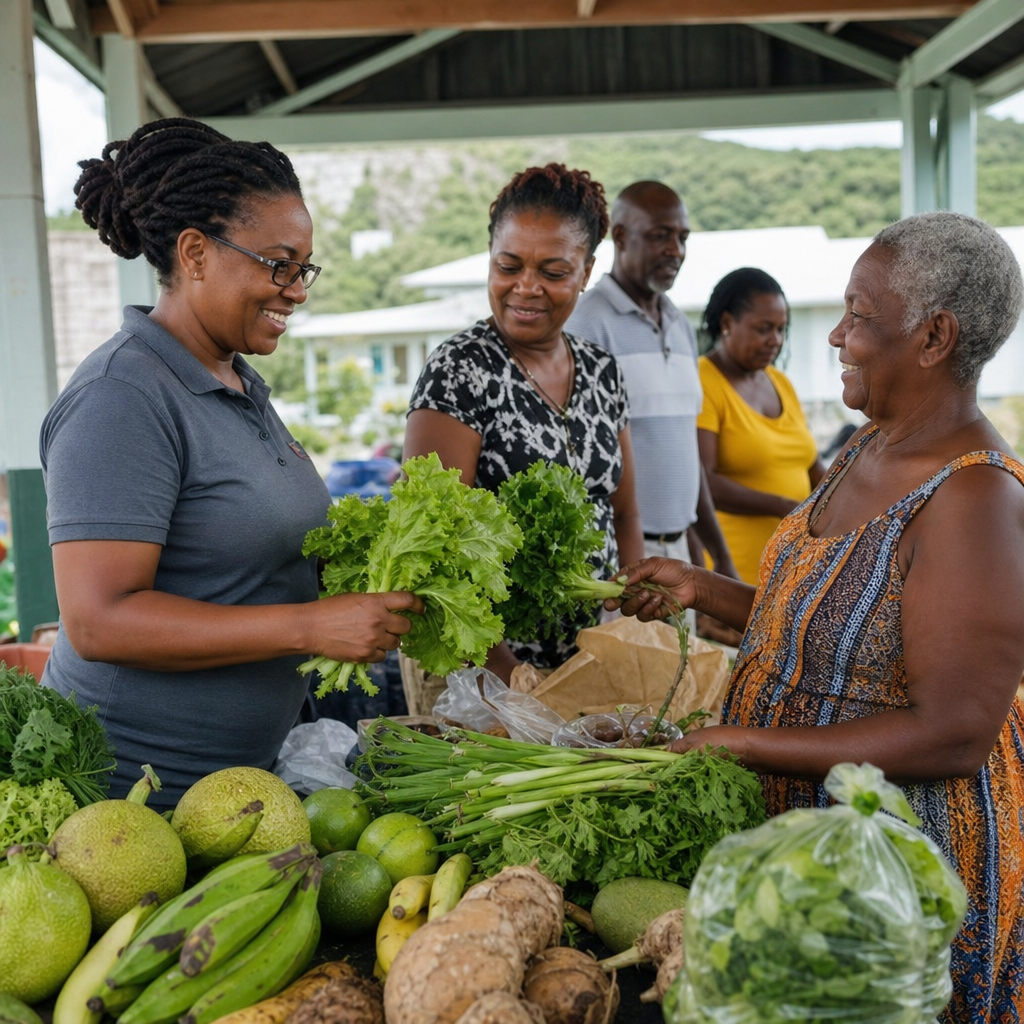
Nevis’ food co-ops show how a small island can turn shared effort into reliable access to fresh produce, stronger local business, and a deeper sense of belonging. A food co-op is a member-owned enterprise that buys, grows, distributes, or sells food for the benefit of the community rather than outside shareholders. On Nevis, where import dependence, shipping delays, and limited retail scale shape daily life, that model carries unusual weight. It connects farmers, fishers, cooks, households, and small retailers in ways that conventional supply chains often cannot. I have seen similar community buying groups succeed when they focus on transparent pricing, practical governance, and a clear local mission, and those lessons apply closely to Nevis.
In practical terms, the phrase “food co-op” can describe several structures. One model is a consumer cooperative, where residents pay membership fees and collectively purchase staples, vegetables, and household goods at better rates. Another is a producer cooperative, where farmers share storage, transport, packaging, and market access. A third is a hybrid community food hub that combines retail, education, and local sourcing under one umbrella. On Nevis, all three matter because the island’s food system is shaped by land availability, tourism demand, weather exposure, and the cost of importing almost everything from dry goods to refrigerated items.
This topic matters beyond groceries. Food co-ops influence nutrition, resilience after storms, youth employment, and cultural continuity through local crops and recipes. They can keep more money circulating on the island by reducing leakage to external distributors and by giving small producers a dependable outlet. They also create an organizing center for related local life articles: farming traditions, fish markets, roadside vendors, school gardens, farm-to-table dining, and seasonal festivals all connect back to cooperative food systems. As a hub topic under local life and experiences, “miscellaneous” is not a leftover category here. It is the connective tissue that explains how everyday systems support the island’s character, affordability, and social fabric.
For readers asking the direct question, the value of Nevis’ food co-ops is simple: they improve access, spread risk, and build community ownership. Yet they are not automatic success stories. Co-ops work only when members participate, leaders report clearly, and operations match real demand. Understanding both the promise and the constraints is the best way to see why community-led food systems deserve attention on Nevis.
What makes food co-ops especially relevant on Nevis
Nevis is a small island economy, and small islands face distinct food system pressures. The Caribbean imports a large share of its food, and regional agencies such as CARICOM and FAO have repeatedly highlighted the vulnerability created by import dependence, high freight costs, and climate shocks. For Nevis, that means a delayed shipment can affect prices quickly, while a surge in tourism can tighten supply for residents if local distribution is thin. A food co-op helps by aggregating demand. Instead of many households paying retail markups on separate orders, a cooperative can negotiate bulk rates, plan ordering cycles, and spread transport costs across members.
Scale is another reason co-ops fit the island context. A single farmer may not produce enough volume to supply hotels, schools, and households consistently. A cooperative structure allows several growers to coordinate crop planning so that one produces lettuce, another roots, and another herbs or fruit. Shared cold storage and standardized packing can make local produce more usable for institutional buyers. In my experience with community food networks, that middle layer between producer and customer is where many local systems either strengthen or fail. Nevis benefits when that layer is community-owned rather than purely extractive.
There is also a cultural argument. Island food traditions depend on continuity: breadfruit, pumpkin, callaloo, yam, cassava, mango, fresh fish, and home cooking practices that are easy to lose when imported convenience foods dominate shelves. A co-op can support cooking classes, recipe cards, school outreach, and featured local product days. That turns food access into cultural preservation. It gives residents and visitors a clearer picture of what Nevis eats when it is feeding itself, not just catering to outside tastes.
How the cooperative model works in everyday practice
At its core, a cooperative follows a simple principle: people who use the service own and guide it. Members typically buy a share or pay a fee, elect a board, and vote on major decisions. Day-to-day operations may still be handled by paid staff, but accountability runs back to the membership. For a food co-op on Nevis, that can include decisions about supplier standards, pricing policy, opening hours, membership benefits, and whether profits are reinvested into equipment, education, or patronage refunds.
Transparent governance matters more than enthusiasm. The strongest co-ops keep clear bylaws, audited accounts, inventory controls, and procurement rules. They define who can become a member, how votes are counted, and how conflicts of interest are handled when board members are also suppliers. Without those basics, co-ops can drift into informal buying clubs that depend too heavily on a few volunteers. On a small island, reputational trust is everything, but trust still needs systems behind it.
The operating cycle is straightforward. Members forecast demand, managers place orders with local and imported suppliers, goods are received and checked, prices are set with modest margins, and sales data informs the next order. The difference from a normal shop is that the objective is service and sustainability, not maximum profit extraction. If tomatoes from local growers cost more in one season because rainfall was poor, a co-op can explain that openly and help members understand the tradeoff between price and local resilience.
| Co-op function | What it looks like on Nevis | Community benefit |
|---|---|---|
| Bulk purchasing | Members combine orders for staples, produce, and household basics | Lower per-unit shipping and retail costs |
| Producer coordination | Farmers align crop schedules and delivery days | More reliable local supply for homes and businesses |
| Shared infrastructure | Cold storage, transport vans, washing stations, packaging | Less waste and better product quality |
| Community education | Cooking demos, nutrition talks, school garden links | Stronger food literacy and healthier habits |
| Emergency resilience | Preplanned stock management before storms or shipping delays | Better continuity during disruptions |
Benefits for households, farmers, and the wider island economy
The most visible benefit is price stability. Co-ops do not always make food cheap, but they often make costs more predictable. On islands, predictability can matter as much as headline price because families plan around wages, school costs, and transportation. A cooperative can smooth spikes by ordering ahead, stocking core staples, and reducing layers of markup. Even a small saving on flour, rice, eggs, cooking oil, or produce becomes meaningful when it repeats every month.
For farmers, the gain is market certainty. Growers often struggle less with production than with post-harvest handling, delivery logistics, and irregular demand. A co-op can issue standing purchase plans, set quality specifications, and pay on clear terms. That allows farmers to invest more confidently in seeds, irrigation, shade cloth, or soil improvement. It can also reduce waste. If one farm harvests more cucumbers than expected, the co-op can redirect stock to member boxes, restaurants, or community events before spoilage cuts income.
The wider island economy benefits through local multiplier effects. Money spent at a community-rooted enterprise tends to recirculate through wages, transport services, farm inputs, repairs, and local professional support. Economists often describe this as a local multiplier, and while the exact figure varies by sector and region, the principle is established: spending retained locally generates more follow-on activity than spending that exits immediately to external owners. On Nevis, where import leakage is a constant challenge, that recirculation matters. It supports practical livelihoods, not abstract development goals.
There are health implications as well. Better access to fresh foods supports dietary quality, especially when paired with education on preparation and storage. The Caribbean faces rising rates of noncommunicable diseases, including diabetes and hypertension, so any community model that makes vegetables, fruit, and minimally processed foods easier to buy deserves attention. A co-op cannot solve public health on its own, but it can nudge daily choices in a better direction.
Common challenges and what successful co-ops do differently
The main challenge is not ideology; it is execution. Many co-ops struggle with cash flow because they carry too much inventory, underprice goods, or extend informal credit. Perishable stock is especially risky in tropical climates where refrigeration costs are high and power interruptions can happen. Successful operations watch gross margin carefully, track shrinkage, and separate social goals from accounting discipline. If the books are weak, the mission eventually suffers.
Leadership fatigue is another common problem. Community ventures often begin with energetic volunteers, but enthusiasm fades if too few people handle too much work. Strong co-ops build committees, rotate responsibilities, and document procedures so knowledge is not trapped with one founder. Training matters here. Board members need basic literacy in governance, finance, and procurement, not just good intentions. Organizations such as the International Cooperative Alliance and regional cooperative departments have long emphasized that member education is part of cooperative survival, not an optional extra.
Supplier reliability can also be uneven. Local agriculture is affected by drought, pests, storms, labor shortages, and land constraints. Imported goods face customs delays and freight volatility. The best response is diversification, not wishful thinking. A Nevis food co-op should maintain a balanced supplier base, set realistic substitution policies, and communicate quickly when products are unavailable. Members tolerate shortages better when they understand the cause and the alternative.
There are social tradeoffs too. Some residents may assume a co-op is automatically cheaper than every supermarket item, which is rarely true. Small-scale local produce may cost more than imported bulk goods during certain periods. A trustworthy co-op explains why, shows where savings do exist, and offers tiered options rather than pretending all local food can beat global commodity pricing. Credibility grows when claims stay grounded.
How food co-ops connect to Nevis’ local life and experiences
As a hub topic, this subject links naturally to many other local experiences on Nevis. Farm visits become more meaningful when visitors understand where produce goes after harvest. Restaurant guides gain depth when they identify chefs using cooperative supply chains. Articles on markets, roadside stands, fishing communities, herbal traditions, and village events all fit within this ecosystem because each reflects how food moves through the island socially as well as commercially.
For residents, the co-op can function as more than a shop. It can host seed exchanges, seasonal tasting events, nutrition workshops, and school partnerships. Children who see local carrots washed, packed, and labeled through a community enterprise learn that food systems are built, not given. That kind of literacy creates long-term civic value. It encourages future farmers, managers, chefs, and informed consumers who understand both the effort and the economics behind local meals.
For travelers seeking authentic local life, food co-ops offer a grounded point of entry. They present Nevis through everyday practice rather than staged tourism. A visitor buying island-grown fruit, preserves, spice mixes, or fresh bread from a cooperative outlet engages with the local economy more directly than at an imported convenience store. That does not make co-ops tourist attractions in the usual sense. Their primary job is serving the community. Yet when they are healthy, they also give visitors a more honest experience of place.
What to look for in a strong community food co-op
If you are evaluating or supporting a food co-op on Nevis, start with practical indicators. Look for consistent opening hours, visible pricing, named local suppliers, clear membership terms, and evidence of basic inventory discipline. Ask whether the co-op publishes annual results, holds member meetings, or explains how decisions are made. Those signals tell you more than branding. A well-run cooperative feels welcoming, but it also feels organized.
Next, look at the product mix. The best island co-ops avoid an all-or-nothing approach. They combine local seasonal foods with carefully chosen imported essentials, because households need reliability alongside ideals. They also tailor formats to real behavior: family staple packs, weekly produce boxes, school snack options, and bulk ordering for small guesthouses or community kitchens. Flexibility is a strength when it is backed by good data.
Finally, pay attention to partnerships. A durable co-op rarely works alone. It links with farmers, fishers, schools, health advocates, restaurants, transport providers, and public agencies. Those partnerships extend reach without diluting ownership. On Nevis, where networks are close and scale is limited, collaboration is not a side benefit. It is the operating condition for lasting success.
Nevis’ food co-ops demonstrate the power of community in the most concrete way possible: by helping people eat, trade, and organize together. They matter because they reduce vulnerability to imports, support local producers, strengthen household resilience, and preserve the food culture that makes island life distinct. They also reveal an important truth about local experience. Community is not only found in festivals, beaches, or heritage sites. It is built in supply chains, meeting rooms, market crates, and weekly shopping habits.
The core lesson is straightforward. A food co-op succeeds when it combines shared purpose with professional discipline. Member ownership creates accountability, but clear governance, realistic pricing, supplier coordination, and education turn that ownership into results. On Nevis, those results can include steadier access to fresh food, better opportunities for growers, and more money staying within the island economy. The model has limits, and it will not replace every conventional retailer, but it fills gaps that standard commerce often leaves behind.
As you explore local life and experiences on Nevis, treat food co-ops as a central thread rather than a side note. They connect agriculture, health, culture, tourism, and everyday affordability in one living system. Support them by shopping locally when possible, asking how food is sourced, and paying attention to the community institutions that make island life more resilient. That is where the real power of community becomes visible.
Frequently Asked Questions
What is a food co-op, and why does it matter so much on Nevis?
A food co-op is a member-owned food enterprise created to serve the needs of the community rather than maximize returns for outside investors. Depending on how it is organized, a co-op may buy food in bulk, market produce from local farmers, support fishing communities, run a storefront, coordinate deliveries, or even help members grow food together. The key idea is shared ownership, shared responsibility, and shared benefit. Members typically have a voice in decisions, which helps the co-op stay focused on practical local priorities such as affordability, freshness, reliability, and fair treatment for producers.
On Nevis, that model has special importance because island life comes with real supply challenges. Imported food can be expensive, shipping schedules are not always predictable, and small markets often do not have the same scale advantages as large mainland retailers. A food co-op can help reduce some of that pressure by strengthening local supply chains and giving residents a more coordinated way to buy and distribute food. Instead of every household, farmer, cook, or vendor working in isolation, the co-op creates a structure for cooperation. That can mean better access to fresh produce, more stable demand for local growers, and stronger community resilience when imports are delayed or costs rise.
Just as important, food co-ops matter culturally and socially. They reinforce the idea that food is not only a commodity but also a community asset. In a place like Nevis, where relationships and local knowledge carry real value, a co-op can deepen trust between the people who grow food and the people who buy it. The result is not just a different shopping model. It is a community-centered system that can support local livelihoods, encourage healthier eating, and strengthen the island’s sense of belonging and self-reliance.
How do Nevis’ food co-ops support farmers, fishers, and other local producers?
Food co-ops can give local producers something many small island businesses need most: dependable connection to buyers. For farmers, fishers, bakers, and food makers on Nevis, one of the hardest parts of business is often not producing quality goods but selling them consistently and at fair prices. A co-op helps by acting as an organized link between producers and households, restaurants, or community institutions. That kind of coordination can reduce uncertainty and make it easier for producers to plan what they grow, catch, or prepare.
Because co-ops are designed around member benefit, they often place a higher value on local sourcing than conventional retail models do. That means more shelf space, visibility, and purchasing priority for Nevis-based producers. Instead of competing solely against imported goods that may arrive in large volumes, local producers can participate in a system built to recognize freshness, seasonality, and the economic value of buying close to home. In practical terms, this can lead to more regular orders, less waste, and better opportunities to sell a wider range of products, from fresh vegetables and herbs to fish, preserves, breads, and prepared foods.
Co-ops can also support producers through education and collaboration. They may help members understand seasonal availability, encourage bulk purchasing of local goods, or create community programs that highlight the people behind the food. Over time, that strengthens producer-consumer relationships and builds loyalty. When residents know who grew the callaloo, caught the fish, or made the sauce, they are often more willing to support those products even when market conditions are challenging. In that way, a food co-op does more than move food. It helps create a local food economy where producers are more visible, better supported, and more connected to the everyday life of the island.
Can a food co-op really improve food security and access to fresh produce on a small island?
Yes, a food co-op can make a meaningful difference in food security, especially in a small island setting like Nevis. Food security is not only about having food available somewhere in the market. It is also about reliable access, reasonable affordability, and a system that can keep functioning when outside conditions become difficult. On an island where imported goods may be delayed by weather, shipping disruptions, or changing costs, a co-op can help build a more stable local foundation for the food supply.
One of the biggest advantages is diversification. When a community relies too heavily on imports, any disruption can quickly affect store shelves and household budgets. A co-op helps balance that vulnerability by investing in local networks of farmers, fishers, processors, and buyers. Even if it does not replace imports entirely, it can reduce dependence on them by making local food easier to aggregate, distribute, and purchase. That matters because fresh produce, in particular, benefits from shorter supply chains. Food that comes from nearby fields or local growers often reaches consumers faster, with less spoilage and better quality.
Co-ops can also improve access by organizing food in ways that fit the community. They may coordinate weekly produce boxes, bulk orders, neighborhood pickup points, or direct partnerships with schools and kitchens. These systems can help more households obtain fresh food consistently rather than only when retail supply happens to be strong. In addition, because members have a voice, the co-op can respond to actual community needs, whether that means focusing on staple items, prioritizing affordability, or creating programs for vulnerable households. The result is a more responsive food system, one that strengthens local resilience while making fresh produce a more regular part of daily life on Nevis.
How do food co-ops strengthen community life and local business beyond just selling food?
Food co-ops often have an impact far beyond the checkout counter. At their best, they become community institutions that connect economic activity with social trust, local identity, and shared purpose. Because they are member-owned, co-ops invite participation in a way many conventional businesses do not. People are not only customers; they are contributors, decision-makers, and stakeholders. That creates a stronger sense of ownership and a deeper connection to the success of the enterprise.
On Nevis, that matters because local economies are often shaped by close relationships, limited scale, and the need to make every resource count. A food co-op can circulate money more directly within the island by prioritizing local producers, local services, and local employment. When residents buy from a co-op that sources from Nevis-based farmers, fishers, cooks, and small businesses, more of that spending remains in the local economy. That multiplier effect can support entrepreneurship, preserve skills, and create new opportunities for value-added products such as jams, baked goods, sauces, and prepared meals.
Socially, co-ops can help people feel more connected to one another and to the island’s food traditions. They may host educational events, cooking demonstrations, seasonal markets, or volunteer activities that bring together households, producers, and young people. These interactions help turn food into a shared experience rather than a purely transactional one. Over time, that can build trust, encourage healthier habits, and strengthen intergenerational knowledge about farming, fishing, and local ingredients. In short, a food co-op supports commerce, but it also supports community life by giving people a practical way to work together around something as essential and unifying as food.
What challenges do food co-ops on Nevis face, and what helps them succeed?
Like any community enterprise, food co-ops face real challenges. On Nevis, those may include limited scale, fluctuating supply, weather-related disruptions, transportation costs, storage constraints, and the complexity of coordinating many different members and producers. Running a co-op also requires strong management. Shared ownership does not mean the work is simple. In fact, because co-ops balance economic goals with community values, they often need clear governance, good communication, and disciplined financial planning to remain sustainable over time.
Another challenge is consistency. Local food systems can be highly seasonal, and small producers may not always be able to deliver the same volume every week. Consumers, however, are used to expecting availability and convenience. Successful co-ops bridge that gap by setting realistic expectations, planning around seasonality, and educating members about the value of local supply. They may combine local sourcing with carefully selected imports, improve aggregation and distribution methods, or invest in simple infrastructure that reduces spoilage and expands capacity.
What helps a co-op succeed is strong community buy-in. Members need to see the co-op not as a passive service but as a shared effort worth supporting. That means regular participation, honest feedback, and a willingness to prioritize long-term local benefit over short-term convenience. Transparent leadership also matters. When people understand how decisions are made, how prices are set, and how producers are supported, trust grows. In the context of Nevis, success often depends on building relationships across the island’s food network, from growers and fishers to cooks, households, and small businesses. When that network is organized with care, a food co-op can overcome its challenges and become one of the most practical examples of community power in action.