Saint Kitts’ historic forts tell the story of how a small Caribbean island became one of the most heavily defended places in the British West Indies. For travelers exploring beyond beaches and catamaran trips, these island defenses offer a deeper kind of adventure: steep hilltop walks, panoramic views, layered colonial history, and a close look at how geography shaped military strategy. When I have guided visitors around Saint Kitts, the most common surprise is not simply the scale of Brimstone Hill Fortress, but how many smaller batteries, redoubts, and surviving works still define the landscape. Together, they form a network rather than a single monument.
A historic fort is a military structure built to control land or sea access, protect settlements, store weapons, and project power. On Saint Kitts, forts ranged from massive masonry citadels to compact coastal batteries armed with cannon. Island defenses included walls, bastions, powder magazines, lookout points, signal systems, and gun platforms placed to command anchorages or vulnerable passes. These works mattered because Saint Kitts sat at the center of imperial rivalry. From the seventeenth through early nineteenth centuries, Britain and France fought repeatedly for control of the island, and whoever held the heights and harbors held trade, sugar wealth, and regional influence.
This history matters today for three reasons. First, the forts preserve the island’s political and military past in a way that books alone cannot. Second, they create some of the most rewarding cultural excursions in Saint Kitts, blending heritage tourism with hiking, photography, and local storytelling. Third, they help visitors understand the human cost of empire, because these defenses were built to secure plantation economies powered by enslaved labor. A proper tour of Saint Kitts’ historic forts is not only about architecture. It is about conflict, engineering, landscape, and the people whose lives were shaped by both.
As a hub for miscellaneous fort and defense experiences under Adventure and Activities, this guide covers the essential sites, what makes each one important, how to plan a practical visit, and what details are easiest to miss. If you want one page that connects fortress history with on-the-ground travel advice, this is the place to start.
Why Saint Kitts Needed So Many Defenses
Saint Kitts was settled by both the English and French in the early seventeenth century, an unusual arrangement that almost guaranteed future conflict. The island’s fertile land supported lucrative sugar production, and its location in the Leeward Islands made it strategically valuable for naval resupply and regional control. Once sugar profits rose, fortifications became indispensable. European powers did not merely build forts because invasion was possible; they built them because invasion was expected.
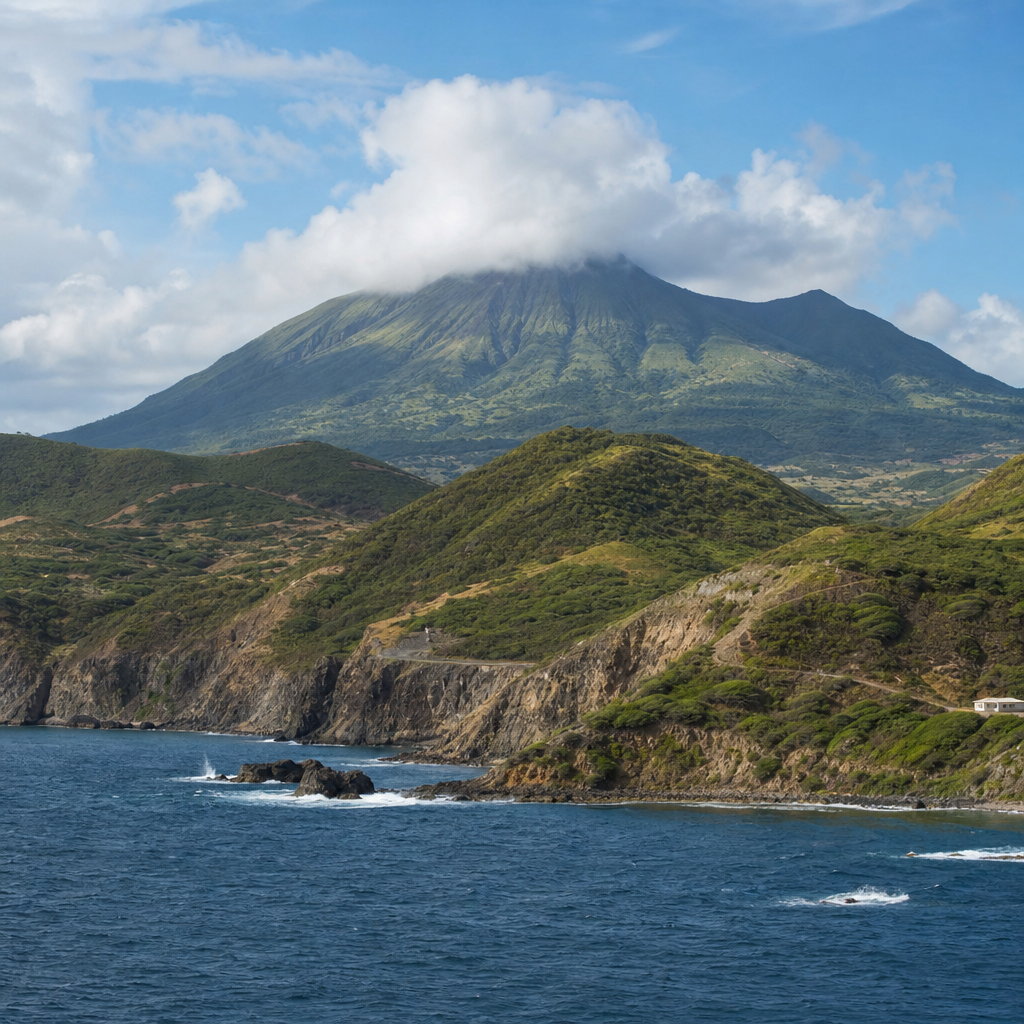
The topography of Saint Kitts made defense both difficult and highly tactical. The island has mountain ridges, steep coastal slopes, narrow landing points, and commanding elevations overlooking roads and anchorages. Military engineers used these natural features the way a modern planner uses a map overlay. Heights became artillery positions. Coastal shelves became batteries. Interior routes were monitored by smaller posts that could communicate with larger strongholds.
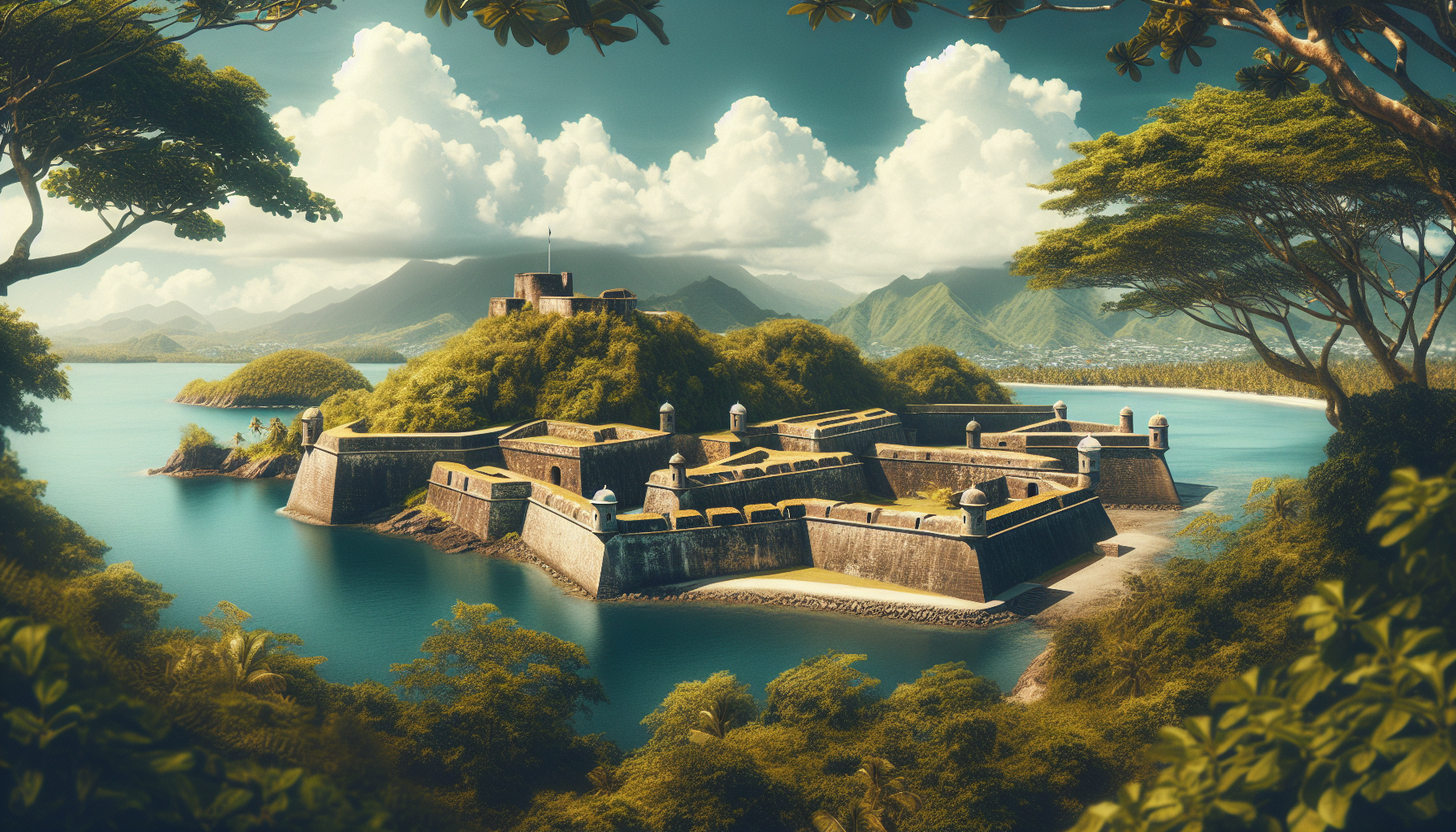
Repeated Anglo-French wars led to cycles of construction, destruction, repair, and expansion. Defenses evolved as artillery improved. Early works might be earthworks and timber, but permanent threats required stone. By the eighteenth century, major fortifications on Saint Kitts reflected formal military engineering principles associated with bastioned defense, controlled fields of fire, protected magazines, and layered fallback positions. Brimstone Hill is the clearest surviving example, but it was supported by a wider system that included Charles Fort, Fort Thomas, saddle batteries, and coastal guns near key towns and bays.
Brimstone Hill Fortress National Park: The Essential Visit
Any tour of Saint Kitts’ historic forts begins with Brimstone Hill Fortress National Park, the island’s defining military landmark and a UNESCO World Heritage Site. Located on a steep volcanic hill on the western side of the island, the fortress was developed mainly by the British from the late seventeenth century through the eighteenth century. Its commanding position allowed defenders to watch sea approaches and inland movement while presenting a formidable artillery platform that was extraordinarily hard to assault.
What makes Brimstone Hill exceptional is the completeness of the site. Visitors can still trace bastions, ramparts, barracks, magazines, parade grounds, citadel spaces, and defensive walls climbing the hill. The scale becomes clear only when you walk it. Cannon placements reveal overlapping arcs of fire. Thick masonry demonstrates how engineers balanced strength with elevation. The long ascent explains why attacking uphill under artillery would have been punishing. In 1782, however, French forces under the Marquis de Bouillé captured the fortress after a siege, proving that even the strongest defenses depended on supply lines, manpower, and control of surrounding ground.
For travelers, Brimstone Hill works on three levels at once: historical site, scenic overlook, and active outing. From the upper works, views stretch across the Caribbean Sea toward Sint Eustatius, Saba, and St. Martin on clear days. Interpretation panels help, but a knowledgeable guide adds context about construction by enslaved Africans, British military life, and the strategic rivalry behind the stonework. Plan at least two to three hours. Wear sturdy shoes, bring water, and expect sun exposure. This is not a quick roadside stop if you want to understand the site properly.
| Fort or Site | Location | Best Known For | Visitor Experience |
|---|---|---|---|
| Brimstone Hill Fortress | West Saint Kitts | UNESCO fortress, major British stronghold | Extensive walking, panoramic views, interpretation |
| Fort Charles | Sandy Point area | Protecting the old roadstead and town approaches | Historic context often paired with Brimstone Hill visit |
| Fort Thomas | Middle Island area | Supporting western coastal defense network | Smaller-scale history stop with local guide value |
| Charles and related batteries in Basseterre | Basseterre | Harbor defense and colonial town protection | Urban heritage exploration, less visually dramatic |
| Coastal batteries and ruins | Various bays and ridges | Localized artillery positions and surveillance | Special-interest exploration, often requires local knowledge |
Beyond Brimstone Hill: Secondary Forts and Coastal Batteries
Although Brimstone Hill dominates most itineraries, smaller defenses are essential if you want a complete picture of Saint Kitts’ military landscape. Fort Charles, near Sandy Point, helped guard one of the island’s key western settlements and roadstead. In earlier centuries, Sandy Point was more important than many first-time visitors realize. Ships anchored offshore, goods moved through the town, and military control of the area mattered to both commerce and defense. Fort Charles worked in coordination with the larger hill defenses, demonstrating how major fortresses relied on lower supporting positions rather than standing alone.
Fort Thomas, usually associated with the Middle Island area, formed part of the same western defensive chain. Today, these lesser-known sites often survive as fragments, earthworks, masonry remnants, or locations preserved more in local memory than in monumental form. That does not make them less significant. In practice, these positions reveal how defense operated on an island scale. A great fortress could not monitor every cove, road, or landing point, so secondary works extended surveillance and artillery reach.
Basseterre, the capital, also had its own defensive needs. As an administrative and commercial center, it was vulnerable to naval attack, raid, or bombardment. Historic references to batteries and fortified positions around the town show how urban defense differed from hilltop fortress design. Harbor protection focused on denying easy landing, guarding warehouses and government buildings, and responding quickly to threats from the sea. Much of this fabric has changed over time, especially after disasters, redevelopment, and urban growth, so interpretation requires more imagination. Still, the story is important because it links forts to daily colonial life rather than presenting them as isolated monuments.
What the Architecture Reveals About Warfare
Saint Kitts’ forts are best understood by reading them as practical machines for defense. Bastions projected outward so defenders could fire along the faces of walls and reduce blind spots. Thick stone ramparts absorbed artillery impact better than thinner vertical walls. Powder magazines were vaulted and protected to minimize explosion risk. Barracks and cisterns supported long occupation, because the ability to withstand siege depended on food, water, ammunition, and discipline as much as cannon.
Brimstone Hill in particular reflects eighteenth-century military engineering adapted to Caribbean realities. Heat, humidity, hurricane exposure, and the difficulty of moving heavy materials uphill influenced design and logistics. Stone had to be quarried, transported, shaped, and set on severe slopes. Labor was intense and dangerous. Much of it was performed by enslaved Africans, whose contribution is fundamental to the site’s existence. Any serious interpretation of these forts must recognize that military grandeur rested on coercion and plantation wealth.
Artillery placement also reveals strategic priorities. Guns were not scattered randomly for dramatic effect. They were positioned to command channels, roads, and likely landing beaches, and to support neighboring positions through overlapping fire. Elevation increased visibility, but very high guns could overshoot close targets, so lower batteries still mattered. This is why multi-level defense systems were common. The island’s surviving fort remains make most sense when viewed as a coordinated network of observation, signaling, and firepower.
How to Tour the Forts Well
The best fort tour in Saint Kitts combines one major site with one or two secondary locations and some broader island context. If you have only half a day, focus on Brimstone Hill and pair it with a drive through Sandy Point and nearby western settlements. If you have a full day, add Middle Island, Basseterre heritage stops, and a guide who can connect military history with plantation history, emancipation, and local place names. Visitors who rush through in forty-five minutes usually leave with photos but not understanding.
Timing matters. Mornings are usually better for walking because the hill heats quickly, and light for photography is often clearer before afternoon haze builds. Cruise visitors should check return times carefully, since traffic and weather can affect schedules. Independent travelers should confirm opening hours, entrance fees, and road conditions in advance. Renting a car gives flexibility, but guided tours add interpretive value that most signage cannot match. I generally recommend a guide for anyone who wants more than surface-level sightseeing.
Bring water, sun protection, and footwear with grip. Some historic surfaces are uneven, and steps can be steep. If mobility is limited, ask ahead which sections are accessible, because not every viewpoint or upper rampart is easy to reach. Also approach the sites with respect. Do not climb fragile walls, remove artifacts, or treat old masonry as a backdrop only. These places are preserved heritage, not adventure playgrounds.
Why These Forts Belong in an Adventure Itinerary
Fort visits fit naturally into Adventure and Activities because they combine movement, terrain, discovery, and story. Brimstone Hill is a physical experience as much as a historical one. You feel the gradient in your legs, the wind on exposed walls, and the scale of the strategic view that commanders once relied on. For travelers who enjoy hiking, photography, bird’s-eye viewpoints, or cultural exploration, fort touring adds substance to a beach holiday without feeling academic.
These sites also connect well with related island experiences. A heritage-focused day can combine Brimstone Hill with Romney Manor, Old Road Town, scenic coastal drives, and local food stops. Travelers interested in military history can continue into museum exhibits and archival stories in Basseterre. Families often find forts more engaging than standard monuments because the spaces are large, visual, and easy to imagine in use. The forts make abstract history concrete.
Most importantly, Saint Kitts’ island defenses reward curiosity. They show how landscape, empire, labor, and survival intersected on one small island. If you want to understand Saint Kitts beyond resort imagery, start with the forts. Plan a thoughtful visit, ask questions, and give yourself time to see both the famous walls and the lesser-known remnants that complete the story.
Saint Kitts’ historic forts are more than old stone structures on scenic hills. They are the physical record of a contested island where geography, sugar wealth, and imperial ambition drove centuries of fortification. Brimstone Hill Fortress remains the headline site because of its scale, preservation, and dramatic setting, but the full story only emerges when you also consider Fort Charles, Fort Thomas, Basseterre’s harbor defenses, and the scattered batteries that once watched roads, bays, and anchorages. Together, they reveal a complete defense system shaped by real military needs, not isolated architectural curiosities.
For travelers, that makes these forts one of the most rewarding miscellaneous heritage adventures on Saint Kitts. You get sweeping views, meaningful exercise, and a direct connection to the island’s colonial past. You also gain a more honest understanding of how these defenses were built and why they mattered, including the central role of enslaved labor and the realities of Anglo-French warfare in the Caribbean. Few attractions combine scenery, engineering, and historical depth so effectively.
If you are building an island itinerary, give these sites the time they deserve. Start with Brimstone Hill, add at least one secondary defense location, and explore with a guide when possible. That single decision will turn a quick sightseeing stop into a richer tour of Saint Kitts’ island defenses.
Frequently Asked Questions
What makes Saint Kitts’ forts so historically important?
Saint Kitts’ forts are historically important because they reveal how a relatively small Caribbean island became one of the most strategically defended territories in the British West Indies. The island sat at the center of intense rivalry between European powers, especially Britain and France, both of which understood that control of Saint Kitts meant influence over trade routes, plantation wealth, and military movement in the eastern Caribbean. Its terrain added to that importance: steep volcanic hills, commanding ridgelines, and coastal approaches created natural defensive advantages that could be fortified and expanded over time.
The most famous example is Brimstone Hill Fortress, often called the “Gibraltar of the West Indies,” but the significance of Saint Kitts’ defenses goes beyond one landmark. The island’s military landscape included hilltop batteries, smaller outposts, and interconnected defensive positions designed to monitor sea lanes, protect settlements, and respond to invasion threats. Together, these sites tell a larger story about imperial competition, colonial engineering, enslaved and laboring populations who helped build these structures, and the way geography shaped military decisions. For travelers, visiting these forts is not just about seeing old stone walls; it is about understanding how power, conflict, labor, and landscape all came together on one island.
Is Brimstone Hill Fortress the main fort to visit, or are there other defenses worth exploring too?
Brimstone Hill Fortress is absolutely the centerpiece and, for many visitors, the essential site to see. It is the best-preserved and most visually dramatic fortification on Saint Kitts, rising high above the coastline with sweeping views that instantly explain why this location mattered militarily. The fortress offers massive stone ramparts, gun emplacements, citadel structures, and interpretive elements that help visitors picture the scale of colonial defense planning. If you only have time for one fort-related stop on the island, Brimstone Hill is the one to prioritize.
That said, Brimstone Hill should not be viewed in isolation. One of the most rewarding ways to understand Saint Kitts’ military history is to think of it as a wider defensive network rather than a single monument. Smaller batteries, elevated lookout points, and traces of older defensive positions help show how the island was watched and defended from multiple angles. Even when some of these sites are less monumental or less fully preserved, they can still be deeply meaningful because they reveal how strategic planning extended across the landscape. Travelers who enjoy history, walking tours, and panoramic viewpoints often find that combining Brimstone Hill with other historic areas creates a fuller picture of how Saint Kitts functioned as a fortified island rather than simply the home of one famous fortress.
What should visitors expect when touring Saint Kitts’ historic forts?
Visitors should expect much more than a quick photo stop. Touring the forts of Saint Kitts often involves a combination of scenic driving, uphill walking, exposed viewpoints, and time spent taking in both architecture and landscape. At Brimstone Hill in particular, the experience is immersive: you move through broad stone defenses, open parade areas, bastions, and elevated positions where cannons once stood ready to defend the coastline. The climb and the elevation are part of what make the visit so memorable, because the views outward over the Caribbean and inward across the island help you immediately understand the strategic logic behind the site.
You should also expect the experience to be layered. On the surface, the forts are visually striking and often spectacular in their setting. On a deeper level, they invite reflection on colonial rivalry, military ambition, and the labor systems that made such large fortifications possible. Good visits tend to move between those two dimensions: the physical thrill of being on a dramatic hilltop and the historical reality of what the site represented. Practical preparation helps as well. Wear comfortable walking shoes, bring water, use sun protection, and allow enough time to move slowly rather than rushing through. These are places best appreciated at a thoughtful pace, especially if you enjoy reading the site, noticing construction details, and pausing at viewpoints that once served as watchful defensive positions.
How did geography influence the design and placement of forts on Saint Kitts?
Geography shaped nearly every aspect of Saint Kitts’ defenses. The island’s rugged topography offered natural high ground that could be transformed into formidable military positions. Hilltops and steep slopes allowed defenders to watch the sea approaches, monitor movement inland, and control surrounding territory with artillery placed at advantageous elevations. A fort built on commanding terrain did not simply look impressive; it made tactical sense. From those heights, defenders could see potential threats earlier, direct fire more effectively, and make any assault significantly more difficult.
This is one of the reasons Saint Kitts stands out in Caribbean military history. The island’s volcanic landscape created defensive opportunities that engineers could exploit, but it also demanded extraordinary building effort. Constructing large fortifications in such locations required planning, labor, transport of materials, and adaptation to uneven terrain. That is why a visit to these sites can be so revealing: the forts do not feel abstract or decorative. They are clearly anchored to the land itself. When you stand on a ridge or bastion and look at the coast below, the military logic becomes obvious. Geography was not just a backdrop to Saint Kitts’ history; it was an active force in determining where forts were built, how they functioned, and why the island became so heavily defended in the first place.
Why do travelers interested in culture and history often find Saint Kitts’ forts more rewarding than expected?
Many travelers arrive in Saint Kitts expecting beaches, cruises, and laid-back island scenery, so the forts often come as a genuine surprise. What makes them so rewarding is that they offer a richer, more complex understanding of the island. Instead of seeing Saint Kitts only as a tropical destination, visitors begin to see it as a place shaped by conflict, trade, empire, engineering, and adaptation to landscape. The forts make history feel tangible. You are not just reading about colonial competition; you are standing where decisions were made, watching the same sea horizons that soldiers once scanned, and moving through structures built for defense on a grand scale.
There is also a powerful emotional and visual dimension to the experience. The hilltop settings are beautiful, but that beauty is intertwined with a serious historical story. Travelers who enjoy meaningful experiences often appreciate that combination. The forts deliver panoramic views and memorable walks, yet they also prompt questions about who built these places, why they were necessary, and what life on a fortified island must have been like. That blend of scenery, history, and perspective is what elevates the visit. For many people, exploring Saint Kitts’ defenses becomes one of the most memorable parts of their trip because it reveals a side of the island that is far deeper, more dramatic, and more historically significant than they expected.