Saint Kitts’ local markets are where the island’s economy, memory, and daily rhythm meet in the most visible way. More than shopping spots, they are working spaces for farmers, fishers, artisans, cooks, musicians, and small traders who keep community life moving. In Saint Kitts, a local market can mean an open-air produce stall in Basseterre, a roadside fruit table in a rural parish, a craft vendor near Port Zante, or a seasonal event tied to holidays, cruise arrivals, and weekend foot traffic. Together, these spaces form a practical guide to local life and experiences because they reveal what people grow, eat, make, value, and sell.
For visitors, markets offer direct access to Kittitian culture without the filter of a resort itinerary. For residents, they remain essential channels for food distribution, household income, and social exchange. I have walked these market corridors early in the morning, when fish is still being iced down and vendors are arranging dasheen, yam, plantain, pumpkin, and bunches of herbs before the midday heat. Those hours show why markets matter: prices are negotiated face to face, quality is judged by sight and touch, and recommendations come from people who know the land, the season, and the customer. That combination of commerce and trust is difficult to replicate in formal retail.
The importance of Saint Kitts’ local markets also extends beyond a single purchase. They support domestic agriculture, create opportunities for microenterprise, and preserve traditional foodways that would otherwise weaken under import pressure and standardized tourism offerings. They also function as orientation points for anyone exploring the island’s miscellaneous everyday experiences, from street food and handmade crafts to music, transport habits, and informal neighborhood networks. If you want to understand how Saint Kitts works beyond brochures, start where people buy breadfruit, saltfish, coconut water, pepper sauce, woven souvenirs, and fresh juice. The market is not a side attraction. It is one of the clearest expressions of local life.
What Defines a Local Market in Saint Kitts
A local market in Saint Kitts is best understood as an ecosystem rather than a single building. The island has formal vending areas, municipal spaces, roadside commerce zones, and tourism-facing stalls that all operate under different conditions but remain connected. In Basseterre, public vending has long clustered around high-footfall commercial streets and transport links, where people can combine errands, work commutes, and food shopping in one trip. In rural communities, market activity often appears in smaller, flexible formats: pop-up produce tables, backyard sales, mobile vendors, and community events where local goods are sold alongside prepared food.
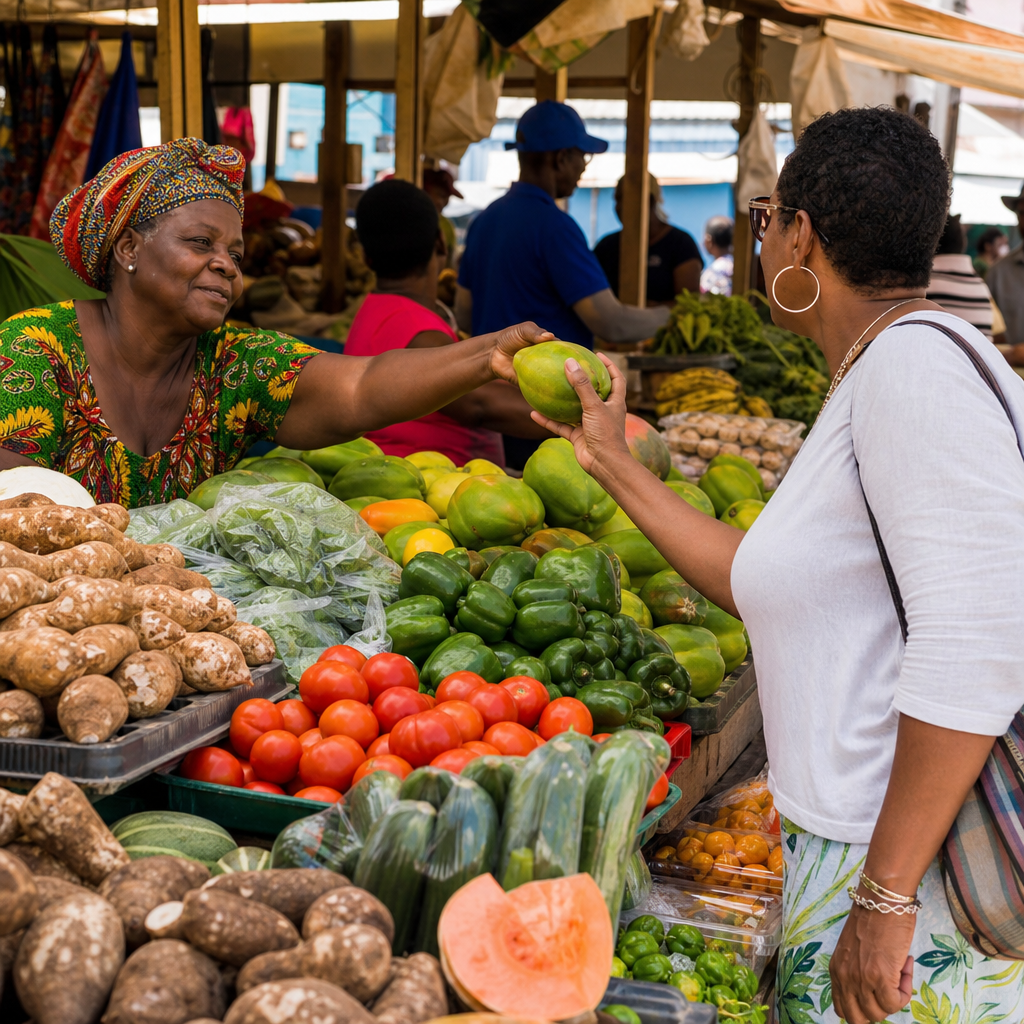
The core categories are usually produce, seafood, prepared food, spices, beverages, and crafts. Produce includes staples such as sweet potato, cassava, tannia, green fig, mango, soursop, papaya, and seasonal guava. Seafood varies with weather and catch, but snapper, lobster when in season, and smaller coastal fish are common reference points. Prepared foods often include patties, rotis, johnny cakes, coconut tarts, sugar cakes, and cups of local juice. Craft stalls may feature batik, wood carvings, shell jewelry, straw work, and printed island memorabilia. The mix changes according to season, cruise traffic, school schedules, and public events.
Unlike supermarkets, these markets run on conversation as much as inventory. Buyers ask what is fresh, how something should be cooked, whether a fruit is ripe today or better tomorrow, and which vendor has the hottest pepper sauce. That exchange is commercially efficient because local knowledge reduces waste and improves the customer’s outcome. It is also culturally significant because language, humor, and familiarity shape the experience. In practical terms, the market teaches a visitor how to navigate Saint Kitts with more confidence, whether the goal is buying ingredients, finding authentic food, or understanding neighborhood routines.
Markets as Engines of Culture and Commerce
Saint Kitts’ local markets matter because they perform two jobs at once. Economically, they give small producers and informal businesses a route to market with relatively low overhead. Culturally, they preserve habits of exchange that carry family recipes, farming traditions, and social identity from one generation to the next. On small islands, where imported goods can dominate shelves and external shocks affect supply chains, that dual role is especially important. Markets help diversify income and maintain local resilience.
Many vendors operate on thin margins. A farmer selling a few crates of callaloo, cucumber, and pumpkin may be balancing transport costs, weather losses, labor shortages, and variable demand. A craft seller may rely on cruise schedules, festival weekends, and recommendations from taxi drivers. Yet the market model remains viable because it allows direct sales without multiple intermediaries. That direct relationship often means better value for buyers and better returns for producers compared with wholesale channels. It also keeps money circulating locally through transport operators, food handlers, packers, and nearby shops.
Culture is just as visible as commerce. Food traditions are embedded in what appears on a stall. If breadfruit is plentiful, conversations turn to roasting, frying, and pairing it with saltfish. If sorrel is in season, people discuss drinks, syrups, and holiday preparation. Craft items reflect visual identity, from Caribbean color palettes to motifs associated with sea, cane, and village life. The market therefore acts as a living archive. It documents changing tastes, but it also protects continuity by rewarding skills that remain meaningful to the community.
| Market Element | What You Commonly Find | Why It Matters |
|---|---|---|
| Produce stalls | Yam, plantain, mango, pumpkin, herbs | Supports local farming and seasonal eating |
| Seafood vendors | Fresh fish, conch when available, lobster in season | Connects coastal livelihoods to daily consumption |
| Prepared food sellers | Johnny cakes, patties, juices, local lunches | Preserves recipes and offers affordable meals |
| Craft stalls | Batik, straw items, jewelry, souvenirs | Creates income from creative and cultural skills |
| Roadside vendors | Coconuts, cane juice, fruit bags | Extends market access beyond town centers |
What Visitors Can Expect When Shopping
Most visitors want to know three things: where to go, what to buy, and how to shop respectfully. The first answer is simple: start in Basseterre for variety, then pay attention to roadside stalls and community events as you travel around the island. Areas near the cruise port and central commercial districts are convenient for crafts and quick purchases, while less tourist-oriented produce points can offer a clearer picture of everyday local buying patterns. Morning is usually best for freshness, selection, and conversation before the heat and crowds build.
What to buy depends on your purpose. If you want edible souvenirs, look for packaged spices, pepper sauces, preserved sweets, or locally made condiments that travel well, while checking customs rules for your home country. If your interest is immediate consumption, fresh tropical fruit, baked goods, and juices are safer bets than buying large amounts of highly perishable seafood without proper storage. For culture-focused shopping, handmade textiles, small carvings, and batik pieces are stronger purchases than generic imported souvenirs, because they direct spending toward local skill.
Shopping respectfully in Saint Kitts means understanding that markets are workplaces, not staged performances. Ask before taking close-up photographs of vendors or their goods. Carry small cash because not every seller accepts cards or mobile payments. Do not handle produce excessively, and if you ask for guidance, listen carefully; many vendors know exactly how long an avocado needs before it is ready or which mango variety is best for eating versus juice. Bargaining may happen in some contexts, especially for souvenirs, but aggressive haggling over small sums can feel tone-deaf when margins are already tight. A fair price for quality local goods is part of responsible travel.
Food, Craft, and Everyday Experiences Linked to the Market
As a hub for miscellaneous local life and experiences, the market connects naturally to several related themes. The first is food culture. Many of the island’s best culinary discoveries begin with ingredients sold in open view: breadfruit for a roadside roast, tamarind for a tangy snack, fresh thyme for stews, or coconut for grating into desserts. A traveler who spends even thirty minutes speaking with produce and food vendors will understand more about Kittitian cooking than someone who only reads a menu. Markets explain why certain dishes exist, when ingredients peak, and how households adapt to availability.
The second theme is craft and creative identity. A locally made item is rarely just a souvenir. Batik, for example, carries design labor, dyeing technique, and a recognizable island aesthetic tied to Caribbean textile traditions. Straw and shell work reflect material knowledge, patience, and the ability to turn regional resources into useful or decorative objects. When these goods are sold in person, buyers can often learn who made them, how long they took, and what distinguishes one piece from another. That provenance adds cultural value that imported trinkets cannot match.
The third theme is social observation. Markets show how residents move through space, greet each other, compare prices, and share news. You notice transport rhythms, schoolchildren buying snacks, office workers collecting lunch, and older shoppers selecting produce with practiced precision. This is why market visits belong at the center of any serious guide to local life and experiences. They are one of the few places where food systems, informal economy, craftsmanship, language, and neighborhood interaction all become visible at once.
Challenges Facing Saint Kitts’ Local Markets
Despite their value, local markets in Saint Kitts face real constraints. Imported food often arrives with consistent packaging, long shelf life, and large-scale distribution that can undercut local produce on convenience even when not on quality. Climate variability affects crop yields, while heavy rain, drought periods, and storm threats increase risk for small farmers who may lack irrigation, storage, or crop insurance. Fisheries face their own pressures from fuel costs, weather windows, and sustainability concerns. These factors can reduce the reliability of supply that customers expect.
Infrastructure also matters. Vendors benefit from clean stalls, shade, drainage, cold storage, sanitation facilities, and organized waste disposal. Where these are weak, both shopper comfort and product quality suffer. Digital adoption is another dividing line. Some sellers now promote goods through WhatsApp, Facebook, or community networks before market day, but many still depend entirely on walk-up traffic. That limits reach, especially among younger buyers accustomed to pre-ordering or checking availability online.
Tourism creates both opportunity and distortion. Cruise visitors can boost sales dramatically, especially for crafts and ready-to-eat items, but demand may concentrate on products that fit tourist expectations rather than local needs. There is also a risk that genuinely local markets become flattened into souvenir corridors if planning focuses only on visitor spending. The healthiest model balances both audiences: residents who rely on markets weekly and visitors who contribute new revenue without displacing everyday use. Policy support, vendor training, infrastructure investment, and stronger links between agriculture, hospitality, and small business development can all improve that balance.
How to Experience the Markets Well
The best market visit in Saint Kitts is deliberate, not rushed. Go early, bring cash, wear light clothing, and treat the outing as both practical shopping and cultural learning. Ask vendors what is in season, what came in that morning, and how locals usually prepare it. If you are staying in a villa or apartment, buy a manageable amount of produce and cook one meal around local ingredients. If you are on a day trip, build your visit around fruit, snacks, juices, and crafts you can enjoy immediately or carry easily.
Look beyond the most obvious stalls. Sometimes the strongest finds are modest: a vendor with exceptional tamarind balls, a cooler of homemade sorrel drink, a table of herbs that instantly signals what local soups and stews rely on, or a craft item made with enough care to outlast generic souvenirs. If you hear about a community fair, agricultural exhibition, or seasonal celebration, attend it. Those events often expand the market experience by combining vendors with music, demonstrations, and a broader cross-section of residents.
Saint Kitts’ local markets are a hub of culture and commerce because they compress the island’s daily life into a form anyone can see, taste, and support. They feed households, create livelihoods, preserve craft, and give visitors a direct route into authentic local experience. If you want to understand Saint Kitts beyond landmarks and beaches, make the market part of your itinerary, spend thoughtfully, and let the island introduce itself through the people who sell what it grows and makes.
Frequently Asked Questions
What makes Saint Kitts’ local markets so important to the island’s culture and economy?
Saint Kitts’ local markets matter because they bring together everyday commerce, cultural continuity, and community interaction in one highly visible space. These markets are not simply places where goods change hands. They are working environments where farmers sell produce harvested from nearby lands, fishers offer their catch, cooks prepare familiar island foods, artisans display handmade items, and small traders sustain household income through regular sales. In that sense, the market reflects how the island functions on a daily level. It shows who is producing, what is in season, what people are eating, and how money circulates through local hands.
Culturally, the market is also a living archive of memory and routine. The sounds, scents, accents, bargaining styles, and food traditions found there preserve ways of life that are deeply tied to place. A visitor may see fresh breadfruit, mangoes, cassava, coconut products, spices, herbal remedies, woven crafts, and home-style dishes being sold in ways that have changed little in spirit over time, even as tourism and modern retail have grown. Economically, local markets give small-scale vendors an accessible entry point into business without the overhead required by formal storefronts. That makes them especially important for independent earners and family-run enterprises. Together, these roles make the market one of the clearest expressions of how culture and commerce support each other in Saint Kitts.
What kinds of local markets can visitors and residents find in Saint Kitts?
In Saint Kitts, the idea of a “local market” covers more than one setting, which is part of what makes the island’s market culture so distinctive. In Basseterre, open-air produce stalls may offer fruits, vegetables, ground provisions, seasonings, and other daily essentials in a busy urban environment. In rural parishes, roadside tables and small informal vending spots often serve as neighborhood-scale markets, where sellers bring seasonal fruit, coconuts, vegetables, or homemade goods directly to passing customers. Near tourism-heavy areas such as Port Zante, craft vendors and small traders may focus on handmade souvenirs, jewelry, carvings, textiles, local snacks, and gift items that appeal to both visitors and residents.
There are also temporary and seasonal markets that become more active during holidays, weekends, festivals, or cruise ship days. These events often expand the market experience beyond shopping and turn it into a social gathering place with food stalls, music, and stronger pedestrian traffic. Some sellers adapt according to the season, the weather, and visitor flow, so the same vendor might sell in different locations at different times of year. This flexibility is a defining feature of market life in Saint Kitts. Rather than existing in one fixed format, the local market appears across the island in forms that match the rhythms of agriculture, tourism, transportation, and community demand.
What can shoppers typically buy at Saint Kitts’ local markets?
Shoppers at Saint Kitts’ local markets can usually expect a broad mix of practical goods, fresh food, handmade products, and culturally rooted items. Fresh produce is one of the strongest draws, especially fruits and vegetables that reflect the island’s growing conditions and seasonal cycles. Depending on the time of year and the seller, buyers may find mangoes, bananas, papayas, breadfruit, yams, sweet potatoes, cassava, plantains, peppers, herbs, and leafy greens. Seafood may also appear through fish vendors, while prepared foods can range from local snacks to fuller home-style dishes that offer a quick taste of everyday Kittitian cooking.
Beyond food, markets are valuable spaces for craft and small-scale artisanal trade. Visitors may see handmade jewelry, straw items, woodwork, artwork, fabric goods, natural body products, spices, preserves, and souvenir pieces that are more personal than mass-produced imports. Some vendors specialize in items tied to island identity, while others focus on utility and price. That mix is part of the appeal. A market in Saint Kitts can be the place where someone picks up ingredients for dinner, a fresh coconut to drink, a gift for a friend, and a conversation with the person who made or grew the product. For that reason, shopping at the market often feels more direct, more local, and more connected to real island life than shopping in conventional retail spaces.
How do local markets reflect the daily rhythm and community life of Saint Kitts?
Local markets in Saint Kitts reflect the island’s daily rhythm because they are shaped by the routines of work, weather, harvests, transport, and social life. Early hours may favor produce sellers and shoppers looking for fresh goods, while busier periods can build around lunch traffic, weekend movement, or times when cruise passengers are in town. Vendors adjust to these patterns constantly. Farmers bring what is ready from the land, fishers sell according to the day’s catch, cooks prepare what people are likely to buy, and craft sellers position themselves where foot traffic is strongest. The market, in other words, moves with the island rather than standing apart from it.
Community life is visible in these spaces because markets create regular contact between people who know one another, depend on one another, or meet there repeatedly over time. News is shared, prices are discussed, recipes are exchanged, and relationships are reinforced through ordinary transactions. Even for visitors, this atmosphere is easy to notice. A market is often where the social character of the island feels most immediate, not staged. It is where daily resilience, humor, hustle, and hospitality become visible. That is why local markets are often described as community hubs: they support livelihoods, but they also sustain familiarity, trust, and a sense of belonging that cannot be measured only in sales.
What is the best way to experience Saint Kitts’ local markets respectfully and meaningfully?
The best way to experience Saint Kitts’ local markets is to approach them as real working spaces first and visitor attractions second. That means taking time to observe how the market functions, greeting vendors politely, asking questions with genuine interest, and being patient during busy moments. Many vendors are balancing sales, preparation, and conversation at once, so a respectful attitude goes a long way. If you are curious about a fruit, dish, spice, or craft item, asking where it comes from or how it is used often leads to a richer exchange than simply asking the price. Buying directly from vendors, especially small-scale producers and makers, is one of the most meaningful ways to support the local economy.
It also helps to stay flexible and shop with the understanding that local markets are shaped by seasonality and availability. The best finds are not always the ones you planned for in advance, but the ones that reflect what is freshest or most relevant that day. Bringing cash can be useful, and so can arriving ready to explore more than one type of stall, from produce and prepared food to craft tables and roadside stands. Most importantly, treat the market as a place of relationship as much as transaction. When visitors engage respectfully, they leave with more than purchases. They gain a clearer understanding of Saint Kitts as a place where commerce is personal, culture is active, and everyday life is still visible in the open air.