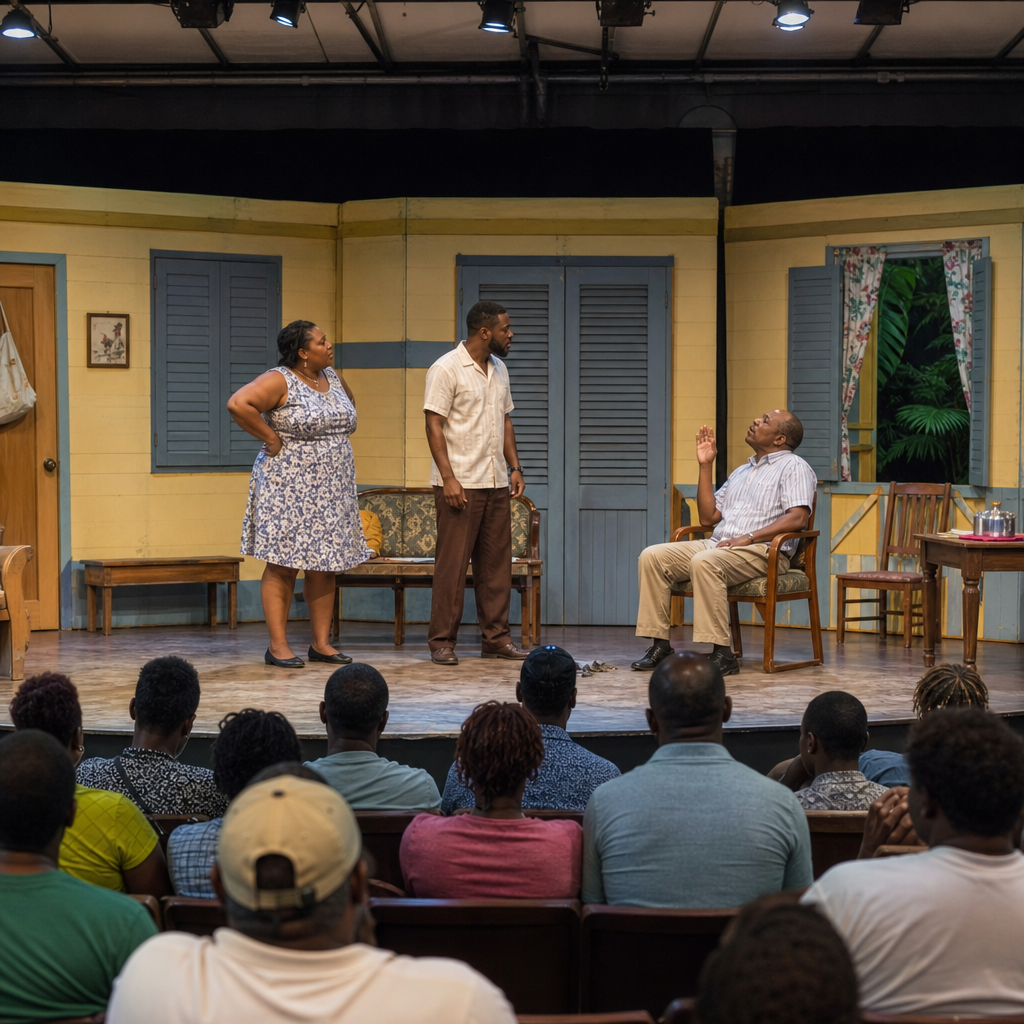
Saint Kitts’ local theater scene blends community storytelling, musical performance, satire, and social history into a cultural experience that reveals how island life is lived, remembered, and debated. When people think of Saint Kitts, they often picture beaches, cruise arrivals, Brimstone Hill Fortress, and Carnival. Yet the local theater scene deserves equal attention because drama and comedy on the island do more than entertain. They preserve dialect, stage political commentary, celebrate folk traditions, and give residents a public space to examine everyday concerns. In practical terms, local theater in Saint Kitts includes scripted plays, original comedies, school productions, spoken-word influenced stage work, festival performances, church hall shows, and community events that mix acting with music and dance.
As someone who has covered Caribbean arts programming and tracked how small-island performance scenes operate, I have seen the same pattern repeatedly: where budgets are limited, theater becomes more inventive, more communal, and often more honest. Saint Kitts follows that pattern. Performances may happen in formal venues, multipurpose halls, school auditoriums, open-air festival settings, or temporary stages built for cultural programs. The result is a scene that feels close to the audience. Actors are often teachers, civil servants, students, musicians, broadcasters, and writers. Audiences may personally know the cast, the references, or the neighborhood being portrayed. That familiarity gives local drama and comedy unusual immediacy.
This matters for anyone interested in local life and experiences because theater acts as a cultural hub for many other island interests. A single production can connect language, foodways, music, heritage festivals, youth education, tourism, religion, and current events. It can also function as a practical guide to the island’s values: respectability and rebellion, migration and return, humor under pressure, and the tension between tradition and modernization. For travelers, residents, students, and researchers, understanding Saint Kitts’ theater scene provides context that beach itineraries and brochure descriptions cannot. It is where the island talks back in its own voice.
In this hub article, drama refers to serious or emotionally grounded stage work, whether historical, domestic, social, or literary. Comedy refers to performances built around humor, satire, improvisation, mistaken identity, character exaggeration, and commentary on public life. In Saint Kitts, those categories often overlap. A comic production may sharply criticize bureaucracy, migration pressures, or class aspiration. A drama may still rely on laughter, call-and-response, and musical interludes. That hybrid quality is central to Caribbean performance traditions, and it is especially visible in small theater ecosystems where artists wear multiple hats and audiences expect both meaning and enjoyment.
What defines Saint Kitts’ local theater scene
The defining feature of theater in Saint Kitts is scale. This is a small-island scene, which means productions are shaped by limited infrastructure but strengthened by strong social networks. Rather than a large commercial theater district, Saint Kitts has a web of community organizations, schools, cultural departments, festival committees, churches, and independent creatives who keep stage performance active. Because cast members and audiences often share the same social landscape, productions can be highly specific. A joke about a government office, a village rivalry, a taxi stand, or Carnival behavior lands immediately because the audience recognizes the reference.
Language is another defining element. English is the formal language of education and administration, but Kittitian speech rhythms and Caribbean idiom animate local scripts and performances. When playwrights and actors use local patterns of expression, they are not just adding flavor. They are asserting authenticity. In many island productions, comic timing depends on code-switching, pauses, inflection, and shared phrasing. That means the performance carries cultural information that would be flattened in a more standardized delivery. Theater becomes a record of how people actually speak and relate.
Music and movement also matter. Many local productions draw from calypso, soca, folk traditions, choral performance, drumming, and dance. Even stage works that are not musicals often use song transitions, rhythmic speech, or festival aesthetics. This reflects a Caribbean performance continuum rather than a rigid separation between theater, concert, and cultural presentation. In practice, local audiences are comfortable with productions that move between dialogue, song, comedy sketch, and social commentary within one evening.
Drama as a mirror of history, family, and change
Serious theater in Saint Kitts frequently addresses themes that are central to Caribbean societies: colonial inheritance, emancipation memory, migration, education, land, church influence, family responsibility, and economic change. Some productions are historical in orientation, recreating periods of plantation life or moments of political transition. Others are intimate domestic dramas that focus on intergenerational conflict, financial pressure, or the emotional cost of migration when family members leave for the United States, Canada, or the United Kingdom.
These stories matter because Saint Kitts has experienced the same structural shifts that shaped much of the Eastern Caribbean. The sugar industry defined life for centuries and remained economically important long after emancipation, with the state-owned sugar company finally closing in 2005. That economic transition changed work patterns, migration decisions, and community identity. On stage, those changes can be explored through one household, one village, or one disputed inheritance. A playwright does not need to lecture about macroeconomics when a family argument over land, money, or opportunity makes the same reality visible.
School and youth theater often plays an important role in sustaining this dramatic tradition. Teachers and cultural coordinators frequently use performance to teach literature, history, and public speaking. In small-island settings, a school play is not a minor event. It can be a community gathering, a talent pipeline, and a training ground for future actors, presenters, and writers. Students learn projection, timing, memorization, collaboration, and confidence. More importantly, they learn that their own stories are stageworthy.
Comedy as social commentary and public release
If drama helps Saint Kitts process memory and change, comedy helps it survive the daily pressures of island life. Local comedy often works through exaggeration, character types, verbal wit, and satire. Public officials, gossip chains, church politics, romantic misunderstandings, immigration paperwork, generational clashes, and Carnival excess all provide material. The best island comedy is rarely random. It identifies a social truth, pushes it to absurdity, and lets the audience laugh at what they already know.
That function is important in a society where news travels quickly and public life can feel intimate. Humor becomes a socially acceptable way to criticize without formal confrontation. A stage character who bungles a permit, boasts beyond his means, or performs respectability for the neighborhood may be fictional, but the audience understands the type. In that sense, comedy in Saint Kitts can resemble the social role long played by calypso: entertaining on the surface while documenting hypocrisy, tension, and resilience underneath.
Comic performance also benefits from the island’s oral traditions. Timing, repetition, audience recognition, and direct address are often stronger than elaborate sets. A strong comedian or comic actor can carry a scene with voice, posture, and phrasing alone. This is one reason small venues often work well. They intensify audience response, and local comedy thrives on that energy. Laughter in these spaces is communal, not passive. People react audibly because the material belongs to them.
Where performances happen and how audiences find them
Unlike major metropolitan theater markets, Saint Kitts does not rely on a single dominant venue. Performances can emerge through national cultural events, private productions, educational institutions, community centers, and multipurpose halls. Festival calendars are especially important because they create reliable moments when audiences expect performance. Carnival season, Independence celebrations, and heritage-focused programming often increase demand for scripted and semi-scripted stage work.
Promotion is typically practical rather than elaborate. Audiences hear about productions through radio interviews, Facebook pages, WhatsApp circulation, school notices, church announcements, posters, and word of mouth. This distribution model reflects the island’s media reality. A show succeeds not only because it is artistically strong, but because organizers reach the right communities early enough. Repeat attendance often depends on trust. If a group has delivered solid productions before, audiences will return.
For visitors, this means finding local theater requires active checking rather than assuming tickets will appear on a global booking platform. The Department of Culture, local media outlets, hotel concierges, tourism information channels, and community bulletin pages can all be useful starting points. The reward is access to a more grounded cultural experience than most standard excursions provide.
| Aspect | What it looks like in Saint Kitts | Why it matters |
|---|---|---|
| Venue type | School halls, cultural centers, open-air festival stages, churches, community spaces | Expands access beyond one formal theater building |
| Common genres | Social comedy, historical drama, youth productions, musical stage shows, spoken-word hybrids | Reflects community interests and available talent |
| Audience discovery | Radio, Facebook, WhatsApp, posters, personal networks | Word of mouth remains a primary driver of attendance |
| Peak periods | Carnival, Independence, school terms, cultural festivals | Programming often aligns with larger community events |
| Creative model | Actors and writers often hold other jobs and work collaboratively | Keeps the scene resilient despite limited funding |
Connections to Carnival, spoken word, and wider performing arts
Saint Kitts’ theater scene should not be viewed in isolation from the rest of the island’s performance culture. Carnival, in particular, shapes expectations around costume, humor, satire, music, and public participation. Even when a play is not officially part of Carnival programming, the season influences how performers think about audience engagement. Characters may be broader, pacing may be quicker, and comic references may borrow from the same social energy found in calypso tents, street parades, and pageantry.
Spoken word and literary performance have also influenced contemporary staging. Across the Caribbean, poetry performance has sharpened how artists use monologue, rhythm, and testimony on stage. In Saint Kitts, that influence can appear in one-person pieces, ensemble recitations, or scripts that rely on heightened oral storytelling rather than naturalistic realism alone. This matters because it expands what local theater can be. Not every production needs expensive scenery or a long run to be effective. A well-crafted text, a capable performer, and a responsive audience can create powerful theater with modest resources.
Music communities also overlap with theater communities. Singers, drummers, arrangers, and choir directors may contribute to productions, especially when a script includes ceremonial scenes, festival settings, or comic musical interludes. This interdisciplinary habit is one of the scene’s strengths. It allows theater to absorb local talent from many corners of island culture.
Challenges facing local theater and why the scene still endures
The main constraints are familiar to anyone who has worked in Caribbean arts administration: funding gaps, limited rehearsal space, small audiences, technical shortages, and inconsistent documentation. It is difficult to build momentum when actors have full-time jobs, venues are booked for many purposes, and production budgets must stretch across costumes, transport, sound, lighting, and promotion. Archiving is another weak point. Some excellent productions are remembered only through flyers, social posts, and personal recollection.
There is also the question of scale. On a small island, the pool of performers, directors, stage managers, and playwrights is finite. Burnout is a real risk. The same committed people may be asked to write, act, direct, organize, and market at once. At the same time, imported entertainment and digital streaming compete for attention, making it harder to persuade audiences to leave home for a live show.
Yet the scene endures because live performance offers something digital entertainment cannot: direct recognition. People attend local theater to see their own society interpreted in real time. They go to hear familiar speech, laugh at familiar habits, and watch local talent take ownership of the stage. That social bond is powerful. It is why community theater across the Caribbean continues even when financial logic alone would say otherwise.
How to experience Saint Kitts’ theater scene more fully
The best approach is to treat theater as part of a broader local life itinerary. Check seasonal calendars, ask cultural officers about upcoming productions, listen to local radio, and follow arts groups online. If a school, church, or community organization is staging a performance, do not dismiss it because the venue sounds informal. Some of the strongest work in small-island settings happens outside conventional theater buildings.
Arrive ready to listen for local references rather than expecting every joke or dramatic cue to be explained. If you are a visitor, context improves the experience. Reading about Saint Kitts’ sugar history, Carnival traditions, migration patterns, and village geography will make many productions richer. If you are a resident, supporting the scene consistently matters more than praising it in theory. Buy tickets early, bring younger relatives, and talk about shows afterward. Theater cultures grow when audiences become participants in the conversation.
As a hub within Local Life and Experiences, this topic also connects naturally to village festivals, Carnival arts, local music, Kittitian food culture, education, heritage sites, and community media. Follow those threads, and the theater scene becomes easier to understand. In Saint Kitts, drama and comedy are not side attractions. They are active tools of memory, criticism, celebration, and belonging. Watch a local production with attention, and you will learn not only how the island performs, but how it thinks. The next step is simple: seek out a show, support the artists, and let Saint Kitts introduce itself from the stage.
Frequently Asked Questions
What makes Saint Kitts’ local theater scene unique compared with other cultural attractions on the island?
Saint Kitts’ local theater scene stands out because it presents the island’s culture in a living, speaking, laughing form. While historic landmarks, beaches, and Carnival showcase important parts of national identity, theater allows audiences to hear how people think, argue, remember, and celebrate in real time. Local productions often draw from everyday life, village humor, family dynamics, political frustrations, migration stories, and the social rituals that shape community identity. That gives theater a special role: it does not simply display culture, it performs it.
Another defining feature is the way drama and comedy in Saint Kitts often blend storytelling, music, satire, and social commentary. A play may move from serious reflection on history or hardship into comic relief rooted in recognizable island behavior, then shift again into song, dance, or emotionally charged dialogue. This layered style feels deeply Caribbean and deeply local. Audiences are not passive observers either; they often respond with laughter, recognition, and strong emotional engagement because the material reflects familiar experiences and shared memory.
Perhaps most importantly, local theater preserves voice. Dialect, rhythm of speech, folk expressions, and community perspectives are carried onto the stage in ways that formal archives cannot easily capture. In that sense, Saint Kitts’ theater scene is both entertainment and cultural record. It tells visitors and residents alike that island life is not only scenic or historical, but also witty, complex, critical, and full of dramatic texture.
What kinds of stories are usually told in Saint Kitts’ drama and comedy productions?
Local theater in Saint Kitts often centers on stories that emerge directly from social life on the island. These may include family tensions, generational disagreements, courtship, village gossip, economic struggle, migration, education, religion, and political debate. Because theater is so closely tied to community experience, even fictional stories tend to feel grounded in recognizable realities. A dramatic work might explore sacrifice, identity, or loss, while a comedy may turn everyday misunderstandings or public behavior into sharp, memorable satire.
Historical and cultural themes also play a major role. Some productions revisit the colonial past, emancipation, labor experience, or the changing shape of national life after independence. Others highlight traditions, public celebrations, or social values that communities want to preserve. Rather than treating history as distant or purely academic, local plays often connect the past to current concerns, showing how old systems, memories, and expectations still influence present-day relationships and institutions.
Comedy is especially important because it gives playwrights and performers a powerful way to address serious subjects without losing audience engagement. Through humor, exaggeration, and familiar character types, productions can critique vanity, corruption, hypocrisy, class attitudes, or bureaucracy in ways that feel accessible and entertaining. This balance between laughter and truth is one of the strongest features of the Saint Kitts theater tradition. The result is a body of work that is socially observant, emotionally direct, and distinctly rooted in the island’s voice.
How does local theater in Saint Kitts reflect the island’s history and social issues?
Local theater in Saint Kitts reflects history and social issues by turning public memory into lived performance. Instead of presenting the island’s story only through monuments, textbooks, or official ceremonies, theater gives that story human faces, local speech, and emotional consequence. Themes connected to colonialism, labor, race, class, migration, and national development can be explored through family stories, neighborhood tensions, and personal struggles. This makes broad historical processes easier to understand because audiences see how those forces affect ordinary lives.
The stage is also an important place for social critique. Playwrights and performers often use both drama and comedy to examine current concerns such as leadership, inequality, generational change, moral expectations, and the pressures of modernization. In comedic works especially, satire can expose contradictions in public life with remarkable precision. Audiences may laugh at exaggerated characters or absurd situations, but the underlying message is often serious: theater can challenge the way a society sees itself.
In addition, local productions help preserve collective memory by keeping older experiences in circulation. Stories about work, resistance, kinship, discipline, migration, and cultural change are passed to younger audiences not as abstract lessons, but as felt experiences. This is one reason theater matters so much in Saint Kitts. It can honor resilience, question power, and keep difficult conversations active, all while remaining engaging and communal. In that sense, the local stage functions as both artistic space and civic forum.
Why are comedy and satire so important in Saint Kitts’ theater culture?
Comedy and satire are central to Saint Kitts’ theater culture because they match the island’s strong oral traditions and social style. Humor is often a key part of everyday conversation across the Caribbean, and on stage it becomes a natural vehicle for truth-telling. A well-crafted comic scene can reveal vanity, pride, gossip, political posturing, or generational conflict more effectively than a direct lecture. Audiences recognize the behavior, laugh at the exaggeration, and understand the criticism almost instantly.
Satire is especially powerful because it allows theater makers to address sensitive subjects without becoming heavy-handed. Issues such as poor leadership, bureaucratic inefficiency, social pretension, and public hypocrisy can be staged in ways that are witty, memorable, and easier for audiences to absorb. Rather than weakening the seriousness of the message, humor often sharpens it. The laughter creates openness, then the meaning lingers after the performance ends.
Comedy also strengthens community connection. When audiences laugh together at familiar speech patterns, local habits, or social types, they are participating in a form of cultural recognition. That shared response helps explain why comedic theater can be so beloved: it sounds like the people, feels like the place, and captures truths that are widely understood but not always openly stated. In Saint Kitts, comedy is not just amusement. It is a cultural language, a social mirror, and a highly effective artistic tool.
How can visitors and residents better appreciate a local theater performance in Saint Kitts?
The best way to appreciate a local theater performance in Saint Kitts is to approach it as more than a night of entertainment. These productions often carry layers of cultural meaning, including references to dialect, social customs, historical memory, and political context. Visitors in particular will gain more from the experience if they listen closely to how people speak, how humor is constructed, and which situations provoke the strongest audience reactions. Those responses usually reveal what matters deeply in local life.
It also helps to understand that local theater may move fluidly between seriousness and laughter. A play can begin with broad comedy, shift into emotional tension, and then return to music or satire. This is not inconsistency; it is often part of the style. Island storytelling traditions frequently allow different moods to coexist, reflecting the reality that hardship, resilience, wit, and celebration are all part of the same social world. Audiences who embrace that rhythm tend to connect more fully with the performance.
Residents and visitors alike can deepen their appreciation by seeing theater as a conversation with the community. Notice the themes being explored, the types of characters being highlighted, and the values being defended or challenged. Pay attention to dialect and local expressions, since they often carry cultural nuance that standard language does not. Above all, recognize that Saint Kitts’ local theater scene offers one of the clearest windows into how the island imagines itself. It reveals not just what Saint Kitts looks like, but how it remembers, questions, jokes, and tells its own story.