Saint Kitts’ waste management and recycling initiatives for tourists matter because the island’s beaches, reefs, neighborhoods, and visitor economy all depend on how waste is handled from the moment a bottle, food container, or sunscreen tube is discarded. For travelers, waste management means the systems that collect, sort, transport, recover, and safely dispose of solid waste; recycling refers to separating usable materials such as glass, metals, paper, and certain plastics so they can be processed instead of dumped. In practical tourism terms, this includes what happens in hotels, at cruise terminals, on tour boats, in restaurants, and at popular sites such as Basseterre, Frigate Bay, Brimstone Hill Fortress National Park, and South Peninsula beaches. I have worked on destination content and sustainability audits for Caribbean visitor services, and the same pattern appears repeatedly: when tourists understand local waste rules, they reduce litter, contamination, and pressure on limited island infrastructure. That matters on small islands because landfill space is finite, collection costs are high, imported packaging accumulates quickly, and leakage into drains or the sea can directly damage marine life and visitor experience. A useful sustainable tourism hub page must answer simple questions clearly: What waste systems exist in Saint Kitts, what can tourists recycle, where do common problems happen, and how can visitors act responsibly without creating extra work for local staff?
Why waste management is a critical tourism issue in Saint Kitts
On Saint Kitts, waste management is not a background municipal service; it is a frontline tourism issue tied to public health, environmental quality, and destination competitiveness. Island destinations face structural constraints that larger countries can spread over wider tax bases: imported consumer goods create high volumes of packaging, transportation to overseas recyclers can be costly, and disposal facilities must operate within limited land area. When visitor numbers rise during cruise calls, festivals, and winter high season, those constraints become more visible. A single busy day in Basseterre can sharply increase disposable drink cups, takeaway containers, and beverage bottles, while beach outings generate cans, snack wrappers, and cigarette litter that can blow into coastal vegetation and storm drains.
The direct tourism impact is easy to see. Clean public spaces support positive reviews, repeat visitation, and higher willingness to spend time in towns and on beaches. Poorly managed waste does the opposite. Overflowing bins attract pests, create odor, and undermine the premium image that hotels and tour operators work hard to maintain. On a tropical island, unmanaged organic waste also contributes to vectors such as flies and rodents. Marine impacts are equally important. Lightweight plastics can enter gullies and coastal waters, where they fragment and pose risks to turtles, seabirds, and reef ecosystems. For tourists who come for snorkeling, diving, sailing, and heritage sightseeing, visible litter reduces the quality of the experience immediately.
There is also a climate and resource efficiency dimension. Every aluminum can or glass bottle recovered avoids some demand for virgin material extraction and can reduce lifecycle emissions compared with producing new packaging from raw inputs. Yet recycling only works when materials are separated correctly and kept relatively clean. Visitors often assume island systems mirror those at home, but local collection rules may be narrower. That is why tourism-facing guidance matters: a traveler who understands the local system becomes an asset rather than a source of contamination.
How Saint Kitts handles waste from visitor spaces to final disposal
Saint Kitts relies on a mix of public collection, private hauling for businesses, on-site separation practices at some properties, and final disposal through the island’s waste management infrastructure. The exact route differs by waste type and by the kind of tourism business involved. Large hotels and resorts usually manage back-of-house waste through contracted pickups, staff sorting areas, compactors or storage rooms, and procurement policies that influence how much packaging enters the property. Smaller guesthouses, villas, restaurants, and excursion providers may use municipal collection schedules or shared contractor arrangements. Cruise-related activity introduces another layer, because ships manage significant volumes onboard while port-side vendors and transport operators generate their own waste streams during passenger turnover.
In my experience reviewing Caribbean hospitality operations, the most effective properties map waste at the source. Housekeeping separates room waste from recyclables where systems allow it. Bars isolate glass and aluminum because those materials retain value and are easier to recover cleanly. Kitchens track food waste, cardboard, cooking oil, and supplier packaging separately because mixing them lowers recovery potential. Public-facing bins only work when signage is simple and staff actively monitor contamination. A bin marked “recycling” without examples usually fails; one showing bottles and cans with a nearby general waste bin performs far better.
Tourists should expect variation. Some accommodations provide in-room recycling, while others centralize collection at reception or service areas. Public recycling access can also be inconsistent compared with large North American or European cities. That does not mean recycling is absent; it means visitors need to ask where materials should go instead of guessing. On islands, a wrong item in a small recycling stream can spoil a significant portion of collected material. The best default is to separate drink containers, flatten cardboard if requested, keep recyclables dry, and hand uncertain items to staff for direction.
What tourists can usually recycle, what should go to trash, and what needs special handling
The most commonly recoverable materials in tourism settings on Saint Kitts are beverage cans, some glass bottles, cardboard, and selected plastic containers, though acceptance can depend on current local processing and export arrangements. Aluminum is typically one of the strongest materials to recover because it has established value and can be baled for shipment. Glass is heavy and expensive to transport, but many island programs still try to capture it, especially from hotels and bars that generate consistent volumes. Cardboard from deliveries is often recoverable when kept clean and dry. Plastics are the most confusing category. A sturdy PET water bottle may be accepted where a flimsy film wrapper, foam clamshell, or black plastic tray is not. Tourists should never assume every plastic item belongs in recycling simply because it has a symbol on the base.
General trash includes contaminated food packaging, chip bags, plastic cutlery, straws where still in use, cigarette butts, diapers, and heavily soiled paper products. Hazardous or special waste requires extra care. Batteries, e-waste, printer cartridges, aerosol cans, propane cylinders, fluorescent lamps, and chemicals should never be dropped casually into hotel bins. The same applies to partially used sunscreen containers if staff have designated special collection guidance, especially in marine excursion operations that handle boat maintenance and cleaning products separately. Medical waste such as sharps, test kits, or medication packaging should be managed through pharmacies, clinics, or explicit staff instructions, not left in bathroom bins.
| Waste item | Best action for tourists | Reason |
|---|---|---|
| Aluminum cans | Rinse lightly and place in marked recycling | High recovery value and low contamination risk |
| Glass bottles | Use hotel or bar bottle collection point | Commonly separated in hospitality operations |
| Cardboard | Keep dry and flatten if requested | Easier storage and better baling quality |
| PET drink bottles | Recycle only if the property confirms acceptance | Plastic rules vary by processor and exporter |
| Food-soiled containers | Place in general waste | Residue contaminates recoverable material |
| Batteries and e-waste | Ask front desk or tour operator for special handling | Contains hazardous components |
For visitors, the simplest rule is this: when in doubt, ask before you toss. That one step prevents contamination and helps local staff maintain efficient sorting.
Where tourist waste problems usually arise: beaches, cruises, tours, and events
Most waste challenges linked to visitors happen in a few predictable places. Beaches are the most obvious because wind, tides, and open-air recreation make litter escape likely. Single-use drink bottles, cans, snack wrappers, and cigarette filters are common. The problem is not only what people intentionally leave behind. Items can blow out of overfilled bags or uncovered bins and travel quickly into coastal vegetation. Tourists visiting South Friars Bay or Cockleshell should plan to pack out small items if bins are distant or full rather than leaving waste beside them.
Cruise tourism creates short, intense surges of packaging and food-service waste. On heavy port days, downtown vendors, taxi stands, and popular attractions face concentrated demand for bottled drinks and takeaway food. Even where ships manage onboard waste under international maritime rules, land-based businesses still carry the burden for what passengers buy onshore. This is why well-placed bins, street sweeping, and vendor training matter. I have seen destinations cut visible litter simply by pairing public bins with frequent collection during peak call hours instead of relying on standard municipal timing.
Tours and excursions create another set of risks. Boat trips, snorkeling charters, and island tours often distribute water, snacks, and disposable service ware. Good operators brief guests before departure, collect empties in dedicated bags, and use refill dispensers where feasible. Poor operators leave guests to improvise, and loose waste accumulates in vehicles or blows from docks. Festivals, sports days, and community events raise similar issues. Temporary food stalls can generate large amounts of cups, plates, and cooking waste in a few hours, so event planning should include vendor waste rules, cleanup crews, and post-event collection windows. Tourists who choose operators with visible waste procedures directly support better island outcomes.
How hotels, restaurants, and tour operators can help visitors participate correctly
Tourism businesses are the bridge between local waste systems and visitor behavior. Clear communication is more effective than long policy statements. A card in the room explaining which materials the property actually recycles, where bins are located, and what not to include can reduce contamination immediately. Front desk teams should be able to answer simple questions about bottles, batteries, and refill stations. Housekeeping and food-and-beverage staff need the same script, because guests often ask whichever employee they see first.
Operational design matters as much as messaging. Properties that want guests to avoid disposable plastic should make refill easy by placing filtered water stations near lobbies, gyms, pools, and excursion pickup points. Restaurants can reduce waste by shifting from single-use condiment sachets to refillable dispensers, using durable tableware for dine-in service, and offering straws only on request. Tour operators can preload coolers with large water containers and reusable cups instead of handing out multiple small bottles per guest. These changes lower purchasing costs over time and reduce the volume that staff must store, sort, and haul.
Training is essential. In hotel audits, I repeatedly find that sustainability goals fail not because staff disagree, but because procedures are inconsistent across shifts. If the night team mixes separated materials into one bag for convenience, the system breaks. Businesses that succeed set measurable routines: labeled back-of-house stations, contamination checks, supplier take-back arrangements for crates or containers, and monthly review of waste volumes. Tourists notice these details. A property that explains its system confidently earns trust and often motivates guests to cooperate more carefully.
Practical tips for tourists who want to reduce waste in Saint Kitts
The most useful actions are straightforward and low-effort. Bring a reusable water bottle, insulated tumbler, and shopping bag. Choose reef-friendly sun protection and avoid overpacking disposable toiletries. If your accommodation offers bulk amenities instead of mini bottles, use them. Refill water before heading to beaches or excursions rather than buying multiple single-use bottles through the day. For snacks, pick larger share packs for groups instead of many individually wrapped items. If you rent a villa, ask the host on arrival how sorting works and on which days collection happens; this prevents bags being left outdoors too long in warm weather.
When eating out, decline unnecessary cutlery, extra napkins, and straws. On tours, keep a small dry bag for wrappers, caps, and tickets so nothing escapes in transit. Smokers should carry a portable butt container, since cigarette filters are among the most common forms of beach litter and contain plastic fibers. Families with children can help by designating one person to check the seating area before leaving any beach, taxi, or attraction. That quick “last look” catches forgotten bottles and packaging.
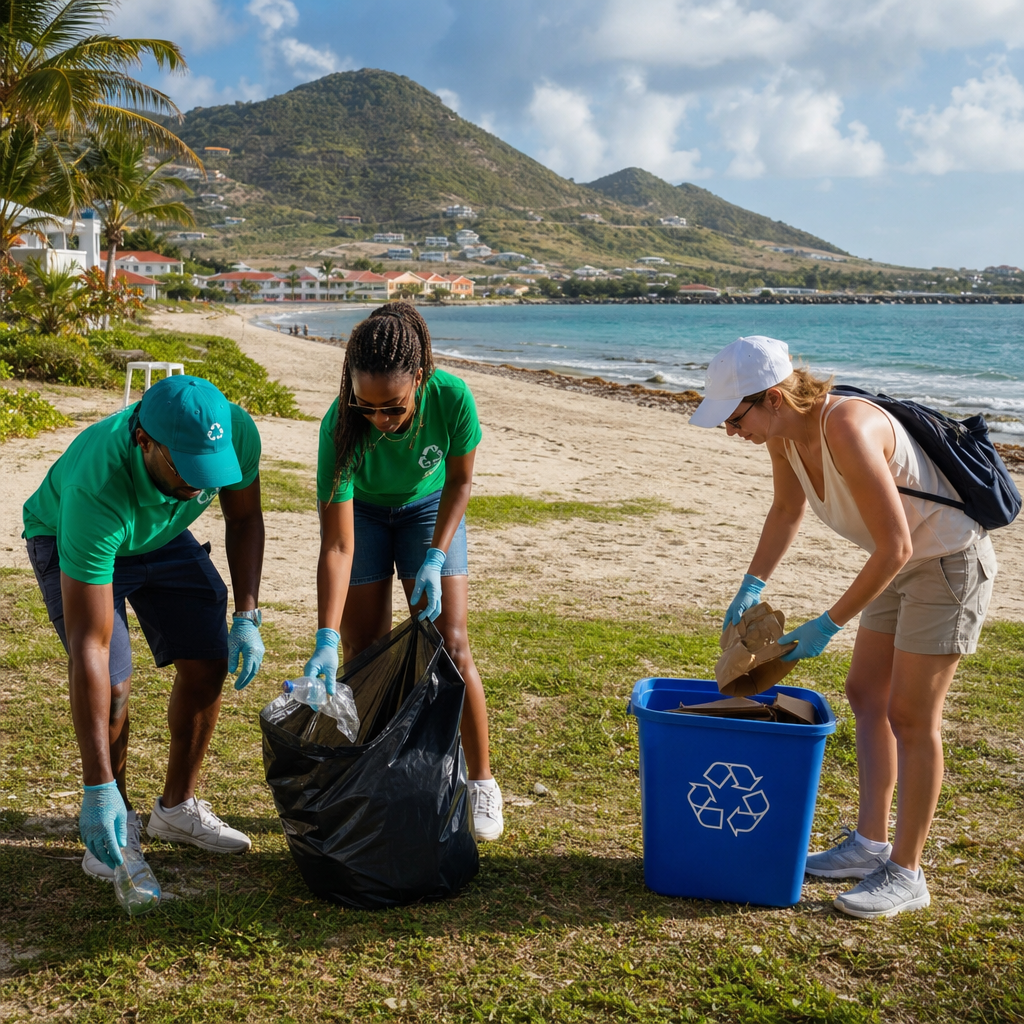
Visitors can also support the system financially and socially. Book operators that advertise refill practices, reusable service ware, or beach cleanup partnerships. Favor restaurants that use returnable glass, durable cups, or clearly labeled separation stations. If you see bins overflowing, tell staff rather than stacking waste beside them. And if you are staying longer, ask whether there are community cleanups or environmental groups welcoming visitor participation. Responsible tourism on Saint Kitts is not about perfection. It is about reducing avoidable waste and matching your habits to island realities.
Saint Kitts’ waste management and recycling initiatives for tourists work best when visitors understand that small-island systems are practical, limited, and worth supporting. The core lesson is simple: waste does not disappear after checkout, after a beach day, or after a cruise stop. It moves through collection crews, hotel back-of-house teams, haulers, sorting points, and final disposal infrastructure that all operate under real cost and space constraints. Tourists who separate materials correctly, avoid unnecessary disposables, and ask staff before discarding uncertain items make those systems more effective.
Several takeaways stand out. First, clean destinations are built through routine operations, not occasional campaigns. Bin placement, staff training, collection timing, and guest instructions matter more than slogans. Second, the most recyclable materials in visitor settings are usually cans, some glass bottles, cardboard, and selected plastic containers, while food-soiled packaging and special waste need different handling. Third, problem areas are predictable: beaches, cruise-heavy downtown zones, excursions, and events. That means simple preventive behavior by travelers can have outsized impact. A reusable bottle, a packed-out snack wrapper, or a quick question at the front desk genuinely helps.
As a sustainable tourism hub for this miscellaneous subtopic, this page connects the everyday decisions tourists make with the broader health of Saint Kitts’ environment and visitor economy. Better waste habits protect beaches, reduce marine leakage, support hospitality teams, and preserve the island experience people travel to enjoy. If you are planning a trip, make waste reduction part of your itinerary: pack reusables, choose operators with visible sustainability practices, and follow local disposal guidance from day one.
Frequently Asked Questions
What should tourists know about waste management in Saint Kitts before they arrive?
Tourists should understand that waste management in Saint Kitts is closely tied to the island’s environmental health, public cleanliness, and tourism economy. Because Saint Kitts is a relatively small island, the space available for disposal is limited, which makes responsible handling of trash especially important. Every item a visitor throws away, from a plastic drink bottle to takeaway packaging or toiletry containers, enters a system that must collect, transport, sort, and either recover or safely dispose of that material. On an island where beaches, marine ecosystems, neighborhoods, and hospitality areas are all closely connected, poor waste practices can quickly affect the visitor experience as well as local quality of life.
Before arriving, travelers should plan to reduce the amount of waste they create. Reusable water bottles, shopping bags, food containers, and travel utensils can make a significant difference over the course of a stay. It is also wise to expect that recycling options may not look exactly the same as they do at home. Depending on where a visitor stays, there may be designated bins for specific materials, hotel-led sustainability programs, or more limited sorting infrastructure in some areas. The most practical approach is to ask your hotel, villa host, tour operator, or cruise representative how waste should be separated and where recyclables should be placed. Travelers who arrive with this mindset tend to make better decisions throughout their trip and help reduce strain on local systems.
Which materials can tourists typically recycle in Saint Kitts, and how should they sort them?
Recycling in Saint Kitts generally focuses on materials that have the best chance of being recovered and processed, such as glass, metals, paper, cardboard, and certain plastics. However, what is accepted can vary depending on the collection point, the accommodation provider, local program capacity, and the condition of the material. Tourists should not assume that every plastic item is recyclable simply because it would be accepted in their home country. Beverage containers, clean cardboard, aluminum cans, and glass bottles are often among the most practical materials to separate, while mixed plastics, heavily soiled packaging, or composite items may be harder to process.
The best sorting method is simple and careful: keep recyclables clean, dry, and separate from food waste whenever possible. Rinse bottles, cans, and containers lightly so they do not contaminate the rest of the recycling stream. Flatten cardboard boxes if space is limited, and avoid placing napkins, greasy pizza boxes, food scraps, or broken mixed-material items into recycling bins unless local guidance says they are accepted. If bins are labeled by material, follow the labels exactly. If they are not clearly marked, ask staff rather than guessing. Contamination is one of the biggest obstacles to successful recycling, and a single bag of mixed waste can reduce the value or usability of otherwise recoverable materials. Careful sorting by visitors helps support cleaner collection and more effective recycling outcomes.
How can tourists reduce waste while enjoying Saint Kitts’ beaches, tours, restaurants, and attractions?
Reducing waste in Saint Kitts starts with everyday choices. At the beach, tourists can bring reusable bottles, avoid single-use drink containers, pack snacks in reusable pouches or containers, and make sure nothing is left behind in the sand or near the shoreline. Lightweight litter can easily blow into the sea, where it threatens marine life and coral reef habitats. On tours and excursions, especially boating, hiking, and snorkeling trips, visitors should secure their belongings, refuse unnecessary disposable items, and carry a small bag for personal trash until they reach a proper bin. Even small actions, such as declining plastic straws or using reef-safe sunscreen in durable packaging, contribute to lower waste generation and less environmental impact.
In restaurants, markets, and accommodation settings, travelers can support waste reduction by choosing dine-in service over takeaway when practical, bringing a reusable shopping bag, and using refillable toiletry bottles instead of travel-size disposables. It also helps to order thoughtfully to reduce food waste and to ask whether leftover containers are recyclable if takeout is necessary. Guests staying in hotels can reuse towels and amenities, participate in room recycling programs, and avoid opening single-use items they will not need. These choices matter because tourism creates concentrated bursts of consumption, particularly in coastal and high-traffic areas. When visitors reduce waste at the source, they help protect the cleanliness and appeal of the very places they came to enjoy.
Why is proper waste disposal especially important for Saint Kitts’ beaches, reefs, and local communities?
Proper waste disposal is especially important in Saint Kitts because the island’s natural and built environments are deeply interconnected. Litter dropped in a street, parking area, beach access point, or marina does not simply stay there. Rain, wind, drainage systems, and coastal currents can move waste into gullies, wetlands, and the sea. Once there, plastics and other debris can harm fish, seabirds, turtles, and coral reef systems, while also reducing water quality and damaging the scenic appeal that supports tourism. Beaches are not just recreational spaces; they are part of a wider ecological network and a major reason travelers choose Saint Kitts in the first place.
There is also a direct community impact. Poorly managed waste can attract pests, create odors, contribute to flooding when drains are blocked, and increase cleanup costs for local authorities and businesses. Communities, hospitality workers, and environmental groups often bear the burden of dealing with preventable litter and contamination. For visitors, using the correct bins and disposing of trash responsibly is a simple but meaningful way to respect the destination. It helps protect public spaces, supports the island’s image as a clean and welcoming place, and reduces pressure on municipal and private waste systems. In a tourism-dependent setting, proper disposal is not just an environmental issue; it is part of sustaining jobs, public health, and the long-term visitor experience.
What can tourists do if they cannot find clear recycling bins or are unsure how local waste systems work?
If recycling bins are not clearly available or local instructions are unclear, the most effective step is to ask directly. Hotel front desks, guesthouse hosts, villa managers, restaurant staff, marina personnel, tour operators, and visitor service teams can often explain where waste should go and whether materials need to be separated. This is far better than placing items in the wrong container and contaminating the collection stream. If no recycling option is available nearby, tourists should focus on storing items responsibly until they reach a location that can accept them, rather than leaving materials behind in public areas or assuming someone else will sort them later.
When in doubt, visitors should prioritize waste prevention first. Hold onto reusable items, consolidate packaging, avoid impulse purchases that create unnecessary trash, and carry a small bag for recyclables during day trips. If a material cannot confidently be identified as recyclable under local conditions, it is usually better to follow the guidance of the property or operator rather than apply rules from home. Travelers can also choose businesses that visibly support sustainability practices, such as offering refill stations, reducing single-use plastics, or providing labeled waste stations. By staying attentive and asking a few simple questions, tourists can participate more effectively in Saint Kitts’ waste management and recycling efforts and help ensure their visit leaves as little environmental footprint as possible.