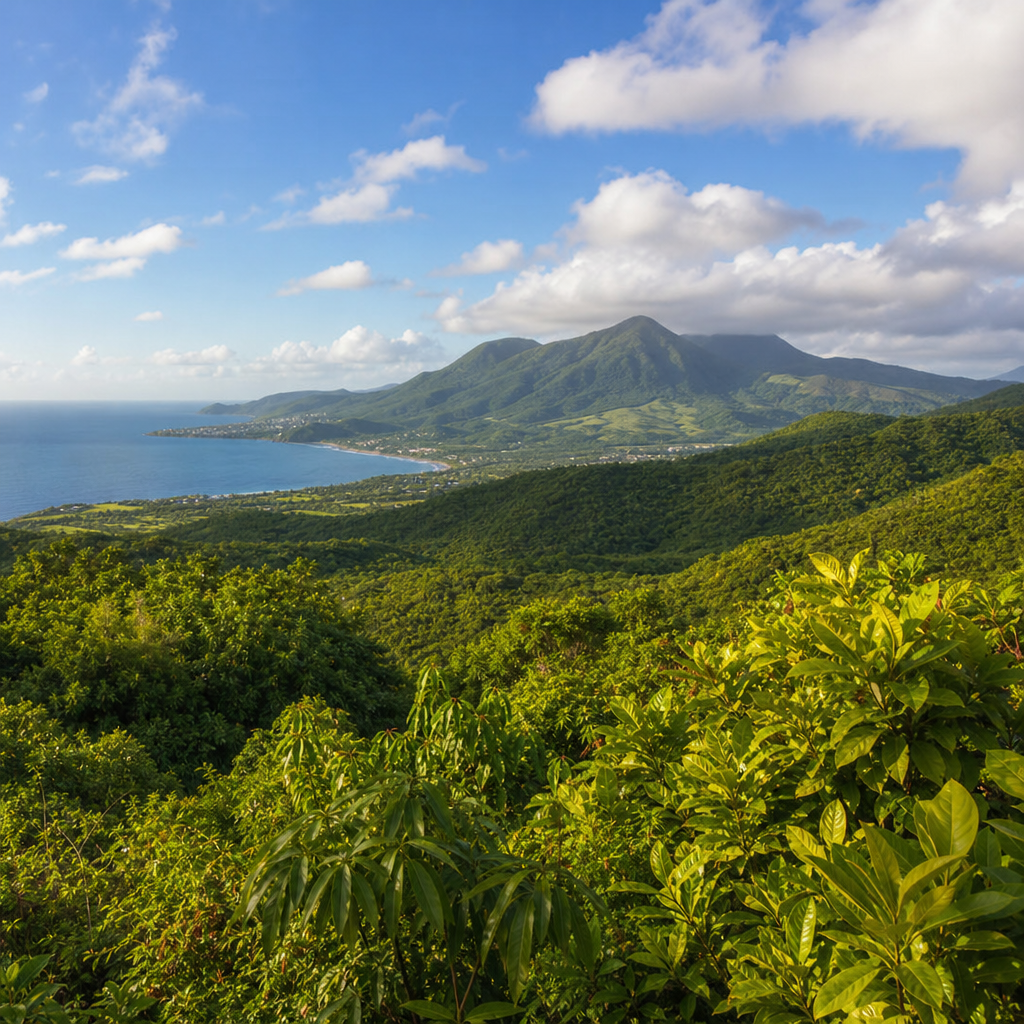
Late autumn reveals the evergreen landscapes of Saint Kitts with unusual clarity, when brief showers, warm trade winds, and lower visitor numbers make the island’s living textures easier to see and understand. In this season, “evergreen” does not mean a static blanket of identical green. It refers to plant communities that retain foliage year-round, from coastal shrubs and coconut groves to ghauts lined with bamboo, wet forest on Mount Liamuiga, and cultivated landscapes where breadfruit, mango, and banana remain visually lush after northern latitudes have turned bare. “Late autumn” in Saint Kitts also differs from temperate definitions. The island does not experience a cold fall; instead, November marks the transition toward the drier season, with daytime temperatures commonly around 28 to 30 degrees Celsius, sea temperatures near 28 degrees, and hillsides refreshed by the latter part of the wet season. That combination matters for travelers, photographers, birders, and conservation-minded readers because it shapes visibility, wildlife activity, trail conditions, and the overall character of the landscape.
As a hub within Nature and Wildlife, this guide covers the miscellaneous elements that make Saint Kitts in late autumn especially rewarding: forest structure, volcanic terrain, coastal vegetation, seasonal bird activity, agricultural scenery, practical access, and the conservation pressures affecting what visitors see. I have walked the island’s rain-fed interior after overnight showers and spent mornings moving from Basseterre’s outskirts into greener elevations, where the shift from roadside gardens to dense upland cover happens quickly. Saint Kitts is compact, but its ecological variety is significant. The central mountains trap moisture; old sugar lands create open views; black volcanic soils support vigorous growth; and the coast alternates between dry scrub, mangrove pockets, and planted ornamentals. Understanding these layers helps a visitor do more than admire scenery. It allows you to read the landscape correctly, choose the right excursions, and connect separate experiences—hiking, birdwatching, scenic drives, beach visits, and heritage tours—into one coherent view of how the island stays green through late autumn.
Why Saint Kitts Stays Green in Late Autumn
Saint Kitts remains green late in the year because climate, topography, and volcanic geology work together. The island sits in the northeastern Caribbean and receives moisture from Atlantic trade winds. When those winds rise against the central mountain chain, air cools and condenses, feeding cloud cover and regular rainfall in higher elevations. Mount Liamuiga, a stratovolcano rising to 1,156 meters, is the dominant feature in that system. Its slopes create a vertical ecological gradient: lower areas may look sunlit and settled, while upper ridges hold wetter forest with tree ferns, vines, mosses, and broadleaf species that rarely lose all foliage at once. Volcanic soils, rich in minerals and generally well drained, support rapid plant growth once rain falls.
Late autumn is useful because it sits near the end of the wetter part of the annual cycle without the heavier traffic of winter high season. Trails can still be muddy, but vegetation looks full rather than stressed. Visibility often improves between showers, and the island’s patchwork becomes more legible: old cane fields, regenerating secondary forest, fruit trees around homes, and steep ghauts cutting from interior slopes toward the sea. A ghaut is a seasonal stream course or ravine common across the Eastern Caribbean. In Saint Kitts, these channels are ecological corridors, concentrating moisture and shelter for birds, insects, and small reptiles. For anyone asking what the landscape actually looks like in November, the simplest answer is this: green at every elevation, but in different textures, from glossy coastal leaves to dark mountain forest.
Mount Liamuiga and the Island’s Wet Interior
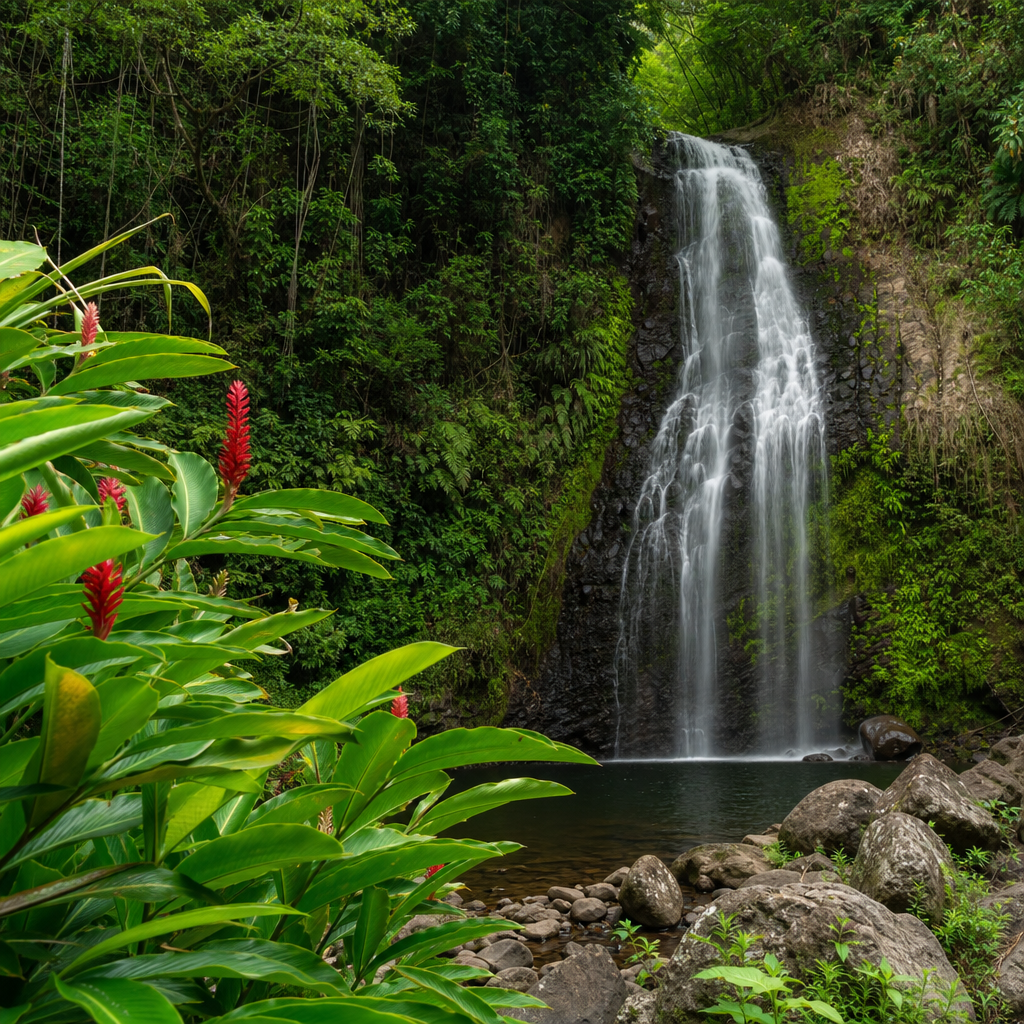
The most dramatic evergreen scenery is found on and around Mount Liamuiga. The mountain’s crater hike is well known, yet even lower sections of the route reveal the island’s botanical character. The path typically begins through former agricultural land and secondary growth before entering denser forest. You see heliconia, lianas, epiphytes, palms, and moisture-loving understory plants. In late autumn, leaf surfaces are clean from rain, streams are more active, and the forest canopy feels layered rather than sparse. This is not a manicured tropical garden. It is a working ecosystem shaped by succession, rainfall, invasive pressures, and human use over centuries.
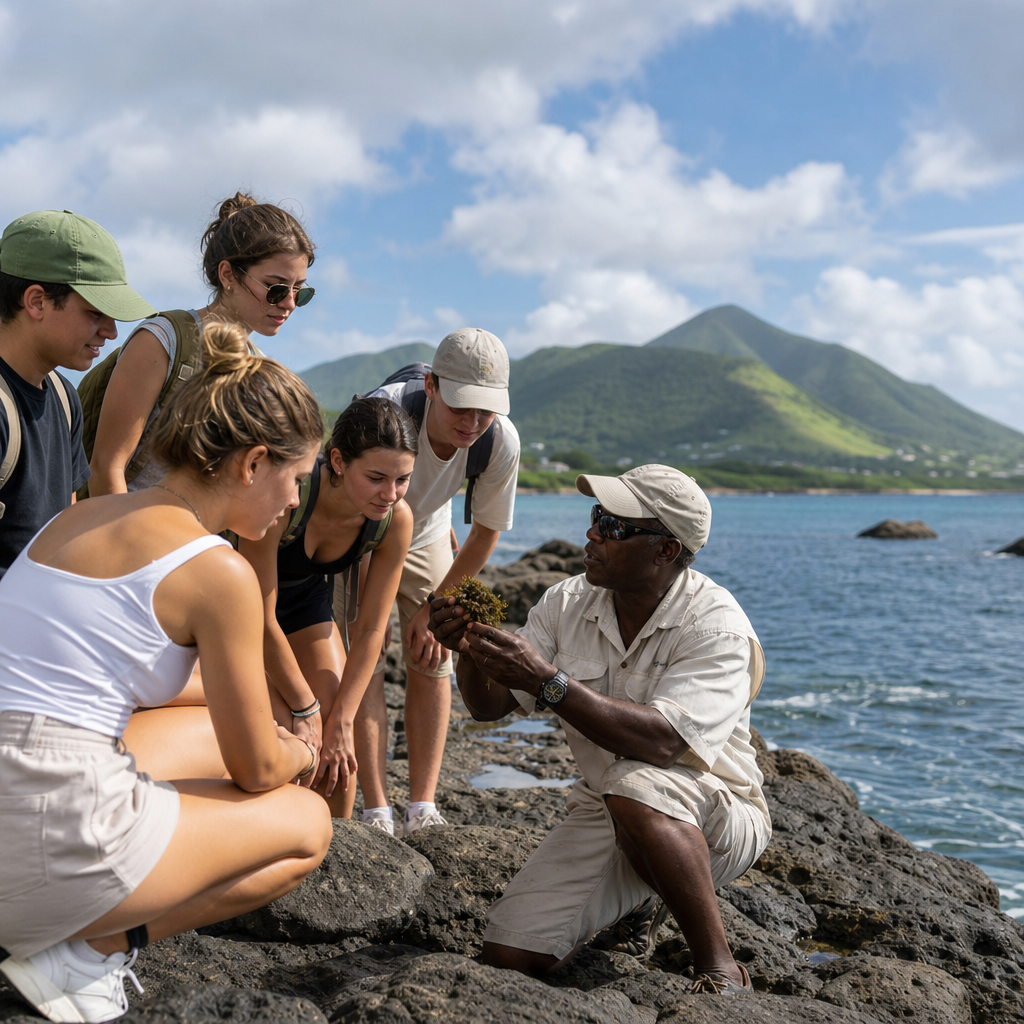
The interior matters beyond hiking value. Forest cover in upland catchments regulates water flow, reduces erosion on steep volcanic slopes, and protects habitat for species such as the green vervet monkey, Caribbean birds, bats, and invertebrates that depend on humid conditions. Visitors often focus on summit views, but the more important lesson is how quickly ecological function changes with elevation. A roadside stop may show ornamental hibiscus and cultivated bananas; an hour later you are in cloud-touched woodland where decomposition, runoff, and root systems are visibly part of the terrain. If you are building an itinerary around nature, prioritize one guided forest excursion in late autumn. Local guides are especially useful because they can identify edible plants, point out historical estate boundaries, and explain where trail damage from rain or storms has altered access.
Coastal Greenery, Ghauts, and Scenic Contrasts
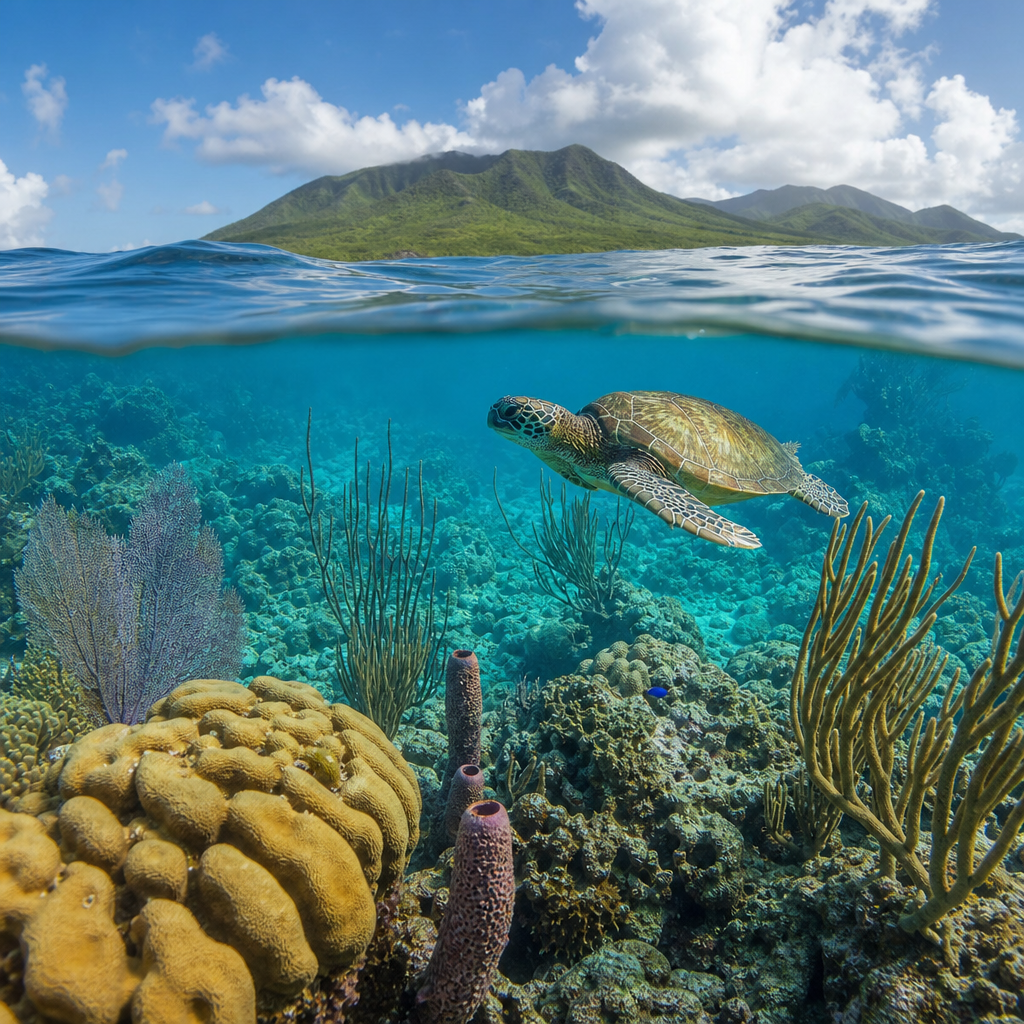
Saint Kitts is often marketed for beaches, but its evergreen appeal comes from the contrast between coast and interior. Around the Southeast Peninsula, vegetation can appear drier and more wind-shaped, with sea grape, acacia, cactus in exposed spots, and low shrubs adapted to salt and sun. Yet even there, late autumn rains soften the landscape. Grasses recover, hillside tones deepen, and roadside thickets gain density. On the Atlantic-facing side, rougher seas and stronger breezes create a wilder look than the calmer Caribbean coast. That contrast is part of the island’s visual identity.
Ghauts are the hidden connectors. Many visitors cross them without noticing, but these ravines gather runoff from uplands and support greener ribbons through settled areas. Bamboo stands, tall grasses, vines, and fruiting trees often cluster in and around them, which in turn attracts birds. In practical terms, ghauts also explain why one road segment may look dry while the next suddenly turns lush. After rain, they become channels of sound as well as scenery. If you are photographing landscapes in late autumn, include these transition zones. A wide coastal shot is attractive, but a frame that pairs volcanic slopes, a ghaut corridor, and the sea says more about how Saint Kitts actually works as a living island.
Birdlife and Wildlife Activity in November
Late autumn is not just about vegetation; it is also a favorable period for observing wildlife against that green backdrop. Commonly seen birds on Saint Kitts include the brown pelican alongshore, the magnificent frigatebird overhead, the bananaquit in gardens, the Zenaida dove in open areas, and the Caribbean elaenia in wooded habitats. Depending on location and timing, migratory warblers and shorebirds may also appear as the northern migration season progresses. The island’s remaining wetlands and salt ponds, especially near the peninsula and low-lying coastal areas, can attract herons, egrets, sandpipers, and plovers.
The green vervet monkey is the most visible mammal for many visitors. Introduced centuries ago, it is now deeply associated with the island landscape, especially near forest edges and old estates. Although charismatic, vervets also create agricultural pressure by feeding on crops. That is a useful reminder that “nature” on Saint Kitts includes management challenges. Reptiles such as anoles are abundant in warm daylight hours, while bats become active at dusk around fruiting trees. Insects increase after rain, and that can improve bird activity in gardens and forest margins. For wildlife viewing, early morning remains best. In November, cloud cover can keep temperatures moderate for longer, extending active periods compared with hotter, still afternoons in other months.
Landscapes Shaped by Agriculture and Estate History
Saint Kitts cannot be understood through wilderness alone. Much of its green scenery is cultural landscape, shaped by centuries of sugar cultivation, estate infrastructure, and later shifts toward mixed land use after the sugar industry closed in 2005. Old cane lands now present a mosaic: grazing pasture, secondary growth, small farms, abandoned stonework, and occasional replanting with fruit or ornamental species. This layered scenery is one reason late autumn drives across the island feel visually rich. You are not seeing untouched forest everywhere; you are seeing ecological recovery and adaptation on land that has been intensively used.
Former estate zones often contain large shade trees, breadfruit, tamarind, mango, flamboyant, and palms near surviving great houses or village edges. The St. Kitts Scenic Railway, built on the old narrow-gauge sugar line, offers a practical way to read that pattern from a broad perspective. From the train, visitors can observe how coastal fields, villages, forested slopes, and historical ruins interlock. This is valuable for miscellaneous hub coverage because many related topics—bird habitats, photography, heritage tourism, and scenic road trips—connect through these semi-managed environments. Late autumn adds color subtlety rather than dramatic foliage change: fresher grasses, cleaner air after rain, and stronger tonal contrast between black volcanic rock, bright sea, and saturated vegetation.
Best Places to Experience the Evergreen Landscapes
For readers planning deeper exploration, the most dependable late autumn locations can be grouped by experience type.
| Location | What You See | Why Late Autumn Works | Best For |
|---|---|---|---|
| Mount Liamuiga trails | Wet forest, crater slopes, cloud-wrapped canopy | Full vegetation, active streams, cooler hiking conditions | Hikers, serious nature travelers |
| Romney Manor and Wingfield area | Botanical plantings, old estate grounds, nearby forested hills | Gardens look vigorous after rains | Casual walkers, photographers |
| Central island road corridors | Village gardens, ghauts, fruit trees, mountain views | Low-angle light and clear post-rain air improve visibility | Scenic drives, local culture |
| Southeast Peninsula | Dry-meets-green coastal vegetation, salt ponds, sea views | Seasonal rains soften scrub and attract birds to wetlands | Birders, landscape photographers |
| Black Rocks and northeastern coast | Volcanic shoreline framed by inland greenery | Strong contrast between surf, lava formations, and fresh vegetation | Short stops, dramatic scenery |
Romney Manor deserves special mention because it combines accessible gardens with historical depth. The site is known for its grounds and mature trees, and it gives less experienced travelers an easy introduction to the island’s plant diversity without a strenuous hike. For more rugged scenery, the Black Rocks area shows how vegetation colonizes volcanic terrain under salt spray and strong light. If your goal is a single representative day, combine a morning inland hike or garden visit with an afternoon coastal drive to the peninsula. That pairing captures Saint Kitts better than staying in one ecological zone.
Conservation Pressures and Responsible Visiting
Evergreen does not mean invulnerable. Saint Kitts faces the same pressures affecting many small islands: development along attractive coastlines, invasive species, erosion on steep slopes, litter in drainage channels, and habitat fragmentation around expanding roads and settlements. Climate variability also matters. Heavy rainfall events can destabilize trails and increase sediment runoff, while longer dry spells stress lower-elevation vegetation and freshwater availability. Hurricanes and tropical storms remain periodic landscape-shaping forces, even when a given season is relatively quiet.
Responsible visitors can reduce pressure in simple ways. Stay on marked trails in upland areas to avoid widening muddy paths. Use local guides and operators who respect site limits and know post-rain safety conditions. Do not feed vervet monkeys; it alters behavior and worsens human-wildlife conflict. Carry out all waste, especially near ghauts and overlooks where wind can move litter quickly. Support sites and businesses that maintain gardens, trails, or historical landscapes, because conservation on Saint Kitts often depends on practical stewardship rather than large wilderness budgets. If you are creating related content for this subtopic, link your reading across hiking, birding, botanical gardens, scenic railway travel, beaches, and heritage estates. The island’s evergreen landscapes make most sense when those experiences are treated as connected parts of one environment.
The evergreen landscapes of Saint Kitts in late autumn are best understood as a system, not a postcard. Moist mountain forest, green ghauts, cultivated village edges, recovering former cane lands, and wind-shaped coastal vegetation all remain active and visible in November. That is why this season is so rewarding. You get the freshness left by the wetter months, generally warm and comfortable conditions, and a clearer chance to notice how geology, rainfall, wildlife, and history fit together on one small island. For nature travelers, the main benefit is range: within a short drive, Saint Kitts can deliver crater forest, garden biodiversity, volcanic shoreline, wetland birdlife, and broad scenic views.
As a miscellaneous hub within Nature and Wildlife, this page points to the themes that deserve deeper exploration: upland ecology, birds and wetlands, estate landscapes, coastal habitats, and practical responsible travel. The strongest takeaway is simple. If you visit Saint Kitts in late autumn, look beyond the beach and read the green carefully. The island’s beauty comes from layered, year-round growth shaped by water, altitude, and human history. Start with one guided forest walk, one scenic coastal route, and one heritage garden or estate stop, then build outward from there. That approach will give you a fuller, more accurate experience of Saint Kitts and its enduring evergreen character.
Frequently Asked Questions
What does “evergreen” really mean in Saint Kitts during late autumn?
In Saint Kitts, “evergreen” in late autumn refers to landscapes and plant communities that keep their foliage throughout the year rather than shedding all leaves in a single seasonal event. That distinction matters because the island’s greenery is not a uniform carpet of one color or one plant type. Instead, late autumn reveals a layered living system made up of coastal shrubs, coconut groves, ghauts edged with bamboo and other moisture-loving plants, wetter upland forest on Mount Liamuiga, and cultivated areas where fruit trees and provision grounds remain productive. The season’s brief showers and steady warmth help sustain this foliage, while lower visitor numbers and clearer views often make the patterns easier to notice.
Just as important, evergreen in Saint Kitts does not mean unchanging. Leaves flush, age, and fall at different times depending on species, elevation, moisture, and exposure to wind and salt. A breadfruit tree may look dense and vigorous in one valley, while a coastal thicket nearby appears leathery, wind-shaped, and more muted. Late autumn brings enough moisture to freshen vegetation without obscuring it behind constant rain, so textures stand out: glossy broad leaves, feathery bamboo growth, layered palms, tangled vine margins, and darker wet-forest canopies higher up. In practical terms, the term describes continuity of plant cover and ecological resilience, not a single visual effect.
Why do Saint Kitts’ landscapes often look especially vivid and well-defined in late autumn?
Late autumn can make the island’s landscapes appear unusually clear because several environmental conditions come together at once. Short showers refresh foliage and wash dust and salt from leaves, while warm trade winds help vegetation dry quickly and keep the air moving. This combination often sharpens contrast rather than flattening it. Greens become easier to distinguish by tone and texture: the brighter hues of new growth, the deeper shades of mature canopy, the silvery cast of leaves adapted to sun and wind, and the rich, damp look of ravine and forest vegetation. The result is not merely “lushness,” but a more readable landscape.
There is also a visual advantage created by the season’s rhythm. Because rain often comes in bursts rather than prolonged downpours, observers can see how water moves through the island’s terrain. Ghauts become more obviously defined as vegetated corridors, slopes show differences between cultivated and semi-wild ground, and the mountain interior reads as a distinct moisture zone. With fewer visitors in many areas, roadsides, viewpoints, and walking routes may feel less crowded, allowing more time to notice plant structure, spacing, and habitat transitions. For photographers, hikers, and curious travelers alike, late autumn can be one of the best times to understand how Saint Kitts is organized ecologically from coast to summit.
Which parts of Saint Kitts best show the island’s evergreen character in late autumn?
Several parts of Saint Kitts showcase the island’s evergreen identity particularly well, and each does so in a different way. Along the coast, you can see hardy plant communities shaped by wind, sun, and salt, including shrubs, grasses, and coconut palms. These areas demonstrate that evergreen vegetation is not always dense or rainforest-like; it can also be sparse, tough, and structurally adapted to exposure. Moving inland, cultivated landscapes begin to tell another part of the story. Villages, estates, and small agricultural areas often contain breadfruit, mango, banana, and other useful trees that maintain a strong visual presence through the season, blending domestic and ecological continuity.
The ghauts are especially important for understanding evergreen Saint Kitts. These drainage corridors and ravines collect moisture and often support bamboo, vines, ferns, and other vegetation that looks more sheltered and layered than the surrounding ground. They act as green pathways through the landscape, marking where water and fertility concentrate. Higher still, the slopes of Mount Liamuiga reveal the wettest and most forested expression of the island’s evergreen systems. Here the canopy can feel denser, cooler, and more vertical, with mosses, broadleaf trees, and moisture-loving understory plants reflecting the mountain’s cloud-influenced environment. Taken together, these zones show that Saint Kitts’ evergreen landscapes are best understood as a mosaic tied to elevation, water, and land use.
How do weather patterns in late autumn affect plants, forests, and cultivated land on Saint Kitts?
Late autumn weather supports plant life on Saint Kitts through a balance of warmth, intermittent rainfall, and persistent trade winds. Plants benefit from moisture pulses that replenish soils, encourage fresh leaf growth, and sustain streams and damp ground in ravines and upland areas. At the same time, the winds reduce stagnation, moderate heat stress, and help prevent the landscape from feeling overly heavy or waterlogged for long periods. This creates favorable conditions for both wild and cultivated vegetation. Forest edges may appear newly refreshed, ghauts greener and fuller, and fruit trees in settled areas healthier and more legible in form.
For cultivated land, this period can be especially revealing because it shows how human-managed greenery fits into the wider ecosystem. Breadfruit, mango, banana, and other useful plants often remain integral parts of the visual landscape rather than standing apart from it. Moisture supports growth, but because rain is often episodic, farmers and gardeners still rely on local knowledge of drainage, soil depth, and exposure. In forested areas, the same weather pattern highlights habitat variation: wetter slopes retain denser canopies, while lower or more exposed ground may show tougher leaf forms and more open spacing. In short, late autumn does not simply “green up” Saint Kitts; it clarifies the relationship between climate, terrain, and vegetation across the island.
What is the best way to experience and interpret Saint Kitts’ evergreen landscapes in late autumn?
The best approach is to treat the island as a series of connected ecological zones rather than looking for a single iconic green scene. Start at the coast to notice how evergreen vegetation handles salt, wind, and strong light. Then move inland through agricultural and village landscapes, where fruit trees, shade trees, and mixed plantings reveal how people have long worked with the island’s climate. If possible, spend time near ghauts, where moisture, shade, and shelter create noticeably different plant textures and densities. Finally, explore higher elevations on or around Mount Liamuiga, where wetter forest conditions show the fullest expression of year-round foliage. Seeing these transitions in one trip makes the term “evergreen” much more meaningful.
Interpretation also improves when you slow down and look for pattern instead of just color. Notice leaf size, surface gloss, trunk form, spacing between plants, and how vegetation changes with slope and exposure. Pay attention after brief showers, when washed leaves, darkened bark, and moving cloud can reveal structure very clearly. If you are walking or photographing, early and late daylight often helps define layers in the landscape. And because late autumn generally brings fewer crowds than peak travel periods, there is often more room for careful observation. In that quieter setting, Saint Kitts becomes easier to read: not as a generic tropical backdrop, but as a dynamic evergreen island shaped by water, wind, altitude, and cultivation.