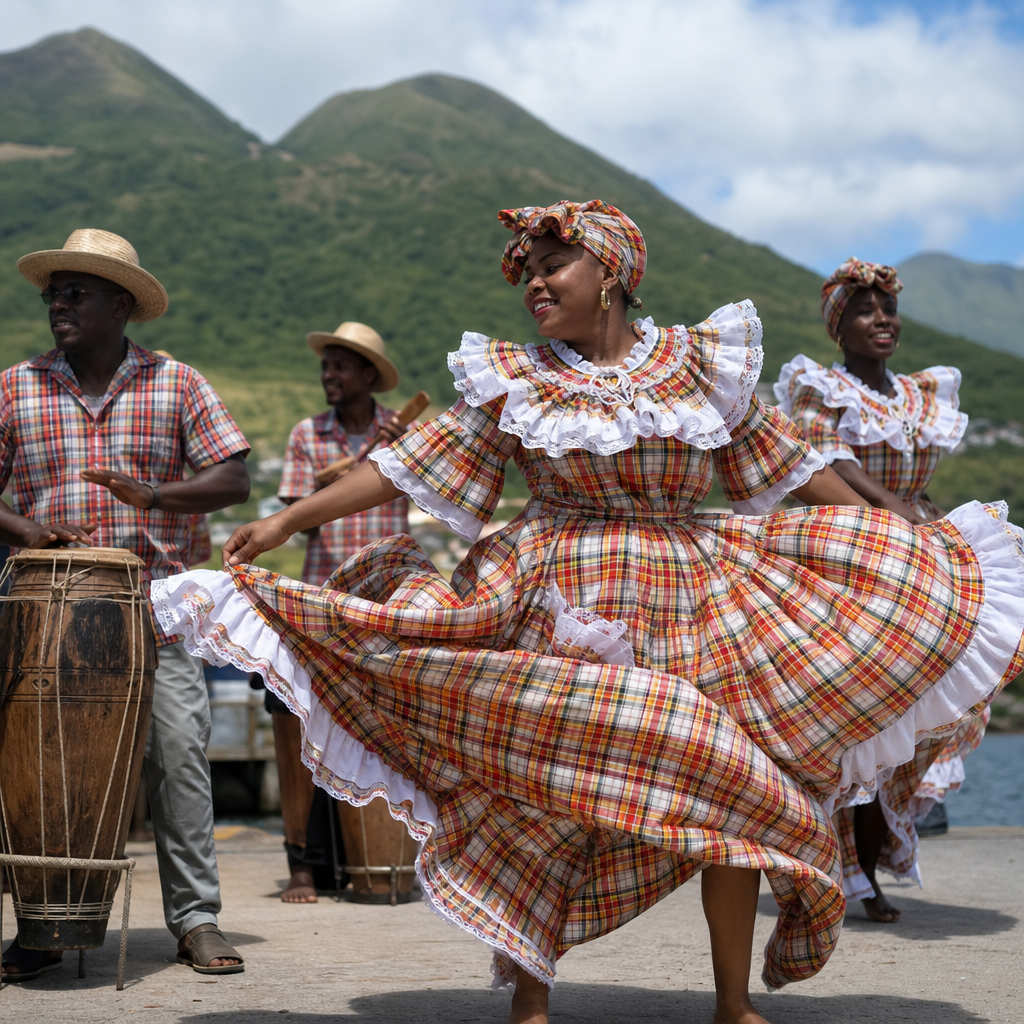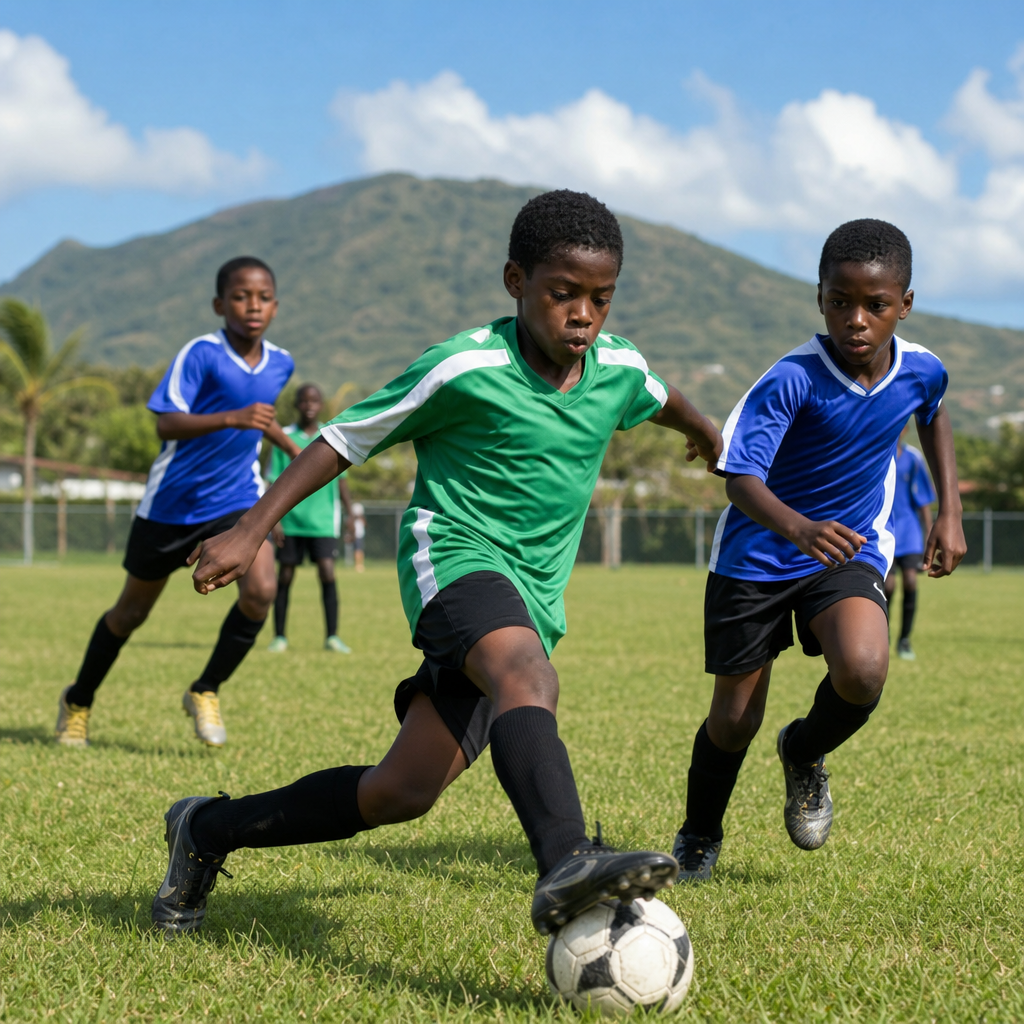
Saint Kitts’ youth sports scene is one of the clearest windows into local life, community ambition, and the island’s long-term development. On a small Caribbean island where neighborhoods are tightly connected and schools, churches, and playing fields often sit at the center of daily activity, youth sports do far more than organize recreation. They shape discipline, support public health, strengthen identity, and create pathways to education, employment, and national representation. When people ask how Saint Kitts cultivates talent, the answer is not a single academy, league, or government office. It is a network of families, coaches, teachers, volunteers, clubs, and institutions working together, often with limited resources, to help young athletes grow.
In practical terms, youth sports in Saint Kitts include structured school competitions, community football programs, cricket development, athletics training, netball, basketball, swimming, and emerging opportunities in sports tourism and private coaching. Talent cultivation means the process of identifying potential early, teaching fundamentals correctly, building physical literacy, supporting mental resilience, and creating chances to compete at progressively higher levels. On islands with small populations, that process matters even more because every promising athlete represents both individual possibility and national potential. A strong youth sports system can raise participation rates, improve educational outcomes, and produce elite performers.
I have seen that the most successful youth programs are rarely the flashiest. They are the ones that keep children engaged consistently, train coaches in age-appropriate methods, and maintain a clear bridge from beginner participation to advanced competition. In Saint Kitts, that bridge is especially important because the island must balance passion and promise against real constraints such as facility access, funding gaps, equipment costs, and the need for specialized sports science support. Yet those constraints have also made local programs resourceful. Coaches adapt shared spaces, schools carry broad responsibility, and community support frequently makes the difference between a short-lived initiative and a lasting development pathway.
As a hub within Local Life and Experiences, this overview of Saint Kitts’ youth sports covers the wider miscellaneous landscape rather than focusing on one discipline alone. It explains which sports matter most, how young talent is developed, where the current system performs well, and what still needs improvement. For readers exploring family life, education, wellness, culture, or national identity on Saint Kitts, youth sports sits at the intersection of all of them. Understanding this sector helps explain how the island invests in its next generation and why sports remain one of the most practical tools for cultivating talent, confidence, and community pride.
The Sports That Shape Youth Life in Saint Kitts
Football, cricket, and athletics remain the most visible foundations of youth sports in Saint Kitts, but they do not stand alone. Netball has long been important for girls’ participation and school competition, while basketball has grown through community courts and youth leagues. Swimming, volleyball, and tennis attract smaller but meaningful groups, often shaped by facility availability and coaching access. The result is a sporting landscape that is broad enough to serve different interests, yet concentrated enough that a few disciplines still dominate public attention and investment.
Football is often the most accessible entry point because the equipment threshold is comparatively low and community enthusiasm is high. Children can begin informally in open spaces and then move into organized training through schools or clubs. Cricket carries historic weight across the region and remains tied to Caribbean sporting identity, but it requires more structured facilities and equipment, which can affect participation. Athletics is especially valuable because it develops universal movement skills such as speed, coordination, balance, and endurance. Many of the strongest youth systems I have worked around rely on athletics not only to produce runners and jumpers, but also to build the athletic base for footballers, cricketers, and netball players.
What matters in Saint Kitts is not just which sports are popular, but how they fit island life. A school with a committed physical education teacher can become a local talent hub. A community coach with strong fundamentals can keep a cohort of players engaged for years. A well-run annual competition can change how parents view sports participation. On a small island, one effective program has outsized influence. That is why broad youth sports planning must include both marquee sports and the miscellaneous ecosystem around them, from after-school training and weekend tournaments to holiday camps and skill clinics.
How Talent Is Identified and Developed
Talent identification in Saint Kitts usually begins in schools, community clubs, and local competitions rather than through a fully centralized scouting system. Teachers, coaches, and association volunteers notice speed, coordination, game awareness, and consistency long before formal selection takes place. The best identification processes do not focus only on the child who is already bigger or faster at age twelve. They also account for late developers, technical learners, and athletes whose commitment becomes evident over time. On islands with small talent pools, overlooking one age group can have national consequences later.
Development works best when it follows a clear progression: early exposure, sound fundamentals, regular competition, position-specific or event-specific refinement, and then access to advanced coaching. In practice, Saint Kitts often blends these stages because coaches must work with the athletes available, the facilities accessible, and the support currently funded. That makes coach quality crucial. A coach who understands movement mechanics, training load, injury prevention, and child development can accelerate progress even in a modest setting. A coach who treats children like miniature adults can stall progress or cause dropout.
The most reliable markers of future success are usually not early medals alone. They include attendance, coachability, emotional control, recovery habits, and the ability to improve under structured repetition. For example, a young sprinter who learns efficient acceleration, responds to feedback, and maintains school attendance may have a stronger long-term profile than a naturally fast peer with poor habits. The same applies in cricket, where hand-eye coordination and game sense must be paired with patience and repetition. Saint Kitts benefits when programs reward those durable traits instead of chasing only short-term wins.
| Development Stage | Typical Age Range | Main Focus | Saint Kitts Example |
|---|---|---|---|
| Introduction | 6–9 | Physical literacy, enjoyment, basic rules | Primary school games, beginner football sessions |
| Foundation | 10–13 | Technique, coordination, regular practice | School athletics meets, youth cricket drills |
| Specialization | 14–16 | Position or event skills, competition habits | Club leagues, interschool tournaments |
| Performance | 17–19 | Advanced coaching, strength work, exposure | National youth squads, regional qualifiers |
This staged approach is not theoretical. It is the framework most small-island systems need if they want to convert participation into performance. Without it, talented athletes can remain active for years but never receive the structured development needed to progress beyond local competition.
The Role of Schools, Families, and Community Clubs
Schools are the backbone of youth sports in Saint Kitts because they provide the widest and most regular contact with children. A school timetable creates recurring opportunities for physical education, inter-house competition, and talent spotting. When principals support sport as part of student development rather than as an extracurricular afterthought, participation rises. Schools also help normalize girls’ sports, identify children who may not join private clubs, and connect athletic development to attendance and conduct expectations.
Families are equally important because youth sports depend on transport, nutrition, encouragement, and routine. On small islands, parents and guardians often become de facto administrators, fundraisers, and sideline support teams. I have seen strong youth programs falter not because talent disappeared, but because family logistics became overwhelming. Evening training, weekend matches, uniforms, and travel to regional events all create real demands. When families are informed and included, retention improves. When they are excluded from planning or asked to absorb rising costs without notice, dropout increases.
Community clubs provide the bridge between school participation and sustained development. They create continuity across age groups, preserve local rivalries that motivate players, and give coaches more time with athletes than a school calendar usually allows. In football and cricket especially, club culture can anchor identity and aspiration. A child who sees older players from the same area moving into national youth teams can imagine a believable pathway. That kind of local visibility matters more than imported slogans. Talent development becomes credible when children can point to someone nearby who has already taken the next step.
Infrastructure, Coaching, and the Limits of Scale
Every conversation about Saint Kitts’ youth sports eventually reaches infrastructure. Fields need maintenance, courts need lighting, changing areas need upgrades, and some sports require specialized surfaces or equipment that are expensive to install and maintain. Small states also have to allocate public funds carefully across health, education, roads, tourism, and disaster readiness. That means sports infrastructure must often do double duty, serving schools by day, clubs in the evening, and community events on weekends.
Coaching depth is an equally decisive issue. A country does not need hundreds of elite coaches to improve youth outcomes, but it does need a stable base of trained instructors who understand safeguarding, technical progression, and age-appropriate planning. Certifications from regional and international governing bodies help, but courses alone are not enough. Coaches need mentoring, observation, and practical feedback. In my experience, one of the fastest ways to raise standards in a small system is to improve session design. When warm-ups are purposeful, drills match developmental stage, and practice time is efficient, athletes progress faster without requiring expensive technology.
Scale cuts both ways. Saint Kitts cannot match the infrastructure budgets of larger nations, yet its size makes coordination easier when leadership is clear. Ministries, schools, associations, and clubs can communicate more directly than in sprawling systems. Data collection is also more manageable. Tracking participation, injuries, school attendance, and performance benchmarks across age groups is realistic if organizations commit to it. The challenge is not whether small-island coordination is possible. It is whether sports stakeholders treat basic planning and measurement as essential rather than optional.
Why Youth Sports Matter Beyond Competition
The value of youth sports in Saint Kitts extends far beyond medals, trophies, or regional rankings. Regular participation supports cardiovascular health, healthy weight management, bone development, and motor coordination. It also improves social confidence, time management, and resilience. For adolescents in particular, structured sports environments reduce idle time and can create protective routines around peer influence and digital overuse. These outcomes are not abstract. They show up in attendance patterns, behavior, and how young people carry themselves in classrooms and communities.
Sports also contribute to national identity. Small countries often build international visibility through culture, diplomacy, tourism, and sport. When young athletes represent Saint Kitts in Caribbean competition, they do more than chase personal achievement. They strengthen a shared sense of belonging. That symbolic value matters in a country where community recognition remains meaningful and where success stories travel quickly across schools and neighborhoods. The effect is cumulative: each athlete who progresses makes future participation seem more worthwhile.
There is also an economic dimension. Youth sports can feed into sports tourism, event hosting, coaching services, physiotherapy demand, facility rentals, and scholarship opportunities abroad. Not every child will become an elite athlete, and programs should never be sold on that promise. But strong youth sports systems create transferable benefits, from leadership skills to career exposure in fitness, education, administration, and media. That broader return is one reason investment in youth sports should be viewed as community development, not simply recreation spending.
What Saint Kitts Can Improve Next
The next stage for Saint Kitts’ youth sports development is not guessing what works; it is building consistency around practices already known to produce better outcomes. First, coaching education should become continuous rather than occasional. Short courses help, but regular in-service workshops on injury prevention, long-term athlete development, and inclusive coaching would raise standards quickly. Second, stronger competition calendars would reduce gaps between training and meaningful match play. Young athletes improve when they can apply skills under pressure, review performance, and return to practice with specific goals.
Third, basic athlete support services need expansion. Nutrition guidance, strength and conditioning, physiotherapy access, and mental skills coaching do not have to start at elite levels only. Even simple screening, hydration education, sleep guidance, and return-to-play protocols can protect developing athletes and improve performance. Fourth, Saint Kitts would benefit from better integration between schools and national associations. Too often, promising athletes move between systems that do not share training information, attendance concerns, or development plans.
Finally, the island should continue treating youth sports as part of everyday local life rather than a narrow pipeline for a few standout performers. Broad participation is what makes elite success possible. If more children have safe access to quality coaching, regular play, and visible pathways, Saint Kitts will keep cultivating talent in the truest sense: not only producing better athletes, but building healthier, more disciplined, and more connected young citizens.
Saint Kitts’ youth sports story is ultimately a story about how a small island organizes opportunity. The strongest programs combine school access, community commitment, capable coaching, and realistic pathways from beginner participation to national representation. Football, cricket, athletics, netball, basketball, swimming, and other developing disciplines all contribute to that ecosystem, and each reveals something important about local life. Sports on Saint Kitts are not separate from education, family routines, public health, or national pride. They are woven through all of them.
The key takeaway is straightforward: talent does not emerge by accident. It is cultivated through repetition, guidance, structure, and support. Saint Kitts already has many of the essential ingredients, including committed teachers, dedicated clubs, ambitious young athletes, and a culture that values community achievement. The task now is to strengthen consistency, improve facilities, train more coaches, and align institutions so that promising children are not lost between enthusiasm and opportunity.
For anyone exploring Local Life and Experiences in Saint Kitts, youth sports is a vital hub topic because it connects so many parts of island life at once. Follow the schools, fields, courts, and community clubs, and you will understand how the island invests in its future. Keep exploring this subtopic to learn how specific programs, venues, and sporting traditions across Saint Kitts continue cultivating talent year after year.
Frequently Asked Questions
Why are youth sports so important in Saint Kitts?
Youth sports matter deeply in Saint Kitts because they are woven into the island’s social fabric. In a close-knit setting where schools, churches, village grounds, and community organizations play a central role in daily life, sports become much more than a pastime. They help young people build discipline, confidence, teamwork, and resilience while also giving families and neighborhoods a shared sense of purpose. For many children and teenagers, regular participation in football, cricket, athletics, netball, basketball, and other activities provides structure during critical developmental years and encourages healthy routines that can last into adulthood.
Beyond personal growth, youth sports support broader national goals. They contribute to public health by promoting physical activity and helping to reduce sedentary lifestyles. They also strengthen community identity, as local teams and school competitions often become points of pride that bring people together across generations. In a country where national representation carries special meaning, youth sports can also serve as an early pathway to regional and international competition. That means the benefits extend from the individual athlete to the family, the community, and the nation as a whole.
What kinds of opportunities do youth sports create for young people on the island?
Youth sports in Saint Kitts can open doors in several important ways. At the most immediate level, they give children and teens access to organized activity, mentorship, and positive peer networks. A well-run sports environment often teaches time management, goal setting, communication, and emotional control—skills that are valuable far beyond the playing field. Young athletes learn how to handle setbacks, respond to coaching, and work toward improvement over time, which can have a strong influence on academic habits and personal development.
Sports can also create educational and career-related opportunities. Promising athletes may gain exposure through school competitions, club programs, national youth teams, and regional tournaments, potentially leading to scholarships or invitations to train at higher levels. Even for those who do not pursue elite competition, the sports ecosystem can lead to roles in coaching, fitness, event management, officiating, sports administration, physical education, and community leadership. In that sense, youth sports are not only about producing standout athletes; they are also about developing capable, confident young citizens with practical skills and wider horizons.
How do schools and communities support youth sports development in Saint Kitts?
Schools and communities are the backbone of youth sports development in Saint Kitts. Schools often serve as the first structured environment where children are introduced to competition, physical education, and organized training. Teachers, coaches, and school administrators frequently play a major role in spotting talent early, encouraging participation, and helping students balance academics with athletics. Inter-school events and sports days are especially important because they give young people consistent opportunities to test themselves, represent their institutions, and build pride in achievement.
Community support is just as essential. Local clubs, parents, volunteers, churches, and neighborhood leaders often help maintain sports traditions by organizing training sessions, transporting players, fundraising for uniforms or equipment, and turning out to support matches and meets. On a small island, these support networks can have a direct and visible impact on a child’s progress. When communities invest time and energy into youth sports, they create an environment where talent is noticed, effort is rewarded, and young athletes feel accountable to something larger than themselves. This kind of support system can be decisive in helping promising players stay engaged and continue developing.
What challenges does Saint Kitts face in cultivating youth sports talent?
Like many small island nations, Saint Kitts faces a number of practical challenges in developing youth sports talent consistently. Limited facilities, budget constraints, access to specialized coaching, and the costs associated with equipment and travel can all affect how far young athletes are able to progress. Because high-level development often requires frequent competition and exposure beyond the local level, the expense of regional travel can be a major barrier. In some cases, talented players may also struggle to balance sports with school demands, family responsibilities, or limited access to recovery, nutrition, and sports medicine support.
Another challenge is sustainability. Talent identification is important, but long-term athlete development requires systems—regular coaching education, safe playing surfaces, age-appropriate training, and clear pathways from youth participation to advanced competition. Small populations can make it harder to maintain depth across multiple sports, and volunteer-driven programs may face burnout without institutional backing. Even so, these challenges do not diminish the value of youth sports; they highlight the need for strategic investment, collaboration, and planning. Strong partnerships among government agencies, schools, clubs, private sponsors, and community groups can make a substantial difference in creating a more reliable pipeline for talent development.
How can youth sports contribute to Saint Kitts’ long-term development?
Youth sports contribute to Saint Kitts’ long-term development by building healthier individuals, stronger communities, and a more confident national identity. When children are engaged in sports from an early age, they are more likely to adopt habits that support physical and mental well-being. That has long-range value for public health, especially when paired with education around nutrition, discipline, and active living. Sports also help reduce social isolation by connecting young people to teams, mentors, and constructive routines, which can be particularly meaningful in preventing risky behaviors and strengthening social cohesion.
At a national level, the long-term impact can be both cultural and economic. Successful youth sports systems can produce athletes who represent Saint Kitts proudly at regional and international events, raising the country’s profile and inspiring the next generation. Just as importantly, sports development can create employment and service opportunities in coaching, sports tourism, facility management, wellness, and education. Over time, investment in youth sports signals that the nation values its young people not only as participants in recreation, but as future leaders, professionals, ambassadors, and community builders. That is why cultivating talent in Saint Kitts is ultimately about much more than winning games—it is about shaping the island’s future.