Sustainable urban development in Saint Kitts depends on balancing tourism growth with housing, transport, public services, heritage protection, and coastal resilience in a small-island setting where land is limited and economic concentration can quickly strain communities. In practical terms, sustainable urban development means shaping towns and tourism districts so they create jobs and public revenue without degrading beaches, wetlands, historic streetscapes, or daily life for residents. In Saint Kitts, that balance matters because Basseterre and surrounding growth corridors carry most of the country’s commercial activity, cruise traffic, government services, and visitor-facing infrastructure. Tourism’s role is therefore larger than hotel occupancy or port arrivals; it influences road upgrades, waterfront design, waste systems, retail patterns, labor demand, and the preservation of cultural assets that make the island distinct.
When I have worked on tourism and place strategy in Caribbean destinations, the same pattern appears repeatedly: visitor spending can finance urban improvements, but unless growth is managed carefully, it can also inflate land values, overload utilities, and shift town centers toward short-term consumption rather than long-term community use. Saint Kitts is especially instructive because the island combines cruise tourism, resort development, heritage attractions, and a compact urban form. That mix creates opportunity. A well-designed tourism economy can help fund cleaner streets, restored public buildings, safer pedestrian routes, small-business incubation, and more reliable public amenities. A poorly coordinated one can increase congestion around the port, intensify flood exposure along the coast, and leave local entrepreneurs competing for space against imported retail models.
This article serves as a hub for the broader sustainable tourism discussion by connecting the miscellaneous but essential topics that shape urban outcomes: land use, transport, climate adaptation, cultural heritage, infrastructure, governance, and inclusion. It explains how tourism affects each area in Saint Kitts, what tradeoffs decision-makers face, and which policy tools tend to work best in small islands. It also clarifies an important point often missed in broad tourism debates: urban sustainability is not separate from the visitor economy. In Saint Kitts, the quality of roads, waterfronts, public spaces, drainage networks, and local commerce directly affects both resident well-being and visitor experience. For that reason, tourism’s role in sustainable urban development should be judged not by arrival numbers alone, but by whether growth strengthens the island’s social fabric, environmental resilience, and economic durability.
How Tourism Shapes Urban Form in Saint Kitts
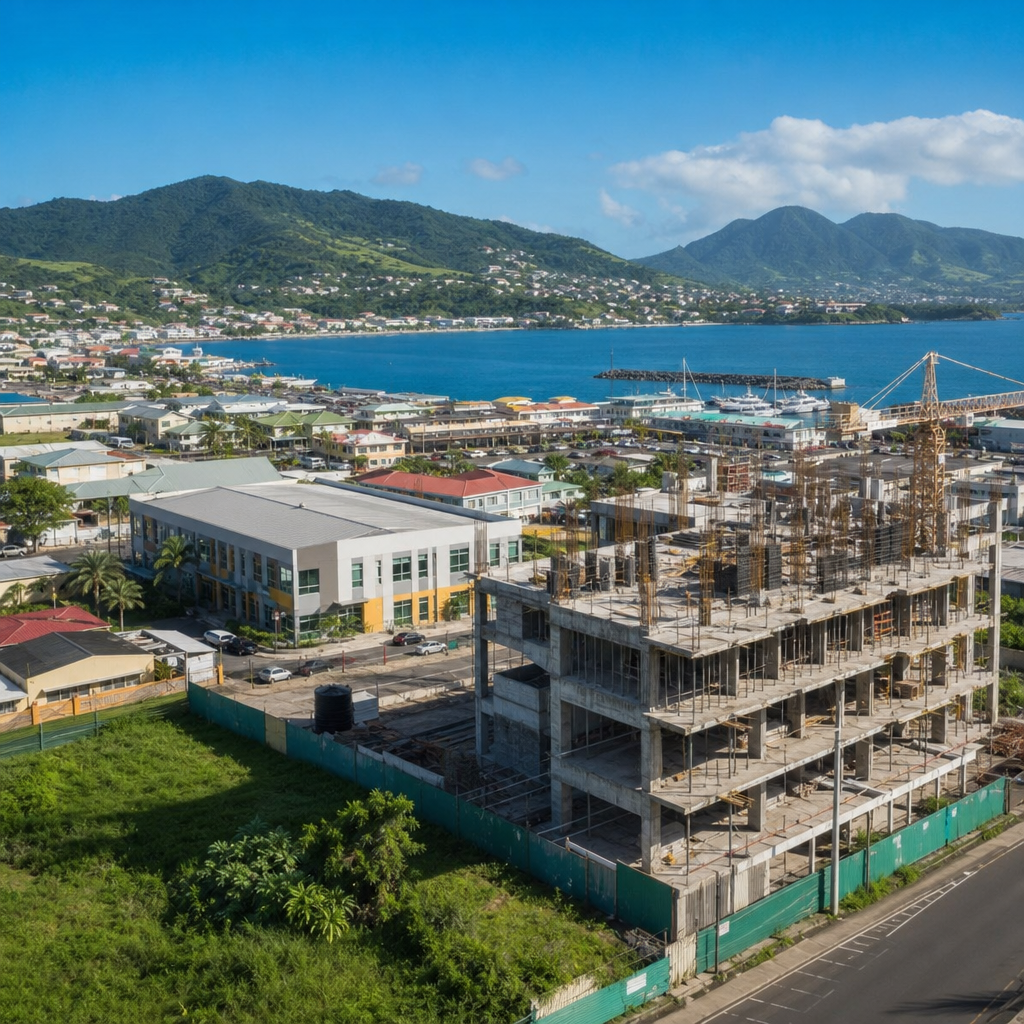
Tourism changes cities and towns by directing where investment goes first. In Saint Kitts, that usually means the Basseterre waterfront, cruise-adjacent commercial zones, transport links to beaches and attractions, and areas surrounding major resorts. Urban form is the physical layout of streets, buildings, public spaces, and infrastructure. When tourism becomes a central economic driver, developers and governments often prioritize visibility, access, and aesthetics in places visitors see most. That can produce real benefits, including façade restoration, upgraded sidewalks, lighting, signage, and stronger maintenance standards. In Basseterre, the concentration of government, commerce, heritage buildings, and port activity makes these choices especially consequential.
The challenge is that tourism-led urban investment can become spatially uneven. A port district may receive consistent improvements while nearby residential areas continue facing poor drainage, overcrowded parking, or limited recreational space. I have seen this mismatch across island destinations where polished waterfronts coexist with underfunded neighborhoods just a few blocks inland. Saint Kitts can avoid that pattern by treating tourism infrastructure as city infrastructure. If a street is upgraded for visitors, it should also improve accessibility for schoolchildren, market vendors, older adults, and commuters. If a public square is beautified, it should support local events, not merely daytime cruise traffic.
Compact islands benefit when urban development is mixed-use rather than single-purpose. Hotels, shops, civic buildings, housing, and cultural venues should complement each other so districts remain active beyond ship schedules and peak seasons. Mixed-use planning also reduces transport pressure because people can live, work, and trade within shorter distances. In Saint Kitts, where land scarcity magnifies every planning decision, tourism should reinforce walkable, multi-functional urban areas rather than isolated enclaves that demand constant vehicle movement and duplicate infrastructure.
Economic Development, Small Business, and Local Value Capture
Tourism contributes to urban development only when a meaningful share of spending remains in the local economy. This is the issue of value capture. Cruise visitors may arrive in large numbers, but if their purchases are limited to imported goods or tightly controlled excursion chains, local multiplier effects stay weak. By contrast, when visitors spend on locally owned restaurants, transport services, craft markets, heritage tours, event tickets, and professional services, urban economies become more resilient. In Saint Kitts, strengthening local value capture is essential because urban sustainability depends on tax revenues, wages, and enterprise growth circulating within the island.
Small businesses are central to this process. In Caribbean town centers, independent cafés, barbers, fashion retailers, guesthouses, music promoters, and tour operators do more than generate income. They animate streets, extend activity beyond cruise hours, and preserve local identity. I have repeatedly found that visitors remember places where commerce feels rooted in community rather than interchangeable with any generic port town. Saint Kitts has a strong opportunity here through heritage-led retail, culinary tourism, and events that connect urban spaces to local storytelling. Urban policy can support that by simplifying licensing, improving vendor facilities, creating wayfinding from the port to town, and offering microfinance or business-development support for resident entrepreneurs.
There are tradeoffs. Tourism can increase rents in prime areas, making it harder for local firms to stay in business. It can also create dependence on seasonal demand or external market shocks, as the pandemic demonstrated across the Caribbean. The answer is diversification within tourism-linked urban economies. That means supporting year-round services, digital commerce, cultural production, education, and professional sectors that benefit from improved urban infrastructure but are not wholly reliant on daily visitor flows.
Infrastructure Pressures and Service Delivery
Urban sustainability in Saint Kitts is inseparable from infrastructure performance. Tourism adds demand to roads, water systems, electricity networks, wastewater treatment, solid waste collection, and public sanitation. In small islands, peak visitor periods can quickly expose capacity limits because there is less redundancy than in larger countries. Cruise days, festival periods, and high season can all amplify service pressure in Basseterre and nearby corridors. If infrastructure planning uses average demand rather than peak demand, service reliability suffers for residents and visitors alike.
Water management is particularly important. Hotels, restaurants, landscaping, and laundries can be resource intensive, and climate variability increases stress on supplies. Efficient fixtures, leak detection, rainwater harvesting, and greywater reuse are no longer optional best practices; they are risk-management measures. The same is true for waste. Tourism increases packaging waste, food waste, and public litter loads around transport hubs and waterfronts. Without sorting, collection discipline, and enforcement, the visual and environmental costs appear quickly.
Transport is another pressure point. Concentrated visitor movement from ports to attractions can intensify congestion, emissions, and pedestrian conflict. Better traffic management, designated loading zones, shaded walking routes, and coordinated excursion dispatch can reduce those impacts significantly. The strongest urban systems treat tourism demand as a design parameter from the beginning rather than a temporary inconvenience.
| Urban issue | Tourism pressure in Saint Kitts | Practical sustainable response |
|---|---|---|
| Road congestion | Cruise arrivals and resort transfers create short, intense traffic peaks | Timed dispatch, shuttle coordination, pedestrian priority streets, clear taxi staging |
| Water demand | Hotels, restaurants, and landscaping increase consumption | Low-flow fixtures, reuse systems, leak monitoring, drought planning |
| Solid waste | Higher volumes from food service, packaging, and public areas | Separated bins, commercial waste standards, vendor compliance, frequent collection |
| Public realm wear | Heavy foot traffic affects sidewalks, signage, and sanitation | Durable materials, maintenance budgets, universal design, routine cleaning |
| Energy use | Air conditioning and hospitality operations raise peak loads | Efficiency retrofits, solar deployment, smart controls, building standards |
Heritage, Identity, and the Visitor Economy
Saint Kitts cannot separate sustainable urban development from heritage conservation. Historic streets, churches, civic buildings, military sites, and cultural traditions give towns their character and economic differentiation. Visitors do not travel to Caribbean islands for generic infrastructure; they are drawn to places with authentic identity. In urban policy terms, heritage is not decorative. It is an economic asset, a community anchor, and a planning constraint that can improve development quality.
Basseterre’s historic fabric, including its street pattern and civic landmarks, should be treated as a foundation for regeneration. Conservation-led development typically outperforms demolition-and-rebuild approaches in destinations where identity drives visitor appeal. Adaptive reuse is especially effective. Older buildings can become boutique accommodations, galleries, offices, cafés, or cultural venues while preserving architectural character. This protects embodied carbon, supports local craftsmanship, and keeps urban centers visually coherent.
There is a caution, however. Heritage tourism can drift into superficial presentation if cultural assets are curated only for short visitor encounters. Sustainable practice requires community ownership of interpretation, fair compensation for cultural labor, and programming that residents also value. Festivals, food markets, oral history tours, and artisan workshops should strengthen local pride first. When they do, tourism benefits follow naturally and more credibly.
Climate Resilience, Coastal Risk, and Environmental Management
Any serious discussion of sustainable urban development in Saint Kitts must address climate risk. Much tourism infrastructure is coastal, and many urban functions are clustered near low-lying areas exposed to storm surge, flooding, erosion, and extreme rainfall. The Caribbean is already experiencing sharper weather volatility, warmer temperatures, and sea-level rise. For Saint Kitts, this means that urban planning, tourism investment, and disaster preparedness must operate together.
Resilience begins with land-use discipline. Critical facilities should not be concentrated in the most exposed zones without protective measures, evacuation planning, and updated building standards. Nature-based solutions also matter. Mangroves, coastal vegetation, permeable surfaces, and restored drainage corridors can reduce runoff and protect shorelines while improving urban livability. Hard infrastructure still has a role, but engineered defenses alone are rarely enough if upstream development increases impermeable cover and blocks natural water movement.
The tourism sector can help finance resilience through green building standards, environmental levies, insurance incentives, and public-private maintenance agreements for waterfronts and drainage assets. I have seen the most durable results where hotel operators understand that resilience spending is not a charitable add-on; it protects business continuity, staff safety, and destination reputation. In Saint Kitts, that mindset is essential because one severe event can damage both urban systems and the island’s tourism brand at the same time.
Governance, Inclusion, and What Good Planning Looks Like
Sustainable urban development succeeds when governance is coordinated. Tourism agencies, planning authorities, port operators, utility providers, transport regulators, heritage bodies, and local businesses must work from shared data and clear priorities. Fragmented decisions create familiar problems: roads widened without shade or walkability, hotels approved without drainage upgrades, public spaces redesigned without vendor input, or heritage zones marketed without maintenance funding. Good planning in Saint Kitts means aligning capital investment with land-use controls, resilience standards, and local economic goals.
Inclusion is equally important. Residents should see tangible gains from tourism-linked urban development: safer sidewalks, reliable sanitation, accessible waterfronts, decent jobs, affordable transport, and opportunities for local ownership. If benefits are too concentrated, public support erodes. That is why community consultation must move beyond formal hearings. Effective engagement includes merchant associations, taxi operators, youth groups, cultural practitioners, disability advocates, and neighborhood residents who understand how places function daily.
Measurement also matters. Saint Kitts should evaluate tourism’s urban role through indicators such as pedestrian counts, local business retention, waste volumes, water intensity, public-space usage, flood incidents, and resident satisfaction. Arrival numbers alone do not show whether development is sustainable. The strongest destinations monitor whether tourism improves the city for the people who live there year-round. That is the standard that ultimately protects competitiveness as well, because visitors consistently respond to places that are clean, authentic, efficient, and confidently managed.
Sustainable urban development in Saint Kitts is not an abstract planning goal. It is a practical test of whether tourism can strengthen towns instead of overwhelming them. The evidence is clear: when tourism revenue supports mixed-use districts, reliable infrastructure, heritage conservation, climate resilience, and local enterprise, the whole urban system performs better. Residents gain improved services and public spaces, businesses gain a stronger commercial environment, and visitors experience a place with real character rather than a staged corridor built only for short stays.
The main lesson is that tourism’s role must be managed intentionally. Saint Kitts benefits when development captures local value, distributes investment beyond the most visible waterfront blocks, and treats environmental limits as fixed realities rather than secondary concerns. It also benefits when planning decisions connect cruise activity, resort growth, transport design, and cultural programming instead of handling each issue separately. Small islands do not have the margin for fragmented urban policy. Every street upgrade, zoning decision, and utility investment has multiplied effects.
For anyone shaping sustainable tourism strategy, Saint Kitts offers a strong case for integrated thinking. Urban quality is destination quality. If the island continues aligning tourism growth with resilient infrastructure, inclusive governance, and authentic place-making, it can protect what makes it competitive while improving daily life for residents. Use this hub as a starting point, then explore each related topic in greater detail and apply the same standard to every tourism decision: does it leave the town stronger, fairer, and better prepared for the future?
Frequently Asked Questions
1. What does sustainable urban development mean in Saint Kitts, especially in relation to tourism?
Sustainable urban development in Saint Kitts means planning and managing towns, tourism zones, and supporting infrastructure in a way that strengthens the economy while protecting the island’s limited land, natural systems, and community life. Because Saint Kitts is a small-island setting, growth happens in a physically constrained environment where beaches, wetlands, historic districts, housing areas, roads, and public utilities are all closely connected. When tourism expands, it can generate jobs, tax revenue, and business opportunities, but it can also place heavy pressure on land values, traffic, water supply, waste systems, and coastal ecosystems if development is not carefully guided.
In practical terms, sustainable urban development asks a simple but important question: how can tourism help improve the island for both residents and visitors over the long term? The answer usually involves directing investment toward compact, well-serviced areas rather than unchecked sprawl, protecting heritage streetscapes and waterfronts, improving drainage and transport, and making sure that tourism facilities are integrated with local communities rather than separated from them. It also means evaluating whether development contributes to resilience, especially in coastal areas exposed to storms, flooding, erosion, and sea-level rise.
For Saint Kitts, sustainability is not just an environmental concept. It is also social and economic. A tourism district is more sustainable when it creates reliable local employment, supports small businesses, funds public services, and coexists with affordable housing, walkable streets, and accessible public space. If tourism growth makes towns less livable for residents, overwhelms roads, or degrades beaches and cultural assets, then the model is not truly sustainable. The goal is balanced development that keeps the island attractive, functional, and resilient for generations.
2. How does tourism support urban development in Saint Kitts?
Tourism can be one of the strongest drivers of urban development in Saint Kitts because it brings spending, investment, and visibility to key areas of the island. Hotels, cruise-related activity, restaurants, cultural attractions, marinas, and visitor services all create direct and indirect demand for better roads, utilities, public spaces, safety services, and waterfront improvements. When managed well, that demand can help justify infrastructure upgrades that benefit residents as much as visitors, including improved transport links, cleaner streets, stronger drainage systems, upgraded water and waste services, and revitalized town centers.
Tourism also helps stimulate employment across multiple sectors, not just hospitality. Construction, retail, agriculture, fisheries, creative industries, transport, maintenance, and professional services can all benefit from a healthy visitor economy. In a place like Saint Kitts, where economic concentration can rapidly shape the physical development of towns, tourism revenue can help local authorities and businesses reinvest in urban areas that might otherwise experience underfunding or decline. This is especially important in heritage-rich districts where preservation and reuse often require significant capital.
Just as importantly, tourism can create incentives to protect and enhance the qualities that make Saint Kitts distinctive. Historic streetscapes, coastal views, public markets, cultural events, and well-maintained waterfronts all contribute to visitor appeal. If urban development strategies recognize these assets as long-term economic strengths, tourism becomes a reason to preserve character rather than replace it. However, that positive outcome depends on policy choices. Tourism supports sustainable urban development most effectively when revenues are linked to public benefit, planning controls are enforced, and local communities share in the gains rather than absorbing only the costs.
3. What are the biggest risks if tourism growth is not balanced with housing, transport, and public services?
If tourism growth outpaces urban planning in Saint Kitts, the effects can be felt quickly because the island has limited land, tightly connected settlements, and finite infrastructure capacity. One major risk is pressure on housing. As tourism attracts investment and raises demand for prime locations, land and rental prices can climb, making it harder for residents, especially service workers and younger households, to live near employment centers. This can deepen inequality, increase commuting burdens, and weaken the social fabric of towns that depend on a stable local population.
Transport is another critical issue. Increased visitor activity can strain already limited road space, create congestion in tourism corridors and town centers, and intensify parking conflicts and emissions. Without investment in more efficient mobility systems, such as better public transport, safer walking routes, coordinated traffic management, and mixed-use planning that reduces unnecessary travel, growth can make daily life less convenient and more expensive for residents. On a small island, transport bottlenecks can affect the entire economy, including access to schools, health services, and workplaces.
Public services can also come under pressure. Water supply, wastewater treatment, solid waste management, electricity, drainage, and emergency services all must be scaled to meet both resident and visitor demand. If tourism development proceeds without corresponding infrastructure upgrades, service reliability can decline and environmental impacts can increase. Poor drainage can worsen flooding, overloaded waste systems can harm coastal waters, and utility stress can reduce resilience during storms or peak travel periods.
There is also a cultural and environmental risk. Rapid, poorly coordinated development can damage heritage buildings, alter traditional town character, and degrade beaches, wetlands, and nearshore ecosystems that are essential to both community well-being and the tourism economy itself. In short, unbalanced growth may boost revenue in the short term but undermine livability, resilience, and destination quality in the long term. That is why integrated planning is so important in Saint Kitts.
4. Why are heritage protection and coastal resilience so important to sustainable urban development in Saint Kitts?
Heritage protection and coastal resilience are central to sustainable urban development in Saint Kitts because they safeguard two of the island’s most valuable assets: its identity and its physical security. Historic streetscapes, traditional building patterns, public squares, waterfront character, and cultural landmarks are not simply aesthetic features. They help define the sense of place that residents value and visitors remember. In tourism terms, authenticity matters. Destinations that erase their historic character in favor of generic development often lose the distinctiveness that makes them competitive.
Protecting heritage also has practical urban benefits. Rehabilitating existing buildings, strengthening historic districts, and encouraging adaptive reuse can support local business development, walkability, and more efficient use of already serviced land. This approach often aligns with sustainability goals better than spreading new construction into sensitive or poorly serviced areas. Heritage-led regeneration can revitalize town centers while preserving community memory and civic pride.
Coastal resilience is equally essential because so much tourism and urban activity in Saint Kitts is linked to the shoreline. Beaches, ports, waterfront roads, hotels, and commercial districts are vulnerable to erosion, storm surge, flooding, and long-term sea-level rise. If development ignores these risks, the island may face repeated infrastructure damage, higher insurance and maintenance costs, environmental loss, and disruption to livelihoods. Sustainable urban development therefore requires setback policies, stronger drainage systems, flood-aware design, nature-based defenses where appropriate, and careful protection of wetlands and coastal buffers that reduce hazard exposure.
Together, heritage protection and coastal resilience support a more durable development model. They help Saint Kitts avoid the false choice between economic growth and preservation. Instead, they show that protecting cultural and natural assets is a form of economic strategy, urban risk management, and community stewardship all at once.
5. What policies and planning approaches can help Saint Kitts ensure tourism benefits residents as well as visitors?
Saint Kitts can strengthen sustainable urban development by using planning tools that connect tourism investment directly to public benefit. One of the most important approaches is integrated land-use planning that coordinates tourism growth with housing, transport, utilities, environmental protection, and hazard risk. Rather than approving projects one by one in isolation, authorities can identify where development is most appropriate, what infrastructure is required, which coastal and heritage areas need special protection, and how different land uses should interact over time.
Housing policy should be part of that conversation from the beginning. If tourism expands in or near urban areas, planners should consider measures that preserve affordability and workforce access, such as zoning tools, incentives for mixed-income housing, or requirements tied to large developments. Infrastructure financing is also key. Tourism-related revenues and private-sector contributions can be structured to help fund drainage improvements, public transport, sidewalks, waterfront maintenance, waste systems, and public spaces that residents use every day.
Community participation matters as much as regulation. Residents often understand where daily pressures are emerging first, whether in traffic, service reliability, beach access, or neighborhood change. Public consultation, transparent approval processes, and clear development standards can improve trust and lead to better project outcomes. Local procurement and support for small and medium-sized enterprises can also ensure tourism wealth circulates more broadly through the island economy instead of concentrating in a few enclaves.
Finally, Saint Kitts benefits from a resilience-first mindset. New tourism and urban projects should be assessed not only for short-term economic return but also for long-term environmental performance, infrastructure demand, and climate risk exposure. Developments that protect coastal systems, respect heritage, reduce congestion, and strengthen public services are more likely to support both visitor satisfaction and resident quality of life. That is the core principle of sustainable urban development: growth that adds value to the island without eroding the very assets that make it thrive.