Agriculture in Saint Kitts has shifted from being the island’s defining economic engine to serving a more complex role tied to food security, cultural identity, land stewardship, and tourism. In practical terms, agriculture here includes crop farming, livestock rearing, fisheries-linked rural livelihoods, and the network of markets, processors, and small enterprises that turn raw produce into local goods. The story matters because Saint Kitts is small, import-dependent, climate-exposed, and historically shaped by plantation agriculture more than most Caribbean societies. When people ask what agriculture means today, they are really asking how the island feeds itself, uses its land, protects rural communities, and preserves traditions while pursuing modern growth.
I have seen this transition discussed in the same breath by farmers, hoteliers, policy officers, and market vendors: nobody treats agriculture as a relic, but nobody imagines a return to the old sugar order either. That distinction is essential. For centuries, sugar cane dominated Saint Kitts, structuring labor, exports, settlement patterns, and politics. The closure of the sugar industry in 2005 marked a historic break. Since then, agriculture has had to justify itself differently. Instead of mass export earnings from one crop, the focus has moved toward diversification, resilience, and local value creation.
Key terms help clarify the change. Diversification means reducing dependence on a single commodity by expanding into vegetables, fruits, root crops, livestock, and niche products. Food security refers to reliable access to safe, nutritious food, a major concern for islands that import a high share of what they consume. Value-added agriculture means processing fresh produce into sauces, seasonings, jams, or packaged goods that raise farmer income. Sustainable land use involves farming methods that protect soil, water, and biodiversity rather than exhausting them. These ideas now shape agricultural planning in Saint Kitts far more than export volume alone.
The topic also sits at the center of local life and experiences. Agriculture influences what appears on household tables, what is sold at public markets, what school feeding programs can source, and what visitors encounter when they seek “authentic” island food. It affects abandoned cane lands, hillside erosion, youth employment, and the viability of small communities inland from the coast. Understanding the changing role of agriculture in Saint Kitts therefore provides a practical window into the wider social and economic transformation of the island.
From Sugar Colony to Post-Sugar Economy
To understand agriculture in Saint Kitts today, start with sugar. Saint Kitts was one of Britain’s earliest and most profitable sugar colonies in the Caribbean, and cane cultivation became the island’s dominant land use for generations. Large estates controlled prime land, labor systems were organized around plantation production, and supporting infrastructure, from roads to mills, reflected that single-crop reality. This long history left deep marks on ownership patterns, rural settlement, and public expectations about what farming looked like.
By the late twentieth century, however, the economics of sugar had deteriorated. Production costs were high, global competition was intense, and preferential trade arrangements became less protective. Governments across the region faced the same problem: sugar carried historical importance but shrinking commercial logic. In Saint Kitts, the state-run industry struggled with losses until the government closed the sugar sector in 2005. That decision ended more than three centuries of commercial sugar production and forced a national rethinking of agricultural purpose.
The post-sugar shift was not simply about replacing cane with another export crop. It involved reassigning land, retraining workers, rebuilding supply chains, and changing public perception. Former sugar lands created opportunities for diversified farming, housing, conservation, and tourism development, but they also exposed unresolved questions about tenure, infrastructure, and investment. In my experience reviewing Caribbean agricultural transitions, this is where many policy discussions become too abstract. Land does not become productive because a strategy document says it should. It needs roads, water access, fencing, technical support, and buyers.
Saint Kitts therefore moved from an agriculture model centered on one commodity and one dominant employer to a fragmented but more flexible system. That system is smaller in macroeconomic terms, yet broader in social function. The sector no longer defines the national economy the way sugar once did, but it still defines critical parts of national resilience.
What Agriculture Contributes Now
Today, agriculture in Saint Kitts contributes less to gross domestic product than tourism, construction, real estate, and related services, but that narrow comparison misses its real significance. Modern agriculture supports local food supply, creates rural livelihoods, reduces pressure from volatile import prices, and gives the island options during external shocks. During disruptions to shipping or spikes in global food costs, even modest domestic production becomes strategically important. Small island states feel this immediately because supermarket shelves depend heavily on maritime logistics.
Local production also improves freshness and shortens supply chains. Farmers grow crops such as sweet potato, cassava, yam, dasheen, pumpkin, cucumber, tomato, watermelon, and leafy greens for domestic consumers. Livestock operations provide eggs, meat, and small ruminants at varying scales. These outputs may not eliminate imports, but they increase the share of food that can be sourced locally, especially for staples suited to tropical conditions. That matters for households, institutions, and hospitality businesses trying to manage cost and quality.
Another contribution is economic circulation. Money spent on locally grown produce is more likely to remain within the island economy than money spent on imported food. A hotel buying herbs, fruits, or eggs from local producers supports not only the farmer but transporters, packers, input suppliers, and vendors. This multiplier effect is often overlooked because agricultural value chains are dispersed across many small transactions rather than concentrated in one export ledger.
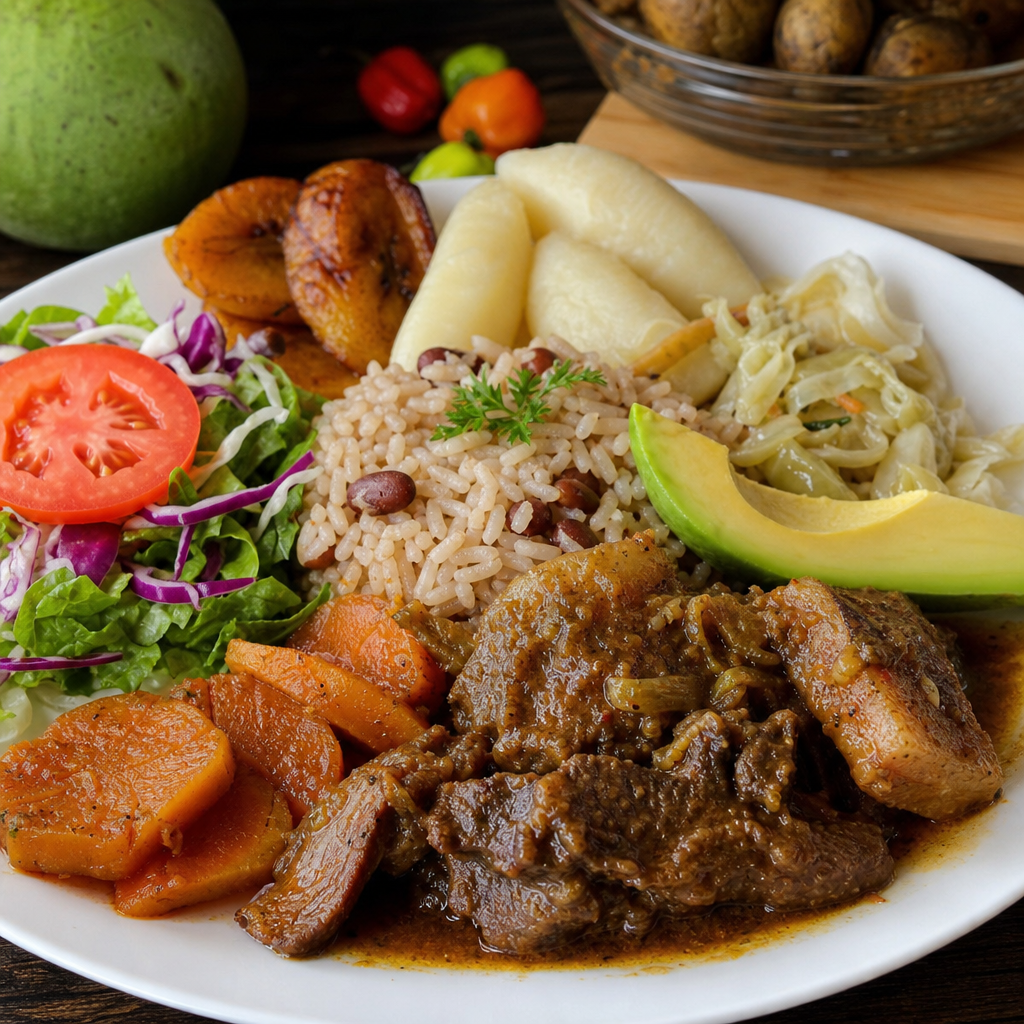
Culturally, agriculture preserves habits and knowledge that are central to Kittitian life. Traditional ground provisions, home gardens, seasonal fruits, and community market exchange carry identity in a way imported packaged food does not. The sector also supports events, culinary offerings, and educational programs that connect younger residents to land-based skills. In a country where economic modernization often pulls attention toward coastal service industries, agriculture provides continuity.
Diversification, Markets, and New Farm Models
The practical future of agriculture in Saint Kitts lies in diversification backed by reliable markets. Small farmers cannot survive on production alone; they need demand, quality standards, and manageable post-harvest systems. The strongest opportunities usually sit where crop choice matches climate, consumer preference, and local institutional buying. That includes vegetables for households, herbs and specialty produce for restaurants, root crops for traditional diets, and processed products with longer shelf life.
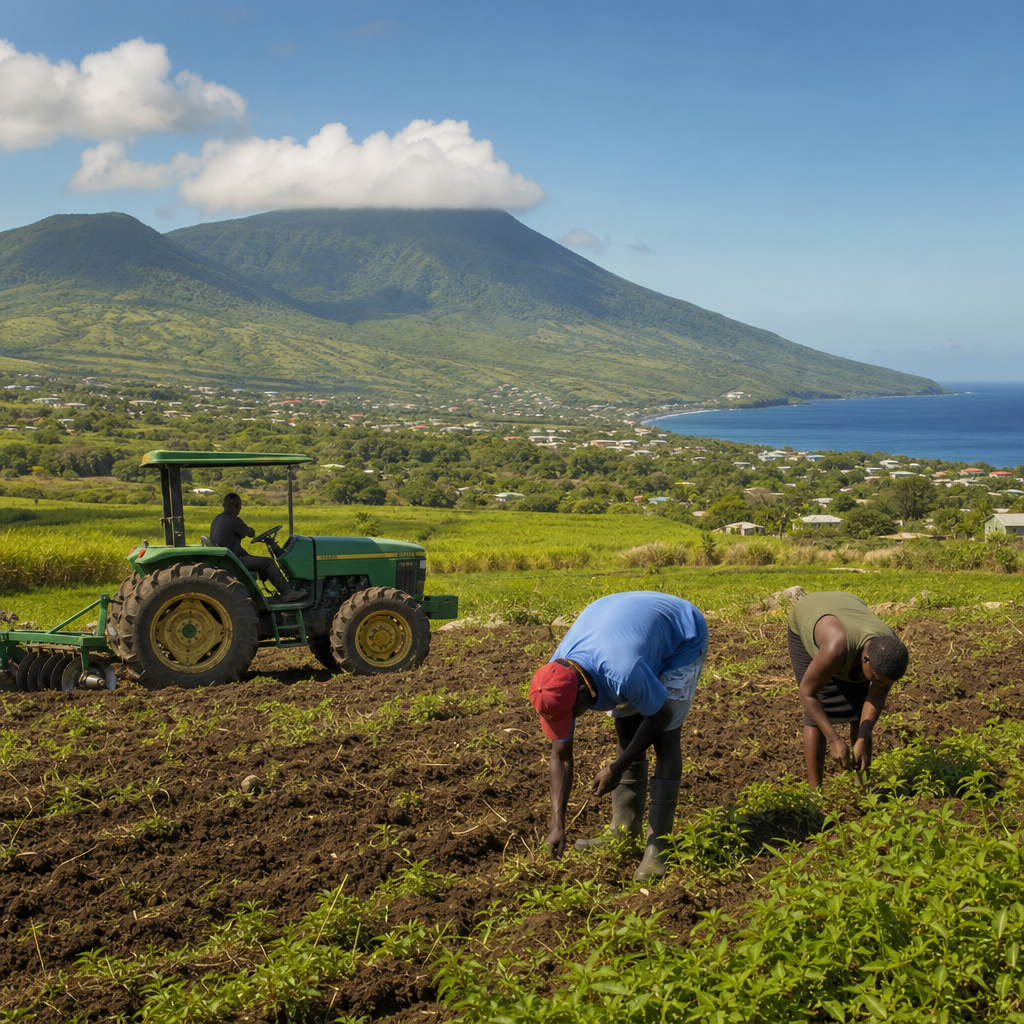
One visible change has been the rise of mixed and small-scale commercial farming rather than estate monoculture. Farmers increasingly combine crops to spread risk and maintain cash flow. A grower may plant watermelon for seasonal income, greens for quick turnover, and root crops for durability. This mixed approach reduces exposure to one pest event or one market dip. It also suits the limited acreage and labor availability common on small islands.
Value-added processing is another important adaptation. Fresh produce is vulnerable to spoilage, so turning peppers into bottled sauce or fruit into jam extends marketability and can improve margins. Local brands gain traction when packaging, food safety, and consistency are handled well. For Saint Kitts, this is especially relevant because tourism creates demand for giftable, locally branded products that carry a sense of place. Agricultural success is no longer measured only by tonnage harvested; it is measured by how much value stays on island after harvest.
| Area of change | Traditional pattern | Current direction in Saint Kitts |
|---|---|---|
| Main crop focus | Sugar cane monoculture | Vegetables, fruits, root crops, livestock, niche products |
| Primary market | Export-oriented sugar trade | Domestic consumers, hotels, restaurants, processors |
| Farm structure | Large estates | Smaller mixed farms and targeted commercial plots |
| Value creation | Raw cane production | Fresh produce plus sauces, jams, seasonings, packaged goods |
| Policy priority | Industrial crop employment | Food security, resilience, rural development |
Market access remains the make-or-break issue. If farmers cannot predict demand, they underinvest. If buyers cannot trust supply consistency, they import. Successful agricultural development in Saint Kitts depends on tighter coordination among producers, public agencies, supermarkets, and the hospitality sector. In practice, that means crop planning, aggregation, grading, cold storage, and clearer purchase agreements. Those details are less glamorous than slogans about self-sufficiency, but they are what make local agriculture commercially durable.
Food Security, Climate Pressure, and Resource Limits
Food security is one of the strongest reasons agriculture still matters in Saint Kitts. The island imports a substantial portion of its food, leaving consumers exposed to freight disruptions, currency pressures, and international inflation. When global supply chains tighten, import-dependent islands absorb the shock quickly through higher prices and reduced availability. Domestic agriculture cannot replace every imported item, but it can buffer risk, especially for produce and staples that grow well locally.
Climate change raises the stakes. Saint Kitts faces drought risk, intense rainfall events, hurricanes, and heat stress, all of which affect planting schedules, soil condition, and yields. Water management is therefore no longer a technical side issue; it is central to farm survival. Irrigation systems, rainwater harvesting, mulching, shade management, and soil organic matter improvement all help crops withstand erratic conditions. Farmers who adopt these measures are generally better positioned than those relying entirely on seasonal predictability.
Land and labor are also limiting factors. Competing demands from housing, tourism, and infrastructure can push agriculture onto less favorable parcels or leave potentially productive land underused. Meanwhile, farm labor is physically demanding and often less attractive to younger workers than service-sector jobs. This is not unique to Saint Kitts, but it is especially pronounced in small tourism economies where wage expectations and lifestyle aspirations shift quickly.
Input costs further complicate the picture. Fertilizer, feed, equipment parts, and packaging materials are often imported, so farmers face the same shipping and price volatility they are trying to help the country avoid. That is why resilient agriculture on the island must be efficient, not romanticized. Better extension services, protected agriculture, improved seed selection, record-keeping, and practical mechanization can make a measurable difference. The goal is not nostalgia for an agrarian past; it is a modern sector capable of producing more with fewer vulnerabilities.
Agriculture, Tourism, and Community Life
One of the most important changes in Saint Kitts is the relationship between agriculture and tourism. Historically, these sectors occupied separate lanes. Today, they increasingly intersect. Hotels, restaurants, and culinary businesses can create dependable demand for local produce when quality and supply are consistent. Farm-to-table menus, heritage food experiences, and agro-tourism visits give agriculture visibility beyond the farm gate and help visitors understand the island beyond beaches and cruise excursions.
This connection works best when it is operational, not just promotional. Chefs need standardized delivery, proper handling, and products that match menu planning. Farmers need clear communication on volumes, varieties, and timing. In destinations across the Caribbean, local sourcing often fails not because anyone opposes it, but because procurement systems are built for import wholesalers. Saint Kitts has an opportunity to strengthen the link by organizing producer groups and encouraging hospitality buyers to source strategically from local farms.
Community life benefits as well. Public markets and roadside vending keep agriculture visible in daily routines. School gardens and agricultural education can reconnect children with local crops and nutrition. Backyard gardening, though small in scale, reinforces household resilience and knowledge transfer. These forms of participation matter because the role of agriculture is no longer judged only by export receipts. It is also judged by whether people retain a living connection to land, seasonality, and local food traditions.
For a sub-pillar hub under local life and experiences, this is the central insight: agriculture in Saint Kitts now touches many domains at once. It shapes cuisine, scenery, rural memory, entrepreneurship, environmental management, and national preparedness. Readers exploring miscellaneous aspects of island life should see agriculture not as an isolated industry but as a thread linking everyday experience to long-term development choices.
The changing role of agriculture in Saint Kitts is best understood as a move from dominance to strategic relevance. Sugar once organized the island’s economy, labor, and landscape, but its closure forced agriculture to evolve into something more diverse and more locally focused. Today the sector matters because it strengthens food security, supports rural livelihoods, preserves cultural practices, and creates opportunities for value-added business and tourism partnerships. Its importance is measured less by export scale and more by resilience, adaptability, and the practical benefits it delivers across society.
The path forward is clear even if it is not simple. Saint Kitts needs coordinated land use, stronger market linkages, better water and climate management, and sustained support for farmers who can supply homes, institutions, and hospitality businesses. Diversification works when it is backed by infrastructure, technical advice, and dependable demand. Local agriculture will not replace the service economy, but it does not need to. Its modern role is to make the island more secure, more self-reliant, and more connected to its own resources and traditions.
For anyone trying to understand local life in Saint Kitts, agriculture remains essential context. It explains historical patterns, current challenges, and future possibilities in one frame. Explore related topics across this hub, from food culture to rural communities and environmental change, and you will see the same conclusion repeatedly: when agriculture becomes smarter, more diversified, and better integrated, Saint Kitts becomes stronger.
Frequently Asked Questions
1. How has the role of agriculture in Saint Kitts changed over time?
Agriculture in Saint Kitts has evolved from being the island’s dominant economic foundation into a broader, more diversified sector with social, environmental, and strategic importance. Historically, agriculture was closely tied to large-scale sugar production, which shaped land use, labor patterns, export earnings, and the overall structure of the economy for generations. As global markets shifted and the sugar industry declined, agriculture could no longer be viewed only through the lens of export volume or plantation output. Instead, its role began to expand in new directions.
Today, agriculture in Saint Kitts is increasingly understood as part of a national resilience strategy. It supports food security by helping reduce dependence on imported foods, which is especially important for a small island vulnerable to shipping disruptions, price shocks, and external economic pressures. It also contributes to rural livelihoods through crop farming, livestock rearing, fisheries-linked activity, small-scale processing, and local market trade. In that sense, agriculture is no longer just about one flagship crop; it is about a network of productive activities that sustain communities and keep money circulating locally.
Its cultural role has also become more visible. Farming practices, local foods, traditional crops, and rural knowledge all form part of Saint Kitts’ identity. At the same time, agriculture now intersects more directly with tourism, wellness, and heritage. Locally grown produce can supply hotels, restaurants, and food vendors, while farm experiences and agricultural landscapes can support visitor interest in authentic island life. So while agriculture may no longer occupy the same singular economic position it once did, its modern role is arguably more complex and in some ways more vital because it touches food systems, culture, land stewardship, entrepreneurship, and national sustainability all at once.
2. Why is agriculture still important to Saint Kitts if the economy is no longer centered on it?
Agriculture remains important because its value extends far beyond direct contribution to gross domestic product. In a small, import-dependent island such as Saint Kitts, the ability to grow food locally has strategic significance. Every pound of produce, root crop, fruit, meat, or fish substitute available from local sources helps reduce exposure to international supply chain disruptions, fluctuating freight costs, and volatile global food prices. That makes agriculture an important buffer, even if it is not the largest formal sector in the economy.
It is also important because it supports livelihoods at multiple levels. Farmers, livestock producers, fishers, transporters, market vendors, agro-processors, and small food businesses all form part of the agricultural ecosystem. When local agriculture functions well, it creates income opportunities not only on farms but across a chain of related enterprises. This matters in a small economy where diversification is essential and where local production can generate broader community benefits.
Another reason agriculture still matters is land management. Productive agricultural land helps prevent abandonment, supports watershed protection, and can reduce some environmental risks associated with poor land use. Responsible farming can contribute to soil conservation, biodiversity protection, and landscape maintenance, all of which have public value. In addition, agriculture helps preserve culinary traditions and intergenerational knowledge. Local dishes, seasonal crops, and farming customs are part of how a society remembers itself and defines what is uniquely its own.
Finally, agriculture complements other sectors rather than competing with them. Tourism, for example, benefits when visitors can experience fresh local foods, traditional products, and rural landscapes that feel authentic rather than imported or disconnected from place. In short, even without dominating the economy, agriculture remains central to resilience, identity, enterprise development, and the practical everyday question of how Saint Kitts feeds and sustains itself.
3. What types of agricultural activity are included in Saint Kitts today?
Modern agriculture in Saint Kitts includes much more than crop cultivation alone. Crop farming remains a core component, with local producers growing vegetables, fruits, root crops, herbs, and other food items for domestic consumption and commercial sale. Depending on the area and season, this can involve both small family plots and more organized commercial operations. These crops are important not only for household nutrition but also for supplying markets, restaurants, schools, and hospitality businesses.
Livestock rearing is another significant part of the sector. This can include poultry, goats, sheep, cattle, and pigs, depending on the producer and local demand. Livestock contributes to protein supply, rural incomes, and value-added opportunities through products such as meat, eggs, and dairy-related goods. Managing animal health, feed costs, water access, and infrastructure are all important considerations in this branch of agriculture, especially on a small island where imported inputs can be expensive.
Fisheries-linked rural livelihoods also connect closely to the agricultural story, particularly when discussing local food systems and coastal communities. While fisheries are often treated as a separate category, they interact with agriculture in practical ways through shared markets, food distribution channels, household income strategies, and local processing. In island economies, the boundaries between sectors are often less rigid than they appear on paper.
Beyond primary production, agriculture in Saint Kitts also includes the wider network that turns raw materials into usable, marketable goods. That means vendors, packers, small processors, caterers, preserve makers, juice producers, spice blenders, and other microenterprises are part of the agricultural economy too. A farmer growing fruit is linked to someone making jams, syrups, or baked products; a livestock producer is linked to retailers and food service businesses. This broader understanding is important because it shows agriculture as a value chain, not just a field activity. The sector’s changing role is tied precisely to this diversification, where production, processing, retail, and tourism-related demand all connect.
4. What are the biggest challenges facing agriculture in Saint Kitts?
One of the biggest challenges is import dependence. Because Saint Kitts relies heavily on imported food and agricultural inputs, local producers often face intense competition from overseas goods that may arrive in larger quantities or at more stable prices. At the same time, farmers may have to pay high costs for seeds, feed, fertilizer, equipment, and transportation. This creates a difficult environment in which local production is essential but not always easy to scale profitably.
Climate exposure is another major issue. As a small Caribbean island, Saint Kitts is vulnerable to drought, heavy rainfall, storms, hurricanes, heat stress, and shifting seasonal patterns. These conditions can damage crops, affect livestock, disrupt planting cycles, and strain water resources. Climate risk is not an abstract future concern for agriculture here; it is a practical day-to-day reality that shapes yields, planning, and investment decisions.
Land use and labor are also recurring concerns. Productive agricultural land may face pressure from development, changing ownership patterns, or underuse. In addition, attracting younger people into farming can be difficult if agriculture is perceived as physically demanding, financially uncertain, or less prestigious than work in other sectors. Labor shortages, aging farmers, and limited technical capacity can slow modernization and reduce the sector’s long-term dynamism.
Market access presents a further challenge. Farmers need reliable buyers, good storage, transportation, and fair pricing. Without efficient links between producers and consumers, local food can be lost, underpriced, or displaced by imports. Processing capacity is equally important because surplus production needs outlets beyond fresh sale. These obstacles do not mean agriculture lacks potential; rather, they highlight why policy support, infrastructure, training, irrigation, climate-smart practices, and stronger farm-to-market systems are so important. The central challenge for Saint Kitts is not whether agriculture matters, but how to make it more viable, adaptive, and integrated into the wider economy.
5. How can agriculture contribute to the future of Saint Kitts?
Agriculture can contribute to the future of Saint Kitts by strengthening resilience in multiple areas at once. First, it can improve food security. Increasing local production of fresh foods helps the island reduce vulnerability to international disruptions and gives consumers better access to nutritious options. This does not mean Saint Kitts will produce everything it consumes, but a stronger domestic agricultural base can meaningfully reduce risk and increase flexibility.
Second, agriculture can drive small business growth and innovation. The future of the sector is not limited to raw produce sales; it includes value-added products, branding, agro-processing, specialty foods, farm-to-table supply chains, and niche markets linked to health, culture, and tourism. Entrepreneurs can create local sauces, teas, preserves, seasonings, juices, meats, and prepared foods that capture more value inside the island economy. This expands employment possibilities and gives agriculture a stronger commercial footprint.
Third, agriculture can support environmental stewardship. Well-managed farms contribute to soil care, landscape protection, and more sustainable land use. Climate-smart farming methods, water conservation, diversification, and better resource management can help Saint Kitts adapt to environmental stress while protecting the natural base on which both agriculture and tourism depend. In a place where land is limited and climate risk is real, productive stewardship is a national asset.
Just as importantly, agriculture can help preserve cultural identity. Local crops, traditional recipes, community markets, and farming knowledge all tell a story about who Saint Kitts is and how its people relate to the land. That cultural dimension has practical value as well, especially in tourism, where visitors increasingly seek authentic food and heritage experiences. Looking ahead, the future role of agriculture in Saint Kitts is likely to