The enslaved people’s uprising in Nevis marked a decisive moment in Caribbean history because it exposed the fragility of plantation rule, forced colonial authorities to rethink security, and revealed how resistance shaped the island long before formal emancipation. In Nevis, as across the British Caribbean, slavery was not a static labor system but a violent regime maintained through law, military force, racial hierarchy, and constant surveillance. An uprising in this context means organized collective resistance by enslaved people, whether planned rebellion, coordinated attacks, flight, sabotage, or alliances across estates. On a small island built on sugar, every act of resistance carried outsized consequences. Nevis mattered because its plantations were deeply integrated into Atlantic trade, its elite were tied to British imperial wealth, and its enslaved majority understood both the terrain and the weaknesses of their oppressors.
When I have worked through colonial records, estate correspondence, and regional histories, one pattern becomes unmistakable: Nevis cannot be treated as a side note to larger revolts in Jamaica, Barbados, or Saint-Domingue. The island’s history shows how local events could influence wider imperial policy. Even when archival details are incomplete, the broader evidence is clear. Rebellious activity in Nevis formed part of a continuum of resistance that included poisoning fears, work slowdowns, maroonage, arson, refusal of orders, clandestine meetings, and open insurrection. Understanding this uprising as a turning point matters because it reframes Nevisian history around the actions of the enslaved rather than the decisions of planters. It also helps explain later debates over policing, militia organization, missionary activity, reform, and emancipation throughout the Leeward Islands.
This article serves as a hub for the miscellaneous dimensions of that history: the political setting, the social structure of plantation life, the mechanics of revolt, the colonial response, and the uprising’s enduring cultural memory. It also addresses common questions directly. Why did enslaved people in Nevis resist despite extreme danger? Because enslavement meant coercion, family separation, corporal punishment, forced labor, food insecurity, legal nonpersonhood, and the daily denial of autonomy. Why was any uprising significant on a small island? Because the plantation economy depended on thin margins of control; once fear spread among planters, trade, governance, and labor discipline all changed. Why call it crucial? Because afterward, the balance between domination and resistance was never viewed the same way again.
Nevis Under Plantation Slavery: Conditions That Made Revolt Likely
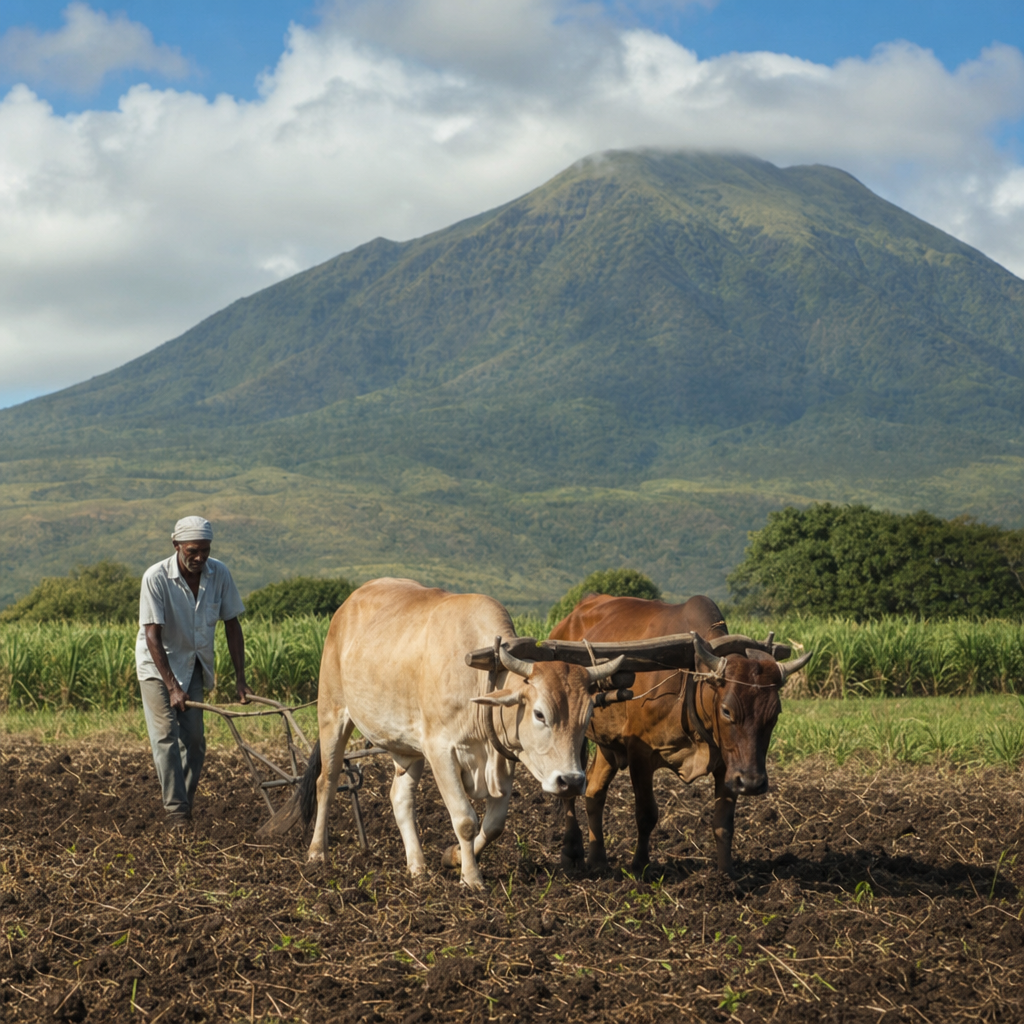
To understand the uprising, start with Nevis’s plantation structure. By the eighteenth century, the island was a mature sugar colony with exhausted soils in some districts but entrenched estates, mills, boiling houses, and export networks. Sugar cultivation required gangs of laborers performing timed, exhausting work from cane planting through harvest and processing. During crop time, work could continue deep into the night. Mortality was high, especially where nutrition was poor and punishment severe. Enslaved Africans and their descendants formed the demographic majority, while white planters and managers depended on overseers, drivers, militias, and legal codes to maintain control.
British slave law in the Leeward Islands treated enslaved people as property while acknowledging, through its punishments and patrols, that they were political actors capable of collective action. This contradiction shaped everyday life. Planters feared mobility, communication, drums, markets, nighttime gatherings, and African cultural continuity because these could enable organization. Yet estates also relied on enslaved people with specialized skills: coopers, sugar boilers, masons, domestics, carters, and sailors. Such workers moved between spaces, exchanged information, and sometimes carried news from neighboring islands. In practice, the plantation was never sealed. Rumor moved along paths of labor, kinship, religion, and trade.
Several pressures made revolt more likely in Nevis. First, economic volatility mattered. Falling prices, debt, hurricanes, drought, and war often led planters to increase labor demands while cutting provisions. Second, demography mattered. On islands where enslaved people vastly outnumbered whites, planters lived with chronic fear. Third, the wider Atlantic world mattered. News of wars between European powers, of antislavery agitation, and later of the Haitian Revolution traveled quickly, even where literacy was restricted. Enslaved people interpreted these events through their own political expectations. They knew empires fought, governors changed, and freedom could become imaginable. The result was a climate in which conspiracy and revolt were not aberrations but foreseeable outcomes of a coercive system.
How Enslaved Resistance Worked in Practice
Resistance in Nevis did not begin only when open violence erupted. It developed through layered practices that tested authority, built trust, and preserved dignity. On estates I have studied through inventories and punishment records, the same pattern appears repeatedly: people resisted when they could, where they could, and in ways suited to local risk. Some actions were individual, such as feigning illness, breaking tools, stealing livestock, or fleeing briefly to visit family on another estate. Others were collective, including coordinated absenteeism, slowing the pace of cane cutting, concealing supplies, or planning attacks on drivers and overseers. These actions weakened plantation efficiency and created the social bonds necessary for more organized rebellion.
Religion, kin networks, and shared labor spaces often helped people communicate. So did Sunday markets and inter-estate relationships. Resistance also depended on leadership. Rebels rarely emerged from nowhere; they were frequently men and women who had earned trust, possessed strategic knowledge, or could move discreetly. Domestic workers heard planter conversations. Skilled laborers understood infrastructure. Boatmen knew coastal routes. Field workers knew ravines, paths, and estate boundaries. A successful plan required intelligence as much as courage.
| Form of resistance | How it operated in Nevis | Why it mattered |
|---|---|---|
| Work slowdown | Reduced cane cutting speed, delayed processing, subtle noncompliance | Cut plantation profits without immediate confrontation |
| Maroonage | Temporary or extended flight using hills, gullies, and inter-estate networks | Challenged labor control and inspired others |
| Sabotage | Damage to tools, mills, livestock, or stored provisions | Raised operating costs and signaled vulnerability |
| Intelligence sharing | News carried through markets, domestic service, and maritime contacts | Made coordinated action possible |
| Open revolt | Planned gatherings, attacks, arson, seizure attempts, collective refusal | Forced direct military and political response |
Seen this way, the uprising was the visible crest of a larger current. It was not spontaneous lawlessness, as planter accounts often claimed, but a political response to enslavement. Colonial authorities understood that point better than they admitted. Their reaction after revolt consistently focused on restricting assembly, movement, communication, and arms because they recognized organization, not mere anger, as the true threat.
The Uprising as a Turning Point in Nevis
Calling the enslaved people’s uprising in Nevis a crucial turning point is not rhetorical. It is historically precise. Before major rebellion scares, many planters imagined domination as durable if discipline remained harsh enough. After uprising, they understood their position as permanently insecure. Even when a revolt was suppressed, it could transform policy because fear rewrote priorities. Militia drills increased. Night patrols intensified. Informant networks expanded. Laws became more restrictive, and punishments more public. At the same time, some officials began arguing that relentless brutality made colonies harder, not easier, to govern. Security and reform became linked in new ways.
The uprising also changed how enslaved people were perceived within imperial administration. They were no longer treated simply as labor units in account books. Governors, magistrates, and merchants recognized them as a population with agency, memory, and political capacity. That recognition did not produce justice immediately, but it altered the terms of debate. Questions once avoided became urgent: Could slavery remain stable? Would missionary instruction pacify or politicize? Did demographic imbalance make the islands indefensible? Could gradual amelioration reduce revolt, or would it raise expectations of freedom further?
In practical terms, Nevis’s rebellion contributed to a regional pattern. Across the British Caribbean, each uprising entered planter memory and official correspondence as a warning. Authorities compared islands, copied emergency measures, and circulated intelligence. This is why even a smaller island event could have broader consequences. Nevis became evidence in a larger imperial argument that slave societies were expensive to police and impossible to secure completely. That conclusion mattered in the decades leading to emancipation, apprenticeship, and the restructuring of labor across the Caribbean.
Colonial Response, Repression, and the Limits of Planter Power
The immediate colonial response to uprising in Nevis followed a familiar script: containment, exemplary punishment, and narrative control. Militia units were mobilized, suspected leaders were hunted, and courts moved quickly, often under standards that favored planter testimony over any defense. Executions, whippings, transportation, and sale off island were used not only to punish but to terrorize. Public punishment was designed as theater. Its message was that empire remained sovereign. Yet the need for such displays revealed the opposite truth: planter power depended on recurring spectacles because consent was absent.
Planters also used print and correspondence to frame rebellion as criminality rather than political resistance. That framing served legal and financial purposes. If revolt could be blamed on a few conspirators, then the institution itself could be defended. If instead the causes were recognized as structural, then slavery stood indicted. Colonial reports therefore often minimized grievances, exaggerated external influence, or invoked supposed ethnic divisions among the enslaved. Historians have to read these records against the grain. Silence in the archive does not mean silence on the ground; it usually means the victorious side controlled documentation.
Still, repression had limits. Surveillance could not eliminate kinship ties. Punishment could not erase memory. Military force could suppress a rising but not solve the contradictions of a labor system sustained by coercion. Many planters knew this from experience. They faced mounting costs, absentee ownership, indebted estates, and a labor force whose resistance persisted in daily forms even after open revolt was crushed. The uprising in Nevis therefore matters partly because it exposed the ceiling of repression. Colonial authorities could restore order temporarily, but they could not restore certainty.
Legacy, Memory, and Why This History Still Matters
The legacy of the enslaved people’s uprising in Nevis extends beyond the event itself. It lives in the island’s social memory, in family histories, in the geography of former estates, and in the wider Caribbean tradition of honoring resistance as foundational to freedom. Modern readers sometimes search for a single dramatic moment that ended slavery, but emancipation was the outcome of accumulated pressure: rebellions, everyday resistance, abolitionist campaigning, economic change, legal contestation, and imperial politics. Nevis belongs within that larger story. Its uprising demonstrates that enslaved people were not waiting passively for liberation; they were active makers of historical change.
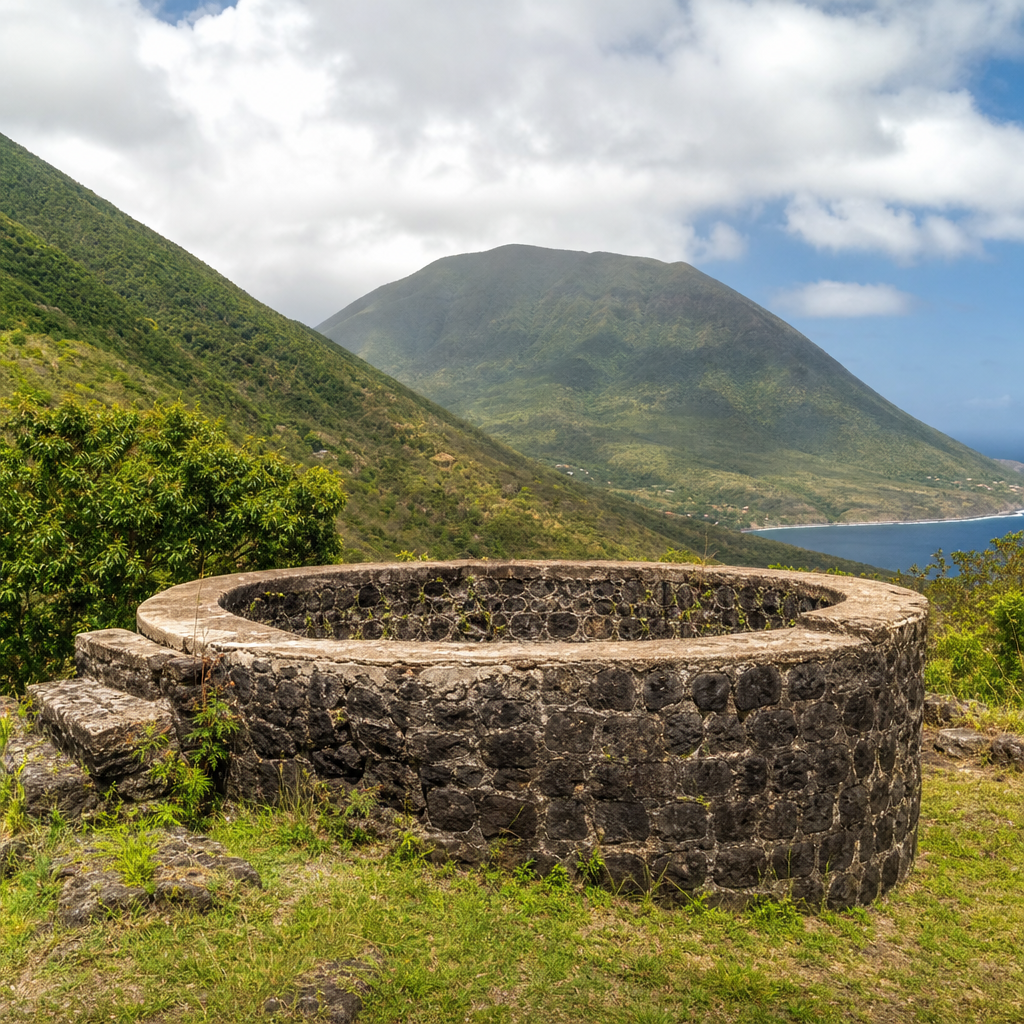
This matters for culture and history because public memory can easily flatten smaller islands into tourist imagery or colonial architecture. A serious account restores the people whose labor built wealth and whose resistance destabilized oppression. It also broadens the meaning of heritage. Forts, churches, and great houses tell only part of the story. Provision grounds, paths between estates, market spaces, burial grounds, and sites of punishment are equally important historical landscapes. Interpreting them honestly changes how Nevis is understood by residents, students, and visitors.
The key takeaway is straightforward. The enslaved people’s uprising in Nevis was a crucial turning point because it demonstrated the political power of the enslaved, exposed the insecurity of plantation slavery, and influenced how colonial rule evolved in the Leeward Caribbean. To explore this miscellaneous hub topic fully, continue into related articles on Nevisian slavery, Caribbean rebellions, emancipation, plantation archaeology, and cultural memory. Reading those pieces together will give you a fuller picture of how resistance shaped the island and why that history deserves careful attention today.
Frequently Asked Questions
Why was the enslaved people’s uprising in Nevis such a crucial turning point?
The uprising in Nevis was a crucial turning point because it exposed a reality that colonial authorities tried hard to deny: plantation rule was never stable, secure, or universally accepted by the people it depended on. The island’s economy rested on slavery, but that system could only function through coercion, punishment, surveillance, and the constant threat of military force. When enslaved people organized resistance, they demonstrated that the plantation order was deeply fragile. The rebellion was not simply an isolated burst of anger. It was evidence that enslaved communities understood the structures controlling them and were willing to challenge them collectively.
Its importance also lies in the reaction it provoked. Colonial officials and planters were forced to reconsider defense, discipline, communications, and local security. Uprisings made clear that violence was not a side effect of slavery; it was central to its operation, and even then it could not guarantee obedience. In this sense, the Nevis uprising helped reshape how power was exercised on the island. It also belongs to a broader Caribbean history in which enslaved people continually resisted, negotiated, and undermined the system long before emancipation became law. That makes the uprising a turning point not only in Nevisian history, but in understanding slavery itself as a contested and unstable regime.
What conditions in Nevis led to an uprising among enslaved people?
The uprising grew out of the brutal realities of plantation slavery in Nevis. Enslaved people lived under a regime designed to extract labor while denying freedom, family security, bodily autonomy, and legal protection. Work was physically punishing, especially on plantations tied to sugar production, and punishment for perceived disobedience could be severe. Enslaved people were monitored closely, restricted in movement, and subjected to a racial hierarchy enforced through colonial law. These were not occasional hardships; they were the ordinary conditions of life under slavery.
At the same time, enslaved communities were never passive. They formed networks of kinship, shared information, preserved cultural practices, and created strategies for survival and resistance. In a place like Nevis, where plantation society relied on maintaining fear and control, even the possibility of organized resistance posed a profound threat. An uprising usually emerged from a combination of immediate grievances and long-term structural oppression. Harsh treatment, intensified labor demands, food insecurity, punishment, and the fear of sale or separation could all contribute. Equally important was the existence of communication and trust among enslaved people, which made collective action possible. The conditions that led to rebellion were therefore both material and political: unbearable exploitation on one hand, and a clear understanding on the other that slavery was a system imposed and sustained by force.
How did the uprising reveal the fragility of plantation rule in the British Caribbean?
The uprising revealed plantation fragility by showing that colonial power depended on constant enforcement rather than genuine legitimacy. Planters and officials often projected confidence, portraying the plantation system as orderly and permanent. In reality, they governed through fear, armed patrols, restrictive laws, militias, informants, and rapid punishment. If an uprising could form under those conditions, then the entire system was more vulnerable than its defenders wanted to admit. Nevis, like other islands in the British Caribbean, depended on a population that had every reason to resist domination. That imbalance meant colonial rule was always under pressure.
Events like this also exposed how thin the line was between so-called order and open crisis. A plantation society could appear calm while actually resting on deep tension. Resistance by enslaved people made visible the hidden labor of repression required to maintain slavery day after day. The response of authorities typically confirmed this weakness: they increased patrols, tightened laws, expanded surveillance, and treated rumor itself as a danger. Such measures reveal anxiety, not strength. In the larger Caribbean context, Nevis helps illustrate a broader historical truth. The plantation complex was profitable, but it was never secure. Its rulers feared revolt precisely because enslaved people had the numbers, the motivation, and the collective memory to challenge the system at any time.
In what ways did the uprising influence colonial policy and security measures in Nevis?
One of the most immediate effects of an uprising was to push colonial authorities into rethinking how they protected the slaveholding order. Officials and planters often responded by strengthening local militias, improving communications between estates, increasing night patrols, and imposing stricter monitoring of enslaved communities. They might also tighten restrictions on movement, gatherings, trade, or access to weapons and tools. These actions were meant to prevent future rebellion, but they also show how deeply authorities understood the threat posed by coordinated resistance.
Beyond military and policing changes, uprisings could influence legislation and administrative practice. Colonial governments frequently revised slave codes, adjusted punishment protocols, and expanded mechanisms for intelligence gathering. Enslaved people were watched more intensely, and everyday life became even more regulated. Yet these policy changes also carried an important historical meaning: they proved that enslaved resistance shaped governance. Colonial policy was not formed in a vacuum or dictated only from London. It was also shaped on the ground by the actions of the enslaved, whose defiance forced the state to adapt. In that sense, the uprising in Nevis did more than unsettle planters in the short term. It altered the practical operations of colonial rule and left a mark on how the island was governed thereafter.
Why is it important to remember the Nevis uprising as part of the history of emancipation and resistance?
Remembering the Nevis uprising matters because it corrects the false idea that freedom came only through gradual reform from above. Emancipation in the British Caribbean was shaped not just by debates in parliament or humanitarian activism, but by the continuous resistance of enslaved people themselves. Rebellions, conspiracies, work slowdowns, desertion, sabotage, and everyday acts of refusal all weakened the institution of slavery and exposed its moral and political contradictions. The uprising in Nevis belongs to this larger history of struggle. It reminds us that enslaved people were historical actors who assessed their circumstances, organized collectively, and took enormous risks in pursuit of freedom and dignity.
It is also important because memory shapes how societies understand justice, power, and identity. When uprisings are forgotten or minimized, the violence of slavery can be softened and the agency of the enslaved erased. Recognizing the significance of Nevisian resistance helps restore a fuller picture of Caribbean history, one in which colonial power was constantly contested. It encourages readers to see emancipation not as a sudden benevolent gift, but as the outcome of long resistance against a violent system. For Nevis in particular, this history is central to understanding the island’s past, its social formation, and the enduring legacy of slavery in public memory.