Coral shapes daily life in Nevis in ways many visitors never notice, yet residents see its influence in food, fishing, shoreline protection, tourism, education, and community identity. In practical terms, coral refers to colonies of tiny marine animals called polyps that build hard calcium carbonate skeletons over time, forming reefs, patch reefs, and nearshore habitat that support entire coastal ecosystems. Around Nevis, those living structures are not decorative extras offshore; they are working natural infrastructure. They reduce wave energy before it reaches beaches and bays, create nursery grounds for fishers’ catch, draw snorkelers and divers who support local businesses, and give schools and conservation groups a living classroom. When people talk about local life and experiences in Nevis, coral belongs at the center because it connects environment, economy, culture, and everyday resilience.
I have worked on coastal destination content and marine stewardship projects across island communities, and Nevis stands out because the link between reef health and ordinary routines is unusually direct. On a small island, environmental change does not stay abstract for long. A damaged reef can mean fewer reef fish on a menu, more beach erosion after storms, less appeal for visitors choosing a Caribbean holiday, and greater anxiety for boat operators who depend on clear, healthy nearshore waters. A healthy reef, by contrast, quietly supports livelihoods with no invoice attached. That is why understanding coral in Nevis is not just a marine biology exercise. It is a practical guide to how local life functions, what pressures it faces, and where future opportunities lie.
For a hub article under local life and experiences, “miscellaneous” should not mean random. It should mean the interconnected details that make a place real. Coral in Nevis touches fisheries, hospitality, crafts, cuisine, recreation, youth programs, shoreline planning, and community values about stewardship. It also raises direct questions travelers and residents ask: Why do reefs matter to beaches? Which local businesses depend on coral health? How do storms, warming seas, pollution, and anchors affect reefs? What can visitors do without causing damage? This article answers those questions comprehensively and sets a foundation for deeper pieces on diving, fishing traditions, conservation efforts, coastal heritage, and responsible travel on the island.
Coral as Natural Infrastructure for Nevis
The most immediate importance of coral in Nevis’ local life is physical protection. Coral reefs act as offshore barriers that absorb and dissipate wave energy before it strikes the coast. Studies from the wider Caribbean and global reef systems consistently show that reefs can reduce wave energy substantially, often by more than 90 percent when reef crests are intact and shallow. For Nevis, where beaches, roads, waterfront properties, and tourism assets sit close to the sea, that service matters every hurricane season and during ordinary swell events alike. Residents may discuss beach loss, rough landings for small boats, or changing conditions at familiar bays without always using scientific terms, but the principle is simple: healthy coral reefs help keep the coast calmer and more stable.
This role becomes especially clear after storms. When reefs are degraded by coral bleaching, disease, sedimentation, or physical breakage, they lose structural complexity and protective height. That can allow larger waves to reach shore, accelerating erosion and stressing coastal infrastructure. For an island like Nevis, adaptation costs are real. Replacing natural coastal defense with engineered structures such as seawalls and revetments is expensive and often shifts erosion elsewhere. Coral therefore provides a cost-saving public benefit, even though it is rarely itemized in a municipal budget. In plain terms, coral is part of the island’s protective system, much like drainage channels or harbor works, except it is alive and must be kept healthy to keep functioning.
How Coral Supports Fisheries and Food Culture
Coral reefs are also essential to local fisheries, both directly and indirectly. Reef structures provide shelter, feeding grounds, and nursery habitat for many species that matter to fishers and consumers, including snapper, grouper, parrotfish, lobster, and conch in wider habitat networks. Not every commercially important species spends its entire life on coral reefs, but reef-associated ecosystems are critical pieces of the chain. Juvenile fish survive better in complex habitat, and that complexity comes from living coral and the reef framework it creates. When reef health declines, fish biomass and species diversity usually decline with it, especially where overfishing and habitat damage happen together.
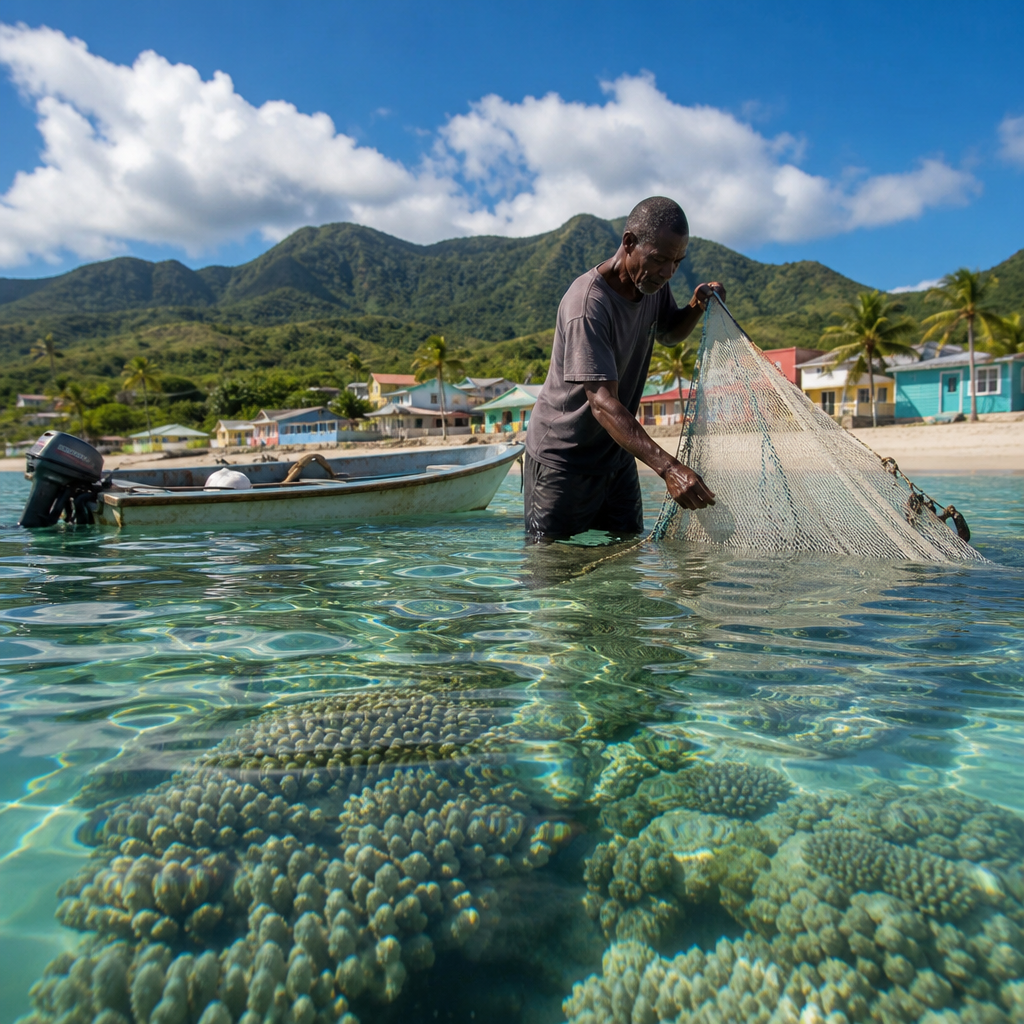
In Nevis, seafood is not only an exportable product or restaurant feature; it is part of ordinary eating and social life. Beach bars, family kitchens, weekend gatherings, and visitor menus all benefit from a productive sea. A fish pot or line catch depends on many variables, yet fishers understand habitat intuitively. They know certain grounds hold life because the bottom is right. That local knowledge aligns with marine ecology: structurally rich reefs tend to support more abundant marine communities. When coral cover falls or algae overwhelms damaged reefs, catches can become less predictable, forcing fishers to travel farther, spend more on fuel, or target different species. That change reaches straight into household economics.
| Local area of life | How coral contributes | What happens when reefs decline |
|---|---|---|
| Fishing livelihoods | Creates habitat and nursery grounds for reef-associated species | Lower catches, higher fuel costs, more pressure on remaining stocks |
| Food culture | Supports seafood supply for homes, cookshops, and restaurants | Reduced availability, higher prices, less menu variety |
| Tourism income | Attracts divers, snorkelers, photographers, and boat tours | Weaker visitor appeal and fewer repeat experiences |
| Shoreline stability | Breaks wave energy before it reaches beaches and bays | More erosion, rougher surf, greater infrastructure risk |
| Education and identity | Provides a living example of island stewardship and biodiversity | Fewer hands-on learning opportunities and weaker place connection |
Coral and the Visitor Economy in Everyday Nevis
Many people first connect coral with tourism, and for good reason. Nevis markets a quieter, more intimate Caribbean experience than some larger destinations, and healthy reefs support that promise. Divers seek reef walls, coral heads, reef fish, and underwater visibility. Snorkelers want accessible nearshore sites with colorful marine life. Boat charters rely on scenic water, safe moorings, and appealing marine encounters. Hotels, guesthouses, taxis, restaurants, and guides all benefit when marine experiences are worth recommending. In destination terms, coral helps convert natural beauty into local spending across multiple small businesses rather than a single industry silo.
The economic value is not limited to specialist dive tourism. A family staying on Nevis may never book a technical dive, yet they still value calm beaches, clear water for swimming, seafood dinners, and an excursion where children can see fish in shallow areas. Coral underpins those experiences. In my work on island travel content, I have seen the same pattern repeatedly: visitors may not understand reef ecology, but they absolutely notice whether a coastal experience feels vibrant or depleted. They remember seeing sea fans, brain coral, and schools of fish. They also remember cloudy runoff, broken coral, and barren bottoms. That memory influences reviews, recommendations, and return visits, which are now central to hospitality performance.
For Nevisian businesses, this creates both opportunity and responsibility. Operators that brief guests not to stand on coral, use fixed moorings instead of anchors, and choose reef-safe boating practices are protecting the asset their business depends on. The most successful marine destinations increasingly treat coral care as service quality, not an optional environmental add-on. On Nevis, that mindset supports a more durable tourism model rooted in stewardship and authenticity.
Community Identity, Education, and Shared Stewardship
Coral matters in Nevis because it helps people understand themselves as part of an island system, not separate from it. That sense of identity shows up in schools, community cleanups, heritage conversations, and the practical habits of those who spend time on the water. Marine education becomes stronger when students can connect textbook concepts such as biodiversity, reef trophic structure, and climate stress to nearby places they know. A lesson about bleaching is more meaningful when a child has seen a living reef during a school outing or through a local environmental group.
Community stewardship around coral often begins with simple observations: fewer fish than before, more storm damage on familiar beaches, or unusual patches of pale coral after a heat event. Those observations matter. Citizen science, guided snorkel surveys, and youth programs can turn local concern into usable knowledge. Across the Caribbean, organizations use Reef Check methods, photo monitoring, and fish counts to build awareness and support management. Even when Nevis relies partly on regional expertise and partnerships, the most durable conservation outcomes come when residents see reefs as part of local inheritance rather than distant science.
That shared responsibility also shapes visitor experience. Travelers increasingly look for meaningful local connection, not just scenery. A guided reef talk, a conservation volunteer day, or interpretation at a marine site can deepen appreciation while reinforcing respectful behavior. In that sense, coral enriches Nevis’ local life culturally as well as economically.
Pressures on Coral Reefs Around Nevis
No serious discussion of coral in Nevis is complete without acknowledging the pressures reefs face. The largest long-term threat is ocean warming, which drives coral bleaching when high temperatures disrupt the partnership between coral polyps and the symbiotic algae that provide much of their energy. Repeated marine heatwaves across the Caribbean have caused major bleaching events, and recovery is uneven. Corals already weakened by heat are often more vulnerable to disease, including stony coral tissue loss disease, which has devastated reefs in parts of the region.
Local stressors compound global ones. Sediment runoff from construction or poorly managed land can smother corals and reduce light penetration. Untreated or poorly treated wastewater adds nutrients that encourage algal growth, which can outcompete corals. Physical damage from anchors, careless snorkeling, trampling, and destructive fishing practices breaks fragile structures that may have taken decades to form. Overfishing of herbivores, especially parrotfish in many Caribbean settings, can also shift reef balance by allowing algae to dominate. Coral cannot simply “bounce back” if too many pressures hit at once.
These threats matter to local life because they alter visible, practical outcomes. Beaches may narrow faster. Fishers may adjust routines. Dive operators may change sites. Waterfront businesses may face higher risk from rougher conditions. Coral decline is not an isolated underwater issue; it is a social and economic issue with direct consequences for Nevisian households.
What Residents and Visitors Can Do to Protect Coral
Protection starts with behavior people can control now. For residents and visitors, the first rule is simple: never touch, stand on, or collect coral. Even light contact can remove protective mucus, break living tissue, or topple juvenile colonies. Snorkelers should maintain buoyancy and keep fins clear of the bottom. Boaters should use moorings where available and avoid anchoring on reef habitat. Fishers and marine operators benefit from gear practices that minimize contact with sensitive areas.
Pollution prevention is equally important. Proper waste disposal, septic maintenance, and stormwater management reduce nutrient and sediment loads entering the sea. On land, developers and property owners can limit erosion with vegetation buffers and responsible drainage design. Sunscreen choices also matter, although local context should guide recommendations; mineral-based options are generally preferred where possible, and covering up with rash guards reduces product entering the water altogether.
Support for conservation institutions makes a difference too. Marine protected areas, monitoring programs, and environmental education need public trust and consistent funding. When local businesses sponsor reef programs, brief guests responsibly, or collaborate with schools, they reinforce a culture of care. For travelers choosing experiences in Nevis, it is worth booking operators who explain reef etiquette clearly and demonstrate it in practice. Good reef protection is not complicated, but it does require repetition, enforcement, and community buy-in.
Why Coral Belongs at the Heart of Nevis’ Local Life
Coral is important in Nevis because it performs many jobs at once. It protects shorelines, supports fisheries, enriches meals and livelihoods, strengthens tourism, and gives communities a living focus for stewardship and education. That combination makes coral more than an environmental topic under local life and experiences. It is a foundation for how the island works. When reefs are healthy, they quietly support the kind of Nevis people value: beautiful coasts, productive water, memorable visitor experiences, and a stronger sense of connection between land, sea, and community.
The key takeaway is practical. Protecting coral is not separate from protecting the local economy or cultural character of Nevis; it is part of the same task. Residents, business owners, planners, fishers, and travelers all have a role, from reducing runoff and avoiding reef contact to supporting responsible marine tourism and local education. Small actions matter because reefs respond to cumulative pressure. If you want to understand Nevis more deeply, start with the coral offshore, then follow its influence back to beaches, boats, kitchens, schools, and neighborhoods. Explore the related articles in this local life and experiences hub to learn how marine heritage, conservation, cuisine, and coastal traditions connect across the island.
Frequently Asked Questions
What role does coral play in everyday life in Nevis?
Coral plays a much bigger role in everyday life in Nevis than many people realize. While visitors may think of coral reefs mainly as beautiful underwater scenery, residents often understand them as working parts of the island’s coastal system. Coral reefs help support fish populations that matter to local fishing, meals, and small-scale livelihoods. They also help reduce wave energy before it reaches shore, which can lessen coastal erosion and help protect beaches, waterfront areas, and nearshore habitats that communities depend on.
In practical terms, coral is part of the foundation of a healthy marine environment. Coral polyps slowly build hard calcium carbonate structures that create shelter, breeding areas, and feeding grounds for many species of fish, crustaceans, and other marine life. That means coral influences what ends up in local waters, what fishers may catch, and how stable and productive coastal ecosystems remain over time. For Nevis, where sea, shore, and community life are closely connected, coral is not a distant environmental issue. It is part of the natural infrastructure that supports food systems, local livelihoods, recreation, and the island’s sense of place.
How does coral support fishing and local food traditions in Nevis?
Coral reefs are essential to fishing because they create habitat for a wide range of marine species. Reef structures provide hiding places for juvenile fish, shelter from predators, and rich feeding areas supported by algae, plankton, and other reef life. When coral ecosystems are healthy, they tend to support greater biodiversity and stronger fish populations, which matters for fishers who rely on coastal and nearshore waters. Even species that are not permanently tied to one reef may use reef areas during important stages of their life cycle.
That ecological support has a direct connection to local food traditions in Nevis. Seafood is not simply a tourism product; it is also part of everyday meals, family cooking, and community life. When reefs are damaged by pollution, warming waters, destructive practices, or physical disturbance, the effects can move through the food web. Fewer healthy reef habitats can mean fewer fish, less reliable catches, and increasing pressure on marine resources. In that sense, coral helps sustain not only biodiversity but also the cultural and practical relationship between Nevisian communities and the sea. Protecting coral is therefore closely tied to protecting food security, fishing knowledge, and longstanding coastal traditions.
Why is coral important for shoreline protection around Nevis?
Coral reefs act as natural barriers that absorb and break wave energy before it reaches the coastline. This is one of their most valuable functions, especially for an island like Nevis where coastal areas are closely tied to homes, roads, beaches, tourism spaces, and community activity. Healthy reefs can reduce the force of incoming waves, which helps limit erosion, flooding, and the gradual loss of shoreline. They work alongside other coastal ecosystems, such as seagrass beds and mangroves, to create a more resilient marine and coastal environment.
This protective role becomes especially important during storms, rough seas, and periods of rising coastal stress. Without strong reef systems offshore, wave action can hit beaches and low-lying coastal zones with greater force, increasing damage over time. That means coral is not just important for marine life underwater; it also contributes to the physical stability of the island’s edges. For residents of Nevis, that can affect everything from beach quality and public access to broader concerns about infrastructure, property, and long-term environmental resilience. Coral reefs are, in many ways, part of the island’s first line of coastal defense.
How does coral influence tourism, education, and community identity in Nevis?
Coral influences tourism because healthy reefs help create the clear, vibrant marine environments that attract snorkelers, divers, boaters, and nature-focused travelers. Visitors are often drawn to the beauty and biodiversity of reef areas, but the economic value goes beyond sightseeing. Reef-related tourism can support guides, hospitality businesses, boat operators, restaurants, and others whose work benefits from a healthy coastal environment. Beaches and calm nearshore waters also benefit indirectly when coral reefs help reduce erosion and moderate wave action, making coastal areas more appealing and usable.
Beyond tourism, coral also has educational and cultural importance. Reefs provide opportunities for teaching people about marine ecology, conservation, climate impacts, and the interconnectedness of island life. For students, local organizations, and community members, coral can serve as a living classroom that makes environmental stewardship tangible and local rather than abstract. It also contributes to community identity by reinforcing the deep relationship between Nevis and the sea. When residents talk about protecting marine resources, they are often talking about preserving a way of life, shared knowledge, and a coastal heritage shaped by generations of interaction with the island’s waters.
What threatens coral around Nevis, and what can be done to protect it?
Coral faces a number of serious threats, many of which are interconnected. Rising sea temperatures can cause coral bleaching, a stress response that weakens reefs and can lead to coral death if conditions persist. Ocean acidification can make it harder for corals to build and maintain their calcium carbonate skeletons. Local pressures also matter greatly, including pollution, sediment runoff from land, careless anchoring, physical damage from marine traffic or irresponsible recreation, and overfishing that disrupts reef balance. Even when a reef still appears present, its ecological function may already be declining if the living coral cover is stressed or reduced.
Protecting coral around Nevis requires both community awareness and practical management. That can include reducing runoff and coastal pollution, encouraging responsible fishing practices, supporting marine protected areas where appropriate, using mooring systems instead of dropping anchors on reefs, and promoting reef-safe tourism and boating behavior. Public education is also crucial, because people are more likely to protect what they understand as valuable to daily life. In the long term, coral protection is not only about saving marine beauty. It is about maintaining fisheries, preserving shoreline stability, supporting tourism, and strengthening the environmental resilience that local communities depend on. In Nevis, caring for coral is ultimately part of caring for the island itself.