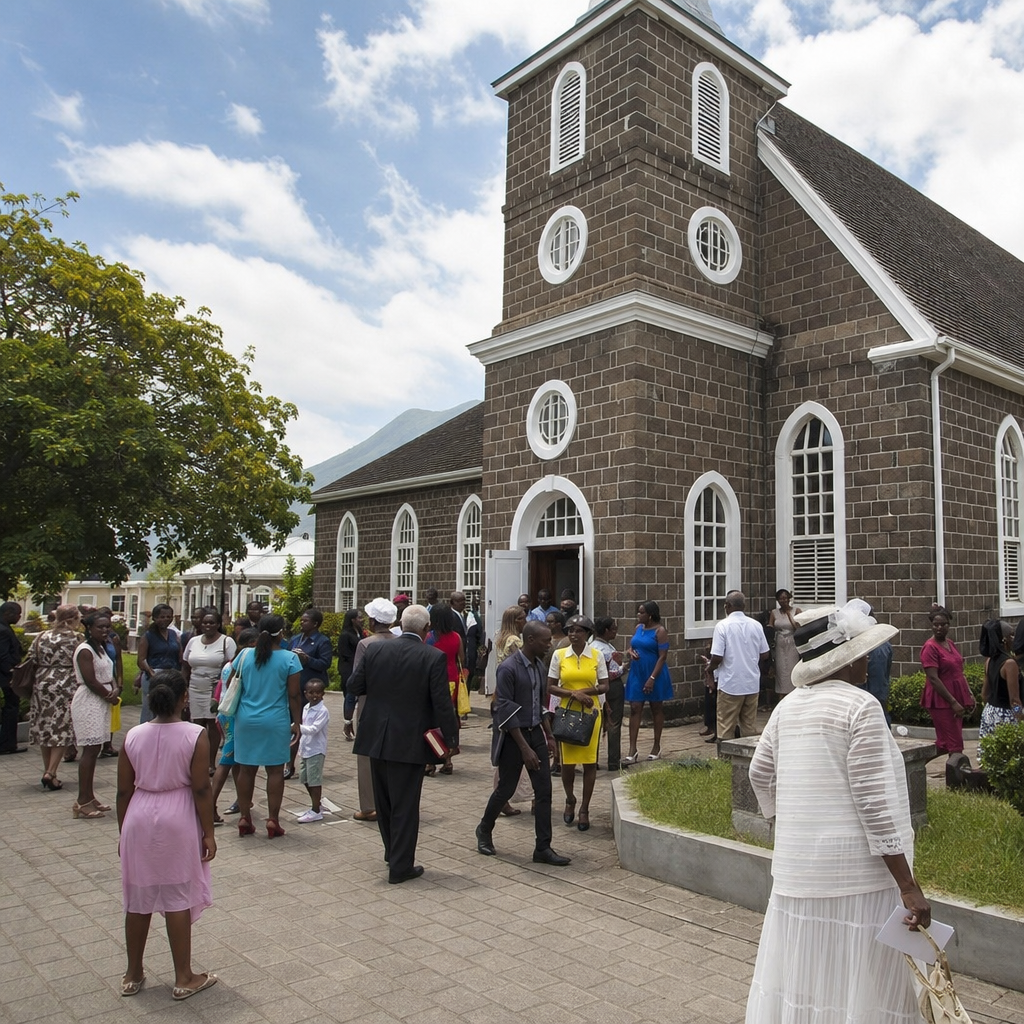
Churches in Nevis are far more than places of weekly worship; they are enduring community institutions that shape social life, preserve local identity, and support residents through every stage of life. On a small Caribbean island where relationships matter and public life is closely connected, the role of churches in Nevis’ community life reaches into education, charity, music, civic leadership, family networks, and national memory. When people ask what holds a village together, the answer is often found not only in homes, schools, and shops, but also in the church building at the center of the community and the people who keep its doors open.
In Nevis, the word church can refer to both the physical place and the organized congregation. That distinction matters. A historic Anglican stone church, a lively Methodist fellowship, a Roman Catholic parish, a Moravian gathering, a Pentecostal assembly, or a Seventh-day Adventist congregation may differ in doctrine and worship style, yet each often performs similar community functions. From my work studying island communities and reviewing how local institutions actually operate, one pattern is clear: churches become dependable anchors because they combine continuity, trust, and practical service in ways many other organizations cannot sustain over generations.
This matters for anyone trying to understand local life and experiences in Nevis. Visitors often see the island’s beaches, heritage sites, and hospitality first, but residents know the deeper social fabric is built through regular, repeated interaction. Churches create those interactions. They host funerals and weddings, youth events and choir rehearsals, holiday programs and relief drives. They also serve as informal information networks where people learn who is ill, who needs help, which student earned recognition, and which family is mourning a loss. In a small-island setting, that kind of connection has real social value.
As a hub topic within miscellaneous local life, this article explains how churches influence Nevis beyond religion alone. It looks at history, social services, education, cultural traditions, economic effects, and the challenges churches face today. It also highlights why churches remain relevant even as lifestyles change, migration affects family structure, and younger generations develop new expectations about community participation.
Historical foundations of church life in Nevis
To understand community life in Nevis, start with history. European colonization brought formal Christian institutions to the island, especially through the Church of England, which later became part of the Anglican tradition in the Caribbean. Over time, other denominations established congregations and schools, and churches became embedded in village development. Their influence was never only spiritual. In the colonial period, churches often kept records of baptisms, marriages, and burials, making them important sources for genealogy and public memory. In many Caribbean societies, parish records remain essential for tracing family lines and local history.
Nevis is known for historic churches, including striking stone structures that survived storms, social change, and shifts in population. These buildings are landmarks, but their real significance lies in what they witnessed: emancipation, migration, political evolution, and changing family life. Churches frequently stood near roads, schools, cemeteries, and village centers, giving them a visible role in daily life. Even people who do not attend regularly may identify their home district by its church, because these institutions help define place and belonging.
Historically, church leadership also provided a moral and organizational framework in communities where formal government services were limited. Clergy and lay leaders often mediated disputes, visited the sick, encouraged literacy, and organized basic assistance. That legacy still shapes expectations today. Residents often assume a church should respond when a family faces hardship because churches have done exactly that for generations.
Churches as social support networks
One of the clearest answers to the question, what do churches do in Nevis besides hold services, is this: they organize care. In practical terms, churches function as social support networks that identify needs quickly and respond in human, local ways. If a resident is hospitalized, church members may arrange meals, transport, prayer visits, and financial contributions. If a home is damaged after heavy rain or a storm, a congregation may collect building materials, clothing, or emergency funds before any formal process begins.
I have seen this pattern across small communities: churches are effective because they already have trusted relationships, communication channels, and volunteers. They do not need to build a network during a crisis; the network already exists. In Nevis, where extended families remain important but are sometimes stretched by migration and work demands, church communities often fill gaps in support. Elderly residents living alone may rely on members who check in regularly. Bereaved families may depend on the church not just for a funeral service, but for food preparation, seating coordination, music, and emotional presence.
Churches also reduce social isolation. Weekly worship, Bible study, women’s groups, men’s fellowships, youth meetings, and choir practice create recurring points of contact. These settings allow problems to surface early. Someone notices a child is withdrawn, an older member has stopped attending, or a parent is under strain. That visibility matters. Strong communities are not built only through policy; they are sustained through attentive relationships.
Education, youth formation, and values
Churches in Nevis have long contributed to education, both formally and informally. Across the Caribbean, denominations historically founded schools, supported teachers, and promoted literacy as part of religious instruction. Even where churches no longer run large parts of the education system, their influence remains visible through scholarship drives, after-school programs, reading initiatives, mentoring, and youth leadership opportunities. A church hall may double as a rehearsal space, tutoring venue, or meeting room for student development activities.
For many families, church involvement is also a form of structured youth formation. Children learn public speaking through recitations, discipline through choir and ushering, and teamwork through holiday pageants or outreach projects. Teenagers may gain early leadership experience by organizing events, leading prayer, managing sound systems, or helping with community collections. These tasks seem small, but they build confidence and civic habits that carry into adult life.
There is also a values component that many residents consider essential. Churches reinforce expectations around respect for elders, service to others, honesty, perseverance, and care for neighbors. While no institution shapes behavior perfectly, churches often provide language and ritual around moral responsibility. In a close-knit island setting, that can help reinforce social norms that support community stability.
| Community role | How churches contribute in Nevis | Practical impact |
|---|---|---|
| Family support | Meal trains, visitation, funeral help, emergency collections | Faster relief for households under stress |
| Youth development | Choirs, mentoring, scholarships, holiday programs, leadership tasks | Skills, confidence, and constructive routine for young people |
| Cultural preservation | Hymns, feast days, harvest events, church anniversaries, oral history | Stronger intergenerational identity and memory |
| Civic engagement | Public appeals, volunteer projects, collaboration with local groups | Higher participation in community problem-solving |
Cultural identity, music, and shared memory
Churches help preserve the cultural identity of Nevis by maintaining traditions that connect generations. Music is one of the strongest examples. Hymn singing, gospel performances, seasonal cantatas, and choir competitions create a shared repertoire that many residents know from childhood. Church music often blends inherited European forms with Caribbean expression, producing styles of worship that are local in feeling even when the texts are centuries old.
Annual observances are equally important. Christmas services, watch-night gatherings, Easter programs, harvest celebrations, anniversaries, and memorial events structure the community calendar. These occasions bring together residents who may be separated by work schedules, migration, or denomination. They also provide a setting where elders pass down stories about families, storms, rebuilding efforts, and the growth of the village. In this way, churches act as memory institutions, not just worship spaces.
Funerals are especially significant in Nevisian community life. A church funeral is not simply a religious rite; it is a public act of recognition. It affirms that a person belonged to a network of kin, neighbors, colleagues, and fellow believers. Attendance, music, tributes, and procession all express communal respect. Because of this, churches play a central role in how communities process grief and reaffirm solidarity.
Economic and civic influence in everyday life
Although churches are not businesses in the conventional sense, they influence the local economy and civic environment in several practical ways. Church events generate demand for catering, floristry, transportation, tailoring, printing, music services, and venue preparation. Weddings, funerals, anniversaries, and special programs support a chain of small-scale economic activity. Historic churches also contribute to heritage tourism, especially for visitors interested in architecture, genealogy, or the island’s colonial and post-emancipation story.
Churches can also shape civic behavior. Clergy and lay leaders often encourage volunteerism, neighborhood cleanups, disaster preparedness, and respectful public conduct. In small communities, a message delivered from a pulpit or church noticeboard can travel quickly and influence response. During emergencies, churches may serve as gathering points, communication hubs, or coordination partners alongside public agencies. Their buildings are familiar, and their leaders are often among the first people residents trust.
This civic influence has limits, and it should be described honestly. Churches cannot replace government services, professional counseling, or modern social policy. They may have limited budgets, aging membership, and uneven administrative capacity. Still, their value lies in reach and legitimacy. Where trust in institutions is mixed, local congregations often retain credibility because people know the individuals involved personally.
Changing realities and the future of church participation
Churches in Nevis are not static, and their future role depends on how they respond to changing realities. Like many communities worldwide, Nevis faces migration, shifts in family structure, digital distraction, and generational differences in religious commitment. Younger adults may value community service but participate less in formal worship. Some residents prefer flexible, project-based involvement over long-standing committee structures. Others seek more direct discussion of mental health, unemployment, domestic strain, or the pressures of modern life.
In my experience, churches remain strongest when they recognize that community leadership now requires both tradition and adaptation. A congregation that preserves historic worship but also supports youth mentorship, financial literacy workshops, or disaster-readiness training is more likely to stay relevant. Churches that communicate well through WhatsApp, social media, and livestreaming can keep diaspora families connected, which matters greatly for an island where relatives abroad still play active roles in local life through remittances, visits, and decision-making.
Another important shift is collaboration. The most effective churches often work with schools, health professionals, nonprofit groups, and public agencies rather than acting alone. That approach allows them to focus on what they do best: mobilizing trust, volunteers, and compassionate presence. In a place like Nevis, where scale is small and relationships are close, partnership is often more effective than duplication.
Churches remain central to Nevis’ community life because they combine history, care, culture, and civic presence in one enduring institution. They help mark life’s milestones, support families in crisis, guide young people, preserve music and memory, and strengthen the social bonds that make island life resilient. Even residents who attend only occasionally are often touched by church influence through funerals, school events, charity drives, seasonal celebrations, or neighborhood support during illness and loss.
The main benefit churches provide is continuity with purpose. They connect past and present while meeting practical needs in real time. That combination is rare. In Nevis, where community identity is built through relationships rather than scale, churches continue to matter because they turn belief into visible service and shared belonging. If you want to understand local life and experiences on the island, include churches in the picture. Visit a historic sanctuary, attend a community program, or speak with residents about the congregation that shaped their district. You will learn quickly that the story of Nevis is also, in many ways, a story told through its churches.
Frequently Asked Questions
1. Why are churches considered so important to community life in Nevis?
Churches in Nevis are important because they have long functioned as some of the island’s most trusted and consistent community institutions. While they are, first and foremost, places of worship, their role extends well beyond Sunday services. In many villages, churches help shape the rhythm of daily and seasonal life through holidays, ceremonies, social gatherings, and outreach efforts. They are often the places where families mark life’s most significant moments, including baptisms, weddings, funerals, anniversaries, and thanksgiving services, which means they remain closely connected to residents across generations.
On a small island like Nevis, where community ties are deeply personal and local identity matters, churches also help hold neighborhoods together. They create spaces where people meet, support one another, and maintain social bonds that might otherwise weaken over time. For many residents, the church is both a spiritual home and a civic anchor. It reinforces values such as mutual care, service, discipline, and respect for elders, while also offering practical help in times of hardship. That combination of moral guidance, public presence, and everyday support is a major reason churches continue to play such a central role in community life throughout Nevis.
2. How do churches in Nevis support families and individuals through different stages of life?
Churches in Nevis often accompany individuals and families through every major stage of life, making them deeply woven into the island’s social fabric. From infancy, many families bring children into church life through christenings, blessings, and youth participation. As children grow, churches may influence their development through Sunday school, choir programs, holiday events, mentoring, and moral instruction. These activities give young people a sense of belonging while also connecting them to older generations within the community.
For adults, churches remain important as places of counsel, fellowship, and stability. Couples frequently turn to churches for marriage preparation, wedding ceremonies, and guidance during family challenges. During illness, financial strain, or personal loss, church leaders and members often provide visitation, prayer, practical assistance, and emotional support. In times of bereavement especially, churches become central gathering points where the wider community comes together to comfort grieving families and honor the life of the deceased. This steady presence across childhood, adulthood, and old age helps explain why churches are often seen not only as religious institutions, but as enduring support networks that stand beside people throughout the course of their lives.
3. What role do churches play in education, youth development, and moral guidance in Nevis?
Churches have historically contributed to education and youth formation in Nevis by helping cultivate discipline, literacy, leadership, and community-minded values. In many Caribbean societies, churches were closely linked to the early development of schooling, and that legacy continues in the way they encourage learning, personal responsibility, and character development. Even when they are not operating schools directly, churches often support educational growth through tutoring initiatives, prize-givings, scholarship support, reading programs, and recognition of student achievement within the congregation.
Youth development is another area where churches have a lasting influence. They provide structured spaces where young people can participate in choirs, scripture study, service projects, public speaking, music ministry, and holiday productions. These experiences help build confidence and social skills while also reinforcing a sense of accountability to family and community. Just as importantly, churches offer moral guidance in a world where young people face many competing pressures. They teach principles related to honesty, respect, service, and compassion, and they often encourage youth to see themselves as future leaders. In a close-knit society like Nevis, that moral and social formation has effects that reach far beyond the church building itself.
4. In what ways do churches contribute to charity, civic responsibility, and social support in Nevis?
Churches in Nevis frequently serve as frontline sources of charity and community care. Because congregations are rooted in local relationships, they are often among the first to recognize when a family is facing hardship, whether due to unemployment, illness, bereavement, or other personal difficulties. Many churches respond through food drives, special offerings, home visits, fundraising efforts, counseling, and volunteer support. This kind of practical assistance can be especially meaningful on a small island, where the strength of community often depends on people stepping in for one another in direct and personal ways.
Beyond individual aid, churches also help promote civic responsibility. They regularly encourage members to act with integrity, contribute to the common good, and take seriously their obligations to neighbors and the wider society. Church leaders may speak on social concerns, encourage peace and cooperation, and support initiatives that benefit the public, from youth mentoring to elder care to disaster response. In this way, churches do not simply address private spiritual needs; they help shape a culture of public responsibility. Their influence is often quiet rather than dramatic, but it is significant because it strengthens the habits of care, service, and social trust that are essential to healthy community life in Nevis.
5. How do churches help preserve Nevisian identity, culture, and collective memory?
Churches are important keepers of Nevisian identity because they preserve traditions, stories, and communal practices that connect present-day residents to earlier generations. Many churches on the island have long histories and are tied to particular villages, families, and historical experiences. Through regular worship, feast days, memorial services, and community commemorations, they help carry forward a shared sense of who the people of Nevis are and what they have endured together. The church setting often becomes a place where local memory is expressed, whether through sermons that reference historical struggles, funeral tributes that recount family roots, or anniversaries that celebrate the endurance of a congregation across time.
Churches also play a visible role in preserving culture through music, language, ceremony, and social customs. Hymn singing, choirs, processions, harvest celebrations, and seasonal observances all contribute to the cultural texture of community life. These traditions are not merely decorative; they reinforce belonging and continuity. In a rapidly changing world, churches provide one of the most stable frameworks for passing on values, collective memory, and village identity from one generation to the next. That is why, for many people in Nevis, the church remains more than a religious institution. It is part of the island’s living heritage and an essential force in maintaining the social and cultural bonds that define community life.