Saint Kitts’ Heritage Day celebrates the island’s layered history through community gatherings, storytelling, food, music, and public remembrance. More than a single holiday, it is a living expression of how Kittitians connect the past to daily life, from village traditions and family recipes to plantation landscapes, churches, schools, and national symbols. In practical terms, Heritage Day gives residents and visitors a structured way to learn what shaped Saint Kitts: Indigenous presence, European colonization, sugar production, emancipation, labor struggles, migration, and nationhood. As someone who has worked on Caribbean destination content and spoken with local guides, educators, and cultural organizers, I have seen that heritage events matter most when they move beyond stage performances and reveal how history still influences neighborhoods, livelihoods, and identity.
Understanding Saint Kitts’ Heritage Day starts with defining heritage itself. Heritage includes tangible sites such as Brimstone Hill Fortress National Park, old sugar estates, village churches, and cemeteries. It also includes intangible culture: dialect, oral history, masquerade traditions, drumming, culinary methods, folk beliefs, and family memory. In Saint Kitts, these layers overlap everywhere. A restored great house may tell one story about plantation wealth, while nearby workers’ villages, rail lines, and cane fields tell another about labor and resistance. Heritage Day matters because it creates space to present both sides honestly. It encourages historical literacy, supports local pride, and strengthens cultural tourism when handled respectfully. For a hub within Local Life and Experiences, this subject is especially useful because it connects to food, festivals, rural life, museums, transport history, architecture, crafts, and community rituals across the island.
For many readers, the practical question is simple: what happens on Saint Kitts’ Heritage Day, and why should you pay attention? The answer is that activities usually combine education and celebration. You may find school presentations, historical exhibitions, reenactments, lectures, village fairs, culinary showcases, church services, dance performances, and tributes to elders. These events help communities preserve memory in forms people actually engage with. Children hear stories they may not encounter in textbooks. Families revisit ancestral villages. Visitors gain context that beaches alone cannot provide. In a small island state where tourism can easily flatten identity into scenery, Heritage Day serves as a corrective. It says that local history is not background decoration; it is the main framework for understanding how Saint Kitts became what it is today.
What Saint Kitts’ Heritage Day Represents
At its core, Saint Kitts’ Heritage Day represents continuity. It links pre-colonial life, colonial transformation, post-emancipation survival, and modern national identity. Saint Kitts was one of Britain’s earliest and most strategically important Caribbean colonies, often called the “Mother Colony of the West Indies.” That title reflects its role in the expansion of British plantation systems across the region. A Heritage Day observance therefore cannot be limited to colorful costumes and food stalls. It must account for the island’s central place in Atlantic history, including conquest, enslavement, military conflict, and agricultural capitalism.
In local settings, this broader history becomes personal. A schoolchild in Sandy Point may learn about Brimstone Hill not just as a UNESCO World Heritage Site, but as a monument built through the labor of enslaved Africans and tied to wars between Britain and France. A family in Cayon may connect recipes and proverbs to grandparents who worked in sugar. A church congregation may honor community founders whose lives were shaped by migration to places such as the United Kingdom, the United States, or other Caribbean islands. Heritage Day works when it gives public form to these private histories and makes them part of a shared national story.
The day also represents cultural stewardship. Once oral traditions weaken, recipes modernize, and historic buildings decay, recovery becomes difficult. Heritage programming creates urgency around documentation and preservation. That may mean recording elder interviews, cataloging photographs, restoring public archives, teaching traditional dances, or simply marking old village routes before memory fades. In my experience, the strongest heritage initiatives are local first, tourism second. They begin with the community asking what should be saved and why.
Historical Foundations Behind the Celebration
To understand the meaning of Heritage Day, it helps to review the island’s historical foundations. Before European colonization, Saint Kitts was inhabited by Indigenous peoples, including Kalinago communities. Their movement, trade, and environmental knowledge formed the earliest human history of the island. European rivalry then transformed Saint Kitts into a contested colonial space. The English and French both established settlements in the seventeenth century, and repeated conflict followed. This competition shaped fortifications, land ownership, and political development in ways still visible on the landscape.
The sugar plantation economy defined Saint Kitts for centuries. Sugar was not merely a crop; it was an entire system of land use, labor discipline, transport, credit, and export. Enslaved Africans were forced to build and sustain that system under extreme violence. Emancipation in the British Caribbean in 1834, followed by apprenticeship and later wage labor, changed legal status but did not erase economic dependency or inequality. Many of the social patterns discussed during Heritage Day, including village formation, family landholding, and work migration, can be traced directly to this era.
Modern Saint Kitts also carries the legacy of industrial and political transitions. The St. Kitts Scenic Railway, now a tourism attraction, originated as a sugar train transporting cane from fields to the factory. The decline of sugar and the closure of the industry in 2005 marked a major national shift. Heritage Day therefore often includes reflection on what happened after sugar: diversification, tourism growth, environmental change, and the challenge of preserving industrial memory once the economic system disappears. This historical depth is what turns a local celebration into a serious civic event.
Key Traditions, Activities, and Community Participation
What do people actually experience during Saint Kitts’ Heritage Day? While exact programming varies by year and community, several traditions appear consistently. Public ceremonies often open the day, sometimes with prayer, national songs, or tributes to cultural figures. Schools may stage dramatic presentations on emancipation, village life, or notable national leaders. Community centers and libraries frequently host exhibitions of old household tools, agricultural equipment, photographs, school registers, maps, and newspaper clippings. These modest displays are often among the most valuable because they reveal daily life rather than only formal state history.
Food is central. Heritage menus commonly feature dishes that reflect African, European, and wider Caribbean influence: goat water, saltfish, ground provisions, cook-up style preparations, coconut-based sweets, cassava items, and seasonal drinks. Demonstrations of how foods were prepared traditionally can be as important as the meal itself. A younger audience may know the taste of a dish without understanding the labor involved in grating cassava, salting fish for preservation, or cooking over coal pots. Heritage Day brings method back into the story.
Performance traditions also matter. Drumming, folk songs, and masquerade forms communicate memory through rhythm and movement. In Saint Kitts and Nevis, carnival traditions are better known internationally, but Heritage Day allows communities to present cultural expression outside the carnival frame. That distinction matters because not every valuable tradition is designed for spectacle. Some are intimate, religious, or village-specific and need different forms of protection.
| Activity | What It Shows | Why It Matters |
|---|---|---|
| Historical exhibitions | Photographs, tools, documents, clothing | Makes local history visible and concrete |
| Food demonstrations | Traditional ingredients and cooking methods | Preserves practical knowledge across generations |
| School performances | Reenactments, poetry, dance, oral presentations | Builds youth participation and historical understanding |
| Site visits | Fortresses, estates, churches, villages | Connects stories to real places on the island |
| Elder tributes | Interviews, awards, storytelling sessions | Protects living memory before it is lost |
Community participation is what determines whether the day feels authentic. When local teachers, historians, craftspeople, cooks, clergy, and youth groups are involved, the event reflects the island’s real social fabric. When programming is too top-down, it can become decorative and repetitive. The best Heritage Day events invite residents to contribute objects, stories, recipes, and family records, turning the celebration into collaborative public history.
Places and Symbols That Anchor Local History
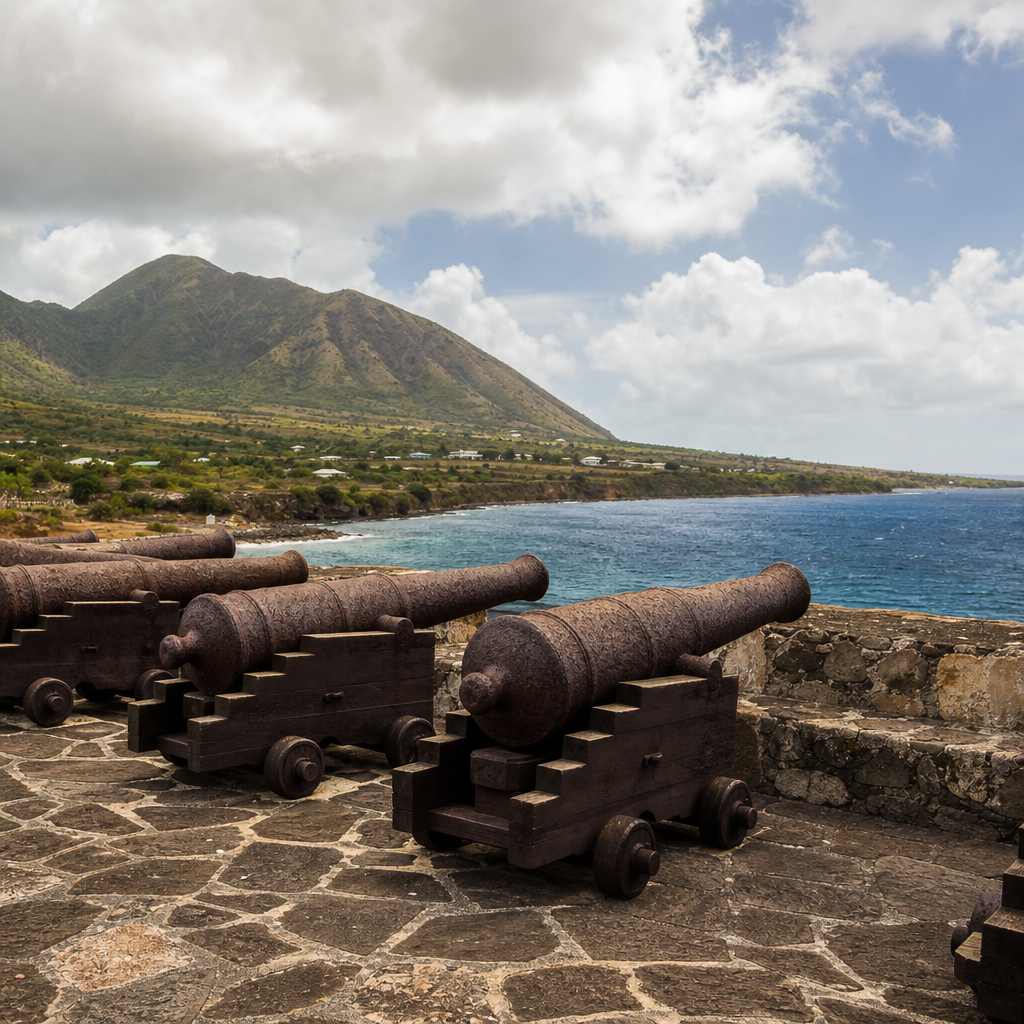
Several sites help anchor Saint Kitts’ heritage in physical space. Brimstone Hill Fortress National Park is the most internationally recognized. Built mainly in the seventeenth and eighteenth centuries, it demonstrates military engineering, imperial rivalry, and the strategic value of Saint Kitts in the Caribbean. Yet it should never be discussed only as an architectural achievement. Its construction depended heavily on enslaved labor, and that fact belongs at the center of any Heritage Day interpretation.
Former sugar estates across the island tell another essential story. Estate houses, windmills, boiling houses, aqueducts, chimneys, and field patterns reveal how deeply sugar structured the landscape. Even ruins matter. A collapsed stone wall or overgrown mill can still explain land concentration, transport systems, and labor organization better than a textbook paragraph. Rural villages that grew around or after plantation zones are equally important because they show how communities claimed space under difficult historical conditions.
Basseterre itself is part of the heritage narrative. The capital reflects colonial planning, commercial adaptation, religious life, and the effects of disasters such as fires and hurricanes. Churches, public buildings, circuses, cemeteries, and market areas each contain usable historical evidence. During heritage programming, guided walks through town can be especially effective because they show that history is not remote. It is built into streets people use every day.
Symbols matter too. National heroes, emancipation observances, family names, village festivals, and even transport routes act as memory markers. A good Heritage Day program explains these symbols rather than assuming everyone already understands them. That educational function is one of the day’s biggest strengths.
Why Heritage Day Matters for Education, Tourism, and Identity
Heritage Day has practical value beyond ceremony. In education, it supports place-based learning. Students remember history more effectively when they can connect dates and concepts to local sites, surnames, and family experiences. A lesson on the abolition of slavery becomes more meaningful when paired with a visit to an estate site or an interview with an elder about post-sugar village life. Schools that integrate community history into projects often produce stronger engagement than those relying only on imported textbook narratives.
For tourism, Heritage Day broadens the visitor experience. Saint Kitts is often marketed for beaches, cruises, and scenic relaxation, but modern travelers increasingly want culture, authenticity, and historical context. Heritage programming can support museums, local guides, food vendors, artisans, and rural communities if visitors are invited respectfully. The key is balance. Cultural events should not be redesigned solely for outside consumption. The strongest tourism benefit comes when community priorities lead and visitor access follows.
Identity may be the deepest benefit. Small island societies face constant external pressure from migration, media, and tourism branding. Heritage Day gives Saint Kitts a structured moment to state who it is in its own terms. That includes pride, but also honesty. Mature identity is not built by ignoring painful history. It is built by understanding it clearly, honoring resilience, and passing that knowledge forward. If you are exploring Local Life and Experiences in Saint Kitts, Heritage Day is one of the clearest windows into how the island remembers itself and why that memory still shapes everyday life.
Saint Kitts’ Heritage Day is valuable because it turns history into something people can see, taste, hear, and question together. It connects landmark sites such as Brimstone Hill to village stories, family records, school lessons, and traditional foods. It also reminds residents and visitors that the island’s history includes Indigenous roots, colonial conflict, plantation wealth, enslavement, emancipation, migration, and national change. When these layers are presented clearly, heritage stops being an abstract label and becomes a practical guide to understanding Saint Kitts.
The strongest takeaway is that Heritage Day works best as community-led public history. Exhibitions, elder tributes, performances, and site visits are not side activities; they are the tools that preserve memory. They help younger generations understand where customs came from, why landscapes look the way they do, and how local identity was shaped. They also create better cultural tourism by offering depth instead of surface imagery. For a Miscellaneous hub under Local Life and Experiences, this topic naturally links to articles on cuisine, architecture, museums, festivals, transport heritage, village culture, and historical landmarks.
If you want to experience Saint Kitts more meaningfully, start with its heritage. Attend local events when possible, visit historic sites with context, ask guides about village history, and support community museums, cooks, and craftspeople who keep traditions alive. The island becomes richer when you understand the stories behind it, and Heritage Day is one of the best places to begin.
Frequently Asked Questions
What is Saint Kitts’ Heritage Day, and why is it important?
Saint Kitts’ Heritage Day is a community-centered observance that highlights the island’s history, cultural memory, and shared identity through public gatherings, storytelling, traditional food, music, and acts of remembrance. It matters because it turns history from something abstract in books into something people can experience in everyday life. On this day, Kittitians reflect on the many layers that shaped the island, including Indigenous presence, European colonization, African heritage, village traditions, religious life, education, labor history, and the symbols that express national identity today.
Its importance also lies in how it connects generations. Elders pass down memories, recipes, songs, and local knowledge, while younger people gain a clearer understanding of how the past continues to influence language, customs, landscapes, and community values. Heritage Day is not only about honoring major historical events; it is also about recognizing the ordinary places and practices that carry meaning, such as family homes, churches, schools, village roads, former plantation areas, and community celebrations. In that sense, the day serves both as remembrance and as a living lesson in what it means to belong to Saint Kitts.
How does Heritage Day help people understand the history of Saint Kitts?
Heritage Day gives residents and visitors a structured way to explore the historical forces that shaped Saint Kitts in a direct and accessible format. Instead of presenting history only through formal lectures or museum displays, the day often brings learning into public spaces through performances, exhibits, oral histories, historical reenactments, guided talks, food traditions, and community ceremonies. This approach helps people see that history is not separate from daily life. It is present in village names, family stories, local architecture, church traditions, school customs, music, and the agricultural and plantation landscapes that still define parts of the island.
It also encourages a fuller understanding of the island’s layered past. Heritage Day can open conversations about early Indigenous communities, the impact of European settlement, the transatlantic slave trade, emancipation, labor struggles, migration, and the development of modern national identity. By engaging with these topics through both formal events and local memory, participants get a more human and grounded perspective on history. This is especially valuable because it allows people to connect dates and events with real communities, real places, and the lived experiences of generations of Kittitians.
What kinds of traditions and activities are commonly associated with Saint Kitts’ Heritage Day?
Heritage Day is commonly associated with activities that showcase both official history and community-based cultural expression. These may include storytelling sessions, school presentations, village gatherings, cultural performances, church-related observances, heritage exhibitions, and tributes to local ancestors or notable national figures. Traditional music and dance often play a visible role, helping to express continuity between past and present. Food is equally important, as family recipes and local dishes can tell their own story about resourcefulness, regional identity, and the blending of cultural influences over time.
Another key feature is the emphasis on place. Plantation landscapes, historic buildings, community centers, schools, churches, and village spaces may all become part of the observance, either as venues or as subjects of discussion. People may use the day to revisit local landmarks, share memories tied to specific neighborhoods, or reflect on how older traditions continue in modern life. The result is that Heritage Day feels less like a single event and more like a living cultural practice. It brings together remembrance, education, celebration, and community pride in a way that reflects the character of Saint Kitts itself.
Why are storytelling, food, and music such important parts of the celebration?
Storytelling, food, and music are central to Heritage Day because they preserve history in forms that are personal, memorable, and widely shared. Storytelling allows families and communities to pass on experiences that may not always appear in official records, including village life, work traditions, migration stories, religious customs, and the lessons of earlier generations. These narratives help people understand not only what happened in the past, but how those events were felt and interpreted by the people who lived through them. Oral tradition is especially powerful in island communities where memory and identity are closely linked.
Food and music serve a similar function. Traditional dishes reflect the island’s agricultural history, cultural blending, and long-standing family practices, while music carries rhythms, language, and emotional memory across generations. When people cook familiar recipes or participate in song and performance, they are not simply entertaining themselves; they are keeping cultural knowledge alive. On Heritage Day, these elements make history tangible. They invite participation from all ages and backgrounds, helping everyone experience heritage through taste, sound, and shared community presence rather than through observation alone.
How can visitors respectfully take part in Saint Kitts’ Heritage Day?
Visitors can respectfully take part in Heritage Day by approaching the celebration as both a cultural experience and a learning opportunity. The best starting point is to attend events with curiosity, listen carefully to local voices, and recognize that the day is rooted in the island’s historical memory rather than designed only for entertainment. Asking thoughtful questions, reading event materials, visiting heritage sites, and joining guided programs can help visitors better understand the meaning behind the ceremonies, performances, and traditions they encounter.
Respect also means appreciating the community dimension of the observance. Visitors should be mindful in sacred or commemorative spaces, support local organizers and vendors when possible, and avoid treating cultural practices as spectacles disconnected from their deeper significance. Taking time to learn about the island’s Indigenous presence, colonial history, African heritage, and post-emancipation development can make participation more informed and meaningful. When approached in this way, Heritage Day becomes an opportunity not just to see Saint Kitts, but to understand how Kittitians remember, interpret, and celebrate the history that continues to shape their lives today.