Creole cooking of Nevis tells the story of the island as clearly as any archive, because its recipes preserve the movements of African, Indigenous, European, and wider Caribbean people across centuries. In practical terms, Nevisian Creole food is the everyday cuisine shaped by local crops, coastal fishing, colonial trade, emancipation-era adaptation, and family technique passed from kitchen to kitchen. When I have worked through Nevisian menus, market stalls, and home-style cooking notes, the same pattern appears repeatedly: straightforward ingredients transformed by seasoning, timing, and thrift into dishes with remarkable depth. Saltfish becomes breakfast, breadfruit becomes a hearty side, fresh coconut enriches stews and desserts, and pepper sauces sharpen nearly everything.
The term Creole in this context refers not to one single recipe style but to a blended culinary tradition formed in the Caribbean under conditions of contact, inequality, exchange, and survival. On Nevis, that means food rooted in African cooking knowledge, adapted to island ingredients such as yam, cassava, pigeon peas, plantain, pumpkin, tamarind, mango, and seafood from surrounding waters. British colonial influence appears in puddings, baked goods, and Sunday roasts, while neighboring islands contribute shared methods for stewing, frying, preserving, and seasoning. Understanding Creole cooking of Nevis matters because food is one of the clearest gateways into the island’s culture and history. It explains how people worked the land, how families managed scarcity, how celebrations were marked, and why certain dishes still dominate breakfast tables, roadside cookshops, and festival gatherings today.
For readers exploring Culture and History, this hub article on Nevis miscellaneous food traditions connects recipes, social customs, agricultural patterns, and historical memory in one place. It is designed to answer core questions directly: What defines Nevisian Creole cooking? Which dishes matter most? How did history shape them? What ingredients should a cook understand before trying authentic recipes? The short answer is that Nevisian cuisine is ingredient-led, seasoning-driven, and intensely local. Its flavor base often includes onion, thyme, scallion, garlic, hot pepper, allspice, and fresh herbs, balanced by starchy staples and bright fruit-based condiments. The longer answer, and the more useful one, is that every major dish on the island carries a practical reason for existing, whether that reason is preservation, affordability, harvest cycles, fishing access, or celebration.
That is why a hub article is useful here. Rather than treating recipes as isolated curiosities, it places goat water, cook-up rice, coconut dumplings, saltfish, johnny cakes, provision, black cake, and local drinks inside a wider framework. The history of sugar estates, small farming, fishing communities, inter-island exchange, and post-emancipation resilience all show up on the plate. If you want to understand Nevis beyond beaches and resort imagery, start with what people cook at home, what appears at village events, and what ingredients keep returning across generations.
Historical roots of Nevisian Creole cuisine
Nevis was one of the early centers of British colonial settlement in the Leeward Islands, and that history left a deep mark on its foodways. Before and during plantation expansion, the island’s cuisine developed through layered contact among Indigenous Caribbean knowledge, enslaved Africans forcibly brought to the island, European settlers, and traders moving goods and techniques through the Atlantic world. Sugar dominated the economy for long periods, but sugar production did not feed ordinary people well. Enslaved and later free communities depended heavily on provision grounds, fishing, backyard livestock, and ingenious use of imported staples such as salted cod, flour, and rice. In my experience studying Caribbean food history, this is where the real identity of Creole cuisine takes shape: not in elite dining, but in the practical kitchens where people made sustaining meals from what they controlled.
African influence is especially visible in one-pot cooking, leafy greens, okra use, fritters, dumplings, ground provisions, and the logic of seasoning early and cooking slowly. European influence appears in baking methods, puddings, preserved meats, and holiday desserts linked to Christmas. Trade added ingredients like codfish from the North Atlantic, wheat flour, and eventually curry powder and other seasonings circulating regionally. Over time, these influences became local rather than foreign. Goat water, for example, is not simply a stew; it is a Nevisian emblem, often prepared for gatherings with bread on the side, and it reflects both African stewing traditions and island adaptation to goat raising. The result is a cuisine that is distinctly Nevisian even when it shares family resemblance with food in St. Kitts, Antigua, Dominica, or Montserrat.
Core ingredients and flavor foundations
The fastest way to understand Creole cooking of Nevis is to know its pantry. Fresh thyme, scallion, onion, garlic, ginger, celery, parsley, hot peppers, black pepper, and allspice create the backbone of many savory dishes. Coconut appears in several forms: grated fresh coconut, coconut milk, coconut water, and coconut oil in some traditional preparations. Ground provisions include yam, sweet potato, dasheen, eddoe, cassava, tannia, and breadfruit, all of which provide substance and help stretch meals. Plantains are boiled, fried, or added to stews. Protein comes from goat, chicken, pork, fish, lobster when available, conch in some contexts, and imported saltfish. Legumes such as pigeon peas and red beans are central to rice dishes and soups.
Seasoning is not an afterthought on Nevis. A proper green seasoning paste or chopped marinade can determine whether a stew tastes flat or rounded. The process usually begins before heat is applied: meat is washed, often with lime or vinegar in older practice, then seasoned with herbs, onion, garlic, pepper, salt, and sometimes browning or Worcestershire sauce in more modern kitchens. The goal is penetration, not surface flavor. Acidity from tamarind, lime, or local fruit may be used to balance richness. Sweetness is also strategic. Pumpkin, ripe plantain, caramelized onion, and coconut naturally soften pepper heat and deepen gravies.
| Ingredient | Typical use in Nevis | Why it matters |
|---|---|---|
| Saltfish | Breakfast sautés, fritters, bakes | Reliable preserved protein with deep historical roots |
| Breadfruit | Boiled, roasted, fried, mashed | Starchy staple that pairs with stews and fish |
| Goat | Goat water, festive stews | Signature island meat associated with communal cooking |
| Coconut | Dumplings, sweets, rice, sauces | Adds richness and reflects abundant local production |
| Pigeon peas | Cook-up rice and side dishes | Affordable nutrition and classic Caribbean flavor |
Signature dishes every reader should know
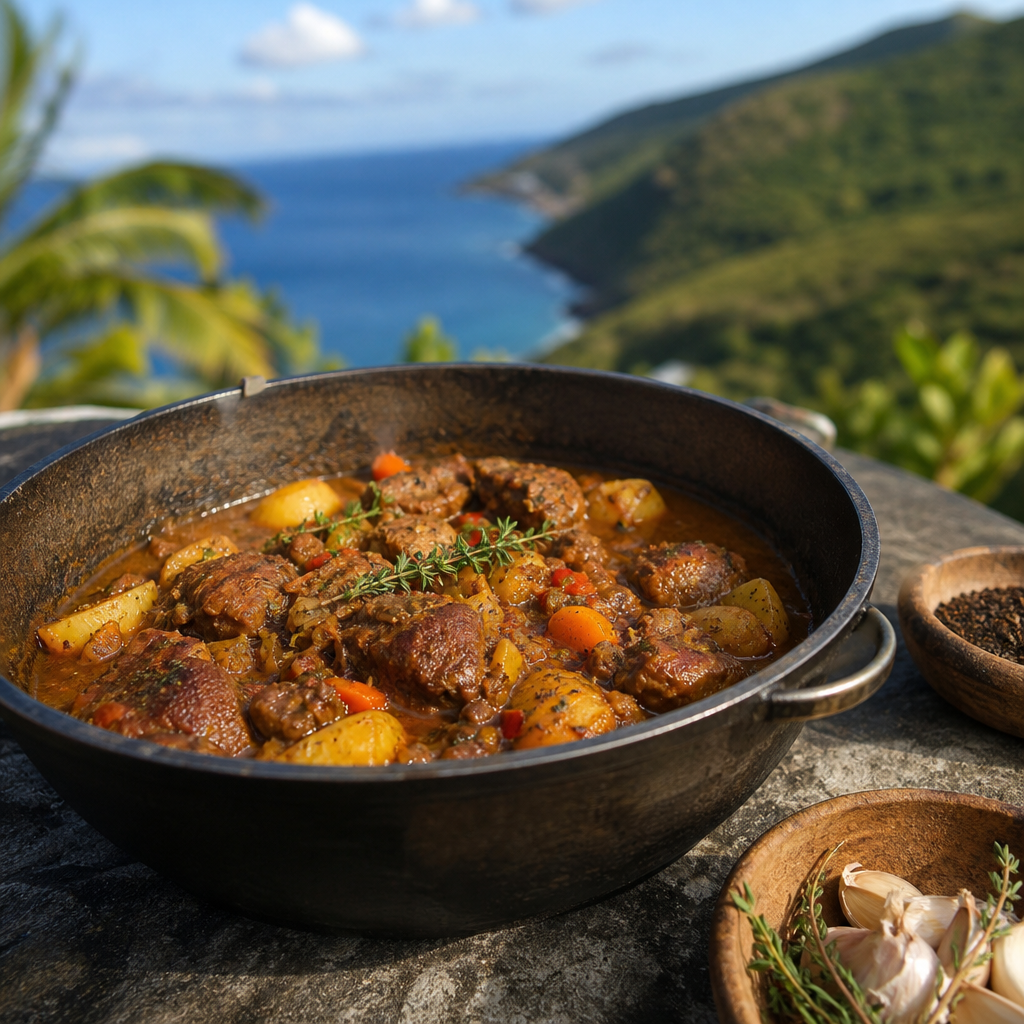
The best-known dish in Nevis is goat water, a dark, aromatic stew that can function as comfort food, celebration food, and cultural shorthand all at once. Despite the name, it is not watery when made well. It is a thickened, deeply seasoned broth of goat meat, browned flour or toasted elements in some versions, herbs, cloves, pepper, and often bread for dipping. At public events, large pots of goat water demonstrate scale and skill. The meat must be tender without disintegrating, and the broth needs body from long simmering rather than shortcuts. When people ask what food is most associated with Nevis, this is usually the first answer.
Saltfish with provisions is another foundational meal. Salt cod is soaked to reduce salinity, then sautéed with onion, tomato, pepper, and herbs, and served with boiled breadfruit, green banana, dumplings, or sweet potato. This dish illustrates a basic historical truth: preserved imported fish became indispensable because it was accessible and durable, while local starches supplied bulk. Cook-up rice, often made with pigeon peas or other beans, is the island’s answer to the efficient one-pot meal. It can include coconut milk, salted meat, herbs, and vegetables, producing a dish substantial enough to stand alone. Johnny cakes and coconut bakes fill the bread role, especially at breakfast or alongside fried fish.
Fish and seafood deserve equal attention. On an island like Nevis, freshness is central, and grilled or fried fish seasoned simply with lime, thyme, garlic, and pepper often shows the cuisine at its clearest. Spiny lobster appears in season, while fish broths and light stews bring together local catch with pumpkin, okra, herbs, and provision. Pepper pot styles, callaloo variations, and soups based on split peas or root vegetables also belong in the wider miscellaneous hub because they capture everyday domestic cooking rather than restaurant presentation. Dessert traditions include coconut tart, tamarind balls, sugar cakes, and black cake at Christmas, all of which show how preserving fruit, using spice, and maximizing sugar-era ingredients shaped sweets.
How traditional recipes are built
Nevisian recipes are often transmitted by observation instead of strict measurement. A cook may say add enough thyme, flour, or coconut milk until it looks right, because texture and aroma are used as benchmarks. That can frustrate beginners, but it reflects a cuisine based on sensory judgment. To recreate these foods faithfully, start by understanding the sequence. First, season aggressively but intelligently. Second, build color through browning onions, sugar, or meat where appropriate. Third, control moisture carefully. Many dishes should simmer, not boil hard, because rough boiling toughens meat and muddies flavor. Finally, taste near the end for salt, acid, and pepper balance, especially when saltfish or salted meats are involved.
A simple home version of goat water begins with bone-in goat marinated with green seasoning, black pepper, cloves, and a little salt. The meat is browned, then simmered with onion, garlic, thyme, hot pepper, and water or stock until tender. Flour can be cooked into the pot or mixed separately to provide the characteristic body. The stew is reduced until glossy and served hot with bread. Saltfish and provisions follow another pattern: desalinate the fish, flake it, sauté aromatics, add tomato and pepper, then fold in the fish briefly so it remains moist. Boil the starches separately and serve together. These are not complicated dishes, but they require patience and restraint. Over-seasoning with packaged mixes or rushing the simmer changes the character immediately.
Food, ritual, and everyday life on Nevis
Creole cooking on Nevis is inseparable from social context. Breakfasts tend to be substantial because traditional labor demanded it, and that legacy remains visible in meals built around fish, bakes, tea, and provisions. Sunday lunch carries special weight, often featuring stewed meats, rice, peas, macaroni pie in some households, salad, and dessert. Christmas and other festive periods expand the menu with sorrel drink, ginger beer, black cake, ham, and more elaborate preparation. At community events, funerals, church gatherings, and village celebrations, quantity matters alongside quality. Large-batch cooking rewards dishes like goat water, pelau-style rice dishes, soups, and baked goods that can be scaled without losing identity.
One reason these foods endure is that they match island life. They rely on ingredients that can be grown, stored, salted, dried, or bought without excessive cost. They also honor hospitality. In households I have seen across the Caribbean, including Nevisian contexts, the measure of a good cook is not novelty but consistency, generosity, and command of seasoning. Food is expected to satisfy physically and emotionally. That is why even so-called miscellaneous recipes matter historically. A tamarind stew, a pan of coconut bread, or a pot of peas and rice may reveal as much about local culture as a famous national dish. They mark seasonality, family preference, and the unwritten rules of what belongs together on a plate.
Modern changes, authenticity, and where to explore further
Nevisian Creole cuisine is not frozen in the past. Tourism, migration, health awareness, imported products, and restaurant culture have changed how some dishes are prepared and presented. You now see lighter use of salt, more grilled seafood, plated versions of goat water, and fusion menus that pair local ingredients with international techniques. Those changes are not automatically inauthentic. Authenticity on Nevis is better judged by flavor logic, ingredient respect, and cultural continuity than by rigid nostalgia. A chef using breadfruit purée with seared fish can still be working squarely within the island tradition if the seasoning, sourcing, and culinary intent remain grounded in local practice.
For a Culture and History hub, the practical next step is to use this article as a map. Explore individual pages on goat water, saltfish breakfasts, Nevisian breads and cakes, market produce, holiday drinks, and the history of sugar and provision grounds. Together, those subjects explain why Creole cooking of Nevis remains one of the most direct ways to understand the island. The key takeaway is simple: these recipes are historical records you can taste. Learn the core ingredients, respect the methods, and cook them with patience. If you want a deeper connection to Nevis, start with one classic dish, then follow the trail from the pot to the people who kept it alive.
Frequently Asked Questions
What makes Nevisian Creole cooking distinct from other Caribbean cuisines?
Nevisian Creole cooking is distinctive because it reflects the specific history, geography, and daily life of Nevis rather than simply following a broad Caribbean pattern. Like many regional food traditions, it draws from African culinary knowledge, Indigenous ingredients, European colonial influence, and inter-island exchange, but on Nevis these influences settled into a cuisine shaped by a smaller island environment, strong fishing culture, fertile volcanic soil, and generations of practical home cooking. The result is food that is resourceful, deeply seasoned, and rooted in what people could grow, catch, preserve, and share.
A defining feature of Nevisian Creole food is its balance between land and sea. Fresh fish, saltfish, lobster, and conch have long been important, while provisions such as yam, sweet potato, cassava, breadfruit, green banana, and plantain provide the hearty foundation of many meals. Coconut, peas and beans, pumpkin, okra, and local herbs appear often, not as decorative additions but as core building blocks of flavor and texture. Seasoning is typically layered rather than overpowering, with garlic, onions, scallions, thyme, peppers, and spice used to create savory depth that supports the main ingredient.
What also sets Nevis apart is the strong continuity of family method. Many recipes are not fixed in written form but are passed along through observation, repetition, and taste memory. One household’s stew, dumpling, pepper pot, or coconut tart may differ slightly from another’s, and those differences are part of the tradition rather than a departure from it. In that sense, Nevisian Creole cooking is not just a list of dishes. It is a living culinary system shaped by history, adaptation, and household expertise.
What are some classic dishes commonly associated with Creole cooking in Nevis?
Several dishes appear again and again when discussing Creole food in Nevis, and together they show the range of the island’s cooking traditions. Goat water is perhaps the most famous example. Despite the name, it is not a thin broth but a rich, highly seasoned stew made with goat meat, aromatics, spices, and often small dumplings. It is widely regarded as a signature dish because it combines practical island cooking with celebratory character, often appearing at gatherings, community events, and festive meals.
Saltfish also plays an important role, especially in breakfast and everyday cooking. It may be sautéed with onions, tomatoes, peppers, and herbs, then served with coconut dumplings, Johnny cakes, ground provisions, or breadfruit. This reflects the long history of preserved cod in the Caribbean, tied to colonial trade networks and the realities of storing protein before refrigeration. At the same time, fresh seafood remains central, with grilled or stewed fish, fish broth, lobster, and conch appearing in both simple home meals and restaurant fare.
Other staples include pelau-style rice dishes, stewed chicken, callaloo preparations, provision-based sides, and soups built from pumpkin, peas, and root vegetables. Coconut appears in sweets and savory cooking alike, whether in coconut bread, tarts, drops, rice, or sauces. Black cake, ginger-based drinks, and fruit preserves also connect Nevisian tables to broader Creole foodways while retaining local character. What ties these dishes together is not just ingredients, but a practical and flavorful approach to cooking that values fullness, nourishment, and the skillful use of whatever the island provides.
How did history shape the recipes and food traditions of Nevis?
The history of Nevis is written directly into its food. Creole cooking on the island developed through centuries of movement, conflict, labor, trade, and adaptation. African culinary knowledge had the deepest and most lasting impact, particularly in the use of one-pot cooking, greens, okra, yams, legumes, seasoning blends, and methods of turning limited ingredients into sustaining meals. Enslaved Africans and their descendants preserved techniques, tastes, and food logic even under conditions of severe constraint, and those traditions became foundational to what is now understood as Nevisian home cooking.
Indigenous food knowledge also matters, especially in the use of cassava and local plant resources that were part of Caribbean food systems long before European colonization. European influence entered through livestock, baking traditions, imported staples, and plantation-era structures that shaped access to land and food. Saltfish, flour, sugar, and other imported goods became embedded in local diets through colonial trade routes, while emancipation-era households adapted these ingredients into practical and culturally meaningful dishes.
Over time, the cuisine evolved through market exchange, migration between islands, church gatherings, village celebrations, and the ordinary routines of feeding families. That is why many Nevisian recipes seem both humble and historically dense. A stew, dumpling, or provision plate may look straightforward, but it often represents centuries of survival, substitution, and creativity. In this way, food on Nevis does more than satisfy hunger. It preserves memory, social history, and the accumulated experience of people who transformed available ingredients into a durable culinary tradition.
What ingredients are most important in authentic Nevisian Creole recipes?
Authentic Nevisian Creole recipes rely on a core group of ingredients that reflect the island’s agriculture, fishing traditions, and historical trade connections. Ground provisions are especially important. Yam, sweet potato, dasheen, cassava, green banana, and breadfruit provide starch, substance, and variety across soups, stews, and side dishes. These ingredients are not interchangeable filler; each contributes a specific texture and flavor, and together they form the backbone of many traditional meals.
Seafood and preserved fish are equally central. Fresh fish is used in broths, stews, and fried or grilled preparations, while saltfish remains a major staple because of its long-standing role in Caribbean food economies. Meat dishes often feature goat or chicken, especially in stews and celebratory cooking. Legumes such as pigeon peas, red beans, and lentils appear in rice dishes and soups, while vegetables like pumpkin, okra, tomatoes, and leafy greens bring color, sweetness, and body.
Seasoning ingredients are where much of the cuisine’s personality emerges. Onion, garlic, scallion, thyme, hot pepper, black pepper, and spice blends create the savory depth associated with Creole food. Coconut is another essential ingredient, used in dumplings, rice, desserts, drinks, and sauces. Just as important as the ingredient list is the way ingredients are combined: layered slowly, seasoned carefully, and cooked until flavors merge. Authenticity in Nevisian cooking is not only about sourcing the right items but also about respecting the rhythm, balance, and purpose behind the recipe.
Can you recreate traditional Nevis Creole recipes at home, even if you cannot find every local ingredient?
Yes, you can recreate many traditional Nevis Creole recipes at home even if you do not have access to every exact island ingredient, but the best results come from understanding the role each ingredient plays rather than substituting randomly. If a specific provision is unavailable, choose one with a similar texture and cooking behavior. For example, if breadfruit or dasheen is hard to find, you may still build a satisfying dish using green banana, yam, potato, or cassava, depending on the recipe. The goal is to preserve the balance of starch, seasoning, and body that defines the dish.
For proteins, fresh white fish can stand in for local catch, and good-quality salted cod can work well in place of regionally sourced saltfish. Coconut milk, thyme, scallions, garlic, onion, peppers, and pumpkin are often easier to find internationally and can help anchor the flavor profile. If making goat water, the key is not only the goat meat itself but also the long simmering, layered seasoning, and rich broth. If preparing a saltfish breakfast, the success of the dish depends as much on proper soaking, sautéing, and pairing with dumplings or provisions as on the fish alone.
The most authentic approach is to cook with patience and respect for the tradition. Taste as you go, avoid overcomplicating the food, and let the ingredients speak clearly. Nevisian Creole cooking is deeply practical, so adaptation is already part of its history. Home cooks have always made adjustments based on season, budget, and availability. If you keep the dish grounded in its original structure and spirit, you can produce food that is recognizably connected to Nevis even from a kitchen far from the island.