Traditional New Year’s customs in Saint Kitts blend family rituals, church observances, street celebration, and culinary heritage into one of the island’s most meaningful seasonal traditions. In local usage, “customs” refers not only to formal ceremonies, but also to the repeated habits that shape how communities move from Old Year’s night into New Year’s Day. In Saint Kitts, that transition carries social, spiritual, and historical weight. It is a time for thanksgiving, homecoming, neighborhood visibility, and public festivity. Having worked on Caribbean cultural content and spoken with Kittitians about holiday life, I have found that New Year traditions are often where visitors best understand the island’s values: hospitality, faith, music, memory, and resilience. These customs matter because they preserve identity in a small federation shaped by African heritage, British colonial influence, migration, and modern tourism. They also connect directly to wider local-life themes, including foodways, family structure, village celebrations, and seasonal performance culture.
Saint Kitts, the larger island in the Federation of Saint Kitts and Nevis, celebrates the turn of the year during a period that overlaps with Carnival, officially known as the St. Kitts National Carnival, often branded as Sugar Mas. That timing makes New Year customs especially rich. Some practices are intimate and domestic, such as cleaning the house before midnight, preparing black cake, sorrel, and hearty meals, or calling relatives abroad. Others are highly public, including attending fetes, joining street gatherings in Basseterre, watching troupes and masquerades during the wider season, and dressing carefully for church on New Year’s morning. To understand traditional New Year’s customs in Saint Kitts, it helps to see them not as one event, but as a chain of observances stretching from late December into the first days of January. Each custom answers a practical or symbolic question: how to end the year properly, how to welcome blessings, how to honor elders, and how to begin again with joy and discipline.
Old Year’s Night: Cleaning, Preparing, and Making Space for a Fresh Start
One of the most consistent New Year customs in Saint Kitts begins before any party starts: households prepare the home. Older residents often describe sweeping, washing, tidying rooms, changing linens, and clearing clutter before Old Year’s night. The idea is partly practical, because families expect visitors, and partly symbolic, because no one wants to carry disorder into a new year. Across the Caribbean, end-of-year cleaning has roots in both African-descended household traditions and Christian ideas of renewal, and Saint Kitts reflects that pattern clearly.
Preparation also includes shopping for food, drinks, and clothing. In Basseterre and village communities, families buy ingredients for large meals and make sure children have fresh outfits for church or family visits. This attention to presentation is not superficial. Looking put together on New Year’s Day signals respect for the occasion and confidence in the year ahead. In many homes, the final hours of December 31 are not idle. Pots are on the stove, cakes are being sliced, coolers are filled, and relatives are arriving or phoning in from the United Kingdom, the United States, Canada, or neighboring islands.
That sense of readiness is central to local life. Saint Kitts has a strong culture of social visibility, especially around holidays. People notice whether a house is well kept, whether family members show up, and whether hospitality is extended. New Year custom, therefore, begins with creating a home environment fit for receiving blessings and guests alike.
Watch Night and Church Services: Entering the Year with Prayer
For many Kittitians, the most important New Year tradition is not the street party but the church service that carries worshippers across midnight or welcomes the first morning of January. Watch Night services, common in Methodist, Anglican, Pentecostal, Moravian, and other congregations across the federation, combine hymn singing, testimony, scripture reading, and prayer. In plain terms, Watch Night means staying spiritually awake as the old year ends and the new one begins.
This custom has deep historical resonance throughout the Caribbean. It reflects Protestant devotional practice, but it also carries significance for descendants of enslaved Africans, many of whom used church gatherings as spaces of community formation and moral grounding. In Saint Kitts, New Year’s services often emphasize gratitude for preservation, remembrance of those who died during the year, and petitions for health, employment, peace, and guidance.
I have consistently seen that even households deeply involved in Carnival festivities still respect the place of church observance. Some families split the evening, attending a fete earlier and church later; others avoid secular celebration altogether. On New Year’s morning, church attire tends to be especially polished. White, bright colors, and carefully pressed outfits are common, reflecting the importance of beginning the year with dignity. For visitors trying to understand traditional New Year’s customs in Saint Kitts, church attendance is not a side note. It is one of the clearest expressions of the island’s moral and communal framework.
Food and Drink on New Year’s Day: Hospitality, Memory, and Abundance
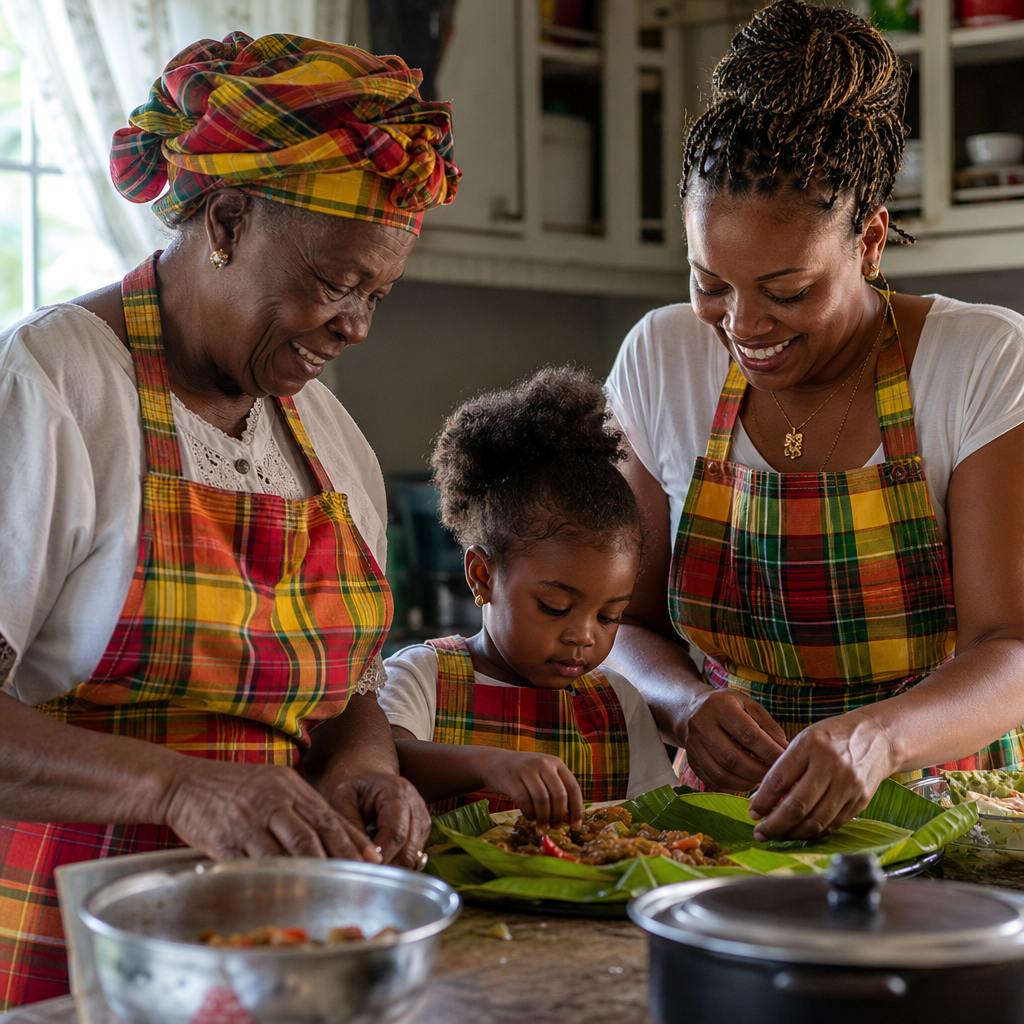
Food is one of the strongest carriers of New Year tradition in Saint Kitts. Holiday tables often include dishes and drinks that appear throughout the Christmas season and continue into January 1. Sorrel, made by steeping the calyces of the hibiscus plant with spices such as ginger and cloves, is a standard festive drink across much of the English-speaking Caribbean, and Saint Kitts is no exception. Black cake, dense with dried fruit and often soaked in rum or wine, remains a classic dessert associated with celebration, inheritance, and careful home preparation.
Main dishes vary by family, but baked ham, roast meats, stewed chicken, goat water, rice dishes, peas, macaroni pie, provisions, and salads are all familiar in holiday contexts. The exact menu matters less than the principle behind it: abundance should be shared. It is common for relatives, neighbors, and drop-in visitors to be fed. A successful New Year visit in Saint Kitts often includes being offered cake, a drink, or a full plate, even if you insist you have already eaten.
Food customs also reveal migration patterns. Families with relatives abroad may adapt recipes based on ingredients brought from overseas or techniques learned in London, New York, Toronto, or Antigua. Yet the social rule remains distinctly local: New Year’s Day is for welcoming people properly. Hospitality is not performative; it is an obligation tied to reputation, kinship, and pride.
Street Celebration, Carnival Energy, and Public Festivity
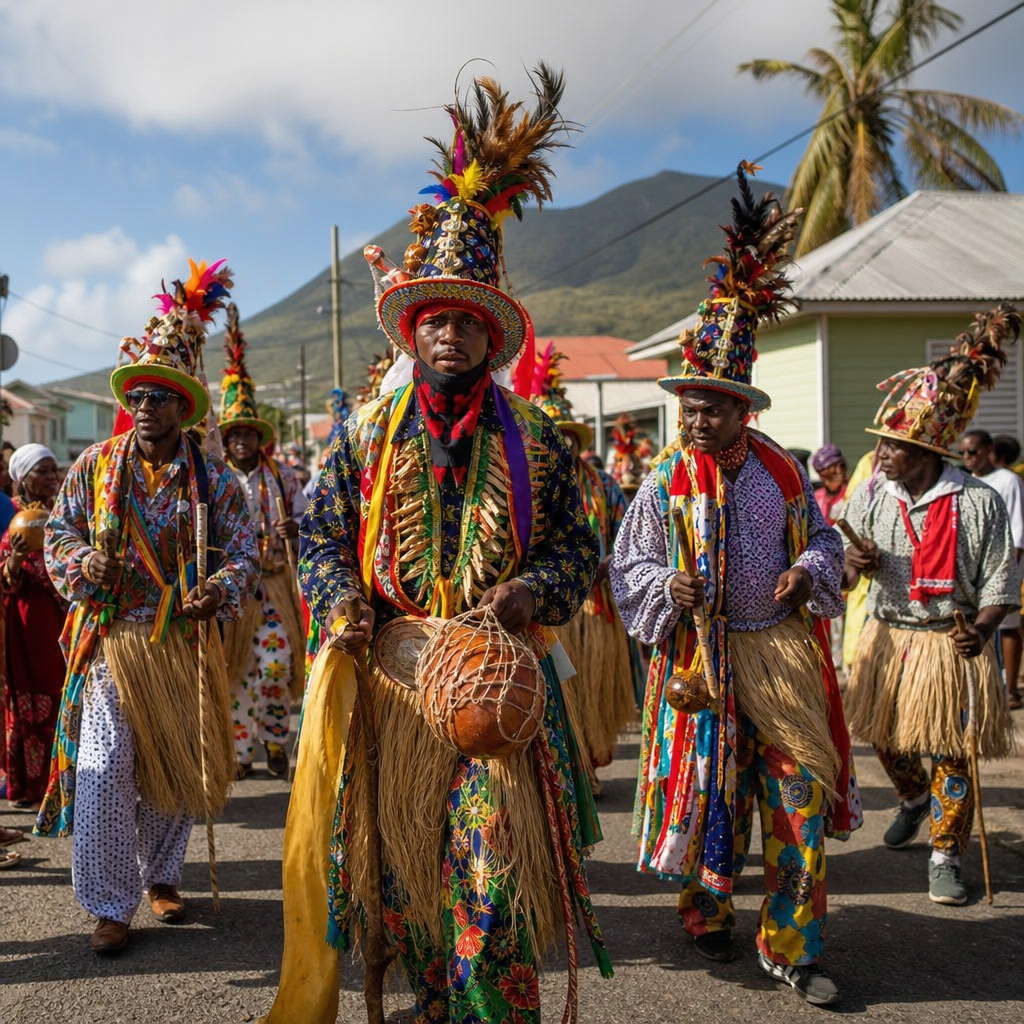
Because the New Year period overlaps with Sugar Mas, public festivity is inseparable from traditional New Year’s customs in Saint Kitts. Carnival season in Saint Kitts typically runs from December into early January and includes pageantry, music competitions, J’ouvert-style energy, bands, and costumed performance. Around New Year, Basseterre becomes a focal point for nightlife, social gathering, and island-wide movement. People travel in from villages, return home from abroad, and stay out later than usual.
Traditional does not mean quiet. In the Kittitian context, festivity itself is traditional. Loud music, dancing, reunions, and visible enjoyment are all legitimate ways of marking survival and possibility. Calypso and soca are especially important, because they provide the soundtrack for both celebration and commentary. Seasonal songs can carry humor, social critique, romance, and island pride in ways that no speech could match.
At the same time, public celebration has structure. Families keep track of where younger relatives are going, established venues shape crowd movement, and community memory determines which events are worth attending. The island’s scale makes this especially noticeable. In a place where social networks are dense, New Year festivities are rarely anonymous. You are likely to see cousins, teachers, former classmates, church members, and returning nationals in the same spaces.
Core Customs and What They Mean in Practice
The following table summarizes the customs that most consistently define New Year life in Saint Kitts and explains the purpose each one serves within the community.
| Custom | How it is practiced | Why it matters |
|---|---|---|
| House cleaning before midnight | Sweeping, washing, organizing rooms, preparing guest areas | Signals readiness, order, and a fresh beginning |
| Watch Night or New Year church service | Prayer, hymns, testimony, thanksgiving, formal dress | Places the year under spiritual guidance |
| Sharing festive food and drink | Serving sorrel, black cake, meats, sides, and snacks to family and visitors | Expresses hospitality and reinforces kinship ties |
| Attending Carnival-related events | Joining fetes, street gatherings, music events, and seasonal performances | Affirms joy, cultural continuity, and public belonging |
| Family visits and phone calls | Going house to house or calling relatives overseas | Maintains family networks across distance |
| Dressing well on New Year’s Day | Wearing carefully chosen clothes for church or visits | Shows respect, confidence, and social pride |
Family Visits, Homecoming, and the Importance of Diaspora Ties
New Year in Saint Kitts is also a season of return. Many Kittitians living abroad come home during Christmas and remain through the New Year period, making reunions a major part of the custom. This matters because migration has long shaped the federation’s economy and family structure. For decades, work, education, and family opportunity have pulled people to the United Kingdom, the United States, the U.S. Virgin Islands, Canada, and elsewhere. New Year provides one of the clearest annual moments when those dispersed ties become physically visible again.
Visits often follow a predictable pattern: immediate family first, then godparents, older relatives, neighbors, and close family friends. Respect for elders remains a defining element. Younger people are expected to greet properly, ask after health, and spend at least some time in conversation rather than rushing through. Even where modern schedules have shortened these rounds, the principle survives. Showing your face at New Year is a statement that relationships still count.
Phone and video calls now extend the same custom digitally. A relative in Brooklyn or Birmingham may still be part of the household gathering through a screen while sorrel is poured and jokes are exchanged. Technology has changed the method, not the custom’s core purpose. New Year’s tradition in Saint Kitts continues to bind a transnational family network into one seasonal community.
Respectability, Joy, and the Balance Between Sacred and Secular
What makes traditional New Year’s customs in Saint Kitts distinctive is the ease with which the island balances disciplined respectability and open celebration. In some societies, church-centered observance and Carnival-style festivity appear opposed. In Saint Kitts, they often coexist in the same family. A grandmother may insist on church attendance, while younger relatives spend hours at music events; both still gather around the same table on January 1.
This balance reflects a long-standing Caribbean social pattern. Public morality, proper dress, and reverence for worship remain important markers of character. At the same time, music, dancing, wit, and spectacle are accepted expressions of life and cultural confidence. Neither side fully erases the other. Instead, New Year custom becomes a negotiation between restraint and release.
That is why broad descriptions of Caribbean holidays often miss the point. Saint Kitts is not simply “party culture,” nor is it defined only by religious conservatism. Its New Year traditions show a more accurate reality: people celebrate hard, pray seriously, feed generously, and observe social codes with care. Understanding that balance is essential for anyone exploring local life and experiences on the island.
How Customs Are Changing Without Disappearing
Like all living traditions, New Year customs in Saint Kitts are evolving. Younger generations may spend more time at organized events than in extended house-to-house visiting. Imported drinks may compete with homemade sorrel. Social media now shapes where people go, what they wear, and how celebrations are documented. Tourism and event promotion have also made some holiday spaces more commercial than they were decades ago.
Still, the core customs remain recognizable. People continue to clean and prepare the home, attend church, cook festive food, reconnect with relatives, and use the holiday as a marker of personal reset. The forms shift, but the meanings endure. In practical terms, that is how tradition survives on a modern Caribbean island: not by freezing the past, but by carrying forward the values underneath the ritual.
For readers using this page as a hub within the broader Local Life and Experiences topic, New Year customs open pathways into many related subjects: Carnival traditions, Kittitian food culture, village social life, religious practice, diaspora homecoming, and the etiquette of hospitality. Each deserves its own deeper treatment, but New Year is where they intersect most clearly. If you want to understand how Saint Kitts feels from the inside rather than from a resort brochure, start here. Learn the rhythm of Old Year’s night, accept the offered slice of black cake, notice the church clothes, listen to the soca outside, and pay attention to how often people speak about blessing, family, and beginning again.
Traditional New Year’s customs in Saint Kitts endure because they do real social work. They renew households, strengthen family networks, affirm faith, showcase culture, and remind the island that celebration and responsibility belong together. From pre-midnight cleaning to Watch Night worship, from sorrel and black cake to Carnival energy in Basseterre, these practices form a complete picture of Kittitian seasonal life. They are miscellaneous only in the sense that they touch everything: food, music, religion, migration, etiquette, and public festivity. For anyone exploring Saint Kitts beyond the surface, they provide one of the clearest and most rewarding entry points. Use this hub as your starting place, then continue into the connected stories of local cuisine, Carnival, village customs, and family life to build a fuller understanding of the island.
Frequently Asked Questions
What makes New Year’s customs in Saint Kitts different from ordinary holiday celebrations?
Traditional New Year’s customs in Saint Kitts are distinctive because they are not limited to a single party, ceremony, or public event. They represent a full transition from Old Year’s night into New Year’s Day, combining family routines, religious observance, neighborhood interaction, and festive public celebration. In Saint Kitts, the idea of “customs” includes the repeated practices that families and communities return to year after year, such as gathering with relatives, attending church services, preparing special foods, visiting loved ones, and marking the start of the year with gratitude and reflection.
What sets these traditions apart is the depth of meaning attached to them. New Year’s is not simply about entertainment; it is also about renewal, thanksgiving, and social connection. Many Kittitians see the period as a time to look back on the past year, acknowledge blessings and hardships, and enter the new year with a clear sense of hope and responsibility. Because Saint Kitts has a strong communal culture, these customs often reinforce ties between generations, neighbors, church communities, and returning family members who come home for the season. The result is a celebration that feels both joyful and deeply rooted in local identity.
How do families in Saint Kitts typically celebrate Old Year’s night and New Year’s Day?
Families in Saint Kitts often begin Old Year’s night with time at home or with relatives, creating an atmosphere that is both festive and personal. Some households host small gatherings, prepare food in advance, play music, share stories, and spend the final hours of the year in company rather than alone. For many, the evening carries emotional significance because it is a moment to take stock of the year that is ending. Elders may speak about the importance of giving thanks, younger relatives may reconnect with family traditions, and returning family members from abroad often help make the occasion feel like a reunion as much as a holiday.
As midnight approaches, customs may shift toward celebration, prayer, or both. Some people welcome the new year in lively social settings, while others prefer a more reflective transition through church attendance or family devotion. New Year’s Day itself is often marked by visits, shared meals, rest after late-night festivities, and continued expressions of goodwill. It is common for the day to include seeing relatives, greeting neighbors, and taking part in traditions that emphasize fresh beginnings. Even when the exact routines vary from one household to another, the overall pattern is clear: family remains central, and the new year is welcomed not just with excitement, but with intention.
What role do church services and spiritual observances play in New Year’s traditions in Saint Kitts?
Church services and spiritual observances are an important part of New Year’s traditions in Saint Kitts, especially for people who see the turning of the year as a sacred moment as well as a social one. Watch-night services, late-night prayer gatherings, and New Year’s services offer a space for worshippers to end the old year in gratitude and begin the new one with faith. These services often include prayer, singing, scripture, reflection, and messages focused on protection, guidance, repentance, and hope for the months ahead.
The significance of these observances goes beyond routine religious attendance. For many families, being in church at or around midnight symbolizes placing the coming year in God’s hands. It is also a way of grounding celebration in humility and thanksgiving. In a society where religion has historically shaped community life, these services help connect personal hopes with shared values. Even people who participate in parties or public festivities may still regard church attendance as an essential part of the season. This blend of reverence and celebration reflects the broader character of New Year’s customs in Saint Kitts, where joy and spirituality often exist side by side rather than in opposition.
Are street celebrations and community gatherings an important part of New Year’s customs in Saint Kitts?
Yes, street celebrations and community gatherings have long been an important part of how New Year’s is experienced in Saint Kitts. While family homes and churches remain central spaces, public celebration adds another layer to the season by bringing energy, music, and a sense of shared identity into the open. Communities often mark the arrival of the new year with social events, neighborhood interaction, and festive street activity that allow people to celebrate together rather than in isolation. This communal style of celebration reflects the island’s social fabric, where public life and personal relationships are closely connected.
These gatherings are meaningful because they reinforce the idea that the new year belongs to everyone, not just to individual households. Neighbors greet one another, friends reconnect, and visitors returning home for the holidays become part of a wider collective atmosphere. In many cases, the public dimension of New Year’s helps preserve continuity with older customs, even as modern forms of entertainment influence how people celebrate. The streets, villages, and social spaces of Saint Kitts become places where memory, music, and fellowship come together. That public spirit is one reason New Year’s customs on the island feel so vibrant and enduring.
What foods and shared meals are associated with Traditional New Year’s customs in Saint Kitts?
Food is one of the most visible and cherished parts of Traditional New Year’s customs in Saint Kitts because shared meals help turn the holiday into a lived expression of hospitality, continuity, and family pride. During the New Year period, households often prepare substantial meals for relatives and visitors, and the act of feeding others carries cultural meaning beyond simple celebration. The table becomes a place where generations meet, recipes are remembered, and the values of generosity and togetherness are put into practice. Even when menus differ from one family to another, the expectation of good food and open hospitality is a consistent feature of the season.
These meals often reflect the broader culinary heritage of Saint Kitts, where local ingredients, home-style cooking, and festive preparation all play a role. Traditional dishes, baked goods, drinks, and hearty family favorites may appear as part of the holiday spread, especially when relatives have returned home and the household is fuller than usual. In this context, food supports the emotional meaning of New Year’s customs: it welcomes homecoming, strengthens social bonds, and helps mark the passage into a new year with abundance and care. For many Kittitians, remembering New Year’s is inseparable from remembering the smells, tastes, and shared experiences of the family meal.