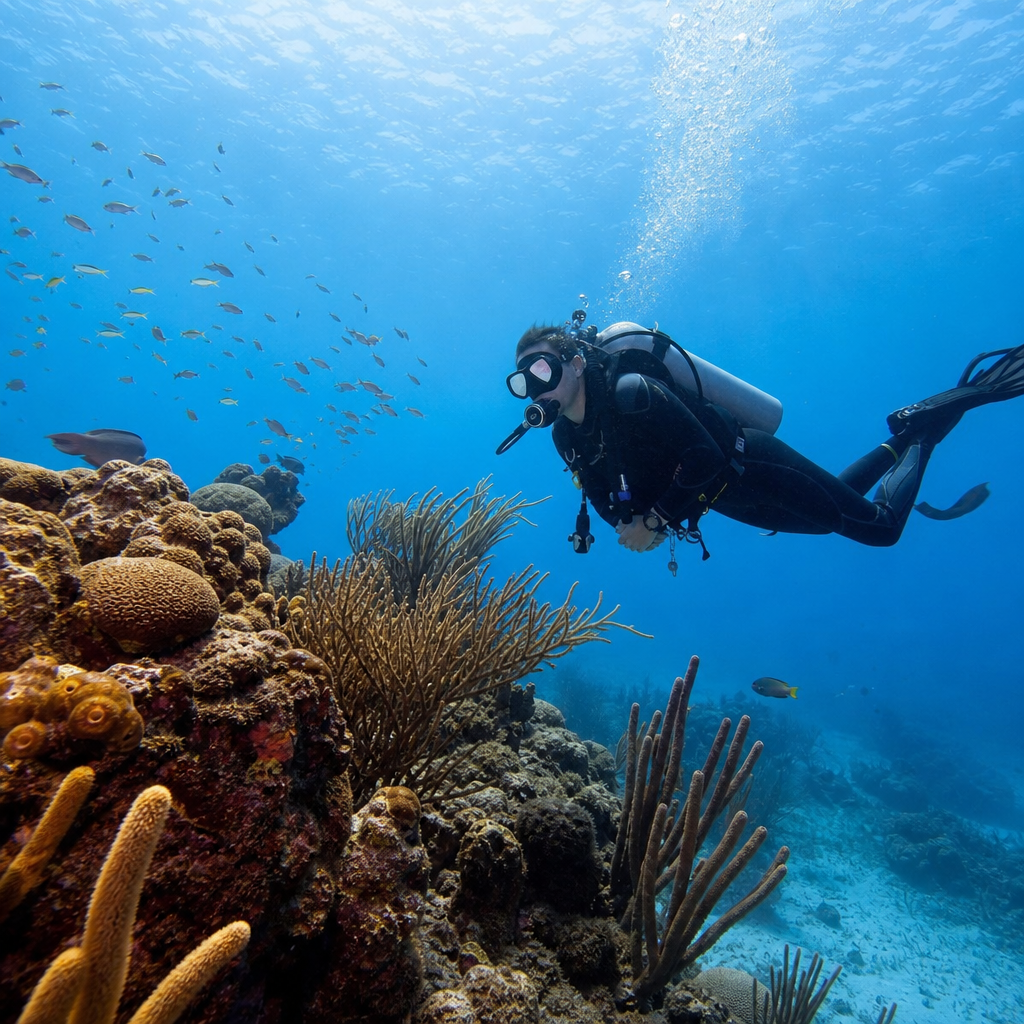
Scuba diving in Saint Kitts and Nevis offers one of the most varied underwater experiences in the Caribbean, combining volcanic reef systems, coral gardens, wreck dives, and frequent encounters with tropical marine life in relatively uncrowded waters. For travelers researching nature and wildlife in the federation, this topic matters because diving here is not a single attraction but a gateway into the islands’ broader ecology: coastal mangroves, seagrass nurseries, reef fish populations, seasonal pelagic visitors, and conservation efforts all connect beneath the surface. Saint Kitts and Nevis, the two-island nation in the Leeward Islands, sits on a volcanic shelf where lava formations, fingers of reef, sandy slopes, and man-made wrecks create a broad range of dive profiles for beginners and advanced divers alike.
When divers ask what makes Saint Kitts and Nevis different from better-known Caribbean destinations, my answer is consistency and diversity. I have planned Caribbean dive itineraries where famous islands delivered a handful of headline sites but little variety after three days. In Saint Kitts and Nevis, the appeal is broader: protected western coasts often provide calmer conditions, visibility commonly ranges from good to excellent depending on weather and runoff, and operators can move between shallow training reefs, dramatic walls, and wrecks without long offshore crossings. Water temperatures usually hover in the upper seventies to low eighties Fahrenheit, which means most divers are comfortable in a shorty or thin full suit for much of the year.
Key terms help frame the experience. A reef dive usually means coral structures with fish life, sponges, and invertebrates in moderate depths. A wreck dive focuses on a sunken vessel, often colonized by corals and attracting larger schools of fish. Drift diving involves moving with the current rather than fighting it, while shore diving starts from land rather than a boat. In Saint Kitts and Nevis, most visitors book boat dives through local operators because they provide access to the strongest sites, local current knowledge, and mooring-based entries that reduce reef damage. For anyone building a nature-focused trip, scuba diving is also the clearest way to understand how the islands’ terrestrial beauty continues underwater.
What the underwater environment is really like
The marine environment around Saint Kitts and Nevis reflects the islands’ volcanic origin. Instead of endless flat reef, many sites feature boulders, ledges, lava fingers, mini walls, and sandy channels that create habitat variety. That structural complexity supports angelfish, parrotfish, trunkfish, grunts, snappers, trumpetfish, moray eels, octopus, lobsters, southern stingrays, and hawksbill or green turtles. Divers also regularly see sponge growth in vivid orange, purple, and yellow, plus sea fans and soft corals that add movement and color. Hard coral cover can be patchy in places, as it is across much of the Caribbean, but many sites remain lively because topography and fish density compensate for areas where coral recovery is ongoing.
Conditions change by coast and season. The Caribbean side is generally calmer than the Atlantic side, and that is why many dive operations focus there. Visibility can exceed 80 feet on strong days, though storms, surge, or recent rain can lower it. Currents vary from nearly absent on beginner reefs to brisk enough to require tighter buddy control on exposed sites. Hurricane season runs from June through November, so summer and early autumn bring the usual Caribbean weather considerations, but diving remains possible much of the year. From a practical standpoint, the best dive destination is not always the one with the single most famous reef; it is the one where operators can reliably match conditions to skill level, and Saint Kitts and Nevis does that well.
Best dive sites around Saint Kitts
Saint Kitts has the larger selection of established dive sites and the broadest mix of training areas, reefs, and wrecks. Friars Bay Reef is often used for check dives and courses because it offers manageable depths, coral heads, and familiar Caribbean reef species without intimidating topography. Monkey Shoals is another commonly cited area where volcanic ridges and reef structure create a more dramatic feel, especially for photographers looking for sponge color and fish activity against dark rock. River Taw and Sandy Point area dives can be rewarding when conditions align, with healthy fish populations and a sense of space that many divers prefer over crowded resort reefs elsewhere in the region.
Wreck enthusiasts often focus on purpose-sunk and older wreck sites that have matured into artificial reefs. The River Taw, a former tug, is one of the better-known wreck experiences associated with the islands, while additional wrecks in the marine park and nearby waters provide different depth ranges and penetration considerations. On these dives, the attraction is not only the hull itself but the life it holds: schooling fish over the deck, encrusting corals on steel surfaces, and predatory species patrolling the edges. For newer divers, local guides typically keep the route external and simple. For advanced divers, the wrecks add navigation interest and a change of pace from reef-only itineraries. That combination makes Saint Kitts especially useful as a hub page topic, because one destination serves multiple diver profiles.
Best dive sites around Nevis
Nevis is often quieter above and below the water, and that lower traffic is part of its appeal. The island’s dive sites include reef slopes, coral patches, volcanic formations, and a more intimate atmosphere than larger Caribbean dive hubs. Sites off the west and southwest coasts often deliver gentle conditions, making them attractive for relaxed two-tank mornings. Divers come to Nevis for the feeling of discovering places that still seem lightly traveled, not for an oversized portfolio of mega-sites. In practical terms, that means smaller groups, easier logistics, and guides who know how to adapt a route based on visibility, surge, and guest experience.
Named sites and operator portfolios change over time, but the pattern remains consistent: Nevis diving is known for fish-filled reefs, healthy sponge growth, occasional turtle encounters, and the chance to combine diving with a slower, nature-oriented island stay. I recommend Nevis to travelers who care as much about overall trip rhythm as raw dive count. You can do a morning boat dive, return for lunch with views of the peak, and spend the afternoon birding, hiking, or exploring historic coastal landscapes. That blend matters because many wildlife travelers are not pure divers; they want one itinerary that supports marine life viewing, scenic experiences, and manageable travel days without the pace of a dedicated liveaboard-style trip.
Marine life, photography, and what divers usually see
Most dives in Saint Kitts and Nevis center on reef life rather than guaranteed sightings of large pelagics. That is not a weakness; it simply defines expectations accurately. The strongest wildlife value lies in repeated close encounters with resident species and excellent opportunities to study habitat relationships. Juvenile fish shelter in seagrass and coral rubble, cleaner shrimp occupy crevices, and turtles browse around reef edges where algae growth supports them. Macro photographers can find blennies, gobies, nudibranchs on good days, flamingo tongues on sea fans where permitted viewing is careful, and arrow crabs tucked into reef cavities. Wide-angle photographers benefit from volcanic contours, sponge color, and wreck lines that create stronger composition than flat reef alone.
| Dive focus | What to expect | Best suited for |
|---|---|---|
| Shallow reef | Coral heads, parrotfish, grunts, turtles, easy light for photos | Beginners, refreshers, snorkel-diver mixed groups |
| Volcanic formation | Ledges, boulders, sponge growth, dramatic terrain, occasional current | Intermediate divers, underwater photographers |
| Wreck dive | Schooling fish, encrusting life, navigation interest, depth management | Advanced beginners to experienced divers, depending on site |
| Drift-style reef | More movement, larger area covered, strong fish activity on current lines | Intermediate and advanced divers |
The most common mistake visitors make is chasing unrealistic megafauna expectations shaped by social media clips from very different regions. Saint Kitts and Nevis is better understood as a biodiverse Caribbean reef destination where texture, color, and natural variety create strong dives day after day. If a traveler wants dependable shark action or blue-water schooling hammerheads, this is not the primary market position. If they want reefs, wrecks, warm water, and a nature-rich itinerary with less crowding than major Caribbean resort zones, it performs very well. Clear expectations produce better trips, better reviews, and safer dive planning.
Training, safety, and how to plan a dive trip
One of the practical strengths of scuba diving in Saint Kitts and Nevis is accessibility for new divers. Resort-based dive centers and independent operators commonly offer Discover Scuba Diving sessions, Open Water certification, refresher courses, and guided two-tank trips. Because many sites are reached quickly from shore bases or marinas, the islands work well for travelers who do not want long boat days. Families or mixed-interest groups also benefit; one person can dive while another snorkels, sails, or stays on the beach. For certified divers who have been inactive, a refresher is worth booking before attempting wrecks or drift-exposed reefs. Good operators will insist on this, and that is a positive sign.
Safety standards matter more than marketing language. Look for operators that use recognized training agencies such as PADI, SSI, or NAUI, maintain oxygen on board, provide clear briefings on current, depth, and route, and ask for certification proof and recent diving history. A quality briefing in Saint Kitts and Nevis should explain entry method, maximum depth, expected visibility, current direction, notable hazards such as fire coral or surge near structure, and the turnaround pressure for the group. Divers should also consider standard travel medicine basics: stay hydrated in the tropical climate, allow appropriate no-fly intervals before departure, and use reef-safe sun protection where possible. Equipment rental quality varies worldwide, so serious divers may prefer to bring a mask, computer, and exposure suit they know well.
Trip timing depends on priorities. Winter and spring often appeal to travelers seeking stable weather and broad vacation availability, while summer can offer warm water and fewer crowds with the usual storm-season caveat. The best itinerary usually spans at least four to six diving days across both islands, allowing time for a weather adjustment day and non-diving nature activities. To get more value from this hub topic, connect diving with the rest of the islands’ wildlife assets: rainforest hiking in Saint Kitts, monkey sightings in upland areas, birdwatching wetlands, and sea turtle conservation context. The result is not just a dive vacation but a more complete understanding of the marine and terrestrial ecosystems that define Saint Kitts and Nevis.
Conservation, local impact, and why responsible diving matters
Healthy diving depends on healthy reefs, and Caribbean reefs face real pressure from warming seas, coral disease, storm damage, overfishing in some regions, and careless visitor behavior. Saint Kitts and Nevis is not exempt from these challenges. That is why responsible diving practices are central, not optional. Good buoyancy control prevents accidental coral strikes. Using moorings instead of anchors protects reef structure. Not touching turtles, feeding fish, or collecting shells helps maintain natural behavior and habitat integrity. Divers should also understand that artificial reefs and wrecks can reduce pressure on natural sites when managed correctly, but they are supplements, not replacements, for living reef conservation.
Local dive operators, marine stakeholders, and conservation groups contribute through education, site rotation, and visitor management, though enforcement and resources can vary as they do on many small islands. Travelers can support that work by choosing operators with strong environmental briefings, buying from local businesses, and treating the underwater environment as wildlife habitat rather than entertainment space. The larger benefit of scuba diving in Saint Kitts and Nevis is perspective: when people see juvenile fish sheltering beside sponge growth on a lava ridge, or a turtle cruising above a wreck now covered in life, conservation stops feeling abstract. If you are planning a nature and wildlife trip, make diving part of it, book with a reputable operator, and experience the islands where their ecology is most alive.
Frequently Asked Questions
What makes scuba diving in Saint Kitts and Nevis different from other Caribbean destinations?
Scuba diving in Saint Kitts and Nevis stands out because it combines a wide range of underwater environments within a relatively small and uncrowded island federation. Divers can explore volcanic reef formations, coral gardens, pinnacles, walls, and wrecks without the heavy boat traffic and crowded dive sites found in some better-known Caribbean hubs. The volcanic origin of the islands creates distinctive underwater topography, including dramatic rock structures, lava-shaped contours, and reef systems that support a rich mix of marine life.
Another major advantage is the sense of ecological variety. A single trip can reveal reef fish communities, macro life hidden in coral heads, seagrass habitats that support juvenile species, and offshore areas where pelagic visitors occasionally appear. Because these marine environments are linked to broader coastal ecosystems such as mangroves and nearshore nurseries, diving here offers more than scenic reefs; it gives travelers insight into how island wildlife systems function as a whole. For visitors interested in nature and wildlife, Saint Kitts and Nevis is not just a place to log dives, but a destination where underwater exploration connects directly to conservation, biodiversity, and the health of the Caribbean marine environment.
What kinds of marine life can divers expect to see in Saint Kitts and Nevis?
Divers in Saint Kitts and Nevis can typically expect a lively and diverse tropical reef community. Common sightings include angelfish, parrotfish, sergeant majors, trumpetfish, grunts, wrasse, butterflyfish, and schools of blue tangs moving over coral formations. Larger reef residents such as southern stingrays, eagle rays, barracuda, and nurse sharks may also be encountered, especially around deeper reef edges and wreck sites. Sea turtles are among the most memorable sightings, and lucky divers may see hawksbill, green, or occasionally other species feeding or passing through coastal waters.
The biodiversity is not limited to large animals. Many dive sites are also rewarding for those who enjoy slower observation and underwater photography. Coral crevices and sponge-covered surfaces can shelter cleaner shrimp, crabs, eels, blennies, gobies, and other small reef creatures. Because nearby seagrass beds and mangrove-linked coastal habitats serve as nurseries, reef populations often include juvenile fish in significant numbers, which helps create a vibrant and active underwater scene. Seasonal conditions and site location influence what you will see, but the overall appeal lies in the balance between colorful reef life, occasional larger encounters, and a healthy variety of species across different habitats.
Are the dive sites in Saint Kitts and Nevis suitable for beginners, or are they better for advanced divers?
Saint Kitts and Nevis is well suited to a broad range of experience levels, which is one of its strongest advantages as a dive destination. Beginners can find calm, accessible reef sites with good visibility, moderate depths, and relatively gentle conditions that allow for comfortable training dives and easy guided exploration. These sites often feature coral gardens, sandy patches, and abundant fish life, making them visually rewarding without requiring advanced buoyancy control or deep-diving experience. Certified but newer divers often appreciate that many sites deliver a classic Caribbean reef experience without intense currents or technical demands.
At the same time, more experienced divers will find plenty to keep them engaged. Deeper reefs, wreck dives, and sites with more pronounced underwater structure offer opportunities for advanced training and more complex exploration. Depending on weather and location, some sites may involve stronger currents, sharper depth changes, or navigation around volcanic formations and wreck features. Reputable local dive operators usually match divers to appropriate sites based on certification, confidence, and current sea conditions, so travelers can expect a safe and enjoyable experience whether they are discovering scuba for the first time or seeking more challenging underwater terrain.
When is the best time of year to go scuba diving in Saint Kitts and Nevis?
Scuba diving is possible year-round in Saint Kitts and Nevis, but the best time depends on what kind of trip you want. In general, travelers often prefer the drier months, when sea conditions can be more predictable and visibility may be especially appealing. Calm weather and stable water conditions tend to make boat access easier and create excellent circumstances for reef and wreck dives alike. For many visitors, this means the most comfortable period for diving overlaps with the peak travel season, when the islands are welcoming but still less crowded underwater than many other Caribbean destinations.
That said, the off-peak and shoulder periods can also be attractive, especially for divers who value quieter travel and potentially better pricing. Water temperatures remain warm throughout the year, which supports consistent diving conditions. Seasonal weather patterns, including rain, wind, and the broader Atlantic hurricane season, can affect visibility and site access on some days, but local dive operators adjust schedules accordingly. If wildlife observation is part of your focus, it is worth asking operators about seasonal changes in fish activity, turtle sightings, and overall marine conditions. The key takeaway is that there is no single narrow dive season here; rather, Saint Kitts and Nevis offers dependable tropical diving across most of the year, with timing shaped by your preferences for weather, crowds, and travel logistics.
Why is scuba diving important to understanding the nature and wildlife of Saint Kitts and Nevis?
Scuba diving is one of the best ways to understand the natural character of Saint Kitts and Nevis because so much of the federation’s biodiversity is connected to the sea. The reefs are not isolated attractions; they are part of a living coastal network that includes mangroves, seagrass beds, sandy shallows, volcanic shorelines, and open-water habitats. These systems support fish breeding, juvenile development, coral growth, nutrient cycling, and the feeding patterns of larger species such as rays and turtles. When travelers dive here, they are seeing the marine side of the same ecological story that shapes the islands’ beaches, bays, birdlife, and coastal landscapes.
This also makes diving highly relevant for visitors interested in responsible tourism and conservation. Healthy reefs help protect shorelines, support fisheries, and sustain marine biodiversity, while seagrass and mangrove areas function as nurseries that keep reef communities productive over time. Observing these environments firsthand often gives divers a much stronger appreciation for how fragile and interconnected tropical ecosystems can be. In Saint Kitts and Nevis, diving is more than recreation; it is a direct encounter with the processes that support the islands’ wildlife and coastal resilience. For anyone researching nature in the federation, time underwater adds essential context that cannot be gained from land-based sightseeing alone.