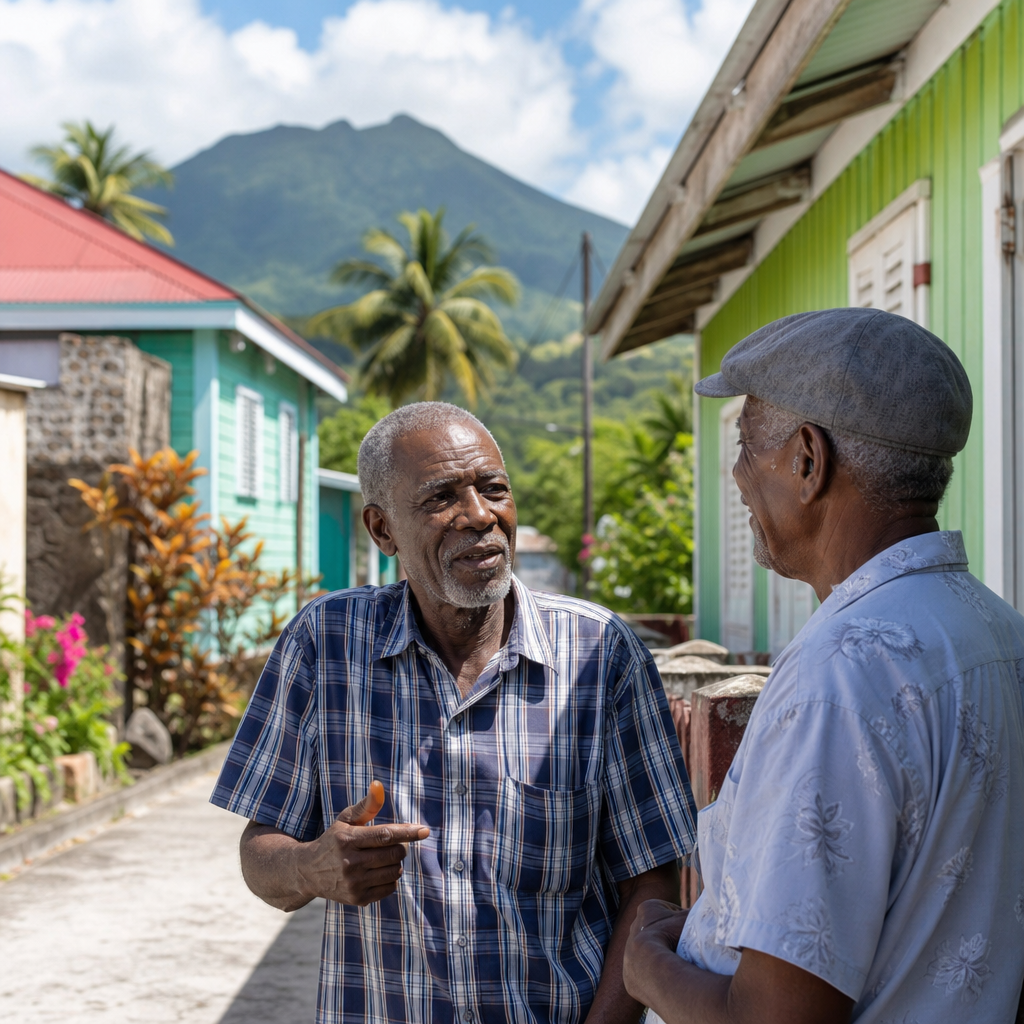
Understanding Nevis’ unique dialect opens a direct path into the island’s history, humor, family life, and daily rhythm. In Nevis, language is never just a tool for exchanging information; it is a living record of migration, plantation society, African retention, British colonial influence, religion, trade, and modern tourism. When people refer to the Nevis dialect, they usually mean the local English-lexifier Caribbean Creole spoken alongside Standard English. Most Nevisians shift between both depending on setting, audience, and purpose. That ability to move across registers is not confusion or broken speech. It is linguistic skill.
I have found that visitors often hear familiar English words and assume they fully understand what is being said, then miss the meaning carried by pronunciation, grammar, pacing, and local references. That gap matters. Misreading dialect can flatten a place into a postcard version of itself. Understanding how Nevisians speak helps travelers show respect, helps researchers interpret oral history correctly, and helps members of the diaspora reconnect with home. It also matters because dialect is one of the strongest markers of cultural identity on a small island where global media constantly presses toward sameness.
Nevis, part of the Federation of Saint Kitts and Nevis, has a speech pattern closely related to other Eastern Caribbean varieties but distinct in sound, vocabulary, and social use. A dialect is a regional or social variety of a language with its own pronunciation, grammar, and vocabulary. A creole develops historically from sustained contact among speakers of different languages and becomes a native language community-wide. In Nevis, the local speech exists on a continuum: broad village speech at one end, formal Standard English at the other, and many blended forms in between. That continuum explains why no single spelling system can capture every voice perfectly.
For a hub article within Local Life and Experiences, this guide covers the essentials: where the dialect came from, what it sounds like, the grammar patterns listeners notice first, common words and expressions, where speech changes across contexts, and how outsiders can engage without parody. It also points toward related subtopics in miscellaneous island culture, from storytelling and proverbs to radio talk, market conversation, church speech, school language, and digital communication. If you want to understand Nevis beyond beaches and heritage sites, listen closely to the words people choose, and just as importantly, how they shape them.
Historical roots of the Nevis dialect
The Nevis dialect developed through centuries of contact shaped by colonization, enslavement, labor, and mobility. English provided the dominant lexical base because Britain controlled the island for long periods, but the speech system that emerged was not simply rural English exported intact. Enslaved Africans from different language backgrounds had to communicate with one another and with English-speaking authorities under violent plantation conditions. Across the Caribbean, that kind of forced multilingual contact produced new grammatical patterns, sound systems, and vocabulary. Nevis followed that regional pattern while developing local specifics through isolation and community continuity.
After emancipation, the dialect remained the primary language of home and village life, while Standard English held prestige in government, school, church formality, and official writing. That divide still shapes attitudes today. Older speakers may describe dialect as “bad English” because colonial education taught them to think that way, yet those same speakers often command extremely rich creole speech full of nuance, wit, and inherited forms. Linguists reject the idea that creoles are inferior. The Nevis dialect is rule-governed, expressive, and historically significant.
Migration reinforced this complexity. Families moved between Nevis, St. Kitts, Antigua, the U.S. Virgin Islands, the United Kingdom, the United States, and Canada. Returning migrants brought back pronunciations, slang, and speech habits, but local patterns remained resilient. You can hear this in villages where younger speakers use WhatsApp-era expressions or North American phrasing while still keeping local rhythm and grammar. Tourism adds another layer, encouraging code-switching in hospitality settings. Even so, the dialect persists because it is tied to kinship, belonging, and the social knowledge of who is from where.
What the dialect sounds like in everyday speech
The first thing many listeners notice is rhythm. Nevis speech often moves with a clipped but musical cadence, with stress patterns that differ from Standard British or American English. Vowels may be shortened, consonants may be softened or dropped, and entire phrases may compress. Final consonant clusters can reduce in fast speech, so “left” may sound closer to “lef.” “Th” sounds may shift toward “d” or “t,” making “this” sound like “dis” in broad speech. None of this is random; it follows patterns shared across many Caribbean English-lexifier creoles.
Intonation carries meaning as strongly as vocabulary. A rising contour can signal surprise, challenge, or playful disbelief. A flat statement can still be warm because the social meaning sits in timing and context. I have seen visitors misunderstand directness as rudeness when it is actually ordinary island efficiency. In village conversation, speakers may overlap, tease, and answer with compressed phrases that sound abrupt to outsiders. Within the local system, those exchanges can be affectionate and highly cooperative.
Pronunciation also varies by age, setting, and degree of formality. A teacher in Charlestown may use nearly Standard English in class, then shift noticeably on the roadside with relatives. A market vendor may speak broadly with familiar customers but moderate pronunciation for cruise visitors. Radio presenters often balance local flavor with intelligibility, creating a semi-formal broadcast style. This range is why there is no single “correct” Nevis sound. The dialect lives in variation, and competent speakers adjust it fluidly.
Core grammar patterns that define Nevis speech
Grammar is where outsiders most often mistake systematic speech for error. In Nevis dialect, verbs do not always mark tense the same way Standard English does. Time can be shown through context, particles, or habitual constructions rather than by changing every verb ending. You may hear forms equivalent to “He go town yesterday” or “She does cook early,” where the meaning remains clear from the structure and situation. Habitual markers, zero copula in some contexts, and streamlined agreement patterns are common features across Caribbean creole speech.
Pronouns and possession can also differ. Plural marking may appear on the noun, the pronoun, or be understood from context. Negation is often economical and emphatic. Questions may rely less on inversion and more on intonation: “You coming?” rather than “Are you coming?” These are not shortcuts caused by laziness. They are established grammatical choices. When I transcribe oral interviews from Nevis, preserving those forms is essential because standardizing them erases social meaning, speaker identity, and often the speaker’s stance toward what is being said.
Another key feature is code-switching. A Nevisian speaker may begin a sentence in a more standard register, shift into broader dialect for emphasis or humor, then return to standard phrasing. That movement can signal intimacy, authority, irony, or emotion. In practical terms, it means the dialect is not separate from English in a rigid box. It operates beside and through English, with speakers selecting forms strategically. Anyone trying to understand local life has to pay attention to those shifts rather than listening only for isolated vocabulary items.
Common words, expressions, and meanings
Vocabulary gives the dialect much of its immediacy. Some terms are shared widely across the Caribbean, while others feel strongly local in tone or frequency. Words can carry meanings that differ subtly from international English. “Lime,” for example, in Eastern Caribbean usage often means to hang out socially. “Maco” can describe someone overly inquisitive or fond of minding other people’s business. “Study” may mean to think hard about or worry over something, not only academic work. Context is everything, because the same word may shift meaning with tone.
Idiomatic expressions are especially important because they compress whole social lessons into a phrase. Proverbs, teasing formulas, and cautionary sayings are common in family speech. Older Nevisians may answer a practical question with an idiom rather than a direct explanation, expecting the listener to infer the message. That style rewards cultural familiarity. It also links language to storytelling traditions, church testimony, political commentary, and village banter, making dialect a gateway to many other miscellaneous aspects of local life.
| Expression or feature | Plain meaning | Typical use in Nevis context |
|---|---|---|
| Lime | Relax socially, spend casual time together | Used for beach gatherings, roadside chats, or after-work socializing |
| Maco | Nosy, too interested in others’ affairs | Common in playful criticism during neighborhood conversation |
| Study | Think about, worry about, consider seriously | Heavily used in advice, family talk, and everyday planning |
| You good? | Are you okay, settled, or satisfied? | Hospitality, check-ins, and routine courtesy |
| Broad pronunciation shift | More distinctly local sound and grammar | Often appears with close friends, family, or joking emphasis |
Because spelling is inconsistent, these expressions may appear in several written forms online. That does not make them unstable; it reflects the fact that the dialect has traditionally been transmitted orally. Social media now acts as an informal writing space, and younger users often spell words phonetically to capture voice. For anyone building a deeper guide to Nevis culture, collecting these expressions alongside examples from market life, Carnival, local comedy, and family WhatsApp groups is more useful than memorizing a short tourist phrase list.
Where dialect appears across local life and experiences
The Nevis dialect is not confined to private conversation. It appears across the full landscape of local life, though in different intensities. In homes, it is often the default language of care, discipline, jokes, and storytelling. Grandparents may tell family history in broad speech because that register carries authority and emotion. In markets and roadside shops, dialect supports speed and familiarity. Prices, favors, gossip, and practical information move efficiently when everyone shares the same linguistic cues.
In churches, the balance can shift. Scripture readings and formal prayers may lean toward Standard English, while testimonies, announcements, and post-service conversation often move into dialect. Politics works similarly. A candidate speaking at a rally may use standard phrasing for policy points but switch into stronger local speech to show solidarity and credibility. Musicians, calypsonians, and comedians rely on dialect because timing, satire, and audience recognition all depend on it. Remove the dialect and much of the performance loses force.
Schools remain a key site of tension. Students commonly arrive with dialect as their strongest spoken system, yet formal education privileges Standard English. Good teachers understand that the solution is not shaming dialect but teaching bidialectal competence: when to use formal written English and when local speech is appropriate and powerful. That distinction matters for literacy outcomes and self-confidence. In recent years, digital media has made dialect more visible. Facebook posts, voice notes, memes, and local news comment sections preserve speech patterns that earlier generations would rarely have seen in writing.
How visitors, researchers, and diaspora readers can engage respectfully
The best way to engage with Nevis dialect is to listen before imitating. Most Nevisians appreciate sincere interest, but exaggerated copying can sound mocking, especially when outsiders perform accent without understanding grammar or social context. Ask what a phrase means. Notice when speakers shift register. Pay attention to who uses broad forms with whom. Those habits lead to better conversations than trying to repeat a few expressions from memory.
For researchers, journalists, and travel writers, accuracy matters. Quote speech faithfully, but do not over-render it into eye dialect so heavily that it becomes caricature. If every word is distorted on the page, readers may interpret the speaker as less intelligent, even though the real issue is the writer’s framing. Use enough representation to preserve voice while maintaining readability. Cross-check unfamiliar words with multiple speakers, because meaning can vary by age, village, and situation.
For diaspora readers reconnecting with family roots, dialect is often the quickest emotional bridge back to place. Voice notes from an aunt, a proverb from a grandparent, or the phrasing used at a funeral service can carry more identity than a formal history text. Preserving those forms matters. Record elders, document local sayings, and support community media that keeps Nevis speech audible. Understanding Nevis’ unique dialect ultimately means recognizing it as cultural knowledge, not background noise. Learn a few terms, ask better questions, and let the language teach you how Nevis sees itself.
Frequently Asked Questions
What makes Nevis’ dialect different from Standard English?
Nevis’ dialect is different from Standard English because it is not simply “incorrect English” or casual slang. It is a fully developed local speech system shaped by the island’s history, social life, and cultural memory. In most cases, people are referring to an English-lexifier Caribbean Creole spoken alongside Standard English. That means many of the words may sound familiar to English speakers, but the pronunciation, rhythm, grammar, sentence structure, and meanings can work in distinct ways. The dialect carries traces of African linguistic retention, British colonial influence, plantation-era communication, regional Caribbean contact, religion, trade, and later tourism. All of that history lives in the way people speak.
One of the clearest differences is rhythm and expression. Nevisian speech often has a cadence, compression, and musicality that gives conversations warmth, wit, and speed. Speakers may shorten sounds, shift verb patterns, or use local vocabulary and idiomatic phrases that do not appear in Standard English. Context matters a great deal, and tone can communicate as much as literal wording. A phrase that looks simple on paper may carry humor, teasing, warning, affection, or skepticism depending on delivery. In this way, the dialect is not just a different set of words; it is a different way of organizing experience through language.
Another major difference is social function. Standard English is often associated with school, official writing, formal business, and public presentation, while the dialect is strongly tied to home life, storytelling, humor, neighborhood interaction, and emotional nuance. However, this does not mean the dialect is less sophisticated. In fact, it often communicates intimacy, cultural fluency, and local intelligence more effectively than formal English can. Understanding that distinction is essential if you want to appreciate Nevis’ dialect on its own terms rather than measuring it unfairly against outside grammatical standards.
Is Nevis’ dialect the same as other Caribbean dialects?
No, Nevis’ dialect is related to other Caribbean dialects, but it is not exactly the same. Across the Caribbean, many islands developed English-based creoles under broadly similar historical conditions, including colonization, enslavement, labor migration, maritime trade, and contact between multiple language communities. Because of that shared history, Nevisian speech may sound familiar to listeners from nearby islands, and there may be overlapping vocabulary, grammar patterns, and expressions. Still, each island has its own sound, local sayings, speech habits, and cultural references, and Nevis is no exception.
What makes Nevis distinct is the particular mix of influences that settled on the island over time. Local pronunciation, pacing, common idioms, and everyday word choices reflect Nevis’ own social history and tight-knit community life. Even where a phrase resembles one used elsewhere in the Caribbean, the meaning or emotional effect may differ slightly in Nevisian usage. This is especially true with humor, nicknaming, teasing, family talk, and expressions used among people who know one another well. Small islands often preserve highly specific speech habits, and Nevis has its own recognizable linguistic personality within the wider Eastern Caribbean world.
It is also important to avoid treating “Caribbean dialect” as one single thing. That oversimplifies a region that is linguistically rich and historically layered. Nevis’ dialect should be understood as part of a broader creole continuum, but with its own local identity. For readers and travelers, this means that familiarity with Jamaican, Bajan, Trinidadian, or Kittitian speech will not automatically equal full understanding of Nevisian language use. You may hear family resemblances, but the details matter. Paying attention to those details is part of understanding the island itself.
Why do many Nevisians switch between dialect and Standard English?
Many Nevisians switch between dialect and Standard English because both forms of speech serve important but different purposes. This practice, often called code-switching, is common in multilingual and creole-speaking societies. In Nevis, speakers may move fluidly between the local dialect and more formal English depending on who they are speaking with, where the conversation is happening, and what kind of impression or clarity is needed. A person might use Standard English in school, government offices, professional settings, or formal interviews, then shift naturally into dialect with family, friends, or community members.
This switching is not confusion or inconsistency. It is a sign of linguistic skill. Nevisians often know exactly when one form of speech will communicate respect, authority, precision, solidarity, humor, or emotional closeness more effectively than the other. Dialect can create immediacy and trust. It can soften criticism, sharpen a joke, or make a story come alive. Standard English, on the other hand, may be preferred when speaking to outsiders, writing formally, or navigating institutions shaped by colonial and global expectations. The ability to move between both is often a practical and cultural advantage.
Code-switching also reflects historical realities. Caribbean societies inherited educational and administrative systems that elevated Standard English, while local communities preserved creole speech as the language of lived experience. In Nevis, that means language choice can reveal social awareness, audience sensitivity, and cultural belonging all at once. Importantly, switching to Standard English does not mean rejecting the dialect, and using dialect does not mean lacking education. Those assumptions are outdated. In many cases, the richest communication happens precisely because speakers can draw from both linguistic worlds.
How does Nevis’ dialect reflect the island’s history and culture?
Nevis’ dialect reflects the island’s history and culture because it developed through centuries of contact, adaptation, and survival. Language on the island did not emerge in isolation. It was shaped by plantation society, forced migration from Africa, British colonial rule, Christian religious life, inter-island exchange, labor systems, trade networks, and later contact through tourism and globalization. The result is a way of speaking that preserves history not as a museum artifact, but as a living, changing part of daily life. Everyday speech can carry echoes of struggle, resilience, hierarchy, kinship, and creativity.
Culturally, the dialect is deeply tied to humor, storytelling, family structure, and community rhythm. In many Caribbean societies, meaning is carried not only by vocabulary but by delivery, timing, exaggeration, irony, and shared background knowledge. Nevis is no different. A local expression may reveal attitudes about respect, discipline, resourcefulness, pride, or social boundaries. The dialect often comes alive most fully in casual conversation, old sayings, oral narratives, church-adjacent language, market talk, playful insults, and affectionate banter. These are not minor features. They are central to how people build relationships and transmit values across generations.
The dialect also reflects the island’s ability to hold continuity and change at the same time. Younger speakers may adopt new expressions influenced by media and tourism, while older forms remain meaningful in family and community settings. Standard English may dominate official spaces, but the dialect continues to carry local identity in a way that formal language often cannot. For anyone trying to understand Nevis beyond beaches and scenery, listening closely to the dialect offers a direct route into how the island remembers, jokes, teaches, and sees itself.
What is the best way for visitors or readers to understand and appreciate Nevis’ dialect respectfully?
The best way to understand and appreciate Nevis’ dialect respectfully is to approach it with curiosity, humility, and the assumption that it is a legitimate language system with cultural depth. Start by listening more than speaking. Notice the rhythm, repeated phrases, ways of greeting, and how people shift tone depending on setting. If you do not understand something, asking polite questions is usually far better than pretending to understand or dismissing the speech as broken English. Respect begins with recognizing that dialect is part of identity, not a performance for outsiders.
It also helps to pay attention to context. Some expressions are playful among locals but may sound awkward or forced if repeated by visitors who do not fully understand the tone behind them. Instead of trying to imitate the dialect immediately, focus on learning how it functions in real conversation. Listen to elders, guides, community members, and everyday speakers. Notice when Standard English is used and when dialect becomes the natural choice. That observation will teach you a great deal about social relationships, formality, and belonging on the island.
Finally, appreciate the dialect as a doorway into Nevisian life rather than a vocabulary exercise. The goal is not merely to collect phrases, but to understand what the language reveals about history, humor, family closeness, endurance, and everyday rhythm. Reading local literature, listening to oral storytelling, and engaging respectfully with residents can deepen that understanding. When visitors and readers treat the dialect with seriousness and warmth, they gain more than linguistic knowledge. They gain a richer, more human understanding of Nevis itself.