Saint Kitts changes character after sunset. The heat softens, the trade winds feel cooler, and the island’s forests, coastal scrub, wetlands, and gardens begin to fill with sounds that daylight visitors rarely notice. Nighttime nature walks in Saint Kitts offer a different kind of wildlife experience: less about sweeping views and more about careful listening, slow observation, and learning how nocturnal creatures move through the dark. For travelers interested in Nature and Wildlife, this Miscellaneous hub matters because many of the island’s most intriguing species are easiest to detect at night, from insects and bats to frogs, crabs, and secretive reptiles.
A nighttime nature walk is a guided or self-guided excursion conducted after dusk, usually along trails, estate roads, coastal edges, or lightly wooded habitats, with the purpose of observing animals that are active at night. “Nocturnal” refers to species primarily active after dark, while “crepuscular” describes species most active around dawn and dusk. On Saint Kitts, both categories matter. A walk that begins at sunset may reveal day-active birds settling into roosts, bats emerging to feed, tree frogs calling after rain, and invertebrates starting their nightly foraging. In practical terms, this means timing, weather, moonlight, and habitat type strongly shape what you will see.
I have planned and evaluated wildlife outings in the Caribbean, and Saint Kitts stands out because its compact size creates unusual variety within short driving distances. Around Basseterre and the southeast peninsula, drier coastal habitats support geckos, land crabs, shore life, and moths around lights. In the central and higher elevations near the rain forest belt, moisture and denser vegetation increase the odds of encountering frogs, insects, and bats using forest edges and fruiting trees. Former sugar estates, village lanes, and hotel gardens add another layer, acting as transition zones where wildlife adapts to human presence. That mix makes the island especially rewarding for visitors who want one article that connects many smaller nature topics.
Why does this matter beyond simple sightseeing? Night walks deepen ecological understanding. They show pollination happening in real time as bats visit flowers, decomposition at work as beetles and crabs recycle organic material, and predator-prey relationships playing out through owl calls, lizard ambushes, or spider webs stretched between leaves. They also support slower, lower-impact tourism. Instead of rushing between attractions, visitors spend time observing the island’s living systems directly. For families, photographers, birders, and curious first-time travelers, nighttime walks can become the most memorable wildlife experience of a Saint Kitts trip because they reveal an island many people never realize exists.
What You Can See on a Saint Kitts Night Walk
The most common question is simple: what animals are actually visible at night in Saint Kitts? The answer depends on habitat, but several groups appear regularly enough to make a walk worthwhile. Bats are among the most important nocturnal mammals on the island. In the wider Lesser Antilles, nectar-feeding, fruit-eating, and insect-eating bats play critical ecological roles, and Saint Kitts reflects that pattern. Around flowering plants and fruiting trees, you may notice fast, erratic silhouettes moving overhead. Near lights, insectivorous bats often feed where moths and flying beetles gather.
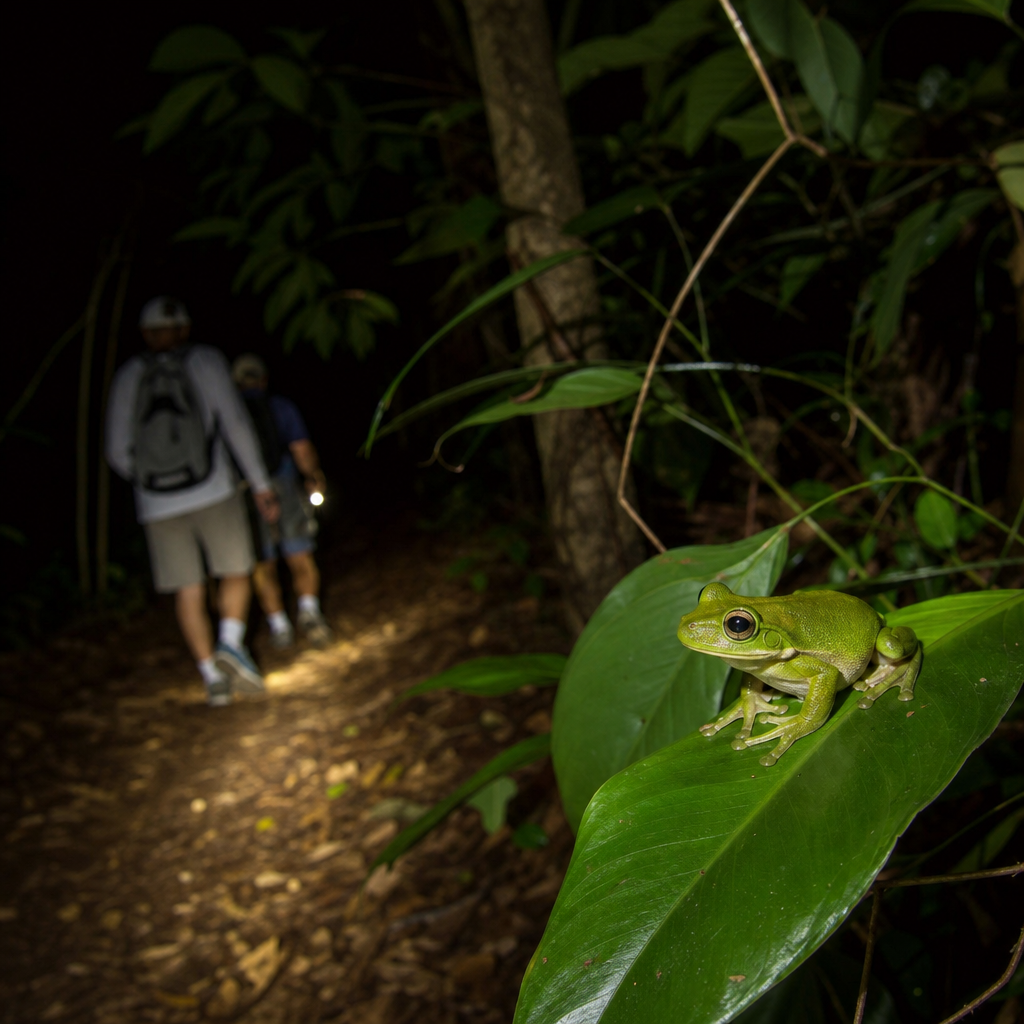
Reptiles are another frequent highlight. House geckos and other small gecko species often hunt around walls, lamps, and tree trunks, taking advantage of insects drawn to artificial light. Anoles, typically day-active, are usually asleep on exposed perches at night, which can make them easier to observe closely without disturbing them. In some moist or sheltered areas, visitors may also encounter larger lizards settling in vegetation. Amphibian activity rises sharply after rain, when frog calls can become one of the defining sounds of the evening. Even when frogs remain hidden, their vocalizations help identify wet pockets, drainage channels, and breeding spots.
Invertebrates provide the richest diversity. Moths, katydids, crickets, stick insects, beetles, millipedes, land crabs, hermit crabs near shore zones, and orb-weaver spiders all become more apparent after dark. On some walks, the best sightings are not large animals at all but small behavioral scenes: a praying mantis waiting under a porch light, a spider repairing its web, or a giant millipede crossing a trail after a shower. This is where Saint Kitts rewards patient observers. Because the island combines cultivated land, secondary forest, dry scrub, and coast, even a short route can reveal distinct nocturnal communities within one outing.
Best Habitats and Where to Focus Your Search
If you want consistent results, choose habitat before you choose trail. Forest edge is often the most productive setting because it concentrates movement. Bats commute along edges, insects gather where vegetation meets open space, and frogs use nearby moisture. Trails near the central hills and rain forest margins can be excellent after warm, humid days. Old estate roads also work well because they provide open walking surfaces with vegetation on both sides, making scanning easier with a red-filtered flashlight.
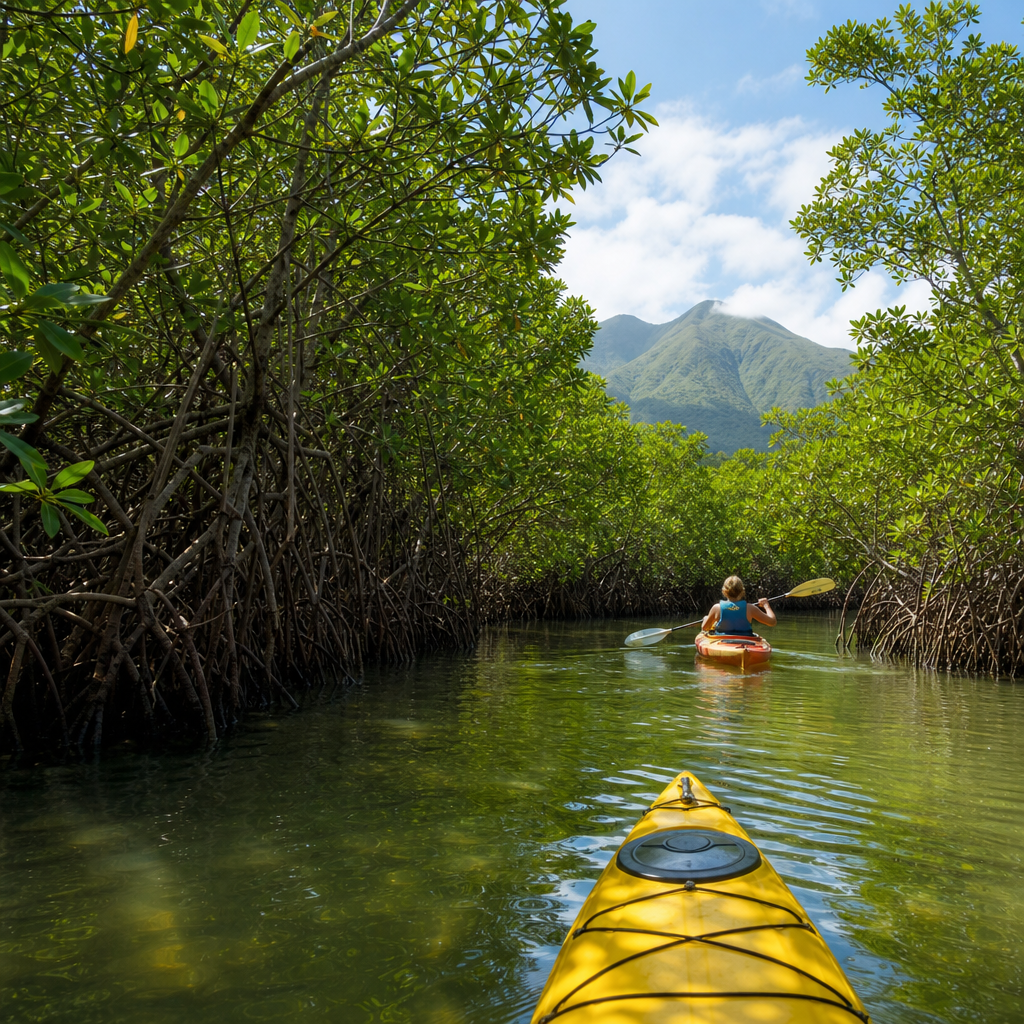
Coastal zones offer different rewards. Along the southeast peninsula and quieter shorelines, nocturnal life may include ghost crabs, hermit crabs, geckos on stone walls, and seabirds heard rather than seen. Mangrove-fringed or wet lowland areas, where accessible and permitted, can hold especially dense insect life and amphibian activity. Gardens should not be dismissed. In Saint Kitts, hotel grounds, guesthouse landscaping, village fruit trees, and flowering ornamentals often attract geckos, moths, beetles, and bats. I routinely tell travelers that one of the easiest high-yield night walks is a slow loop through a well-planted property with varied lighting, leaf litter, and native shrubs nearby.
The table below shows how habitat affects likely sightings and the best observation method.
| Habitat | Most Likely Nocturnal Creatures | Best Time | Observation Tips |
|---|---|---|---|
| Forest edge | Bats, frogs, moths, spiders, sleeping anoles | Just after sunset to 9 p.m. | Walk slowly, scan leaves at eye level, pause to listen for calls |
| Coastal scrub and beach margin | Ghost crabs, hermit crabs, geckos, shore insects | After dark on warm, dry nights | Use low light near sand, avoid shining directly at nesting areas |
| Gardens and estate grounds | Geckos, beetles, moths, fruit bats, praying mantises | Sunset to late evening | Check around lamps, flowering plants, and fruiting trees |
| Wet ditches and moist lowlands | Frogs, mosquitoes, dragonflies at rest, aquatic insects | After rain | Wear boots, use insect repellent, listen before moving closer |
How to Walk Responsibly and Safely at Night
Safety and wildlife ethics are inseparable on a nighttime walk. The first rule is to move more slowly than you think necessary. Most accidents happen because people focus on scanning vegetation and forget uneven ground, roots, loose stones, or sudden drainage cuts. Closed-toe shoes with grip are essential; lightweight sandals are not enough for trails or estate tracks. A flashlight with adjustable brightness is better than an extremely powerful beam, and a red-light mode helps reduce disturbance for many animals while preserving your night vision. Bring a backup light because battery failure is common in humid conditions.
Insect protection matters in Saint Kitts, especially around wetter areas. Use repellent according to label instructions, wear long sleeves when practical, and avoid heavily scented lotions that attract insects. Weather shifts quickly in the hills, so a small rain shell is useful even in the dry season. If you are walking outside managed resort grounds, tell someone your route and expected return time. Mobile coverage is decent in many developed areas but less reliable in some upland pockets, so do not assume constant service.
Responsible viewing means avoiding harassment. Do not handle frogs, geckos, crabs, or insects unless you are with a qualified guide conducting permitted educational work. Repeated bright light can stress animals, particularly roosting birds and hunting bats. Keep noise low, stay on established paths where possible, and never remove rocks, bark, or branches from habitat. If you encounter sea turtle nesting zones on nearby beaches, follow local regulations strictly; white light, crowding, and flash photography can disrupt nesting behavior. A good night walk leaves the habitat looking and functioning exactly as it did before you arrived.
Seasonality, Weather, and Timing
The best time for a nighttime nature walk in Saint Kitts is not a fixed month; it is the right combination of heat, humidity, recent rain, and manageable moonlight. Warmer evenings generally increase reptile and insect activity. Rain, especially a brief shower near dusk, can transform a quiet trail into a chorus of frogs and a feeding ground for spiders and geckos. On very dry nights, coastal and garden walks may outperform forest routes because animals concentrate around residual moisture and artificial lights.
Moon phase influences visibility and behavior. A bright moon makes walking easier and can improve scenic ambiance, but some nocturnal animals become less active in open areas under strong moonlight because they are more exposed to predators. Darker nights may yield better amphibian and insect activity, though they require more careful footing. Sunset timing also changes through the year, so confirm local conditions before planning. In practice, the most productive window is usually the first two to three hours after dusk, when diurnal wildlife is settling down and nocturnal species are just beginning their active period.
Wind is another overlooked factor. On breezy nights, insect activity around exposed coasts can drop, reducing gecko and bat feeding opportunities in those spots. Sheltered gardens and leeward forest edges often perform better. After prolonged heavy rain, some tracks become slippery or unsafe, and certain insects become so abundant that the experience is uncomfortable without proper preparation. A flexible itinerary works best: choose a primary route, then shift to a drier or more sheltered location if conditions change.
Guided Walks, Self-Guided Routes, and What to Bring
For most visitors, a guided walk delivers the best results. Local naturalists understand where frogs call after rain, which garden trees attract fruit bats, and how to distinguish harmless nighttime rustling from something worth investigating. A strong guide also interprets behavior, not just identification. Seeing a gecko eat a moth is interesting; understanding how artificial lights alter feeding patterns is more valuable. If you are new to Caribbean wildlife, a guide reduces the risk of missing small but significant sightings.
Self-guided walks can still work well in secure, familiar environments such as resort grounds, botanical-style gardens, or clearly marked estate areas where access is permitted. Keep expectations realistic. You are less likely to identify every species, but you can still observe patterns: insects clustering by light color, bats commuting along tree lines, or frogs calling from drainage channels. Bring a flashlight, backup batteries, water, a fully charged phone, insect repellent, and a small notebook or wildlife app for recording sightings. Binoculars are usually less useful than during the day, but a compact pair can help with roosting birds or mammals in low branches.
Photographers should use restraint. Diffused light, lower intensity settings, and limited flash preserve more natural behavior. Macro lenses can be rewarding for moths, beetles, and spiders, but only if you avoid damaging vegetation or blocking an animal’s movement. If you travel with children, assign simple tasks such as listening for frog calls or counting geckos near lamps. That keeps the walk focused and helps younger participants appreciate nocturnal ecology instead of treating the outing like a scavenger hunt.
Why This Miscellaneous Hub Matters for Nature and Wildlife Travelers
As a sub-pillar hub under Nature and Wildlife, Saint Kitts’ nighttime nature walks connect many topics that travelers often research separately. Bat watching, frog activity after rain, coastal crabs, garden wildlife, insect photography, responsible flashlight use, and family-friendly evening excursions all belong together because they share the same practical framework: habitat, timing, and low-impact observation. This page serves as the bridge between those narrower interests. If you later explore birdlife, rain forest trails, marine habitats, or seasonal wildlife behavior on Saint Kitts, the same principles from night walks will still apply.
The core lesson is simple. Saint Kitts is not only a daytime island of beaches and scenic overlooks; it is also an active nocturnal landscape filled with specialized creatures performing essential ecological work. The best nighttime nature walks happen when you slow down, choose the right habitat, use careful lighting, and let sound guide as much of the experience as sight. Start with a garden or estate path, progress to a forest edge with a local guide, and keep notes on what weather and timing produced the best sightings. Plan one evening for the island after dark, and you will understand Saint Kitts’ wildlife far more completely.
Frequently Asked Questions
What kinds of nocturnal creatures might you see on a nighttime nature walk in Saint Kitts?
Night walks in Saint Kitts can reveal a surprising variety of wildlife, especially for visitors willing to move slowly and pay attention to sounds, shadows, and small movements. Depending on the habitat, walkers may encounter tree frogs calling from damp vegetation, crickets and katydids creating a constant nighttime chorus, moths and other insects gathering near flowers, and geckos or anoles resting or hunting around foliage and walls. In wetter areas and near ponds or wetlands, amphibians and water-loving invertebrates are often the easiest creatures to detect because they advertise their presence with loud, rhythmic calls.
Birdlife can also be part of the experience, even though nighttime sightings are less predictable than daytime birdwatching. Roosting birds may be spotted tucked into branches, and in some areas you may hear owls or other night-active species before you see them. Along the coast or in garden edges, hermit crabs, land crabs, and other small scavengers sometimes emerge after dark. Bats are another highlight, usually seen as quick silhouettes crossing open clearings or feeding over fruiting trees and flowering plants. The exact species activity changes with the season, moonlight, recent rainfall, and the specific trail, but that unpredictability is part of what makes Saint Kitts’ nighttime wildlife walks so rewarding.
Why is a nighttime nature walk in Saint Kitts different from exploring during the day?
After sunset, Saint Kitts becomes a completely different sensory environment. During the day, visitors tend to focus on broad scenery such as mountain slopes, coastal views, and lush tropical vegetation. At night, the experience narrows in a good way. You begin to notice the rustle of leaves, the clicking of insects, the sudden movement of something crossing the trail, and the way humidity, breeze, and moonlight affect the landscape. A nighttime walk is less about covering distance and more about observing carefully and interpreting clues in the dark.
This shift also changes the type of wildlife activity you are likely to witness. Many animals avoid the heat and exposure of daylight, becoming active only when temperatures drop and conditions feel safer. Frogs call more freely, insects intensify their activity, crabs and reptiles emerge, and bats begin feeding overhead. Night walks in Saint Kitts also encourage a different pace of travel that often leads to deeper appreciation. Instead of trying to see everything at once, visitors learn to pause, listen, and let the island reveal itself gradually. For nature-focused travelers, that slower rhythm often creates a more memorable and immersive encounter than a standard daytime excursion.
What should you bring and wear for a nighttime wildlife walk in Saint Kitts?
Practical preparation makes a major difference on any evening walk, especially in tropical environments where terrain, humidity, and insects can all affect comfort. Lightweight long pants and a breathable long-sleeved shirt are usually a smart choice because they help protect against mosquito bites, brush contact, and minor scrapes on narrow trails. Closed-toe walking shoes or light hiking shoes with good grip are strongly recommended, since paths may be uneven, muddy, rocky, or slick with moisture after rain. Even on warm evenings, a light extra layer can be useful if trade winds pick up, particularly in elevated or more exposed areas.
A flashlight or headlamp is essential, but it should be used thoughtfully. Guided walks often prefer low-intensity lights or red-light settings to reduce disturbance to wildlife and preserve everyone’s night vision. Insect repellent is highly advisable, and carrying water is just as important at night as it is during the day because the humid climate can still lead to dehydration. It is also helpful to bring a small daypack, avoid strong perfumes or scented lotions, and keep phones on silent so the natural soundscape remains part of the experience. If photography is a priority, visitors should be cautious with flash, as sudden bright light can disturb animals and diminish the quality of the encounter for the group.
Are guided nighttime nature walks in Saint Kitts better than going on your own?
In most cases, yes. A guided nighttime walk is usually the better option for safety, wildlife spotting, and interpretation. Trails can feel very different after dark, even if they seem straightforward in daylight. Roots, loose stones, wet ground, and low branches become harder to judge, and a local guide reduces the risk of getting disoriented while also helping visitors move quietly and confidently through unfamiliar habitats. Guides also know which areas are most productive on a given evening, whether that means forest margins, wetlands, coastal scrub, or garden zones where night-active animals are regularly found.
Just as important, an experienced guide can turn scattered sightings into a meaningful wildlife experience. Many nocturnal animals are easy to miss without trained eyes and ears, and guides can identify calls, point out eye shine, explain behavior, and distinguish between similar-looking species. They also typically understand how to observe responsibly, using light carefully and keeping disturbance to a minimum. Going independently may be possible in certain accessible areas, but it often results in fewer sightings and a more limited understanding of what is happening around you. For travelers who truly want to discover Saint Kitts’ nocturnal side, a guided walk is usually the most informative and rewarding approach.
What is the best way to observe nocturnal wildlife in Saint Kitts without disturbing it?
The most effective approach is to slow down and let the environment come to you. Nocturnal wildlife is often easier to hear before it is seen, so listening is one of the most valuable skills on a night walk. Pausing frequently, speaking softly, and avoiding sudden movements can make a big difference. Many animals will remain active if they do not feel threatened, but they disappear quickly when groups move loudly or shine bright beams directly at them for too long. Using dim or red-filtered light, keeping it angled toward the ground unless needed, and following a guide’s instructions all help create a more respectful observation experience.
It is also important not to touch, chase, feed, or corner animals for a better look or photograph. Wildlife in Saint Kitts’ forests, wetlands, and coastal edges depends on nighttime behavior for feeding, mating, and avoiding predators, and unnecessary interference can disrupt those natural routines. Staying on established paths protects both the habitat and the walker, especially in sensitive areas where small animals may be hidden under leaf litter or along trail edges. Visitors who remain patient often end up seeing more, not less. In nocturnal settings, the best encounters usually come from quiet attention rather than active pursuit, and that mindset leads to a richer and more ethical experience overall.