Bird migration in Nevis reaches a fascinating peak in March, when this small Caribbean island becomes a temporary crossroads for species moving between South America and North America. In practical terms, March is the month when local residents, visiting birders, photographers, and conservationists can observe the widest mix of overwintering birds, early spring migrants, seabirds, shorebirds, and year-round island species in a compact landscape. Nevis, part of the Federation of Saint Kitts and Nevis in the Leeward Islands, offers an unusually accessible migration experience because coastal ponds, beaches, dry forest, gardens, mangroves, and the cloud forest slopes of Nevis Peak sit close together. That compressed geography matters: birds with very different habitat needs can be seen in a single morning, and weather shifts can change species presence overnight.
Migration is the seasonal movement of birds between breeding and nonbreeding areas, usually timed to food supply, daylight, wind patterns, and breeding cycles. On Nevis, March represents a transition window. Many Nearctic migrants that spent the boreal winter in the Caribbean are still present, while some individuals begin staging northward. At the same time, passage migrants may pause briefly to rest and feed before continuing. Because Nevis lies within a chain of islands that can function as stepping stones, even a small wetland or fruiting tree can become important habitat during this period. I have found that March birding on the island rewards close attention to timing: first light at freshwater ponds, midmorning in wooded ghuts, and late afternoon along beaches all reveal different movement patterns.
This matters beyond tourism or hobby birdwatching. Migratory birds are indicators of ecosystem health. Their presence reflects the quality of wetlands, insect populations, coastal stability, and forest cover. If a pond is drained, a shoreline is heavily disturbed, or invasive predators expand, migrants lose critical stopover resources. For Nevis, where land is limited and development pressure competes with conservation, understanding March migration supports better habitat management. It also strengthens the broader Nature and Wildlife story of the island, linking marine life, native vegetation, and seasonal bird movements into one connected ecological narrative. A hub article on this miscellaneous subtopic therefore needs to explain not only which birds appear, but also why March stands out, where to look, what behaviors to expect, and how this seasonal phenomenon fits into Caribbean migration science.
Why March is the defining migration month in Nevis
March is often the most instructive month for bird migration in Nevis because it captures overlap. Winter visitors have not fully departed, yet the biological urgency of spring movement is already building. Shorebirds such as Lesser Yellowlegs, Spotted Sandpiper, and Short-billed Dowitcher may still be feeding in ponds and muddy edges, while warblers including Northern Parula, American Redstart, Prairie Warbler, and Black-and-white Warbler remain active in gardens, scrub, and woodland. Some species become more conspicuous in March because they sing more frequently, feed heavily before departure, or gather in favored stopover areas after changes in wind or rain.
Weather is a major driver. Trade winds, frontal systems moving off North America, and localized rainfall can alter migration behavior quickly. A night of headwinds may cause migrants to land in greater numbers than expected, creating what birders call a fallout. On Nevis, these events are most noticeable around sheltered coastal habitats and green inland patches where exhausted birds can refuel. Dry conditions can concentrate birds around the few reliable freshwater sites, making observation easier but also highlighting the fragility of those habitats. In years with stronger late-winter moisture, insect activity may rise, attracting more flycatchers and warblers to feeding corridors.
Another reason March stands out is visibility. During midwinter, some migrants behave quietly and disperse across the landscape. In March, many species shift into pre-breeding condition, showing brighter plumage and more assertive territorial or courtship behavior. Even nonexperts notice the difference. A male American Redstart flashing orange in low coastal woodland is easier to appreciate in March than during duller winter weeks. Likewise, terns offshore may increase in local numbers or become easier to separate by behavior as sea conditions settle. For a hub page, this month provides the clearest entry point into Nevis bird migration because it brings diversity, movement, and observer-friendly conditions together.
Key habitats and the birds most often associated with them
Nevis may be small, but its habitat mosaic is the reason migration here feels rich rather than limited. Coastal ponds and seasonal wetlands are the highest-value stopover habitats for many migrants. These areas attract herons, egrets, ducks when conditions allow, and a rotating cast of shorebirds. Common Gallinule, Green Heron, Great Egret, Snowy Egret, and Little Blue Heron are regularly discussed in local bird observations, while transient sandpipers use exposed margins to feed on invertebrates. A shallow pond with mud, sparse cover, and minimal disturbance can hold more migration interest than a much larger but manicured water body.
Beaches, rocky shores, and nearshore waters support a different community. Brown Pelican is a familiar year-round presence, but March can also be productive for gulls, terns, and wandering shorebirds. Royal Tern and Least Tern may be encountered depending on conditions, and Magnificent Frigatebird often patrols above the coast. Offshore scanning can also reveal passing seabirds, especially when wind and baitfish activity align. On Caribbean islands, seawatching is often underestimated, yet even brief sessions can add species that never appear inland.
Woodland edges, estates, gardens, and dry forest are essential for passerine migrants. These habitats support insectivores and nectar feeders, including Bananaquit, Caribbean Elaenia, and Lesser Antillean Bullfinch among resident birds, plus overwintering North American warblers. Fruiting trees attract thrashers, bullfinches, and tanagers where present, while flowering plants draw hummingbirds and incidental insect prey. Higher elevations on the slopes of Nevis Peak hold more humid forest conditions, with species turnover compared with coastal scrub. That elevational gradient is useful in March because birds move in response to food, shelter, and temperature across short distances.
| Habitat in Nevis | Typical March bird groups | What to watch for |
|---|---|---|
| Coastal ponds and wetlands | Shorebirds, herons, egrets, gallinules | Feeding at dawn, water-level changes, mixed flocks |
| Beaches and rocky coast | Terns, plovers, sandpipers, pelicans | Tide cycles, roosting behavior, disturbance from people |
| Gardens and estate grounds | Warblers, bullfinches, hummingbirds, elaenias | Flowering shrubs, fruiting trees, insect bursts after rain |
| Dry forest and scrub | Resident songbirds and migrant passerines | Mixed-species feeding flocks, morning song, shade edges |
| Upper slopes of Nevis Peak | Forest birds, occasional migrant stopovers | Cooler temperatures, mist, quieter but specialized activity |
Species highlights: what birders and nature travelers may see in March
A realistic March checklist in Nevis usually combines resident Caribbean species with a useful range of migrants. Among the residents, Brown Pelican, Magnificent Frigatebird, Zenaida Dove, Common Ground Dove, Caribbean Coot where suitable habitat exists, Bananaquit, Gray Kingbird, Caribbean Elaenia, Lesser Antillean Bullfinch, and the endemic-looking regional specialty Purple-throated Carib are all important to note because they frame the island context. Visitors sometimes focus only on migrants, but the resident birds are what make Nevis distinct from mainland stopover sites.
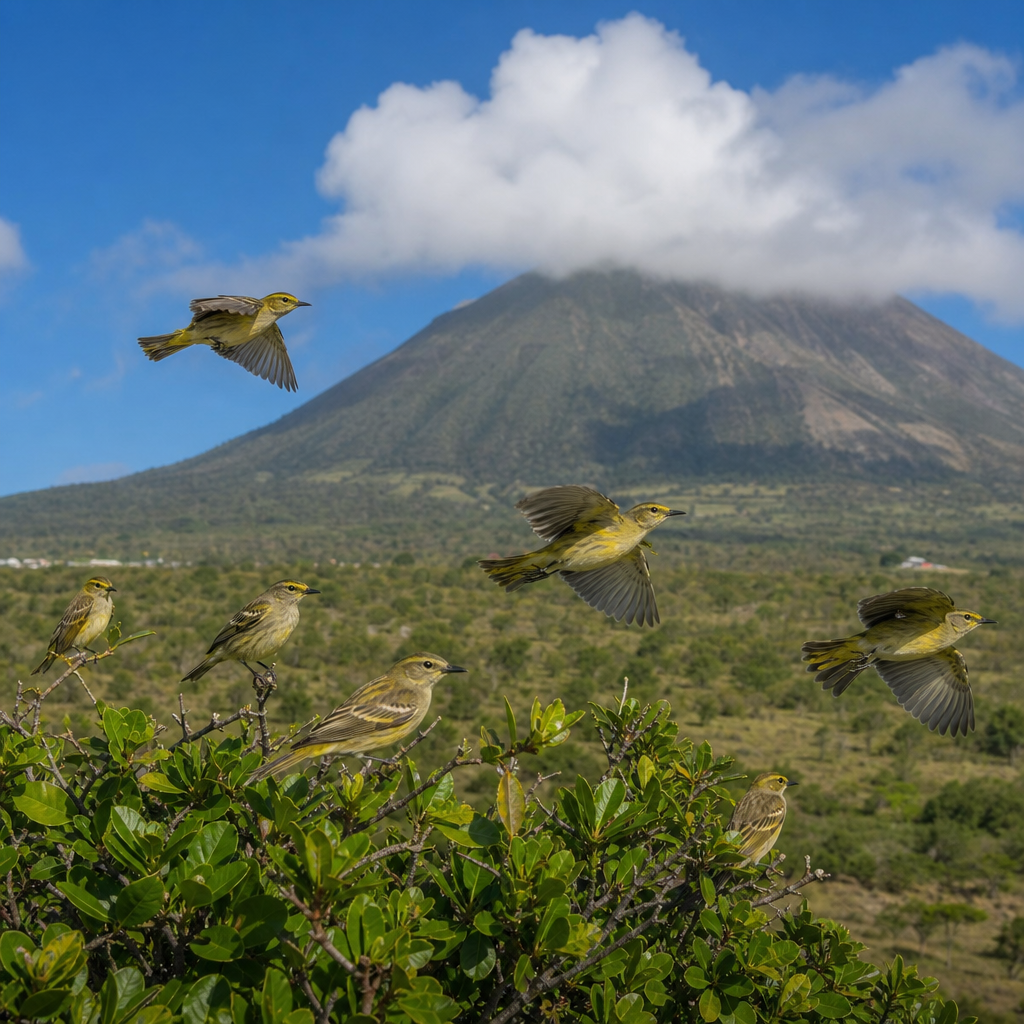
Among migrants, warblers are often the most engaging group for general birders. American Redstart is a regular favorite because of its active foraging and strong contrast pattern. Northern Parula often works flowering or epiphyte-rich trees. Prairie Warbler prefers scrubby edges and can be surprisingly approachable. Black-and-white Warbler creeps along trunks and branches in a nuthatch-like manner. Prothonotary Warbler is less widespread but memorable when found near wetter vegetation. These species are not guaranteed in every location, which is exactly why habitat selection matters on Nevis.
Shorebird interest depends heavily on water levels and disturbance. Spotted Sandpiper is among the most consistent species around edges and rocky shoreline. Greater and Lesser Yellowlegs may appear at suitable wetlands, as can Ruddy Turnstone on coastlines. Semipalmated Plover, Black-bellied Plover, and Sanderling are possible on beaches and flats. Osprey is one of the most charismatic migrants or wintering visitors, often seen hunting over coastal waters or perched in exposed vantage points. Belted Kingfisher may also be present around ponds and shorelines, offering one of the clearest signals that North American winter visitors are still using the island in March.
How migration works on a small Caribbean island
Nevis demonstrates a core migration principle: birds do not need huge land masses to survive a journey, but they do need predictable resources. Many migrants crossing or island-hopping through the Caribbean operate on tight energy budgets. A warbler arriving after a night flight must quickly find insects, water, and shelter from predators. A shorebird must locate shallow feeding habitat with enough invertebrate density to rebuild fat reserves. If these needs are met, the bird may remain for hours, days, or weeks depending on species and weather.
Orientation is guided by a combination of celestial cues, the earth’s magnetic field, polarized light, wind patterns, and inherited route tendencies refined by experience. On islands like Nevis, topography can influence micro-distribution after arrival. Birds often settle along greener ravines, sheltered leeward areas, coastal edges, and places with concentrated food. This is why two observers on the same day can report very different species lists if one visits a dry open beach and the other works a shaded estate garden with flowering trees and freshwater nearby.
Migration on Nevis is also shaped by regional ecology. The Lesser Antilles form a chain that can either assist movement or expose birds to risk, depending on storms and habitat availability. Degraded wetlands in one island reduce options across the network. Conversely, protecting modest stopover sites on Nevis contributes to a broader migratory system extending from Arctic breeding grounds to tropical wintering areas. That wider lens is essential for understanding why local bird records matter scientifically. Even casual March observations can add insight into timing shifts, abundance changes, and unusual species occurrences linked to climate and land-use change.
Best birding practices, conservation priorities, and related wildlife links
The best way to experience bird migration in Nevis is to bird quietly, early, and with a habitat plan. Start at first light in a wetland or pond, then move to gardens, wooded edges, or a ghaut as temperatures rise. Carry binoculars in the 8×42 or 10×42 range, a notebook or eBird-enabled phone, water, and neutral clothing. I strongly recommend logging sightings with location and habitat notes because island records become more valuable when tied to conditions such as tide, rainfall, and wind direction. Even simple notes like “five Northern Parulas feeding in flowering sea grape after overnight rain” can be useful.
Good field behavior matters. Do not flush shorebirds repeatedly for photos. Avoid playback in sensitive areas, especially when birds are stressed from migration. Keep distance from roosting terns and nesting residents. Support properties, guides, and community groups that maintain habitat rather than manicured emptiness. On small islands, the difference between a bird-friendly pond edge and a cleared, disturbed shoreline is immediate and visible. Conservation priorities in Nevis should include protecting seasonal wetlands, retaining native and mixed-structure vegetation, managing invasive predators, and limiting uncontrolled coastal disturbance.
This topic also connects naturally to the wider Nature and Wildlife hub. Readers interested in March migration usually also want information on Nevis wetlands, native plants that support birds, hiking routes on Nevis Peak, marine and coastal ecology, photography ethics, and seasonal wildlife calendars. As a miscellaneous sub-pillar hub, this page should point readers toward all of those related articles because migration is not isolated. It is the meeting point of habitat, seasonality, geography, and conservation. March simply makes that relationship easiest to see. If you are planning a wildlife-focused visit or building your understanding of Nevis biodiversity, begin with bird migration in March, then explore the connected habitats that make the phenomenon possible year after year.
Frequently Asked Questions
Why is March such an important month for bird migration in Nevis?
March is one of the most exciting times for birdwatching in Nevis because the island sits at a seasonal transition point in the wider Atlantic flyway. At this time of year, many birds that spent the winter in the Caribbean or South America are beginning their northbound spring movement toward breeding grounds in North America. At the same time, some overwintering birds are still present, local resident species remain active, and seabirds and shorebirds continue to use the island’s coastal habitats. This overlap creates an unusually rich mix of species in a relatively small area. For birders, photographers, and nature enthusiasts, that means a better chance of seeing a wide variety of birds in a short period, from waders in wetlands and coastal flats to songbirds in dry forest edges and gardens. In practical terms, March offers both diversity and activity, making it one of the most rewarding months to observe migration in Nevis.
What kinds of birds can people expect to see in Nevis during March?
Visitors in March can expect a broad and interesting combination of birdlife. Shorebirds are often a major highlight, especially around ponds, mudflats, and coastal edges, where migrating sandpipers, plovers, and other wading birds may stop to feed and rest. Seabirds can also be seen offshore, depending on weather and viewing conditions, while herons and egrets are often found in wetlands and near mangroves. March may also bring early spring migrants moving north, adding another layer of excitement for observers who enjoy tracking seasonal movement. Just as important are the island’s resident species, which provide year-round birding opportunities and help define the local ecology of Nevis. Because the island includes beaches, salt ponds, scrub, forested slopes, agricultural areas, and village gardens in close proximity, birders can encounter very different species within a single morning. That habitat variety is a key reason Nevis feels so dynamic during migration season.
Where are the best places in Nevis to watch migrating birds in March?
The best birdwatching locations in Nevis during March are usually the places where habitats concentrate food, shelter, and safe resting areas for birds in transit. Wetlands, salt ponds, and shallow coastal areas are especially productive for shorebirds and waders, since these sites provide easy feeding opportunities during migration. Beaches and rocky shorelines can also be useful for spotting seabirds and coastal species, particularly during calm mornings. Inland, open fields, wooded edges, and garden-rich areas may attract songbirds and resident island species, while higher elevations on the slopes of Nevis Peak can offer a different set of birds associated with more forested habitats. One of the strengths of birding in Nevis is that the island is compact, so observers can move between coast, lowland, and upland environments without long travel times. That makes it possible to build a very productive route in a single day and sample multiple habitats during peak migration activity.
What is the best time of day to go birdwatching in Nevis during March?
Early morning is generally the best time to go birdwatching in Nevis during March. Birds are typically most active shortly after sunrise, when temperatures are cooler and feeding activity is high. This is especially true for resident land birds and many migrants using scrub, gardens, and forest edges. Morning light is also better for photography and easier viewing, especially before heat shimmer and strong midday sun affect visibility. Coastal wetlands can remain productive later into the morning, particularly for shorebirds that continue feeding in exposed shallows and mud. Late afternoon can also be worthwhile, especially in coastal areas where birds may gather again before roosting. Weather conditions matter as well; calmer days can improve seabird viewing, and recent rain may increase activity around freshwater areas. For the best overall experience, many experienced birders in Nevis begin early, cover inland and edge habitats first, and then shift toward ponds, shorelines, or beaches as the morning develops.
Why does bird migration in Nevis matter for conservation and local tourism?
Bird migration in Nevis matters because it highlights the island’s role as part of a much larger ecological network stretching across the Caribbean and the Americas. Migratory birds depend on safe stopover sites to rest and refuel, and even a small island like Nevis can make a meaningful difference during these demanding seasonal journeys. Protecting wetlands, coastal habitats, forest edges, and other natural areas helps support not only birds that live on the island year-round, but also species that pass through during critical migration windows in March and beyond. From a tourism perspective, this seasonal movement adds real value to Nevis as a destination for birders, wildlife photographers, and travelers interested in nature-based experiences. Migration season can encourage low-impact, educational tourism that benefits guides, accommodations, local businesses, and conservation awareness at the same time. In that sense, March bird migration is more than a natural spectacle; it is also an opportunity to connect biodiversity, community interest, and sustainable travel in a way that benefits both visitors and the island itself.