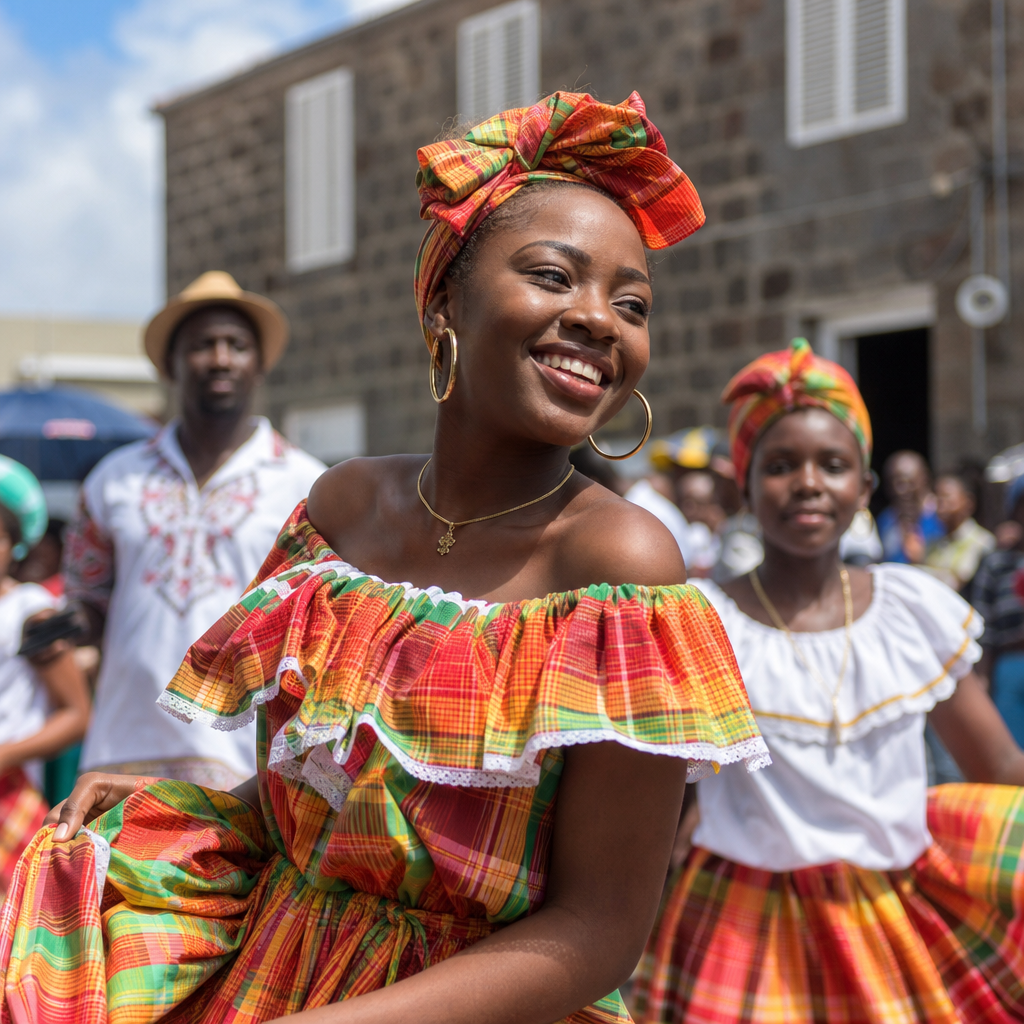
Celebrating Black History Month in Saint Kitts means honoring a Caribbean story shaped by African endurance, emancipation, cultural memory, and modern community life. Black History Month is an annual observance dedicated to the history, achievements, and continuing influence of people of African descent. In Saint Kitts, the subject is especially meaningful because the island’s social fabric, language patterns, foodways, music, religion, labor history, and national identity are inseparable from the experiences of enslaved Africans and their descendants. Any guide to local life and experiences in Saint Kitts must treat Black history not as a separate chapter, but as a foundation that explains how the island became what it is today.
Saint Kitts, officially part of the Federation of Saint Kitts and Nevis, was one of the earliest and most profitable British sugar colonies in the Caribbean. That economic system depended on forced labor. The legacies of that period remain visible in plantation great houses, abandoned sugar mills, village settlement patterns, and family surnames. They are also heard in oral traditions, church choirs, carnival troupes, and everyday speech. When residents, schools, heritage groups, and visitors celebrate Black History Month in Saint Kitts, they are not importing an abstract international event. They are recognizing a living local inheritance.
I have seen that the strongest Black History Month programming on the island connects past and present clearly. It does not stop at dates and heroic names. It asks practical questions: How did emancipation change land access? Why did sugar dominate for so long? What African retentions survive in music and spirituality? How are young Kittitians learning their history today? Those questions matter because heritage tourism, education, cultural preservation, and civic pride all depend on honest understanding. For families raising children, newcomers trying to know the island, and travelers seeking more than beaches, Black History Month offers a structured way to engage Saint Kitts with depth and respect.
This hub article covers the main themes that define Black History Month in Saint Kitts: historical context, places to visit, cultural expressions to experience, school and community observances, and respectful ways to participate. It also points readers toward the broader “Miscellaneous” side of local life, where heritage often intersects with food, public holidays, neighborhood events, museums, archives, and everyday storytelling. The goal is simple: provide a reliable starting point for anyone who wants to understand how Saint Kitts remembers Black history and why that remembrance still shapes island life now.
The historical foundation of Black history in Saint Kitts
To understand Black History Month in Saint Kitts, start with the colonial plantation economy. The island, known historically as Saint Christopher, became a key site of British and French rivalry in the seventeenth century before British control was consolidated. Sugar transformed the island’s economy, and that transformation required the mass importation of enslaved Africans. By the eighteenth century, Saint Kitts had one of the densest concentrations of sugar estates in the British Caribbean. Enslaved laborers planted cane, cut fields under punishing conditions, worked boiling houses, maintained estate infrastructure, and generated the wealth that built colonial fortunes.
Emancipation in the British Empire arrived in 1834, followed by the apprenticeship system until full freedom in 1838. In Saint Kitts, freedom did not instantly create equality. Formerly enslaved people faced restricted land access, economic dependence on estates, low wages, and limited political power. Yet emancipation fundamentally altered social life. Villages expanded, free Black institutions strengthened, churches became centers of education and mutual support, and new forms of family and community organization emerged. Black History Month should therefore be framed around both oppression and agency. The island’s story includes exploitation, resistance, adaptation, and self-definition.
One crucial point often missed by casual visitors is that Black history in Saint Kitts is not confined to slavery alone. It includes post-emancipation labor struggles, migration to and from neighboring islands and Britain, the rise of trade unionism, constitutional development, and independence in 1983. It also includes intellectual and political contributions from Kittitians and Nevisians who shaped Caribbean thought. When schools and community groups build effective Black History Month programs, they usually widen the lens beyond plantation history to show a continuous Black presence across every era of national development.
Places and institutions that bring the history to life
Several sites on Saint Kitts can anchor a meaningful Black History Month itinerary. Brimstone Hill Fortress National Park, a UNESCO World Heritage Site, is often interpreted mainly as a military monument, but it also reflects the plantation world that financed imperial defense. Any visit should include discussion of the enslaved and free Black workers who built, maintained, and serviced the wider colonial system surrounding the fortress. Basseterre itself offers important layers, from Independence Square, once linked to slave markets and public punishment, to churches and public buildings associated with emancipation-era community life.
The National Museum in Basseterre is one of the most useful starting points for visitors who need context quickly. Good museum interpretation can connect archaeology, indigenous presence, colonization, sugar production, and emancipation in a coherent sequence. Heritage houses, estate ruins, and old sugar mills across the island add another dimension because they show how deeply plantation infrastructure structured the landscape. Romney Manor and nearby Caribelle Batik, for example, often draw visitors for gardens and crafts, yet they also open conversations about estate history, labor, and the transformation of colonial spaces into modern cultural enterprises.
Archives, libraries, and church records also matter, even if they are less visible than major attractions. Family historians often discover that baptismal records, burial registers, and estate documents reveal intergenerational local history in striking detail. For residents, Black History Month can be the ideal time to organize oral history projects with elders, map village lineages, or preserve photographs before they are lost. The most effective heritage work on Saint Kitts combines formal institutions with community memory. A museum can explain the broad timeline, but a grandparent’s recollection of school celebrations, sugar work, or migration often makes the past real.
How culture preserves memory in everyday life
Black history on Saint Kitts survives not only in documents and monuments, but in living culture. Music is a clear example. Drumming traditions, call-and-response patterns, and rhythmic structures found in carnival and community performance reflect African continuities filtered through centuries of Caribbean change. Masquerade, clowns, string bands, and festive street performance are not museum pieces; they are active expressions of collective memory. During Black History Month, performances and workshops can help younger audiences understand that cultural forms often preserve historical knowledge more effectively than textbook summaries.
Food is another strong carrier of memory. Dishes associated with provision grounds, small farming, and resourceful home cooking tell a story about survival and adaptation after slavery. Saltfish, ground provisions, breadfruit, goat water, and other familiar foods are part of local life, but they also reflect the agricultural constraints and creative resilience that shaped Afro-Caribbean households. In community events, I have found that food demonstrations often reach people who might not attend a formal lecture. Explaining why certain ingredients became staples can open a sophisticated discussion about trade, poverty, self-sufficiency, and cultural continuity.
Religion and language deserve equal attention. Churches played an enormous role in Black education, leadership, and social organization after emancipation. Hymnody, sermons, funeral customs, and revival-influenced practices all preserve historical meanings. Meanwhile, Kittitian speech patterns and idioms carry the legacy of creolization, where African linguistic influence blended with English under colonial conditions. Black History Month programming becomes richer when it treats these everyday practices as evidence. Heritage is not only what happened long ago. Heritage is also what people still sing, cook, say, wear, and teach within families and neighborhoods across Saint Kitts today.
Ways to celebrate Black History Month in Saint Kitts
Residents, schools, businesses, and visitors can celebrate Black History Month in Saint Kitts in practical, respectful ways. The best approach is to combine learning, participation, and support for local institutions. A school may host a reading on emancipation, a church may honor community elders, a tour operator may redesign an itinerary to include plantation labor history, and a family may visit a museum together then discuss ancestors at dinner. These actions seem simple, but they build public memory. Black history becomes durable when it is repeated across many settings, not confined to one official ceremony.
| Activity | Why it matters | Best local application |
|---|---|---|
| Visit a museum or heritage site | Builds historical context with artifacts and interpretation | Start in Basseterre, then connect the visit to estate ruins or village history |
| Attend a cultural performance | Shows how memory survives in music, costume, and movement | Look for masquerade, drumming, spoken word, or school showcases |
| Support Black-owned local businesses | Links historical recognition with present-day economic participation | Choose local crafts, food vendors, guides, and creative entrepreneurs |
| Record oral histories | Preserves memories not captured in formal archives | Interview elders about work, migration, education, and village traditions |
| Use themed walking tours | Turns ordinary places into teachable spaces | Interpret Basseterre streets, churches, and squares through Black history |
For visitors, respectful celebration starts with curiosity and preparation. Read basic island history before arrival, choose guides who address slavery and emancipation honestly, and ask informed questions rather than expecting entertainment alone. For local organizations, quality matters more than volume. A single well-researched panel on post-emancipation land struggles is more valuable than a generic tribute with little substance. Businesses can also participate thoughtfully by highlighting Black Kittitian artisans, chefs, historians, and musicians instead of using the month as a superficial marketing theme.
Education, tourism, and the future of remembrance
Black History Month in Saint Kitts has long-term value when it strengthens education and improves heritage interpretation year-round. Students benefit most when local history is place-based. A lesson on emancipation becomes more powerful when paired with a walk through Basseterre, a visit to a former estate, or analysis of family naming patterns and church records. Teachers can connect local material to wider Caribbean developments such as apprenticeship, labor protest, federation debates, migration to Britain, and the decline of sugar. That approach helps students see Saint Kitts as central to Atlantic and regional history, not peripheral.
Tourism also benefits when Black history is presented with precision. Many travelers now want culturally grounded experiences, and Saint Kitts has the resources to meet that demand if interpretation is consistent. Heritage guides should be trained to explain the economics of sugar, the legal structure of slavery, the significance of 1834 and 1838, and the social changes that followed emancipation. Cruise visitors in particular need concise, accurate framing because their time ashore is limited. Well-designed tours can move beyond scenery and deliver memorable insight without becoming overly academic or inaccessible.
There are challenges. Historical interpretation can become sanitized, fragmented, or overly celebratory if difficult subjects are avoided. Some sites lack updated signage, archival access can be uneven, and community knowledge is vulnerable when elders pass away without recording their memories. Still, the opportunity is substantial. By investing in oral history, school partnerships, stronger museum programming, and heritage entrepreneurship, Saint Kitts can make Black History Month a catalyst for broader cultural preservation. If you want to understand local life and experiences on the island, begin with this history, visit the places that hold it, and support the people keeping it alive.
Frequently Asked Questions
Why is Black History Month especially meaningful in Saint Kitts?
Black History Month carries special weight in Saint Kitts because the island’s history, culture, and national identity are deeply rooted in the experiences of people of African descent. Saint Kitts was shaped by plantation slavery, colonial rule, emancipation, and the long struggle for dignity, land, labor rights, and self-determination. For many residents and visitors alike, observing Black History Month is not simply about reflecting on distant global events; it is about recognizing the local foundations of everyday life, from family histories and village traditions to language, music, food, faith, and public memory. The island’s African heritage is visible in the resilience of communities that endured forced displacement, harsh labor systems, and social exclusion, yet built enduring cultural practices that continue to define Kittitian life.
In Saint Kitts, Black History Month also provides an opportunity to connect the past with the present. It encourages people to look beyond textbook summaries and engage more fully with the human stories behind emancipation, economic change, migration, education, political organization, and national development. It is a time to honor ancestors, celebrate Black achievement, and acknowledge that African-descended people have not only survived history in Saint Kitts, but actively shaped its future. That makes the observance both commemorative and forward-looking, inviting conversations about identity, justice, heritage preservation, and community pride.
What parts of Saint Kitts’ history are most important to highlight during Black History Month?
Several major themes deserve attention during Black History Month in Saint Kitts, beginning with the history of enslavement and the plantation economy. Sugar production played a central role in the island’s colonial development, and that system depended on the labor, suffering, and resistance of enslaved Africans. Any meaningful observance should acknowledge how African people were brought to the island under brutal conditions and forced to sustain an economy from which they themselves were denied freedom and rights. Highlighting this history is essential because it explains many of the social and economic structures that shaped the island for generations.
Emancipation is another vital subject, but it should be presented as more than a single date or ceremonial milestone. In Saint Kitts, the end of slavery was followed by a long process of adjustment in which formerly enslaved people worked to secure autonomy, family stability, education, religious life, and stronger community institutions. Labor struggles, access to land, and political participation all became important parts of the post-emancipation story. Black History Month is therefore an ideal time to discuss how freedom was pursued, defended, and expanded over time rather than instantly achieved.
Cultural continuity should also be emphasized. African influence remains present in oral traditions, cuisine, musical expression, spiritual practice, kinship patterns, and forms of social organization across Saint Kitts. In addition, the contributions of teachers, activists, community leaders, artists, workers, and nation-builders deserve recognition. Their efforts helped transform the island socially and politically, especially during the periods that led toward greater self-government and modern national consciousness. A strong Black History Month observance in Saint Kitts should therefore balance remembrance of hardship with recognition of creativity, leadership, and lasting cultural power.
How can people celebrate Black History Month in Saint Kitts in a meaningful way?
Meaningful celebration starts with learning. Residents, students, families, and visitors can use Black History Month as a time to explore the island’s African-rooted history through local archives, museum visits, heritage sites, public lectures, school programs, and intergenerational conversations. Listening to elders, reading about emancipation and labor history, and engaging with the stories behind villages, churches, estates, and public landmarks can turn the month into a richer and more personal experience. This kind of engagement helps people understand that Black history in Saint Kitts is not abstract; it is embedded in the landscape and in the lives of real communities.
Celebration can also take cultural forms. Supporting local music, storytelling, visual art, food traditions, and community events is a powerful way to honor the living legacy of African-descended people on the island. Cooking traditional dishes, attending performances, highlighting Kittitian creators, and discussing the African influences present in daily life all help connect heritage to contemporary identity. Schools and organizations may also create programs that center youth participation, allowing younger generations to explore heritage through research projects, dramatic presentations, exhibitions, and oral history work.
Just as importantly, meaningful observance involves reflection and dialogue. Black History Month in Saint Kitts can open space for honest conversations about inequality, representation, historical memory, and the importance of preserving cultural heritage. It is not only a festive occasion, but also a time to ask how communities can continue honoring the resilience of the past while building a more informed and inclusive future. The most effective celebrations combine remembrance, education, pride, and active community participation.
How has African heritage influenced everyday life and culture in Saint Kitts?
African heritage has profoundly shaped everyday life in Saint Kitts in ways that are both visible and deeply woven into the social fabric. One of the clearest influences can be seen in language patterns, speech rhythms, and oral expression. The ways people tell stories, use proverbs, emphasize tone, and preserve communal memory often reflect historical processes through which African-descended communities maintained identity and passed knowledge across generations. These traditions have helped sustain a strong sense of belonging and continuity even as the island changed over time.
Foodways also reveal this influence. Many aspects of Kittitian cuisine reflect the creativity of African-descended communities who transformed limited ingredients into nourishing, flavorful dishes that became staples of local culture. Music and performance traditions similarly carry African legacies through rhythm, movement, communal participation, and expressive style. These forms are not simply entertainment; they are cultural records of endurance, adaptation, celebration, and shared identity. Religious life, family networks, market culture, and community gatherings have likewise been shaped by values and practices that emerged from African-rooted social worlds on the island.
Perhaps most importantly, African heritage has shaped Saint Kitts at the level of identity and worldview. It has influenced how communities understand resilience, mutual support, dignity, and remembrance. The island’s modern character cannot be fully explained without acknowledging the central role of African-descended people in building institutions, sustaining traditions, and defining what it means to be Kittitian. Black History Month offers the perfect opportunity to make these connections more explicit and to appreciate how history continues to live in everyday culture.
What message should Black History Month in Saint Kitts leave with younger generations?
For younger generations, Black History Month in Saint Kitts should communicate that their heritage is not marginal to the island’s story; it is central to it. Young people should come away understanding that the history of African-descended people on the island includes pain and injustice, but it also includes extraordinary resilience, intelligence, creativity, leadership, and achievement. This balanced message matters because it helps youth see themselves not only as inheritors of struggle, but also as inheritors of strength, cultural richness, and the capacity to shape the future.
The observance should also inspire curiosity and responsibility. Younger generations should be encouraged to ask questions about family history, village memory, national heroes, emancipation, labor movements, and cultural traditions. They should learn that preserving heritage is an active process that involves listening, documenting, participating, and speaking with pride about where they come from. In Saint Kitts, where history is so closely tied to place, Black History Month can help youth see the island itself as a living classroom filled with lessons about endurance, transformation, and community.
Ultimately, the message should be empowering. Black History Month in Saint Kitts should remind young people that honoring the past is not just about remembrance; it is also about vision. By understanding the sacrifices and contributions of earlier generations, they are better equipped to value education, protect cultural memory, support their communities, and contribute to a more just and confident society. That sense of continuity between ancestors, present communities, and future possibilities is one of the most important gifts the observance can offer.