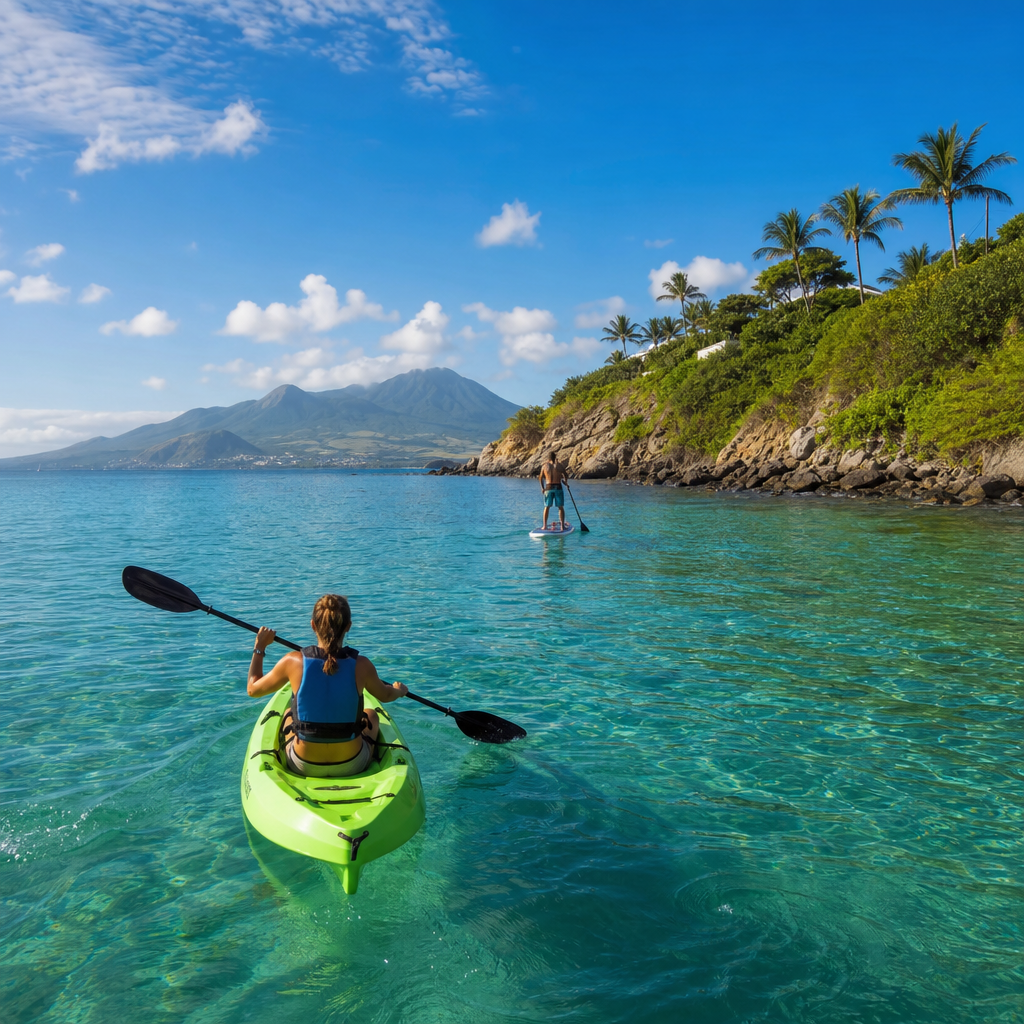
Saint Kitts offers some of the Caribbean’s most rewarding eco-friendly water sports, combining clear seas, coral habitats, and community-led tourism with a growing focus on conservation. In practical terms, eco-friendly water sports are activities that minimize fuel use, wildlife disturbance, reef damage, and waste while still giving travelers full access to the island’s marine environment. In Saint Kitts, that usually means human-powered or low-impact experiences such as kayaking, stand-up paddleboarding, snorkeling, sailing, freediving, and carefully managed scuba diving. It also means choosing operators that follow local marine rules, brief guests on reef-safe behavior, and support beach and coastal stewardship. I have planned and reviewed sustainable coastal excursions across the Eastern Caribbean, and Saint Kitts stands out because the island’s scale makes responsible choices easier to find and easier to combine in one trip. You can paddle in a bay in the morning, snorkel over seagrass by midday, and join a sunset sail without spending hours in transit or relying on high-emission transport between sites.
Why does this matter? Because marine tourism brings both opportunity and pressure. Coral reefs protect shorelines, support fish nurseries, and help sustain the visitor economy, yet they are vulnerable to anchor damage, careless fins, sunscreen chemicals, sediment, and warming seas. Seagrass beds capture carbon, slow erosion, and shelter juvenile species, but they can be scarred by propellers and trampled in shallow water. Sea turtles, rays, and reef fish draw travelers into the water, but repeated disturbance changes feeding and resting patterns. A good guide to eco-friendly water sports in Saint Kitts therefore needs to do more than list activities. It should explain which experiences have the lightest footprint, how to identify responsible operators, what seasonal and site-specific factors affect conditions, and how to move from passive sightseeing to active stewardship. This hub does exactly that, giving you the overview needed to choose low-impact adventures and then explore related articles on snorkeling, sailing, marine wildlife ethics, and sustainable island planning with confidence.
Why Saint Kitts Works for Low-Impact Water Adventures
Saint Kitts is unusually well suited to sustainable marine recreation because its coastline offers variety without forcing travelers into long transfers or highly engineered attractions. On the Caribbean side, many bays are calmer and better for stand-up paddleboarding, beginner kayaking, and relaxed snorkeling. On the Atlantic-facing side, conditions can be more energetic, creating better settings for experienced paddlers or seasonal wind-powered activities when managed safely. The island also benefits from volcanic scenery, nearshore reefs, and pockets of seagrass that let visitors see meaningful marine life without chasing it by speedboat over great distances. From a sustainability perspective, shorter runs matter: less fuel burned, less noise, and less pressure to rush guests through fragile sites.
Another advantage is the close relationship between community tourism and marine access. Many operators are small businesses, owner-guides, or local crews who depend directly on healthy beaches and reefs. In my experience, those operators are often more willing to adjust launch points for weather, avoid crowded reef patches, refuse harmful wildlife interactions, and explain why touching coral is never acceptable. That local knowledge is valuable because eco-friendly travel is not only about the activity itself; it is about timing, tides, wind, currents, and carrying capacity. A paddle route that is harmless on a calm weekday can become disruptive if dozens of guests launch at once into a turtle feeding area. Responsible outfitters know the difference and manage around it.
The Best Eco-Friendly Water Sports to Prioritize
If your goal is the lowest environmental impact per hour of enjoyment, start with human-powered activities. Kayaking is one of the strongest choices because it creates almost no noise, no direct emissions during use, and allows access to mangrove edges, coves, and sheltered coastline without prop wash. Good kayak guides in Saint Kitts teach controlled landings, safe distances from nesting birds, and route discipline that avoids dragging hulls over seagrass. Stand-up paddleboarding is similarly low impact and often ideal in protected waters where visibility is high. It gives travelers a broad view into shallow habitat, which can actually improve behavior: people standing above the water tend to see reef or seagrass earlier and are less likely to step on it.
Snorkeling is another core option, but only when practiced correctly. The activity itself is light footprint; poor technique is not. The biggest issues are standing on coral, chasing wildlife, and wearing sunscreen formulations linked to reef stress. Choosing a guide who enforces buoyancy basics, provides float support for weak swimmers, and uses mooring buoys instead of anchoring sharply reduces harm. Scuba diving can also be eco-friendly, especially with operators following recognized safety and environmental standards, maintaining boats efficiently, and limiting diver numbers at sensitive sites. Divers should ask whether briefings include fin control, no-touch policies, and navigation that avoids crowding cleaning stations or fragile hard coral heads. Sailing rounds out the list. A wind-powered catamaran or monohull still has an engine for maneuvering, but sail time usually reduces fuel dependence and offers a quieter wildlife experience than pure motor cruising.
| Activity | Typical impact level | Best for | Main caution |
|---|---|---|---|
| Kayaking | Very low | Coastal exploration, birding, calm bays | Avoid dragging boats over seagrass or reef |
| Stand-up paddleboarding | Very low | Shallow water viewing, fitness, beginners | Enter and exit only from suitable sandy points |
| Snorkeling | Low | Reef viewing, families, short excursions | No standing on coral; use reef-safer sun protection |
| Scuba diving | Low to moderate | Deeper reefs, wrecks, trained visitors | Check operator standards and diver group size |
| Sailing | Low | Scenic cruising, low-noise wildlife viewing | Confirm waste handling and mooring practices |
How to Choose a Responsible Water Sports Operator
The operator matters as much as the sport. I look first for evidence of environmental procedure, not marketing language. A responsible company explains where guests can and cannot go, uses designated moorings where available, carries reusable water systems or discourages single-use plastics, and gives a pre-launch or pre-dive briefing that includes wildlife distance, waste pack-out, and reef etiquette. For dive businesses, recognized training agency affiliations such as PADI or SSI are normal, but the more useful signal is whether staff connect safety to habitat protection. When guides explain trim, buoyancy, entry methods, and current management in environmental terms, they are usually serious about both guest outcomes and reef condition.
Ask direct questions before booking. How large are the groups? Are routes changed to protect wildlife or adapt to visibility? Do they cancel when conditions would force unsafe or damaging behavior? What kind of sunscreen guidance do they provide? Do they support local conservation groups, beach cleanups, or marine education? A trustworthy operator answers plainly and does not promise guaranteed turtle encounters or unrestricted access everywhere. In Saint Kitts, smaller operators often excel here because they can tailor trips around conditions rather than filling every slot. Price alone is a poor signal. A slightly higher rate may reflect trained guides, better-maintained gear, lower group ratios, and more responsible site management, all of which improve sustainability in measurable ways.
Wildlife, Reefs, and the Rules That Protect Them
The most important principle in eco-friendly water sports is simple: observe without altering behavior or habitat. Coral is not rock; it is a living colonial animal structure that can be damaged by one careless kick. Seagrass is not empty space; it is a nursery ecosystem and carbon sink. Turtles need room to surface and feed, rays need undisturbed bottom habitat, and reef fish rely on predictable shelter patterns. In practical terms, that means no touching coral, no feeding fish, no collecting shells from living habitat, and no crowding animals for photos. If a turtle changes direction because you approached, you were too close. If sediment clouds around a reef from your fins, your control needs work.
There is also a broader management context. Across the Caribbean, marine protected areas, no-anchoring zones, and fisheries rules are increasingly important for balancing tourism with ecological resilience. Visitors do not need to memorize every statute, but they should understand why these controls exist. Mooring buoys prevent anchor scars. Seasonal restrictions can reduce disturbance during spawning or nesting periods. Limits on visitor numbers help keep reefs from becoming overused even when each individual guest means well. Good guides interpret those rules as part of the experience rather than as obstacles. That framing is effective because travelers usually protect what they understand. A five-minute explanation of coral growth rates and storm recovery can change guest behavior more than a dozen warning signs.
Planning a Sustainable Day on the Water
A low-impact itinerary starts before you reach the beach. Choose accommodation near your launch area when possible to reduce car transfers, and bring a refillable bottle, rash guard, dry bag, and reusable snack container. Rash guards and UPF clothing cut sunscreen use dramatically, which matters because even mineral products should be used thoughtfully around marine habitat. Book early-morning sessions for calmer water and lower heat, especially for paddle sports and snorkeling. Better conditions reduce accidental reef contact and make wildlife viewing easier without pursuit. If you are combining activities, pair the most physically demanding one first, then shift to passive experiences such as sailing later in the day.
Waste and equipment care also matter more than many travelers realize. Rinse gear in designated areas if available rather than letting soap or contaminants run directly into the sea. Secure loose items so nothing blows overboard. Avoid inflatable novelty gear that breaks easily and becomes marine debris. If you are new to snorkeling or paddling, take a short skills lesson instead of learning by trial and error over reef. That is one of the best sustainability decisions beginners can make. In Saint Kitts, a guided half-day can be better for the environment than an unguided full day because route choice, entry points, and behavior are managed well. Sustainable tourism is not about doing less; it is about doing the right things in the right places with the right support.
Common Mistakes Visitors Make and How to Avoid Them
The biggest mistakes are predictable and preventable. First, travelers often assume clear shallow water is safe to stand in anywhere. In reality, what looks sandy may hold juvenile coral, seagrass, urchins, or resting wildlife. Enter only where guides direct you. Second, many people underestimate how much sunscreen, bug spray, and personal care products end up in the water. Apply products well before entering the sea, use sun-protective clothing, and avoid overspray on beaches and docks. Third, guests frequently focus so much on photos that they stop reading the environment. Fins scull downward, boards drift, and hands reach out instinctively. Good operators remind people to stabilize themselves before filming, but travelers should build that habit deliberately.
Another common problem is choosing activities that do not match skill level or conditions. A novice on a windy paddle route may zigzag through sensitive shallows or require motorized rescue support, increasing impact and risk. A first-time snorkeler without a flotation aid may stand repeatedly on the bottom. There is no shame in selecting beginner-friendly bays, using a guide, or postponing a trip when swell is up. I have seen the most successful sustainable excursions come from conservative planning, not ambitious itineraries. Finally, do not separate environmental choices from local economic choices. Hiring local guides, eating at independently run spots near the coast, and buying from businesses that invest in stewardship keeps tourism benefits circulating on the island, which strengthens support for long-term marine protection.
Eco-friendly water sports in Saint Kitts are not a niche alternative to a beach holiday; they are one of the best ways to experience the island responsibly and memorably. The central idea is straightforward: choose low-impact activities, book operators with real environmental practices, respect wildlife and habitat boundaries, and plan each outing so convenience never overrides conservation. When travelers follow those principles, kayaking, paddleboarding, snorkeling, sailing, and well-managed diving become more than recreation. They become part of a tourism model that protects reefs, supports local livelihoods, and keeps Saint Kitts attractive for future visitors and residents alike.
As the hub for this miscellaneous section of sustainable tourism, this guide gives you the framework for evaluating every marine excursion on the island. Use it to compare activities, ask better booking questions, and build itineraries that align with the ecology of Saint Kitts rather than working against it. Then continue into related subtopic pages on reef-safe travel, ethical wildlife encounters, sustainable boating, and island conservation planning to deepen your choices. Start with one well-run low-impact excursion, follow the local guidance carefully, and let the water show you why responsible travel is the smarter way to explore Saint Kitts.
Frequently Asked Questions
What counts as an eco-friendly water sport in Saint Kitts?
In Saint Kitts, an eco-friendly water sport is any marine activity designed to reduce environmental impact while still allowing visitors to enjoy the island’s coastline, reefs, and clear Caribbean waters. In practice, that usually means choosing human-powered or very low-impact options such as kayaking, stand-up paddleboarding, snorkeling, and guided coastal excursions that avoid heavy fuel use, minimize noise, and keep disturbance to wildlife and coral habitats as low as possible. These activities are especially well suited to Saint Kitts because many of the island’s most rewarding marine experiences happen close to shore, around calm bays, sheltered coves, and reef systems where quiet access is far better for both nature and the traveler experience.
Eco-friendly also refers to how the activity is operated. A responsible tour or rental provider will typically emphasize reef-safe practices, proper waste handling, small group sizes, and clear guidance about avoiding coral contact and respecting marine life. Rather than chasing speed or large-volume tourism, the focus is on education, conservation awareness, and low-impact enjoyment. For travelers, this means the most sustainable choice is not just the sport itself, but also the way it is organized, where it takes place, and whether the operator actively supports local conservation and community-based tourism.
Which eco-friendly water sports are most popular for visitors in Saint Kitts?
The most popular eco-friendly water sports in Saint Kitts are kayaking, stand-up paddleboarding, and snorkeling, largely because they offer close-up access to the marine environment without the drawbacks associated with high-speed, fuel-intensive recreation. Kayaking is a favorite for exploring scenic stretches of coast at a relaxed pace, and it is ideal for travelers who want to experience the island’s shoreline quietly while taking in sea birds, rocky formations, and calm inshore waters. Stand-up paddleboarding is another strong option, particularly in gentler conditions, because it is easy to learn, requires no engine, and gives paddlers an excellent view into the water below.
Snorkeling is also central to Saint Kitts’ low-impact water tourism. It allows visitors to observe reef life and underwater habitats with minimal infrastructure, provided it is done responsibly. Many travelers combine snorkeling with a guided kayak or paddleboarding outing to create a fuller eco-focused marine experience. In some cases, low-impact sailing excursions may also fit within the eco-friendly category when they operate with a conservation mindset and avoid harmful anchoring practices. Overall, the best-known sustainable choices on the island tend to be simple, nature-forward activities that prioritize access, education, and respect for the sea over speed and noise.
How can travelers protect coral reefs and marine life while enjoying water sports in Saint Kitts?
Protecting coral reefs and marine life in Saint Kitts starts with understanding that even small actions in the water can have lasting effects. Travelers should never stand on, kick, touch, or collect coral, since coral reefs are living ecosystems that are easily damaged and slow to recover. When snorkeling or paddling near reef areas, it is important to maintain good body control, keep fins and gear clear of the bottom, and enter the water carefully to avoid stirring sediment or making contact with fragile habitat. Wildlife should be observed from a respectful distance, and visitors should avoid feeding fish or trying to approach sea creatures for photos, as this can disrupt natural behavior.
Another important step is choosing reef-safe sunscreen and applying it well before entering the water so less product washes off immediately into the sea. Reusable water bottles, dry bags, and snack containers help cut plastic waste, which is especially important in island environments where marine debris can quickly affect coastal ecosystems. Travelers should also follow all guidance from local guides, especially around protected or sensitive areas. If using a boat-supported tour, it is wise to ask whether the operator uses mooring buoys instead of anchoring on reef zones. Responsible behavior, combined with informed tour selection, is one of the most effective ways visitors can enjoy Saint Kitts’ marine environment without contributing to its degradation.
Are guided eco-tours better than exploring on your own in Saint Kitts?
For many visitors, guided eco-tours are the better choice because they combine safety, local knowledge, and environmental best practices in a way that self-guided outings often cannot. A qualified local guide can help travelers navigate weather conditions, currents, launch points, and marine habitats more responsibly, while also explaining the ecological and cultural importance of the areas being visited. In Saint Kitts, where coastal conditions can vary and some marine zones may be more sensitive than they first appear, that knowledge can make a major difference. Guided tours are also more likely to include education about reef etiquette, wildlife observation standards, and conservation efforts taking place on or around the island.
That said, independent exploration can still be eco-friendly if travelers are experienced, well prepared, and committed to low-impact practices. Renting a kayak or paddleboard for a calm, nearshore outing can be a good option when conditions are stable and the route is appropriate. The key is being honest about skill level and avoiding areas where poor navigation or inexperience could lead to environmental damage or safety problems. As a general rule, travelers who want the most informative and conservation-minded experience in Saint Kitts will often get more value from a reputable guided eco-tour, especially one run by local operators with strong ties to the community and a clear environmental ethic.
What should I look for when choosing an eco-friendly water sports operator in Saint Kitts?
When choosing an eco-friendly water sports operator in Saint Kitts, start by looking for evidence that sustainability is built into the experience rather than used only as a marketing term. A strong operator should clearly explain how they reduce environmental impact, whether through small group sizes, non-motorized equipment, reef-safe visitor guidelines, waste reduction practices, or routes designed to avoid sensitive habitats. It is also a good sign if the company provides pre-trip briefings on marine etiquette, encourages reusable items, and trains guests in how to avoid damaging coral or disturbing wildlife. Operators that work closely with local communities and support conservation or education initiatives often deliver the most credible eco-conscious experiences.
You should also consider the quality of the guiding and the operator’s overall attitude toward the marine environment. Good providers are usually happy to answer questions about where tours go, how wildlife encounters are handled, and what steps they take to protect reefs and coastal ecosystems. They should never promise intrusive animal interactions or promote behavior that puts nature under stress for entertainment. Practical details matter too: safe equipment, knowledgeable guides, realistic trip pacing, and transparent communication all point to a professional operation. In Saint Kitts, the best eco-friendly water sports operators are typically those that combine local expertise, low-impact recreation, and visible stewardship of the island’s marine resources.