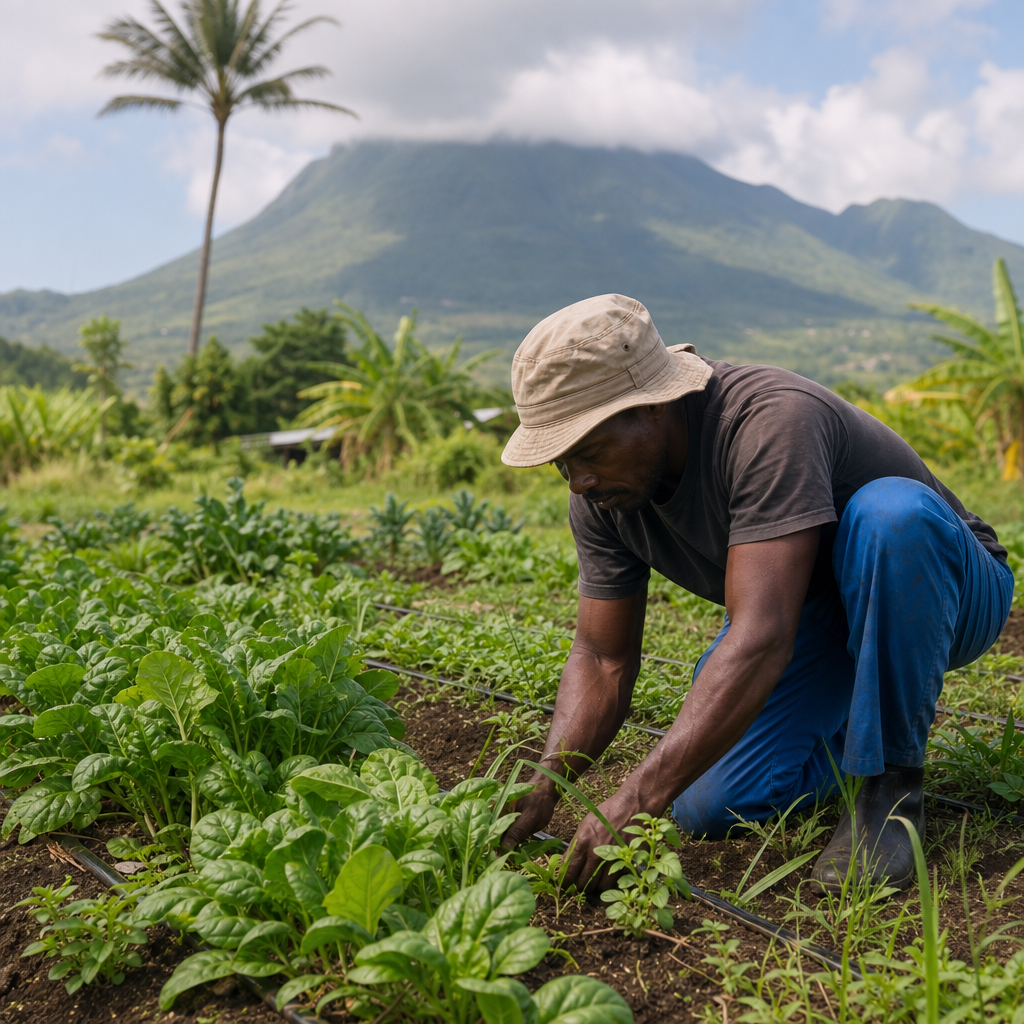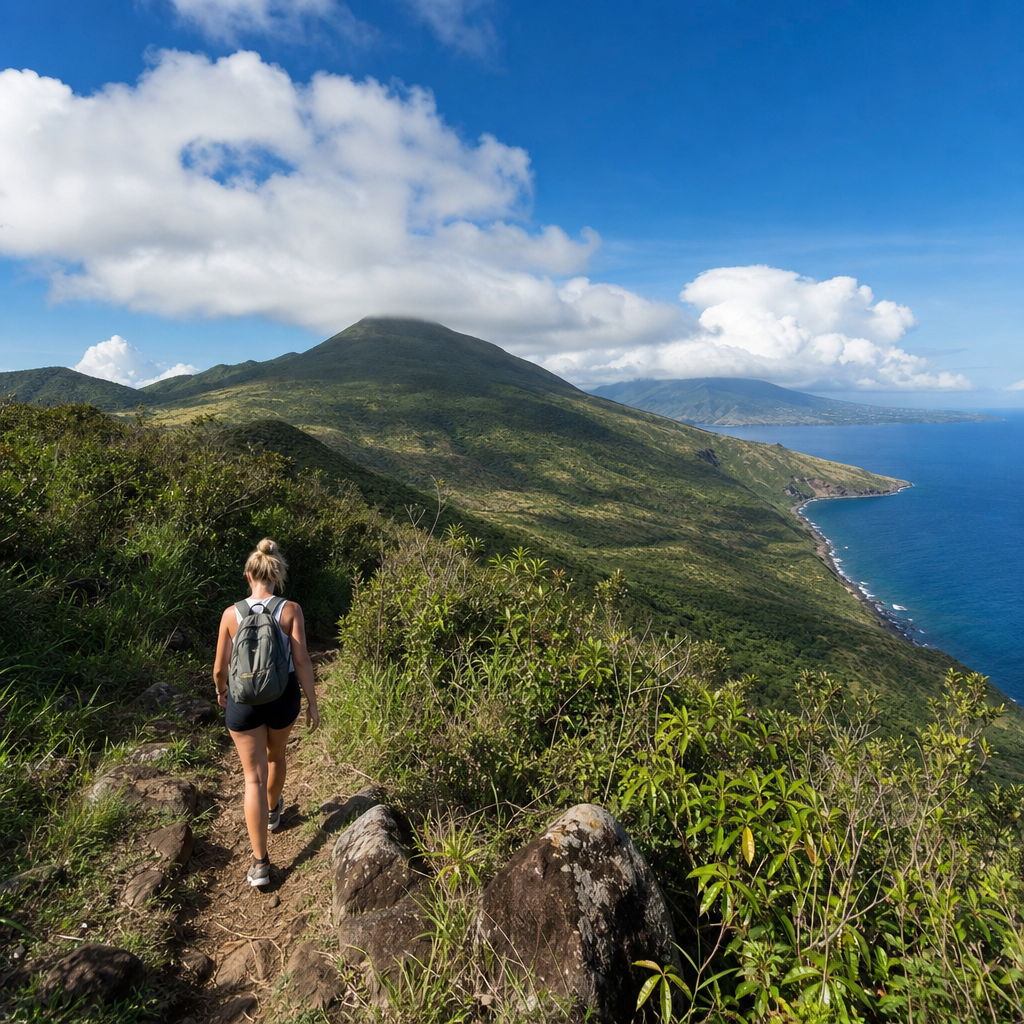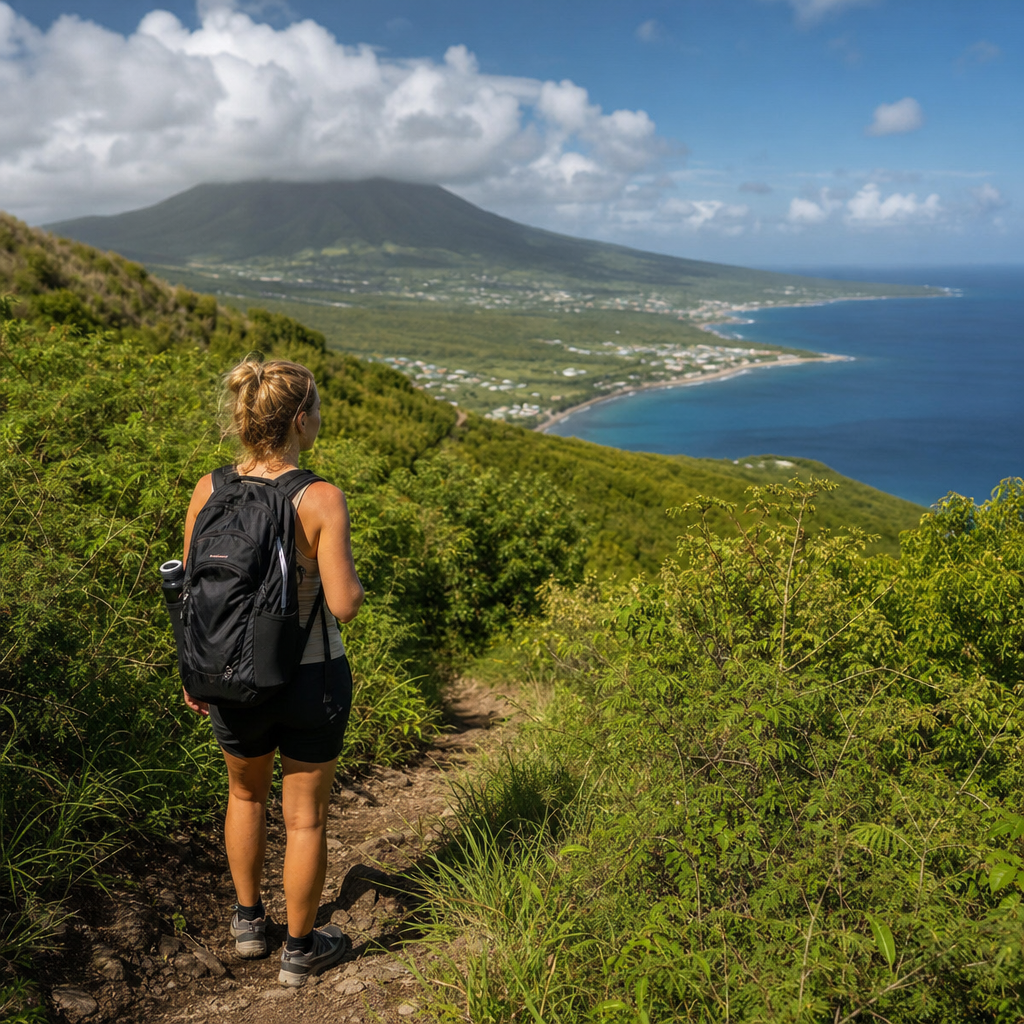
Nevis rewards walkers with a rare combination of compact size, ecological variety, and cultural depth, making nature trails in Nevis one of the most satisfying ways to understand the island beyond its beaches. A nature trail is more than a marked path through greenery. On Nevis, it can mean an old estate road climbing toward cloud forest, a coastal footpath edged by sea grapes and mangroves, or a village route where history, farming, birds, and volcanic geology meet in a single morning’s walk. For travelers interested in nature and wildlife, these walks serve as the practical gateway to the island’s landscapes, because Nevis is best read slowly, on foot, with time to notice changing vegetation, shifting bird calls, and the way the central peak shapes every valley and shoreline.
That is why this hub matters. Many visitors arrive knowing Nevis for quiet luxury, heritage inns, and views of St. Kitts across The Narrows, but the island’s walking opportunities deserve equal attention. I have found that even short hikes reveal how much environmental range exists within a small area: dry coastal scrub near the Caribbean, moist ghauts that channel rainwater downhill, and higher slopes where giant tree ferns, mosses, and mountain cabbage suggest an entirely different climate. Exploring Nevis on foot also answers the questions most travelers actually have. Which trails suit beginners? When do you need a guide? What wildlife can you realistically expect to see? How do weather, terrain, and elevation change the experience? This guide addresses those basics while also acting as a hub for the broader miscellaneous side of Nevis nature coverage, connecting trail walking to botany, birding, geology, heritage landscapes, and responsible access.
At its core, walking Nevis is about pattern recognition. The island is a volcanic cone rising from the sea, crowned by Nevis Peak at roughly 3,232 feet, and that topography drives everything from rainfall to forest type to settlement history. Former sugar estates occupy lower ground with surviving stoneworks and planted shade trees. Ravines and ghauts support denser growth and wildlife movement. Upland trails become steeper, muddier, and more technical as they approach mountain forest. Understanding those transitions helps visitors choose routes well and appreciate what they are seeing. It also explains why the best nature trails in Nevis are not just recreation assets. They are living corridors through the island’s environmental story, and they offer one of the clearest ways to experience its beauty responsibly.
What makes nature trails in Nevis distinctive
Nature trails in Nevis stand out because they compress multiple ecosystems and centuries of land use into short travel distances. In practical terms, that means you can leave a hotel near Pinney’s Beach after breakfast, pass through former plantation grounds by midmorning, and reach cool, misty forest before lunch if you are on a longer inland route. Few Caribbean islands offer that kind of rapid ecological transition in such an accessible setting. The volcanic origin of Nevis creates fertile soils and steep drainage patterns, while the island’s central mountain captures moisture that feeds richer vegetation inland than many first-time visitors expect from a dry-season beach destination.
Another distinctive feature is the overlap of natural and historical landscapes. Many trails follow routes once used by estate workers, farmers, and villagers rather than purpose-built recreational corridors. That gives a walk in Nevis a layered character. You are not only observing wild orchids, vervet monkeys, or the bark texture of turpentine trees; you may also pass old stone retaining walls, mango groves planted generations ago, or abandoned estate infrastructure partly reclaimed by vines. For travelers seeking a broader Nature and Wildlife experience, this mixture matters because it shows how biodiversity persists within a worked landscape, not just in untouched forest.
The island’s scale also improves the walking experience. Drives between trailheads are short, logistics are manageable, and local guides often know routes intimately because they are woven into community life. On larger destinations, remote trail systems can feel disconnected from local context. On Nevis, the opposite is true. A hike often ends with a conversation in a nearby village, a stop for fresh juice, or a discussion about seasonal rainfall and fruiting trees. That human scale makes the island especially good for travelers who want nature interpreted in plain terms rather than treated as an isolated wilderness product.
Best types of walks for different visitors
The best walk on Nevis depends less on fitness alone than on what you want to notice. Casual walkers usually do well on lower-elevation estate roads, coastal tracks, and village-adjacent paths where footing is simpler and exposure to sun is the main factor. These routes are ideal for seeing butterflies, flowering shrubs, shore views, and cultivated trees such as tamarind, breadfruit, and mango. Families often prefer these areas because outing length is flexible and turnaround points are obvious. Early morning is the most comfortable time, especially from December through April when conditions are drier and bird activity is higher.
More active visitors often target foothill routes that begin gently and then climb into wetter forest. These walks offer better chances of seeing endemic and migratory birds, large ferns, bromeliads, and the dramatic changes in vegetation caused by elevation. Footing becomes more uneven, especially after rain, and a walking stick can help. In my experience, hikers who enjoy photography tend to prefer this band of the island because it gives the strongest contrast between open viewpoints and dense greenery without committing to the full difficulty of a mountain ascent.
Advanced hikers and dedicated naturalists usually consider the Nevis Peak climb, which is the island’s best-known strenuous route. It is not a casual trail. The upper sections are steep, often muddy, and require scrambling with fixed ropes in places. A local guide is strongly advised, and after heavy rain the route can be hazardous. Yet for prepared hikers, it is the clearest expression of Nevis’s vertical ecology, moving from settled lower slopes into cloud-affected forest with an intensity that lower trails only hint at.
| Trail type | Typical terrain | Best for | Main considerations |
|---|---|---|---|
| Coastal and estate walks | Relatively even tracks, open sun, light shade | Beginners, families, birders, photographers | Carry water, use sun protection, start early |
| Foothill forest trails | Mixed surfaces, roots, moderate climbs | Active walkers, nature lovers, half-day hikes | Good shoes needed, rain can change footing quickly |
| Nevis Peak ascent | Steep mud, ropes, dense forest, high humidity | Experienced hikers seeking a challenge | Hire a guide, avoid poor weather, expect strenuous effort |
Signature routes and places worth exploring on foot
Although Nevis does not market trails with the same volume of formal signage found in larger hiking destinations, several areas consistently deliver strong walking experiences. The Nevis Peak trail is the island’s signature route and the one most frequently discussed by serious hikers. It commonly begins from the interior near settlements such as Rawlins, climbing through farmland and secondary forest before entering wetter mountain vegetation. The appeal is not only the summit objective. The route demonstrates how quickly the island’s environment shifts with altitude, and on clear sections the views back toward lower estates and the sea provide context for the terrain you are crossing.
For visitors who want scenery with less technical effort, the Nevisian Heritage Village area and estate zones around the island offer rewarding short walks where nature and cultural history overlap. Paths near former plantation lands often pass old stone structures, fruit trees, grazing areas, and pockets of bird-friendly vegetation. These are excellent settings for a self-directed morning outing because they reveal how the countryside is organized: villages tucked into lower slopes, roads tracing old estate boundaries, and broad mountain views rising inland. The experience feels specific to Nevis rather than interchangeable with a generic tropical hike.
Coastal walking deserves more attention than it usually gets. Areas near Pinney’s Beach, Jones Bay, and sections of the western and northern shore can provide easy rambles with seabirds, marine views, and opportunities to observe beach vegetation that stabilizes sand and withstands salt exposure. Sea grape, coconut, and buttonwood help frame these landscapes, while offshore light and cloud movement make them especially attractive to photographers. Because coastal paths can look simple, visitors sometimes underestimate heat load. The combination of open sun, reflected glare, and low wind in some areas can make a short walk feel harder than expected by late morning.
Charlestown and its edges also merit inclusion in a walking-based nature hub. Even within and around the main town, attentive walkers can note flowering trees, nesting birds, historic garden plants, and the relationship between urban life and the island’s natural drainage. Not every meaningful nature experience requires a remote trailhead. On Nevis, everyday routes often function as informal interpretation corridors, especially for travelers interested in local botany and land use rather than only summit goals.
Wildlife, plants, and seasonal changes walkers should expect
Visitors often ask what wildlife they will actually see on Nevis. The realistic answer is that birds are the most consistently rewarding group for walkers. Depending on habitat and season, you may encounter green-throated caribs, bananaquits, grey kingbirds, Caribbean elaenias, doves, herons in wetter lowlands, and migratory warblers during the northern winter. Early morning is best because heat and wind increase later, and bird activity is usually strongest soon after sunrise. Bringing binoculars changes the experience dramatically, especially on mixed habitat routes where forest edge and open land meet.
Vervet monkeys are another memorable part of the island, though sightings are never guaranteed. They often appear near agricultural edges, fruiting trees, and quieter roads. Watch from a distance and avoid feeding them. Feeding changes behavior, increases conflict around crops and accommodations, and undermines the very wildness visitors hope to experience. Reptiles are less celebrated but still important, including small lizards common along sunny walls and paths. Insects, especially butterflies and pollinators, become more noticeable when flowering plants are abundant after rain.
The plant life on Nevis is where many walks become unexpectedly rich. Lower elevations often feature dry forest species, thorny scrub, pasture grasses, and culturally important fruit trees. Move uphill and moisture increases. You start seeing denser understory growth, lianas, tree ferns, moss-covered trunks, and epiphytes attached to branches. That shift is one of the island’s clearest lessons in microclimate. Even travelers without formal botanical training can recognize that the mountain creates its own weather patterns, supporting vegetation that feels almost montane compared with the coast. During wetter periods, the difference is even more dramatic, with streams or seepage appearing in places that look dry in other months.
Seasonality matters. The drier season, generally from December into April, usually offers firmer footing and clearer views, while the wetter months can intensify greenery but also increase mud, insects, and route difficulty. Neither season is universally better. If your priority is comfortable walking and easier logistics, drier months are preferable. If your priority is lush vegetation, dramatic cloud formations, and fuller forest atmosphere, the wetter period can be excellent if you accept the tradeoffs.
Trail safety, local guidance, and responsible access
Safe walking on Nevis begins with honest route selection. The island’s compact geography can make trails look less serious than they are, but humidity, steep grades, sudden rain, and limited signage can turn a short outing into a demanding one. Proper footwear is essential. Lightweight beach sandals are suitable for shoreline strolls only; even moderate inland paths call for shoes with grip. Carry more water than you think you need, especially on exposed routes, and assume mobile signal may be inconsistent in some interior areas.
Guides are especially valuable for the Nevis Peak climb and for less obvious interior paths. A knowledgeable local guide does more than prevent wrong turns. Good guides explain medicinal plants, identify birds by call, interpret old estate ruins, and judge weather patterns on the mountain. They also know when recent rain has made a route unsafe. From years of working with destination content and guided outdoor experiences, I can say clearly that this is one of the best investments on Nevis. It improves safety, deepens understanding, and keeps visitor spending within local communities.
Responsible access is equally important because many paths cross or border private land, active farms, or sensitive habitats. Always ask before entering uncertain areas, close gates if you pass through them, and stay on established lines where possible to reduce erosion. Do not remove plants, disturb wildlife, or leave food waste. Simple practices matter on a small island. A single discarded bottle or informal shortcut can have outsized impact where maintenance resources are limited and ecosystems are tightly connected from hillside to shore.
Weather awareness should shape every plan. Tropical showers can arrive quickly, and upper slopes may be far muddier than the coast suggests. If thunder is building or the mountain is heavily socked in, postpone high-elevation hikes. There is no loss in choosing a lower walk and returning another day. On Nevis, flexibility usually leads to a better experience than forcing a route in poor conditions.
How this hub connects the broader Nature and Wildlife experience
As a sub-pillar hub within Nature and Wildlife, this page should help readers understand that walking is the thread tying many Nevis experiences together. Birdwatching becomes more productive when you know which elevations and edges to explore on foot. Botanical interest grows when you notice how former estates, village gardens, and wild forest overlap. Heritage tourism becomes more vivid when ruins are not seen from a car window but approached gradually through the landscape that once sustained them. Even marine appreciation improves when coastal walks reveal how dunes, mangroves, and shoreline vegetation protect beaches and nearshore habitats.
This is also why “miscellaneous” deserves comprehensive treatment rather than being treated as leftover content. On Nevis, the most revealing experiences often happen between major attractions: a roadside path lined with flamboyant trees, a ghaut echoing with birds after rain, a viewpoint where you can read settlement patterns against the slopes of Nevis Peak. These in-between places create the continuity that turns separate articles on hiking, birds, plants, estates, and beaches into a coherent understanding of the island. If you are building an itinerary, use this hub as the starting point and then branch into focused guides on specific trails, bird species, historic estates, or coastal ecosystems according to your interests.
Nature trails in Nevis offer one of the clearest, most grounded ways to experience the island’s beauty. Walking reveals the logic of the landscape: volcanic height creating rainfall, rainfall shaping vegetation, vegetation influencing wildlife, and people living within those patterns for centuries. For beginners, that may mean an easy estate or coastal walk with birdlife and sea views. For stronger hikers, it may mean a guided climb toward Nevis Peak through increasingly wet forest. For everyone, the core benefit is the same. Moving on foot slows the island to a human pace and makes details visible that no drive-by tour can deliver.
The key takeaways are simple. Choose trails by terrain and weather, not by distance alone. Expect variety, because Nevis changes quickly from shore to slope. Bring water, proper footwear, and binoculars if wildlife interests you. Use local guides for difficult or poorly marked routes, especially high on the mountain. Respect private land and fragile habitats so the island’s walking culture remains sustainable. Most importantly, treat every route as part of a bigger Nature and Wildlife story rather than a standalone activity.
If you want to understand Nevis in a way that feels immediate, informed, and memorable, start with a walk. Pick one trail, go early, look closely, and let the island introduce itself step by step.
Frequently Asked Questions
What makes nature trails in Nevis different from hiking on other Caribbean islands?
Nature trails in Nevis stand out because the island offers an unusually rich variety of landscapes and experiences within a very compact area. In a single walk, you might move from dry coastal vegetation and sea views to shady village lanes, old plantation roads, and higher slopes where the air cools and the vegetation becomes denser. That quick transition between environments makes walking on Nevis feel layered and immersive rather than one-dimensional. The island’s volcanic origin also shapes the terrain, so trails often reveal dramatic changes in elevation, fertile soils, thick tropical growth, and wide views across the sea toward neighboring islands.
Another major difference is the way natural and cultural history are woven together. On Nevis, a trail is rarely just about scenery. Many routes follow paths that were once used for farming, estate access, or daily travel between settlements. Along the way, walkers may notice stone ruins, fruit trees, grazing land, old road alignments, village churches, or evidence of historic sugar production. Birdlife, geology, agriculture, and local heritage frequently appear side by side, which gives even a relatively short outing a deeper sense of place. For travelers who want more than a beach day, nature trails in Nevis provide an intimate, ground-level understanding of the island’s ecology, history, and community life.
Are nature trails in Nevis suitable for beginners, or are they mainly for experienced hikers?
Nevis offers trail experiences for a wide range of fitness levels, which is one of the reasons walking is such a rewarding activity on the island. Beginners can enjoy easier coastal paths, village walks, and lower-elevation routes that focus more on scenery, birdwatching, and cultural discovery than on strenuous climbing. These walks often include gentler grades and shorter distances, making them a good choice for families, casual walkers, and visitors who want to explore without committing to a demanding hike. Because the island is compact, it is often possible to enjoy meaningful nature experiences without venturing far from your accommodation or spending an entire day on the trail.
That said, Nevis also has more challenging routes, especially those that climb into steeper, wetter, and more rugged terrain. Trails associated with the mountain interior can involve mud, roots, uneven footing, and rapid changes in weather, so they are better suited to walkers with stronger fitness, proper footwear, and realistic expectations. The best approach is to choose a trail based on your comfort level, the day’s conditions, and how much time you have. Beginners do very well on Nevis when they plan carefully, start early, bring water, and select routes that match their experience. More ambitious hikers can find a satisfying challenge, but the island is by no means reserved only for experts.
What can you expect to see on a typical nature walk in Nevis?
A typical nature walk in Nevis can reveal an impressive range of scenery and details, even over a short distance. Depending on the route, you may pass through coastal stretches lined with sea grapes, palms, and mangroves, then continue inland toward open fields, orchards, and shaded paths beneath taller tropical vegetation. Walkers frequently enjoy broad views of the Caribbean Sea, neighboring St. Kitts, and the island’s volcanic slopes. Birdwatchers may spot doves, hummingbirds, herons, and other species that thrive in Nevis’s varied habitats, while plant lovers often notice everything from flowering shrubs to towering trees and edible fruits growing near settlements and former estates.
Beyond the scenery, one of the most memorable aspects of walking in Nevis is how often the island’s history appears in the landscape. Old stone walls, estate ruins, narrow roads, and agricultural features can all become part of the experience. In some areas, you may encounter signs of traditional farming, grazing animals, or village life that give the walk a lived-in, authentic character. The terrain itself also tells a story: volcanic soils, steep green ridges, and moisture-rich uplands help explain why the island looks and feels the way it does. Rather than a single type of attraction, Nevis offers a blend of nature, heritage, and everyday island life, which makes each trail feel distinctive and meaningful.
When is the best time to explore nature trails in Nevis, and what should you bring?
The best time to explore nature trails in Nevis is usually in the morning, when temperatures are cooler, the light is softer, and the weather is often more stable. Early starts are especially helpful if you plan to walk in exposed coastal areas or on trails that climb to higher elevations, where humidity and heat can become more noticeable later in the day. Seasonal conditions matter as well. Nevis can be walked year-round, but recent rainfall may make inland and mountain routes muddier and more slippery. Checking local conditions before setting out is always wise, especially if your route includes steeper sections or less-developed paths.
As for what to bring, sturdy walking shoes or hiking boots are strongly recommended, even for trails that appear easy at first glance. A reusable water bottle, sun protection, insect repellent, and light breathable clothing are all practical essentials. If you are heading into more remote or elevated terrain, it is smart to carry a hat, a small snack, a fully charged phone, and a light rain layer, since tropical weather can shift quickly. Walkers who enjoy photography or birdwatching may also want binoculars or a camera. The key is to prepare for both sun and sudden moisture while keeping your gear simple and comfortable. Good preparation makes the experience safer, more enjoyable, and much more relaxing.
Do you need a guide for nature trails in Nevis, or can you explore on your own?
Whether you need a guide depends on the trail you choose and the kind of experience you want. For straightforward coastal routes, village walks, and other lower-risk paths, independent exploration can work well if you have clear directions, suitable footwear, and an understanding of local conditions. Self-guided walks can be especially enjoyable for travelers who like moving at their own pace, stopping frequently for photographs, or combining a trail with beach time, sightseeing, or local dining. On these easier routes, the island’s small size can make logistics feel manageable and relaxed.
However, hiring a guide is often the better choice for more challenging, less obvious, or historically rich trails. A knowledgeable local guide can help with navigation, identify plants and birds, explain the significance of old estate roads and ruins, and add context you might otherwise miss. This is especially valuable in interior and upland areas where paths may be steeper, muddier, or less clearly marked. Guides also improve safety by helping visitors assess weather, footing, and route difficulty in real time. Even experienced walkers often find that guided hikes in Nevis are more rewarding because they transform a simple walk into a deeper introduction to the island’s ecology, heritage, and character.