Nevis’ herbal remedies reflect a living tradition shaped by volcanic soil, tropical rainfall, African and Caribbean knowledge systems, and generations of household practice. On this small island in the Leeward chain, medicinal plant use has never been an abstract subject reserved for textbooks. It has been part of family care, food growing, postpartum support, and everyday responses to coughs, fever, stomach upset, skin irritation, and fatigue. When people speak about “bush medicine” on Nevis, they usually mean remedies prepared from locally known plants as teas, decoctions, poultices, baths, oils, and tonics. The term includes both wild and cultivated species, from backyard herbs to trees gathered along roadsides and in higher, wetter zones near Nevis Peak.
Understanding Nevis’ herbal remedies matters for several reasons. First, traditional plant knowledge is cultural heritage. It preserves naming systems, preparation methods, seasonal awareness, and oral history that can disappear quickly when older practitioners pass away. Second, many of these remedies sit at the intersection of food and medicine. Herbs such as lemongrass, ginger, mint, and soursop leaf are used not only because they are familiar, but because they are accessible, affordable, and easy to prepare at home. Third, this subject helps readers interpret the wider Nature and Wildlife landscape of Nevis. Medicinal plants are tied to rainfall patterns, home gardens, forest edges, invasive species pressure, and the conservation of useful biodiversity. A hub article on this topic needs to connect those dots clearly.
In my work documenting Caribbean plant traditions, I have seen the same pattern repeatedly: the most valuable herbal knowledge is practical, local, and specific. People rarely speak in broad claims. They will say a leaf is good for steam inhalation when a chest feels tight, or that a certain tea is taken warm at night for calming. That specificity is important. Herbal remedies are not one thing. They vary by plant part, dose, preparation, freshness, and purpose. A leaf infusion is different from a bark decoction. A bath for muscle soreness is different from a concentrated tonic. On Nevis, as across the Caribbean, the safest and most reliable understanding starts with careful identification and modest expectations.
What defines traditional plant use on Nevis
Traditional plant use on Nevis is best understood as a community-based health practice built around observation, repeated use, and local ecology. Households often maintain mixed gardens where culinary herbs, fruit trees, ornamentals, and medicinal plants grow side by side. This arrangement is not accidental. It reflects a practical system in which useful species must be close at hand. A remedy for a sudden cold, a scrape, or an upset stomach is more likely to be used if the plant can be harvested within minutes. In many homes, herbal knowledge is passed down through mothers, grandmothers, farmers, and elder neighbors rather than formal clinics.
Another defining feature is flexibility. The same plant may serve several purposes depending on how it is prepared. Ginger, for example, may be sliced into a warming tea for nausea or cold discomfort, while aloe may be applied externally to minor burns and skin irritation rather than taken internally. Leaves are especially prominent because they are renewable and easier to harvest without killing the plant. Preparations also tend to be simple: teas made by steeping aromatic leaves, decoctions made by simmering tougher material like bark or roots, and topical applications using crushed fresh plant material. These methods persist because they are low-cost, understandable, and well adapted to island life.
Common medicinal plants and their everyday uses
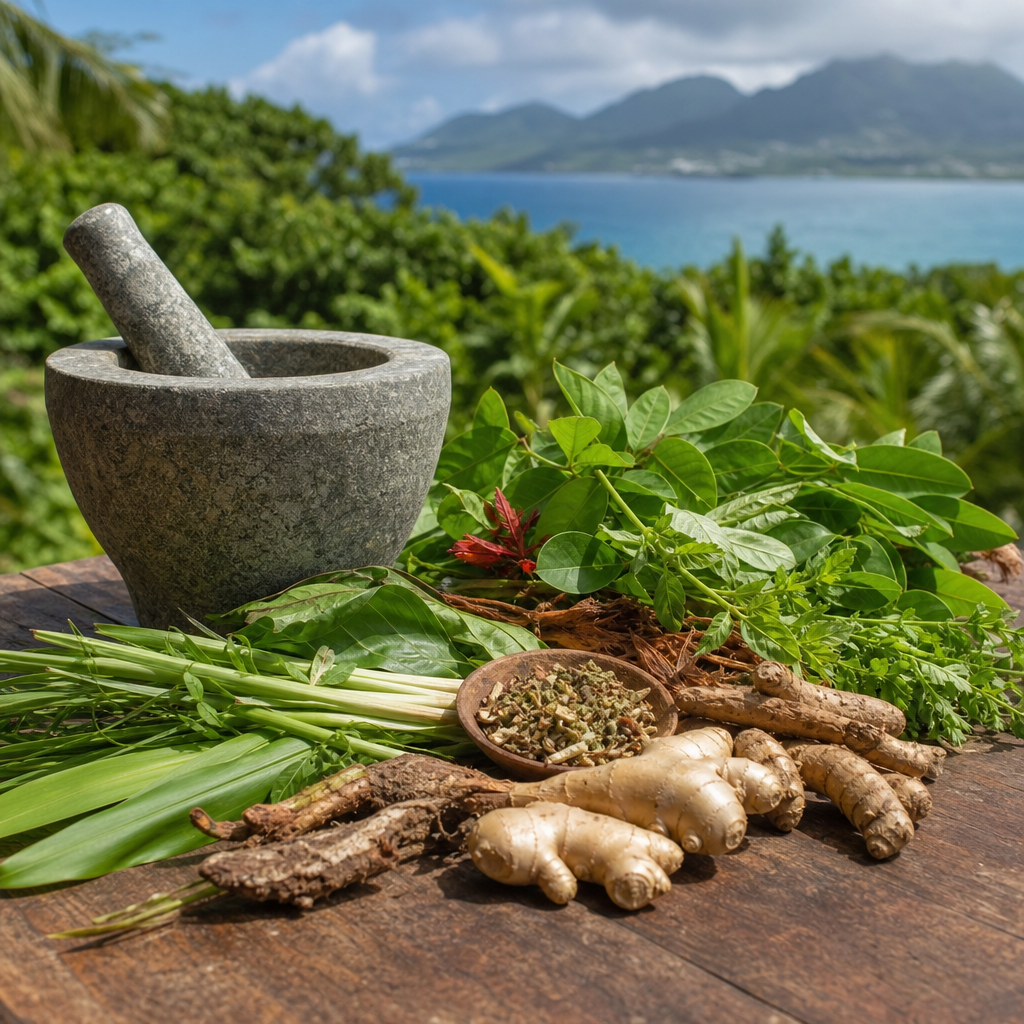
Several plants regularly appear in discussions of Nevisian herbal remedies because they are familiar across the wider Caribbean. Lemongrass, often called fever grass in many islands, is widely brewed as a fragrant tea associated with relaxation, mild fever support, and general comfort during colds. Mint is used for digestive ease and as a soothing hot drink. Ginger remains one of the most practical household remedies for nausea, warming circulation, and easing the sensation of congestion. Turmeric, though not always grown in every yard, is recognized for anti-inflammatory culinary and medicinal use, especially when fresh rhizome is available.
Soursop leaf is another plant that people often ask about because it has a strong reputation in Caribbean folk practice. Traditionally, it is commonly brewed as a tea used for calming or taken in small amounts within broader wellness routines. At the same time, this is a good example of why balance matters. Popular reputation does not equal unlimited safety, and concentrated long-term use is not automatically wise. Cerasee, known for its bitter taste, is associated across the region with digestive cleansing and blood sugar conversations, though bitterness itself should never be mistaken for proof of effectiveness. Aloe, vervain, guinea hen weed, noni, basil, and bay leaf also appear in home use, each with its own local context, reputation, and preparation style.
| Plant | Common preparation | Traditional use | Key caution |
|---|---|---|---|
| Lemongrass | Leaf infusion | Comfort during colds, relaxation | Avoid very strong preparations for young children without advice |
| Ginger | Tea from fresh rhizome | Nausea, warming support | May irritate some stomachs in excess |
| Aloe | Fresh gel applied topically | Minor burns, skin soothing | Internal use differs from topical use and needs caution |
| Cerasee | Bitter leaf tea | Digestive and cleansing traditions | Use conservatively; not suitable for everyone |
| Mint | Leaf infusion | Digestive comfort | Strong oils are different from mild teas |
How remedies are prepared and why method matters
Preparation determines both effect and safety. On Nevis, the most common herbal method is the infusion: pouring hot water over fresh or dried leaves and letting them steep for several minutes. This works well for aromatic herbs such as lemongrass, mint, basil, and certain calming leaves because their useful volatile compounds and water-soluble constituents are released without prolonged boiling. Decoctions are used for tougher materials like bark, roots, seeds, or woody stems. These require simmering, sometimes for fifteen to thirty minutes, to extract compounds that a simple steep would leave behind. Topical applications include leaf poultices, baths, steam inhalations, and infused oils.
Method matters because changing it changes the remedy. A mild tea may be appropriate for routine household use, while a concentrated decoction can become far stronger than intended. I have seen this mistake often when people assume that more plant material means better results. In practice, stronger is not always safer or more effective. Freshness also matters. Some leaves lose aroma and potency quickly after harvest, while others become easier to use when dried properly in shade with good airflow. Clean water, accurate plant identification, and hygienic handling are basic standards that should never be skipped. Traditional practice works best when it is careful rather than casual.
Where herbal knowledge comes from and how it is preserved
Nevisian plant knowledge sits within a broader Caribbean history that includes African botanical memory, Indigenous plant awareness, European colonial exchange, and later global plant movement through trade and migration. Many of the species used in household remedies today are not native to Nevis, yet they have become culturally rooted through long local use. This is typical of island herbal traditions. What matters is not only origin, but adaptation: which plants grow reliably in local conditions, which families trust them, and which preparations have been repeated across decades. Oral transmission remains central, but churches, community gardeners, market vendors, and school projects also help keep this knowledge visible.
Preservation now depends on documentation as much as memory. Older knowledge holders may know several vernacular names for one plant, plus distinctions in use by age, season, and constitution. If those details are not recorded, much of the practical value is lost. Herbarium work, community interviews, and garden labeling can all help. Regional references such as the Caribbean Herbal Pharmacopoeia, the work of the TRAMIL program on traditional medicine in the Caribbean Basin, and botanic garden collections provide useful comparative context. These sources do not replace local wisdom, but they help verify species identity, compare reported uses, and flag known toxicology concerns that older oral systems may not discuss explicitly.
Benefits, limits, and safety considerations
The main benefit of Nevis’ herbal remedies is not that they replace modern medicine. It is that they offer practical first-line support for minor complaints, strengthen cultural continuity, and deepen understanding of local biodiversity. A warm ginger tea for nausea, a lemongrass infusion for comfort during a cold, or aloe gel for a minor kitchen burn are straightforward examples of remedies that fit naturally into daily life. These uses persist because they are accessible and because many people have seen them work in modest, repeatable ways. Herbal care also encourages attentiveness to food quality, hydration, rest, and preventive household habits.
At the same time, limits are real. Traditional use is not proof that every remedy is safe for pregnancy, chronic illness, infants, or people taking prescription drugs. Some plants interact with anticoagulants, diabetes medications, sedatives, or blood pressure treatment. Others are safe externally but not internally. Misidentification is another serious risk, especially when common names overlap. Even plants with useful properties can cause allergic reactions or digestive upset in high amounts. That is why responsible herbal practice on Nevis should combine traditional knowledge with modern caution: verify the species, use moderate amounts, avoid exaggerated claims, and seek clinical care when symptoms are severe, persistent, or unexplained.
Why this topic belongs at the center of Nevis nature coverage
Herbal remedies are a true hub topic for understanding Nevis because they connect directly to gardening, forest ecology, sustainable harvesting, food culture, and wildlife habitat. A medicinal plant is never just a remedy. It is also part of an ecosystem. Pollinators visit basil, mint, and other flowering herbs. Trees valued for bark, leaves, or fruit may shelter birds or stabilize soil. Rainfall patterns affect leaf growth, aromatic intensity, and harvest timing. Invasive plants can displace useful species, while overharvesting from the wild can damage already limited habitats. Readers exploring Nevis’ natural world gain a fuller picture when they see medicinal plants as part of the island’s environmental fabric rather than a separate folk subject.
This hub also points naturally toward related articles on home gardens, native and introduced species, Caribbean ethnobotany, conservation, safe plant identification, and the role of markets in preserving agricultural diversity. For travelers and residents alike, learning Nevis’ herbal remedies adds depth to hikes, garden visits, and conversations with growers. It turns landscape into knowledge. The key takeaway is simple: Nevis’ traditional plant uses deserve attention because they join culture, ecology, and practical care in one living system. Explore the island’s herbs with respect, ask knowledgeable locals careful questions, and use this hub as a starting point for deeper study across the wider Nature and Wildlife section.
Frequently Asked Questions
What does “bush medicine” mean in Nevis, and why is it still important?
On Nevis, “bush medicine” refers to the use of locally known plants, leaves, roots, barks, seeds, and herbal preparations for everyday health support. It is not simply a collection of old remedies. It is a living system of practical knowledge shaped by the island’s volcanic soil, tropical rainfall, food-growing traditions, and the experience of families who learned which plants helped with common problems such as colds, fever, stomach discomfort, skin irritation, low energy, and recovery after childbirth. In many homes, this knowledge was passed down through observation and practice rather than formal written instruction, which is why it remains closely connected to memory, family care, and community life.
Its importance today comes from more than nostalgia. Bush medicine remains meaningful because it reflects self-reliance, local ecological knowledge, and a relationship with the land that many Nevisians still value. For generations, people used what was available in kitchen gardens, yard spaces, hillsides, and nearby fields to respond quickly to minor ailments. That practical approach made herbal care part of ordinary life rather than a separate specialty. Even now, traditional plant use can represent cultural continuity, especially for people interested in preserving Caribbean and African-rooted healing traditions that survived through adaptation and oral transmission. While modern healthcare plays a central role in serious diagnosis and treatment, Nevis’ herbal remedies still matter as an expression of heritage, household wisdom, and respect for local plant knowledge.
What kinds of health concerns were traditional herbal remedies in Nevis commonly used for?
Traditional herbal remedies in Nevis were commonly used for the kinds of health concerns that appeared regularly in everyday life. These included coughs, colds, congestion, feverish feelings, upset stomach, constipation, gas, skin rashes, minor cuts, fatigue, and general weakness after illness. In many households, herbal teas, tonics, washes, poultices, and baths were prepared as first responses to symptoms that did not immediately require outside medical care. Remedies were often chosen based on long-standing family experience with which plants were considered cooling, cleansing, calming, warming, soothing, or strengthening.
Women’s health and postpartum support were also important parts of this tradition. Certain herbal preparations were valued for helping the body recover after childbirth, encouraging rest, warmth, and restoration during the postnatal period. At the same time, some plants were used to support digestion after heavy meals, stimulate appetite, or help the body “clean out” after sickness. Skin care was another major area, since tropical living can bring heat rash, insect bites, fungal irritation, and other surface conditions that people often treated with washes or crushed plant applications.
It is also important to understand that traditional use did not always divide health concerns in the same way modern medicine does. Remedies might be described in terms such as “cooling the body,” “building strength,” or “settling the belly,” reflecting a practical, experience-based framework rather than a laboratory vocabulary. That does not make the knowledge less meaningful; it simply shows that plant use in Nevis developed within a household and community context where observation, repeated use, and inherited judgment guided care.
How were herbal remedies traditionally prepared and used in Nevisian households?
In Nevisian households, herbal remedies were often prepared in straightforward but highly intentional ways. Teas and decoctions were among the most common forms. Leaves, stems, roots, or bark might be steeped in hot water or simmered longer depending on the plant and the purpose of the remedy. Some herbs were used fresh from the yard, while others were dried for later use. A tea might be taken warm for a cough, digestive discomfort, or general cleansing, while a stronger boiled preparation could be used when people believed a deeper effect was needed.
Beyond teas, plants were also used externally. Crushed leaves could be applied directly as a poultice, infused water might be used as a wash for irritated skin, and herbal baths were prepared to soothe the body, reduce discomfort, or support recovery. In some cases, plants were combined with familiar kitchen ingredients or carriers such as oils, salt, or warm water to make them easier to apply or consume. Preparation often depended on the knowledge of elders, especially those who understood not just which plant to use but also how much, when, and in what form.
One of the defining features of this tradition is that preparation was rarely random. Timing, plant freshness, and the condition being addressed all mattered. People often relied on remedies they had seen work repeatedly within the family. The process was practical, local, and grounded in experience. Even simple preparations carried layers of cultural knowledge, including how to identify a plant properly, how to harvest it respectfully, and how to use it in ways considered safe and appropriate within household practice.
What makes Nevis’ herbal traditions distinct within the wider Caribbean?
Nevis’ herbal traditions share clear ties with the wider Caribbean, but they also have distinct local character. The island’s environment plays a major role. Volcanic soil, varied elevation, tropical rainfall, and the ability to grow both cultivated and wild-use plants contribute to a rich herbal landscape. Because Nevis is small, plant knowledge has historically been closely tied to everyday domestic spaces such as home gardens, provision grounds, roadside growth, and village memory. This gives the tradition an intimate scale, where remedies are often remembered not as abstract folklore but as specific family practices linked to particular people and places.
Cultural history is equally important. Nevisian plant use reflects layers of African knowledge systems, Caribbean adaptation, and generations of lived experimentation under local conditions. Remedies were shaped by what people could access, what survived in memory, and what proved useful over time. This blending of inherited knowledge and local improvisation is one reason the tradition feels both rooted and flexible. People did not simply preserve a fixed list of uses; they maintained a way of paying attention to plants, seasonality, bodily needs, and household care.
Another distinctive quality is the way herbal practice overlaps with food, caregiving, and community life. On Nevis, medicinal plant knowledge has often been embedded in ordinary routines rather than separated into a formal healing profession. The same landscape that feeds a household may also provide plants for tea, baths, or skin applications. That continuity between nourishment and healing helps explain why herbal remedies remain culturally significant. They are part of a broader understanding of how land, family knowledge, and well-being fit together.
Are traditional herbal remedies in Nevis still used today, and what should people keep in mind?
Yes, traditional herbal remedies are still used today on Nevis, especially for minor everyday complaints and as part of cultural practice. Many people continue to value herbal teas, baths, and topical plant preparations because they connect present-day life with family traditions and local knowledge. Interest has also grown among younger generations, researchers, and heritage-minded readers who want to document and preserve plant uses before elder knowledge is lost. In that sense, Nevis’ herbal remedies remain relevant not only as health practices but also as cultural records of resilience, adaptation, and community memory.
At the same time, thoughtful caution is essential. Traditional use does not automatically mean every plant is safe for every person or every condition. Correct plant identification matters, as misidentification can be dangerous. Preparation strength, dosage, age, pregnancy status, allergies, and interactions with prescription medications also need to be considered carefully. Some herbs that are used traditionally may not be appropriate for children, people with chronic illness, or anyone taking regular medication. Serious symptoms such as persistent fever, breathing difficulty, severe pain, dehydration, infection, or unexplained reactions should always be assessed by a qualified medical professional.
The most responsible way to approach Nevis’ bush medicine today is with both respect and discernment. Respect means acknowledging the depth of local knowledge and the generations who kept it alive through practice. Discernment means avoiding romantic assumptions, checking safety information, and understanding the limits of home remedies. When approached carefully, these traditions offer valuable insight into how Nevisians have long used plants to support health, comfort, and recovery while maintaining a strong connection to land and heritage.