Saint Kitts rewards careful wildlife watchers with one of the Caribbean’s most approachable reptile scenes, where lizards bask beside trails, geckos patrol veranda lights, and occasional snakes move quietly through dry forest, ghauts, and coastal scrub. In this island context, “exotic reptiles” does not mean dangerous curiosities collected for display; it means the native and long-established species that visitors and residents can observe in natural habitats with patience, distance, and respect. I have spent enough time guiding travelers around Basseterre’s edges, the Southeast Peninsula, and the lower slopes of Mount Liamuiga to know that most reptile encounters are brief, harmless, and easily improved by better field habits. That matters because Saint Kitts is small, ecologically varied, and heavily visited, so the difference between responsible observation and accidental disturbance is not theoretical. It affects basking behavior, nesting success, road mortality, and public attitudes toward wildlife. A practical guide helps readers identify what they are seeing, understand where reptiles are most active, and avoid the common mistakes that turn a rewarding sighting into a stressful encounter for both animal and observer.
Saint Kitts supports reptiles across gardens, stone walls, wetlands, abandoned cane lands, coastal cliffs, and regenerating forest. Key terms are useful from the start. A habitat is the environment a species uses for food, shelter, and breeding. Thermoregulation is how reptiles manage body temperature by moving between sun and shade. Crepuscular activity refers to movement at dawn and dusk, when many species forage while avoiding peak heat. Herping is the practice of searching for reptiles and amphibians in the field, usually with torches, route planning, and strict no-touch ethics. For a hub article under Nature and Wildlife, the goal is broader than listing species. It is to connect identification, behavior, safe observation, photography, ethics, seasonality, and conservation so readers can use this page as a starting point for deeper guides on snakes, iguanas, geckos, habitats, and wildlife etiquette. Saint Kitts may not have the reptile diversity of larger tropical islands, but what it does offer is accessibility: multiple species can be seen in a single day without entering sensitive areas, if you know where to look and how to behave.
What reptiles you can see in Saint Kitts
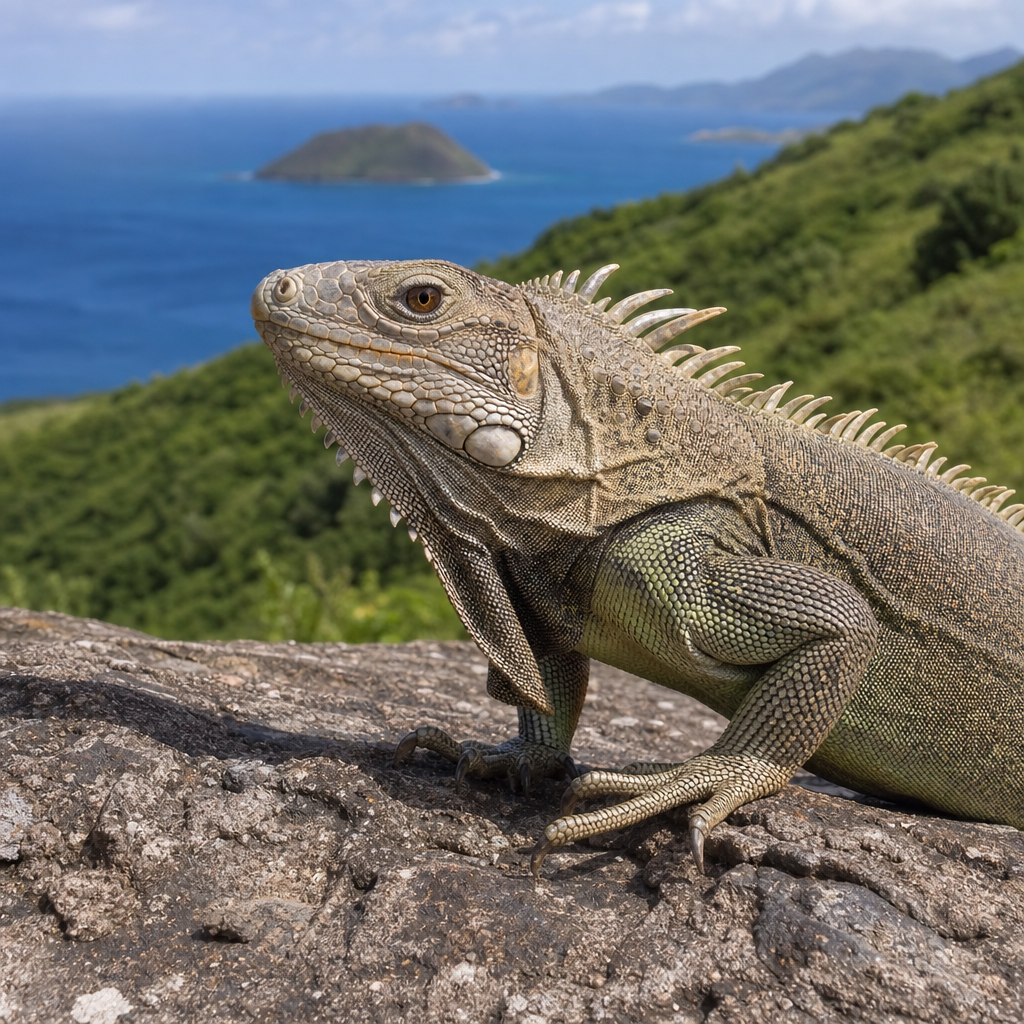
The reptiles most people notice first are lizards. Anoles are common in gardens, hedgerows, and forest margins, often seen doing short territorial displays with head bobs and dewlap extension. Ground lizards move faster and lower, sprinting across paths and open soil in sunny patches. House geckos emerge around buildings after dark, taking advantage of insects drawn to lights. In wetter or more wooded areas, larger tree-dwelling species may be spotted on trunks or fence posts, especially early in the morning when they are warming up. On the Southeast Peninsula and in drier coastal zones, habitat structure changes, and so does reptile behavior: basking sites become more obvious, but animals are often more alert because cover is sparse. For many visitors, these species provide the easiest and safest wildlife observations on the island.
Snakes in Saint Kitts attract disproportionate attention because they are less frequently seen, yet they are part of the island’s ecological balance, helping control rodents, small lizards, and other prey. Most sightings happen by chance on quiet roads, near stone walls, in overgrown lots, or along trail edges after rain. Because snakes rely on camouflage and escape rather than confrontation, the best practice is simple: stop, give space, and let the animal choose its route. Turtles may also be part of the broader reptile conversation in coastal contexts, especially when discussing nearby waters and nesting beaches, but on-land observations in Saint Kitts are dominated by lizards and the occasional snake. This hub article treats “miscellaneous” as the full practical field experience: not only what species exist, but how people encounter them, what signs precede a sighting, and what precautions keep wildlife undisturbed.
Best habitats and times for safe observation
If your goal is to observe reptiles safely in the wild, timing is as important as location. In my experience, the most productive windows are early morning from roughly 7:00 to 9:30 and late afternoon from about 4:00 to sunset. At those times, reptiles are active enough to be visible but not yet pushed into deep shade by midday heat. After warm rain, activity can increase along path edges and low vegetation because insects move, humidity rises, and surface temperatures become favorable. Bright midday hours can still produce sightings, especially of basking lizards on rocks, masonry, or roadside barriers, but animals are quicker to retreat and observers tend to miss subtle movement. Night walks around lit buildings, garden walls, and quiet lanes can be excellent for geckos, provided torches are used responsibly and beams are not held on animals for long periods.
Habitat choice should match the species you hope to see. Coastal scrub and rocky shore-adjacent areas are ideal for basking lizards that use open sun and low shrubs. Forest margins and ghauts offer more shade, moisture, and insect prey, which can support different activity patterns. Urban edges are often surprisingly productive because stone walls, drainage channels, ornamental plantings, and outdoor lights create microhabitats. This mix of human-made and natural structure is one reason Saint Kitts is good for beginner wildlife watchers. You do not need to trek into remote terrain to find reptiles. You do need to move slowly, pause often, and scan surfaces in layers: ground first, then wall tops, then trunks, then branches. Many missed sightings happen because people only look straight ahead.
| Habitat | Likely reptiles | Best time | Safety note |
|---|---|---|---|
| Garden walls and hotel grounds | Anoles, geckos, ground lizards | Early morning, after dusk | Watch footing near irrigation channels and avoid blocking escape routes |
| Coastal scrub and rocky paths | Basking lizards, occasional snakes | Morning, late afternoon | Wear closed shoes and keep hands off rocks you cannot fully see under |
| Forest edge and ghauts | Tree-dwelling lizards, snakes | Morning after rain | Stay on trail and use insect protection to avoid distracted footing |
| Quiet roads at dusk | Occasional snakes crossing warm surfaces | Dusk, early evening | Use a flashlight and stand well off the roadway |
How to observe reptiles without disturbing them
The single best rule is distance. A reptile that changes posture because of you has already been disturbed. In the field, I use the same sequence every time: stop at first sight, lower my profile, watch for the direction of attention, and only then decide whether to move closer by one or two careful steps. Sudden approach triggers flight, especially in anoles and ground lizards. For snakes, closing distance is unnecessary and unwise. Binoculars with close focus, such as 8×32 birding models, are more useful than many visitors expect because they let you study scale pattern, eye stripe, and perch choice without crowding the animal. A phone camera can work well for record shots, but avoid chasing better angles. If the reptile moves from sun to cover because of your position, back off and let the encounter end.
Children and group tours need extra structure. Ask everyone to freeze when an animal is spotted. Keep voices low. Never permit poking with sticks, turning stones, grabbing tails, or collecting eggs, skins, or shed parts from protected areas. Reptiles often use the same refuge repeatedly, and moving cover objects can expose them to predators and heat stress. This matters on small islands, where habitat patches are limited and disturbance accumulates quickly. The safest observational posture is also the most successful one: patient, quiet, and predictable. When people slow down, they start noticing behavior rather than just presence—dewlap displays, basking rotations, gecko hunting near lamps, and the stop-start movement patterns that distinguish a foraging lizard from an alarmed one. Those details turn a simple sighting into real natural history.
Field safety, clothing, and photography tips
Safe reptile watching in Saint Kitts starts with practical preparation, not specialized gear. Closed-toe shoes with good grip are essential because many productive areas include loose rock, roots, thorny vegetation, or uneven masonry. Lightweight long trousers reduce scratches and discourage mosquitoes during dawn and dusk sessions. Carry water, especially on exposed coastal routes where reflected heat builds quickly. A small flashlight or headlamp is enough for gecko watching and careful path scanning at night, but avoid very high-output beams directly into an animal’s eyes. If you are photographing wildlife, a modest telephoto lens in the 70–200mm range is ideal for lizards and safer for snakes than a wide lens that forces close approach. Phones are fine for casual use if you zoom with your feet sparingly rather than intruding.
Photographic ethics are especially important with reptiles because social media has normalized staged wildlife images. Do not handle animals to place them on “better” backgrounds. Do not spray water on lizards to create dramatic droplets. Do not refrigerate or otherwise immobilize reptiles for macro shots, a documented abuse in some wildlife photography circles. Natural history images are strongest when behavior remains authentic: a gecko hunting moths around a light fixture, an anole displaying from a hibiscus stem, or a snake crossing a lane under its own power. For identification records, include at least one frame showing habitat context and body proportions. That information is often more useful than a tight headshot. If you share sightings publicly, avoid posting precise locations for sensitive species or nesting sites.
Common mistakes visitors make
The first mistake is assuming every snake is dangerous and every lizard is harmless to handle. Fear causes people to crowd, strike at, or try to “rescue” animals unnecessarily. Curiosity causes the opposite problem: touching, lifting, or cornering wildlife for a closer look. Both behaviors are harmful. Another common mistake is searching by overturning rocks, boards, and debris without restoring them exactly as found. That destroys shelter conditions built around humidity, temperature, and concealment. I also see people walk too fast, especially on scenic coastal paths where they are focused on views. Reptiles are often noticed only by peripheral movement, so speed works against success. Finally, many visitors choose the wrong hour. If you go out at noon expecting abundant activity, you may conclude reptiles are scarce when they are simply inactive or hidden.
Misidentification is another recurring issue. On Saint Kitts, lighting, distance, and juvenile coloration can mislead beginners, and internet image searches often oversimplify Caribbean reptiles by lumping neighboring islands together. Treat quick identifications cautiously unless they come from a local naturalist group, a museum-backed checklist, or a regional field guide. Roadside behavior is a specific risk area. People stop suddenly to inspect a crossing snake and forget traffic, blind corners, or unstable shoulders. If you encounter wildlife on a road, your first responsibility is scene safety. Pull completely off if legal, use hazard lights when appropriate, and observe from a secure position. Do not attempt to move the animal unless you are trained, authorized, and certain of the species. On islands with mixed visitor experience levels, the safest message is straightforward: look, photograph from distance, and let wild reptiles remain wild.
Conservation context and responsible wildlife travel
Observing reptiles safely in Saint Kitts is inseparable from conservation. Island reptiles face pressures that are easy to underestimate because they operate at small scales: free-roaming cats, road mortality, habitat fragmentation, invasive predators, pesticide use, and casual persecution of snakes. Climate shifts also matter. Hotter dry periods can alter activity windows, while intense rain events can affect nesting sites and prey availability. Responsible wildlife travel reduces these pressures in ordinary ways. Choose marked trails instead of creating shortcuts through scrub. Support accommodations that manage lighting responsibly and maintain native vegetation. Report unusual sightings to local conservation groups when appropriate, especially if a species appears injured, trapped, or unusually concentrated in one area. Useful records include date, time, habitat, weather, and a photograph taken without disturbance.
As a hub page for the miscellaneous side of Nature and Wildlife, this article should point readers toward a broader field mindset. Reptiles are not standalone attractions; they are indicators of habitat quality and part of the same ecological story as pollinators, seabirds, mangroves, dry forest plants, and watershed health. When a garden supports geckos at night, it is also supporting insect life and shelter structure. When a ghaut edge holds lizards and occasional snakes, it reflects moisture, prey availability, and connected cover. That is why respectful observation has value beyond the moment of sighting. It builds support for protected spaces, better land management, and more informed tourism. Saint Kitts offers excellent reptile watching precisely because much of it can happen close to where people stay. The obligation is to enjoy that access without degrading it.
Saint Kitts’ reptiles are best appreciated as living parts of the island landscape, not as props for thrill-seeking or checklist collecting. Learn the main habitats, go out during the right hours, wear practical clothing, keep your distance, and let behavior guide your observation. Most encounters will be with lizards, especially around gardens, walls, trails, and coastal scrub, while snake sightings remain occasional and should always be handled with caution and space. The strongest wildlife experiences usually come from small moments: an anole defending a perch, a gecko timing a strike beneath a lamp, or a fleeting movement through leaf litter that reveals how much life exists just below ordinary notice.
For readers using this page as a hub, the next step is simple: explore deeper guides on local habitats, species identification, and wildlife etiquette before your walk. That preparation will improve both safety and success. Saint Kitts is one of those places where careful attention pays off quickly, and responsible reptile watching adds a richer layer to any visit, from beachside stays to rainforest excursions. Bring patience, move slowly, and treat every sighting as a privilege. The island will show you more when you ask less of it.
Frequently Asked Questions
What kinds of reptiles are visitors most likely to see in Saint Kitts?
Most people exploring Saint Kitts are far more likely to encounter small, active lizards than anything rare or alarming. Anoles are among the most visible, often seen perched on fences, tree trunks, garden walls, and sunny trail edges where they pause, display, and dart away. Ground lizards are also common in open, warm areas and may be noticed moving quickly through leaf litter, along stonework, or near coastal vegetation. Around homes, guesthouses, and outdoor lights, geckos are frequent evening visitors because they are drawn to insects gathering after dark. These species are part of everyday island life and are often the reptiles that give first-time wildlife watchers their best observations.
Snakes are present on the island as well, but they are usually much less conspicuous than lizards and are not what most visitors will spend the day seeing. If you do come across one, it will often be moving quietly through dry forest, ghauts, roadside vegetation, or scrubby coastal habitat rather than openly lingering in busy areas. The key point is that Saint Kitts offers a natural reptile-watching experience centered on free-living native and long-established species in their habitats, not on sensational or dangerous encounters. With a patient eye, you can build a surprisingly rich reptile list simply by walking slowly, watching sunlit surfaces, and returning to good habitat at the cooler and warmer transition periods of the day.
Is it safe to observe reptiles in the wild on Saint Kitts?
Yes, observing reptiles in Saint Kitts is generally safe when it is done responsibly. The island’s reptile encounters are typically low-drama and easy to manage because the animals themselves usually prefer to avoid people. Lizards will often remain visible if you move slowly, while snakes, when encountered, tend to retreat if given space. The safest and most effective approach is simple: do not try to catch, corner, prod, or pose with any wild reptile. Treat every sighting as a viewing opportunity rather than a hands-on experience, and you greatly reduce stress for the animal while protecting yourself from unnecessary risk.
Good field habits matter more than fear. Stay on established paths when possible, wear sturdy shoes, watch where you place your hands near rocks, branches, and walls, and use a flashlight after dark if walking around gardens, trails, or lodging grounds. If you find a snake, stop at a respectful distance and let it choose its escape route. If you are photographing wildlife, use zoom rather than stepping too close. These practical steps create a safer experience than any attempt to identify or assess an animal at close range. In short, Saint Kitts rewards calm, observant behavior: the more respectfully you act, the safer and more natural the encounter will be.
Where are the best places and times to observe reptiles on Saint Kitts?
Reptile activity on Saint Kitts often depends on warmth, shelter, and insect availability, so the best places are habitats that naturally provide those conditions. Dry forest edges, ghauts, coastal scrub, old stone walls, lightly shaded gardens, and sunny walking trails are all productive areas. Lizards frequently choose spots where they can bask and retreat quickly, such as low trunks, fence posts, rocks, and exposed roots. Around houses and accommodations, geckos are particularly easy to observe near exterior lights, porches, and verandas in the evening, where insects draw them into view. Wildlife watchers should think in terms of habitat variety: the transition zones between open and sheltered ground are often especially rewarding.
As for timing, early morning and late afternoon are usually excellent for daytime reptile watching because many species become active when temperatures are warm but not extreme. Midday can still produce sightings, especially in sunny places, but activity may become more stop-and-go as animals retreat to cover during peak heat. After sunset, gecko watching improves significantly around lights, walls, and ceilings of outdoor structures. Snakes are less predictable, but quiet periods with limited disturbance can increase the chance of a brief sighting, especially near natural cover. The best strategy is not to rush. Slow walking, frequent pauses, and repeated visits to the same habitat often reveal more reptiles than trying to cover a great distance quickly.
How can I observe and photograph Saint Kitts’ reptiles without disturbing them?
The most reliable rule is to let the reptile set the distance. If an animal freezes but remains relaxed, continues basking, or resumes normal movement after noticing you, you are probably observing appropriately. If it repeatedly flees, changes posture defensively, or disappears into cover because of your approach, you are too close. Move slowly, avoid sudden gestures, and approach from an angle rather than directly head-on. For lizards, a short pause after each step often works better than a continuous advance. For geckos at night, avoid overwhelming them with constant bright light at close range. For snakes, remain well back and never try to redirect them for a better view.
For photography, use optical zoom, a telephoto setting, or simply crop later instead of trying to force a close shot. Natural-looking images usually come from patient observation rather than manipulation. Never lift rocks, peel back bark, trap an animal against a wall, or handle it to stage a picture. Those actions increase stress and can expose the reptile to predators, overheating, or injury. It is also wise to stay mindful of the habitat itself: avoid trampling vegetation, stepping into fragile coastal scrub, or blocking pathways animals use to retreat. Ethical observation not only protects wildlife, it often produces better sightings because undisturbed reptiles behave more naturally and remain visible longer.
What should I do if I encounter a snake while hiking or exploring?
If you encounter a snake on Saint Kitts, the best response is to stop immediately, stay calm, and give it room. Do not attempt to identify it by moving closer, and do not try to make it move for your convenience. Most snakes prefer to avoid contact and will often continue on their way or retreat once they have a clear escape route. Step back slowly, keep companions nearby so no one accidentally approaches from another angle, and allow the animal to leave undisturbed. This response is both the safest choice and the most respectful one for the wildlife.
If the snake is on a trail, wait at a comfortable distance until it moves off naturally, or turn around and choose another route if necessary. If one is near a home, hotel, or commonly used outdoor area, avoid crowding it and notify local property staff or an appropriate local contact rather than intervening yourself. Never try to pick up, pin, chase, or kill a snake. Beyond the obvious safety concerns, these actions are harmful and unnecessary. Snake sightings on the island are usually brief and memorable precisely because these animals are discreet. A calm, hands-off response preserves that encounter as a wildlife observation rather than turning it into a dangerous situation.