Saint Kitts’ liberation movements shaped the island’s modern identity by turning plantation-era inequality, labor protest, constitutional reform, and regional diplomacy into a sustained path toward self-government and, finally, independence. In this context, liberation movements means the organized political, social, and labor efforts that challenged colonial rule and demanded greater rights for the people of Saint Kitts, while independence refers to the constitutional transition that created the sovereign state of Saint Christopher and Nevis on 19 September 1983. I have worked through many Caribbean history archives and museum collections, and Saint Kitts stands out because its story is not a single uprising followed by a clean break. It is a layered struggle that began in a brutal plantation economy, widened through workers’ demands for wages and dignity, and matured through party politics, trade unionism, federation debates, and statecraft. Understanding that progression matters because Saint Kitts was the site of the English Caribbean’s first permanent British colony in 1624, making it central to the wider history of empire, slavery, and decolonization. It also matters because the island’s experience reveals a practical truth often missed in simplified national stories: independence was built not only by heroic speeches, but also by strikes, election campaigns, constitutional conferences, social reform, and difficult compromises with Nevis and Britain.
To understand Saint Kitts’ liberation movements, readers need several key terms. Colonialism describes political control by Britain over the islands and their institutions. Emancipation refers to the legal end of slavery in the British Empire in 1834, followed by apprenticeship and then full freedom in 1838. Franchise expansion means the widening of voting rights beyond a restricted elite. Federation refers to attempts to join British Caribbean territories into larger political units, most importantly the West Indies Federation from 1958 to 1962. Associated statehood, granted in 1967, meant internal self-government while Britain retained responsibility for defense and foreign affairs. Each stage changed what liberation looked like. At first it meant survival under slavery; later it meant land, wages, representation, and constitutional power. By the late twentieth century it meant full sovereignty and control over national policy. Because this article serves as a hub within Culture and History, it also points readers toward connected themes: plantation society, emancipation, labor history, constitutional development, national heroes, and the continuing relationship between Saint Kitts and Nevis.
Colonial Foundations and the Origins of Resistance
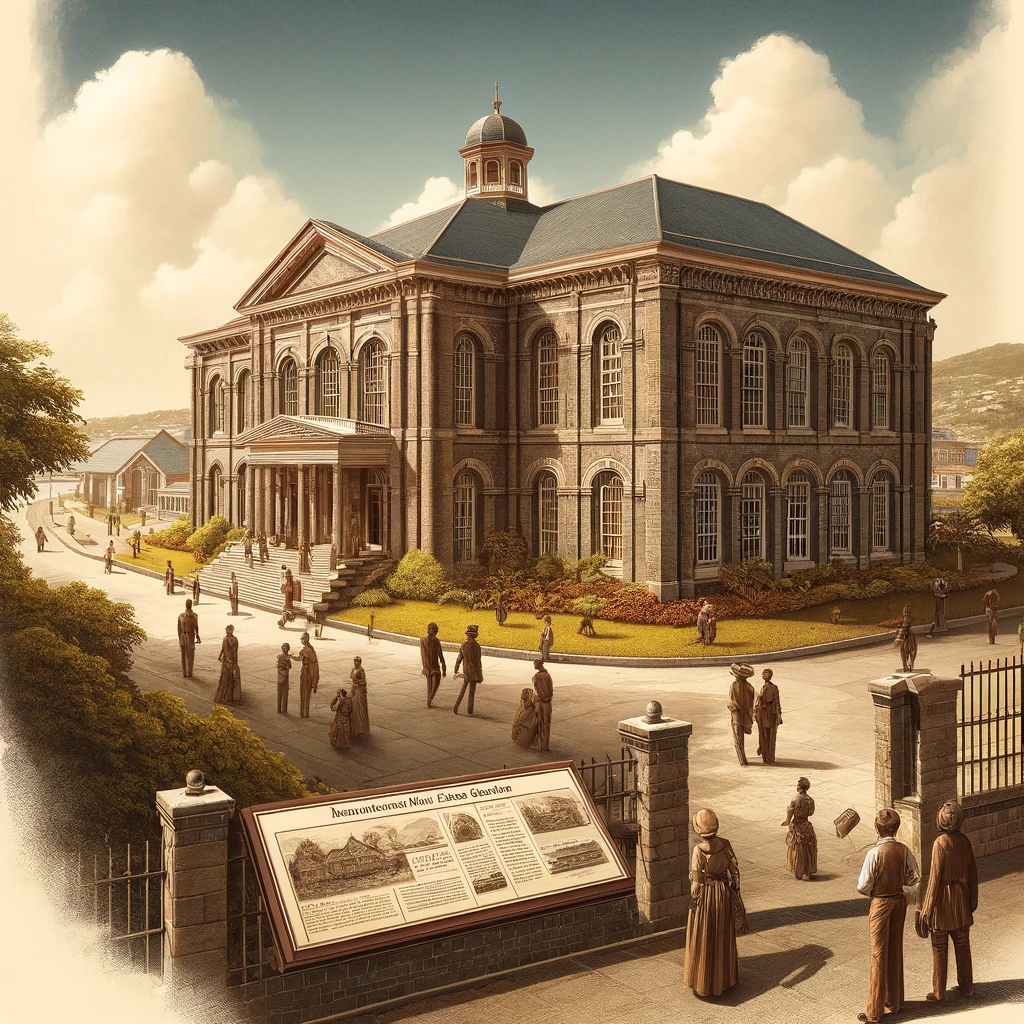
Any serious account of Saint Kitts’ path to independence begins with the island’s colonial foundations. Saint Kitts was contested early by European powers and became a major sugar colony worked by enslaved Africans on large estates. Sugar transformed the island’s economy and social order. Wealth and political power concentrated in the planter class, while the majority Black population endured forced labor, legal repression, and systematic exclusion from land and governance. This structure produced resistance long before modern political parties existed. Enslaved people resisted through flight, work slowdowns, sabotage, retention of African cultural practices, and, at times, direct rebellion. Even after emancipation, the plantation system continued to dominate daily life. Estate laborers often remained tied to low wages, poor housing, debt, and limited opportunities. In practical terms, colonialism survived emancipation because economic dependency and political exclusion remained intact.
That continuity is why liberation movements in Saint Kitts cannot be dated only from the twentieth century. The roots lie in the long contest over labor, land, and authority. Across the British Caribbean, freedom without access to land usually meant dependence on plantation employers, and Saint Kitts was no exception. Estate owners retained leverage because sugar remained the central export, and the state’s institutions largely protected existing hierarchies. The island’s small size intensified this pressure. There were fewer alternatives for workers than in larger territories with interior lands to settle. As a result, demands for better wages and fairer treatment carried political significance very early. In archival records and oral histories, the same themes recur: workers wanted not abstract constitutional theory first, but relief from exploitation, a stronger voice in public life, and the chance to live beyond estate control. Those practical demands became the basis for organized politics.
Labor Protest and the Rise of Mass Politics
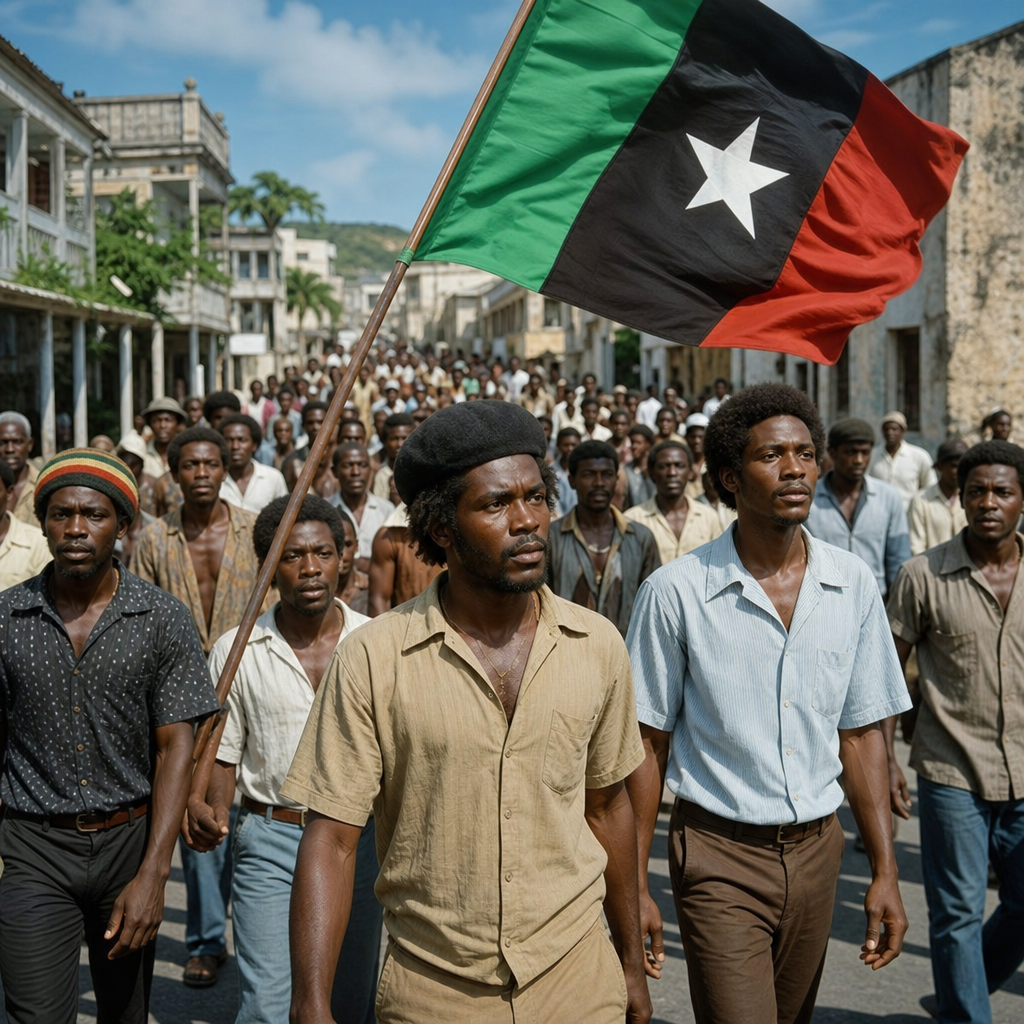
The decisive turn in Saint Kitts’ liberation movements came with the labor upheavals of the 1930s. The Great Depression hit Caribbean sugar economies hard, deepening unemployment, wage pressure, and social hardship. Across the region, workers protested living conditions and colonial neglect, and Saint Kitts experienced its own unrest in 1935. Those disturbances were not isolated outbursts. They reflected years of frustration among sugar workers who produced the island’s wealth but remained marginalized. From my work with regional labor history, one pattern is consistent: once workers moved from scattered complaint to organized protest, colonial governance had to adapt. In Saint Kitts, labor activism helped create a mass political culture in which ordinary people, not just property-owning elites, became central actors in public life.
Out of this environment emerged leaders who tied workers’ rights to constitutional change. The most important was Robert Llewellyn Bradshaw, usually known as RLB Bradshaw. Bradshaw became the dominant figure in modern Kittitian politics through his leadership in the Saint Kitts-Nevis-Anguilla Trades and Labour Union and through the St Kitts-Nevis-Anguilla Labour Party, founded in 1932 as the first political party in the English-speaking Caribbean. That date matters. It places Saint Kitts at the forefront of organized party politics in the region. Bradshaw and his allies understood that labor organization alone was not enough; workers also needed electoral leverage, legislative reform, and administrative power. This combination of unionism and party politics was the engine of liberation on the island.
Bradshaw’s approach was practical rather than romantic. He pushed for higher wages, labor protections, social services, and broader political participation. He also grasped that constitutional advance had to be negotiated step by step. Universal adult suffrage, introduced in 1952 in Saint Kitts-Nevis-Anguilla, dramatically changed the political landscape by empowering the working majority. Once the franchise widened, labor-based politics could convert social strength into government authority. Elections were no longer controlled only by a narrow elite. That shift did not eliminate class conflict, but it permanently altered the balance of power. Liberation now had institutions behind it.
Key Leaders, Turning Points, and Constitutional Milestones
Saint Kitts’ path to independence is easiest to follow through its major turning points and the leaders who shaped them. Bradshaw is central, but he was not alone. Paul Southwell, another major Labour leader, played a critical role in administration and state building, especially after Bradshaw’s death in 1978. Southwell’s work mattered because liberation movements eventually have to govern, not simply oppose. They must run schools, negotiate budgets, manage public works, and maintain legitimacy. In Saint Kitts, that transition from protest to administration was one of Labour’s most significant achievements.
| Period | Development | Why it mattered |
|---|---|---|
| 1932 | Labour Party founded | Created a permanent political vehicle for workers and reform |
| 1935 | Labor unrest | Forced attention to wages, poverty, and colonial neglect |
| 1952 | Universal adult suffrage | Expanded voting rights and strengthened mass politics |
| 1958–1962 | West Indies Federation | Tested regional self-government as an alternative to small-state nationalism |
| 1967 | Associated statehood | Delivered internal self-government while Britain kept limited powers |
| 1983 | Independence | Established Saint Christopher and Nevis as a sovereign nation |
The West Indies Federation is often treated as a side note, but it was an important part of the liberation story. Many Caribbean leaders believed political union would give small territories greater economic viability and international weight. Bradshaw supported federation, seeing regional integration as compatible with self-government. When the federation collapsed in 1962, each territory had to reassess its route forward. For Saint Kitts-Nevis-Anguilla, the next major step was associated statehood in 1967. This status transferred most internal authority from Britain to local government, making it a critical bridge between colony and nation. However, it also exposed internal tensions, especially with Anguilla, whose residents resisted rule from Basseterre and broke away. Anguilla’s secession crisis showed that anti-colonial progress did not automatically resolve disputes within multi-island states.
After Bradshaw’s death, the independence project continued under Labour leadership, but not without opposition. Kennedy Simmonds and the People’s Action Movement became increasingly important voices, particularly among those critical of Labour’s dominance. By the early 1980s, the question was no longer whether constitutional change would continue, but on what political terms and with what safeguards for Nevis. The final independence constitution included significant autonomy provisions for Nevis, including its own legislature and the constitutional right, under specified procedures, to seek secession. That is an unusual feature in postcolonial constitutions and reflects the particular political geography of the federation. Independence in 1983 therefore marked both national achievement and negotiated internal balance.
How Social Reform and National Identity Advanced Independence
Liberation in Saint Kitts was not achieved by constitutional talks alone. Social reform helped make independence credible. Governments led by Labour invested in education, public health, infrastructure, and worker representation, giving ordinary citizens a tangible stake in self-government. When people see roads improve, schools expand, clinics operate, and wages rise, nationalist politics gains legitimacy. In Saint Kitts, social policy translated abstract political claims into everyday experience. That process was especially important in a society still shaped by plantation legacies. Independence had to mean more than replacing British officials with local ones; it had to signal a different social contract.
National identity also developed through culture, memory, and public symbolism. The story of emancipation, labor struggle, and Black political advancement became central to how the nation understood itself. Public commemorations, school curricula, and civic ceremonies reinforced the idea that ordinary workers were makers of history. Basseterre, the capital, became the main stage for this transformation, but village life, churches, unions, and community associations also mattered. In many former colonies, nationalist history can flatten differences. Saint Kitts’ case is more complex because identity had to be built across Saint Kitts and Nevis while accounting for unequal political power, economic grievances, and distinct local loyalties. That is one reason constitutional design became so important. Identity needed legal support as well as emotional appeal.
The sugar industry remained a powerful symbol throughout this period. It represented exploitation, but also collective labor and eventual political mobilization. Workers who had long been treated as instruments of production became voters, union members, ministers, and citizens. That shift captures the deeper meaning of liberation movements on the island. They redefined who counted in public life. While formal independence arrived in 1983, the social groundwork had been laid over decades through organizing, reform, and persistent demands for dignity.
The Legacy of Liberation Movements in Saint Kitts Today
The legacy of Saint Kitts’ liberation movements is visible in the country’s democratic institutions, historical memory, and continuing debates about development and federal balance. Independence did not end all structural problems. Small-island economies remain vulnerable to external shocks, narrow export bases, and tourism dependence. Yet the political achievements of the liberation era gave the country tools to manage those challenges on its own terms. Citizens elect their government, shape policy through national institutions, and interpret their history through local priorities rather than imperial ones. That is the enduring benefit of sovereignty.
For readers exploring this Miscellaneous hub within Culture and History, Saint Kitts’ liberation movements connect directly to related subjects worth studying next: the sugar plantation system, slavery and emancipation, the 1935 labor disturbances, RLB Bradshaw’s leadership, the rise of trade unions, the Anguilla crisis, the constitutional status of Nevis, and Independence Day celebrations. Taken together, these topics show that the path to independence was not linear or unanimous, but it was transformative. The central lesson is clear. Saint Kitts became independent because workers organized, leaders built institutions, voters used new political rights, and constitutional change was pursued with persistence over generations. If you want to understand modern Saint Kitts, start with this liberation story, then follow the people, events, and institutions that carried it from plantation colony to sovereign state.
Frequently Asked Questions
What were the main causes behind Saint Kitts’ liberation movements?
Saint Kitts’ liberation movements grew out of long-standing social and economic inequalities rooted in the plantation system and colonial rule. For generations, political power and economic opportunity were concentrated in the hands of a small elite, while most working people, especially laborers tied to sugar production, faced low wages, limited rights, and little influence over public decision-making. These conditions created deep frustration and made calls for change increasingly urgent. Liberation movements emerged as organized responses to these realities, connecting everyday hardship to the larger issue of political dependence on Britain.
Another major cause was the rise of labor consciousness in the early and mid-twentieth century. Workers began to push back against exploitative conditions, and labor protest became one of the most important vehicles for political awakening. Demands for fair treatment, better wages, and social dignity gradually expanded into demands for representation, constitutional reform, and self-government. In that sense, the struggle was never only about labor issues in a narrow sense; it was also about who had the right to shape the island’s future. As education, political organization, and regional awareness increased, many people in Saint Kitts came to see liberation as both a social and a constitutional project.
How did labor protests influence the path toward independence in Saint Kitts?
Labor protests played a central role in transforming popular discontent into organized political action. In Saint Kitts, workers were not simply asking for minor workplace improvements; they were exposing the structural inequalities of a colonial economy that depended heavily on plantation labor. Strikes, demonstrations, and labor organizing gave ordinary people a public voice and forced colonial authorities to confront the depth of local grievances. These protests helped redefine the political landscape by showing that the majority population could organize collectively and demand accountability.
Just as importantly, labor activism helped build institutions, leaders, and public networks that later drove constitutional change. Trade unions and labor-based political organizations became training grounds for mass politics, teaching communities how to mobilize, negotiate, and press for reforms. This helped shift the independence movement from scattered frustration to a sustained campaign for greater self-government. Over time, labor protest connected economic justice with political sovereignty, reinforcing the idea that true freedom required both improved living conditions and control over national governance. That connection made labor struggles a foundation of the wider liberation movement.
What role did political reform and constitutional change play in Saint Kitts’ independence?
Political reform and constitutional change were essential because independence did not arrive as a single dramatic event; it was the result of a gradual transfer of authority from colonial institutions to local leadership. As liberation movements gained strength, pressure mounted for expanded voting rights, greater local representation, and more control over internal affairs. These reforms created the legal and political framework through which the people of Saint Kitts could move from protest to governance. Constitutional development allowed activists and elected leaders to translate popular demands into formal structures of self-rule.
Step by step, the island moved through stages of increased autonomy, with local institutions taking on more responsibility for domestic matters while Britain retained ultimate authority in key areas. This evolutionary process mattered because it helped prepare Saint Kitts for full nationhood. Leaders had to build administrative experience, negotiate internal political questions, and define how the state would function after colonial rule ended. Independence, therefore, was not only symbolic; it was the culmination of years of constitutional bargaining, institutional development, and political maturation. The liberation movement succeeded in part because it understood that lasting freedom required durable legal and governmental foundations.
How did regional diplomacy and Caribbean politics affect Saint Kitts’ journey to independence?
Saint Kitts’ journey to independence was shaped not only by local activism but also by wider Caribbean political developments. Across the region, other territories were challenging colonial systems, building nationalist movements, and negotiating new constitutional arrangements. These regional examples mattered because they showed that self-government was both possible and increasingly legitimate. Caribbean political thought encouraged leaders and citizens in Saint Kitts to place their own struggle within a larger historical movement toward decolonization, regional dignity, and postcolonial statehood.
Regional diplomacy also influenced how Saint Kitts approached practical questions of sovereignty, governance, and international recognition. Leaders had to consider how the island would relate to neighboring territories, regional institutions, and former colonial powers. The experience of federation, regional cooperation, and diplomatic negotiation helped shape the political imagination of independence. In this sense, Saint Kitts’ liberation movement was local in its grievances but regional in its strategic context. Caribbean politics provided models, alliances, and pressure points that strengthened the case for self-determination and helped normalize independence as the appropriate end point of constitutional reform.
Why are Saint Kitts’ liberation movements still important to the island’s modern identity?
Saint Kitts’ liberation movements remain important because they explain how the island moved from a society marked by colonial hierarchy and plantation-era inequality to one grounded in self-government and national citizenship. These movements were not abstract political episodes; they were struggles carried by workers, organizers, reformers, and community leaders who insisted that the people of Saint Kitts deserved dignity, representation, and control over their own affairs. Remembering that history helps modern audiences understand that independence was earned through collective effort, not simply granted from above.
They also continue to shape national identity by providing a shared narrative of resilience, political awakening, and democratic participation. The legacy of liberation movements can be seen in public debates about social justice, governance, labor rights, and national development. They remind citizens that nationhood involves ongoing responsibility as well as historical pride. In a deeper sense, these movements form part of Saint Kitts’ moral and political foundation: they connect the past to the present by showing how organized action, constitutional change, and popular determination created the conditions for independence and the modern state that followed.