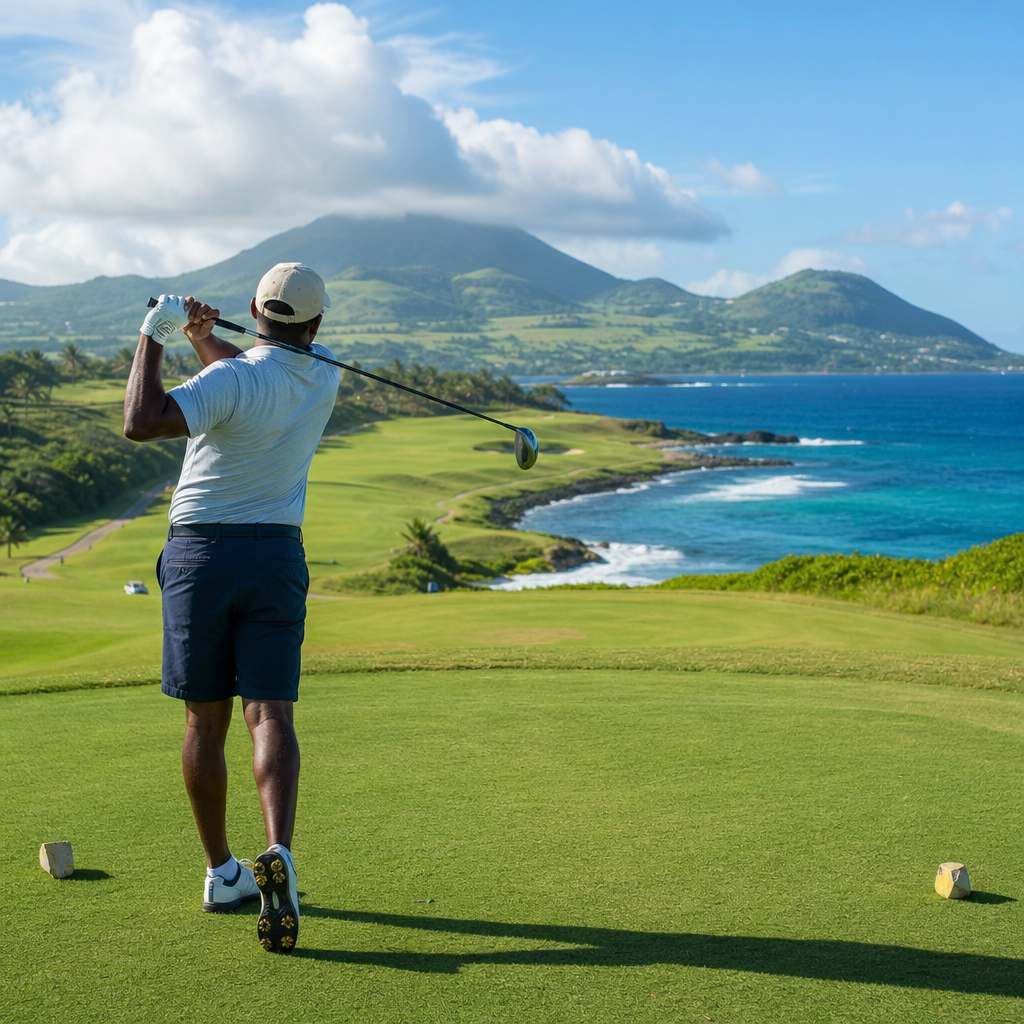
Sea air has a reputation for making people feel clearer, calmer, and more energized, and on Nevis that reputation is supported by a setting uniquely suited to mindful breathing. Breathing exercises in Nevis combine a warm maritime climate, consistent trade winds, volcanic landscapes, and a slower daily rhythm that encourages people to pay attention to how they inhale, exhale, and recover from stress. In practical terms, sea air refers to the coastal atmosphere shaped by saltwater, wind movement, humidity, temperature, and airborne particles near the shore. Breathing exercises are structured techniques such as diaphragmatic breathing, box breathing, pursed-lip breathing, resonance breathing, and mindful nasal breathing, all used to improve respiratory efficiency, mental focus, and nervous system regulation.
I have worked with travelers and wellness operators who consistently notice the same pattern: people arrive carrying shallow chest breathing from long flights, work stress, and excessive screen time, then begin to breathe more deeply after only a few mornings near the water. That shift matters because breathing affects heart rate variability, blood carbon dioxide balance, posture, sleep quality, and perceived anxiety. It also shapes how effectively the body uses oxygen during walking, swimming, hiking, yoga, or recovery after exercise. For a health and wellness hub article, Nevis offers a strong case study because it blends environmental advantages with practical routines people can adopt at almost any age or fitness level.
This guide explains the benefits of sea air, why breathing exercises in Nevis are especially effective, which techniques work best in different settings, and how to practice safely. It also serves as a hub for the wider miscellaneous wellness conversation: spa recovery, outdoor movement, digital detox, sleep support, stress management, and sustainable travel habits all connect back to breath. When readers ask whether the ocean actually changes how they feel, the short answer is yes, though not in magical ways. The real benefits come from a combination of cleaner-feeling coastal airflow, sensory relaxation, regular movement, and deliberate breathing patterns practiced in a place that makes consistency easier.
Nevis, part of the Federation of Saint Kitts and Nevis in the eastern Caribbean, is compact enough to feel accessible and varied enough to support multiple wellness routines in one trip. You can practice on Pinney’s Beach at sunrise, take restorative breaths after a hike on Nevis Peak foothills, or use evening sea breezes to downshift before bed. That versatility is why this topic belongs at the center of a miscellaneous wellness hub. Breath links the body and mind, and on Nevis it becomes a simple daily tool rather than an abstract concept.
Why Sea Air Feels Different on Nevis
Sea air is not a medical treatment, but it does create conditions that many people experience as refreshing and restorative. Along Nevis’s coastline, moving air helps disperse heat and can make outdoor breathing practice more comfortable than stagnant inland conditions. The sensory environment matters too. Rhythmic wave sound, open horizons, and natural negative associations with stress are reduced when people step away from traffic, notifications, and enclosed spaces. In my experience guiding wellness content around coastal destinations, people often mistake this effect for a single chemical property of the air, when it is actually a layered response involving environment, behavior, and perception.
Humidity is one important factor. Moderately humid air can feel easier on the throat and nasal passages than very dry air, especially for travelers coming from air-conditioned offices or long-haul flights. Saltwater environments also produce sea spray aerosols, and while claims around dramatic detoxification are often overstated, many people report that coastal air feels less irritating than polluted urban air. The key point is not that ocean air cures respiratory conditions; it is that Nevis provides an outdoor setting where comfortable breathing practice is easier to sustain. That distinction keeps expectations realistic and useful.
Another benefit is consistency. Nevis does not demand elaborate planning to access restorative surroundings. Beaches, waterfront paths, garden spaces, and hotel terraces can all function as breathing practice locations. This lowers friction, which is critical in habit formation. A five-minute exercise done every morning beside the sea is more effective than an idealized twenty-minute session that never happens. The island’s scale supports repetition, and repetition is what turns breathwork into measurable wellness progress.
How Breathing Exercises Improve Health and Wellness
Breathing exercises work because respiration is one of the few automatic body functions that can also be consciously adjusted. When you slow the breath, extend the exhale, and engage the diaphragm, you influence the autonomic nervous system. This often reduces sympathetic overactivation, the fight-or-flight pattern associated with racing thoughts, tense shoulders, and shallow breathing. At the same time, slower, controlled breathing can support parasympathetic activity, which helps with relaxation, digestion, and recovery.
Diaphragmatic breathing is the foundation. Instead of lifting the chest and tightening the neck, the person expands the lower ribcage and abdomen on inhalation. This improves breathing mechanics and often reduces the sense of breath hunger caused by fast, inefficient upper-chest breathing. Box breathing, commonly taught in high-performance and resilience settings, uses equal counts for inhale, hold, exhale, and hold. Resonance breathing, often around five to six breaths per minute, is used to support calm focus and heart rate variability. Pursed-lip breathing can help people lengthen exhalation and avoid rushed breathing during walking or after exertion.
These methods matter for more than relaxation. Better breathing mechanics can improve exercise tolerance, vocal control, and posture. Deliberate nasal breathing may help warm and filter inhaled air, and it encourages a slower pace that prevents overbreathing in anxious moments. For many travelers, the immediate gains are practical: improved sleep on vacation, less tension after transit, steadier energy during hikes, and a stronger sense of presence. Those outcomes make breathing exercises in Nevis relevant not only for dedicated wellness travelers but also for couples, older adults, remote workers, and families looking for accessible health routines.
Best Breathing Exercises to Practice by the Water
The best breathing exercises in Nevis are simple enough to repeat and flexible enough to match the environment. Sunrise on the beach is ideal for diaphragmatic breathing. Sit upright or stand with relaxed knees, place one hand on the lower ribs, inhale through the nose for four counts, and exhale for six. Repeat for five to ten minutes. The longer exhale helps many people settle quickly, particularly when accompanied by wave rhythm. Midday sessions work well with box breathing because the structure maintains focus when the mind is busy.
Walking breathwork is especially effective along flatter coastal stretches. A practical pattern is inhale for three or four steps and exhale for four or five steps, keeping the pace conversational. This teaches breath control during movement and is easier for beginners than static meditation. After swimming, snorkeling, or light hiking, pursed-lip breathing can help restore a calm rhythm: inhale through the nose for two counts, then exhale through lightly pursed lips for four counts. It is a useful reset because people often leave the water breathing a little faster than they realize.
Evening is ideal for downregulation. On Nevis, I recommend a ten-minute sequence of nasal breathing with a gentle exhale emphasis before dinner or before bed. Travelers who struggle with overstimulation often respond well to a short body scan combined with breathing at five to six breaths per minute. The goal is not perfect technique. The goal is to create a reliable state change. If a person finishes a session feeling less rushed, less tense, and more aware of posture, the exercise has already delivered value.
| Setting in Nevis | Recommended exercise | How to do it | Main benefit |
|---|---|---|---|
| Sunrise beach | Diaphragmatic breathing | Inhale 4 counts, exhale 6 counts for 5 to 10 minutes | Calm focus and better breathing mechanics |
| Coastal walk | Step-matched breathing | Inhale for 3 to 4 steps, exhale for 4 to 5 steps | Breath control during movement |
| After swimming or hiking | Pursed-lip breathing | Inhale through nose 2 counts, exhale through lips 4 counts | Recovery and slower exhalation |
| Terrace or garden at dusk | Resonance breathing | About 5 to 6 breaths per minute for 10 minutes | Nervous system regulation and sleep support |
Where Nevis Supports a Strong Breathwork Routine
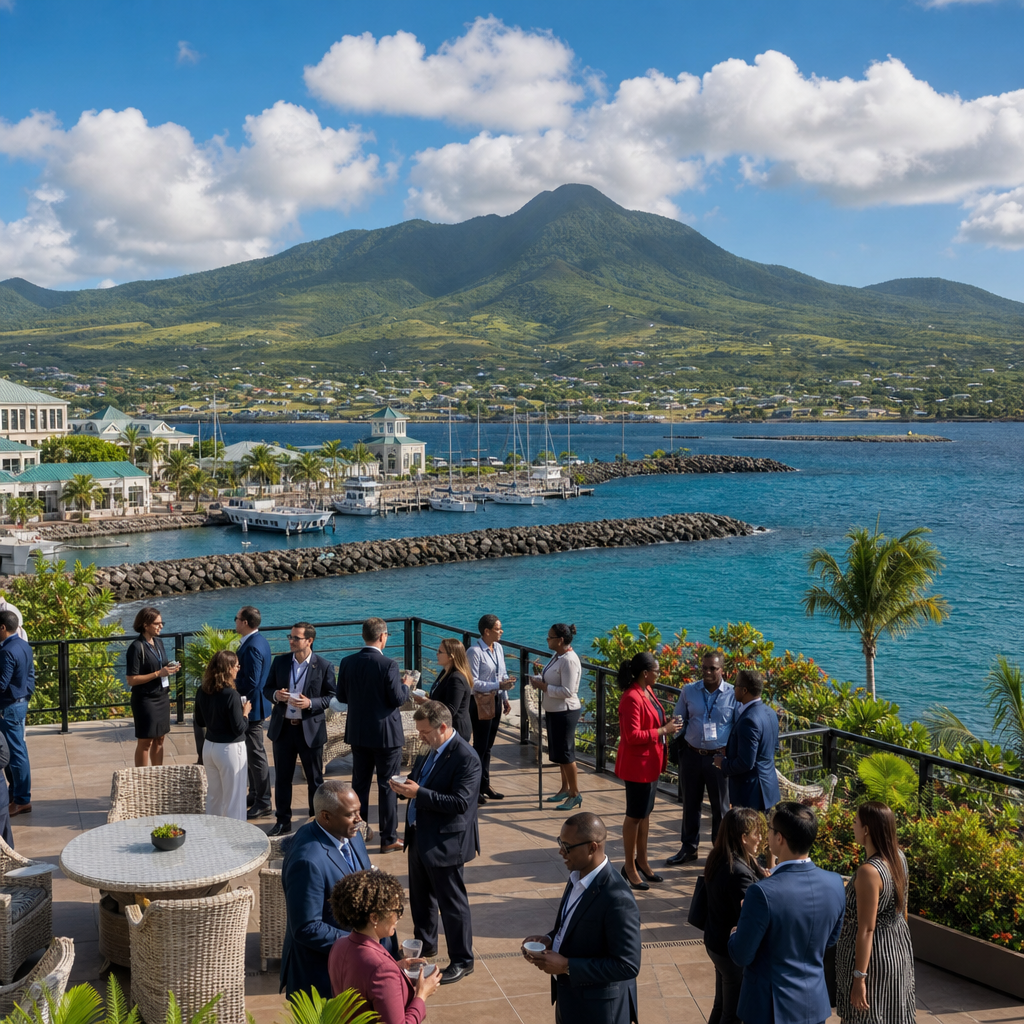
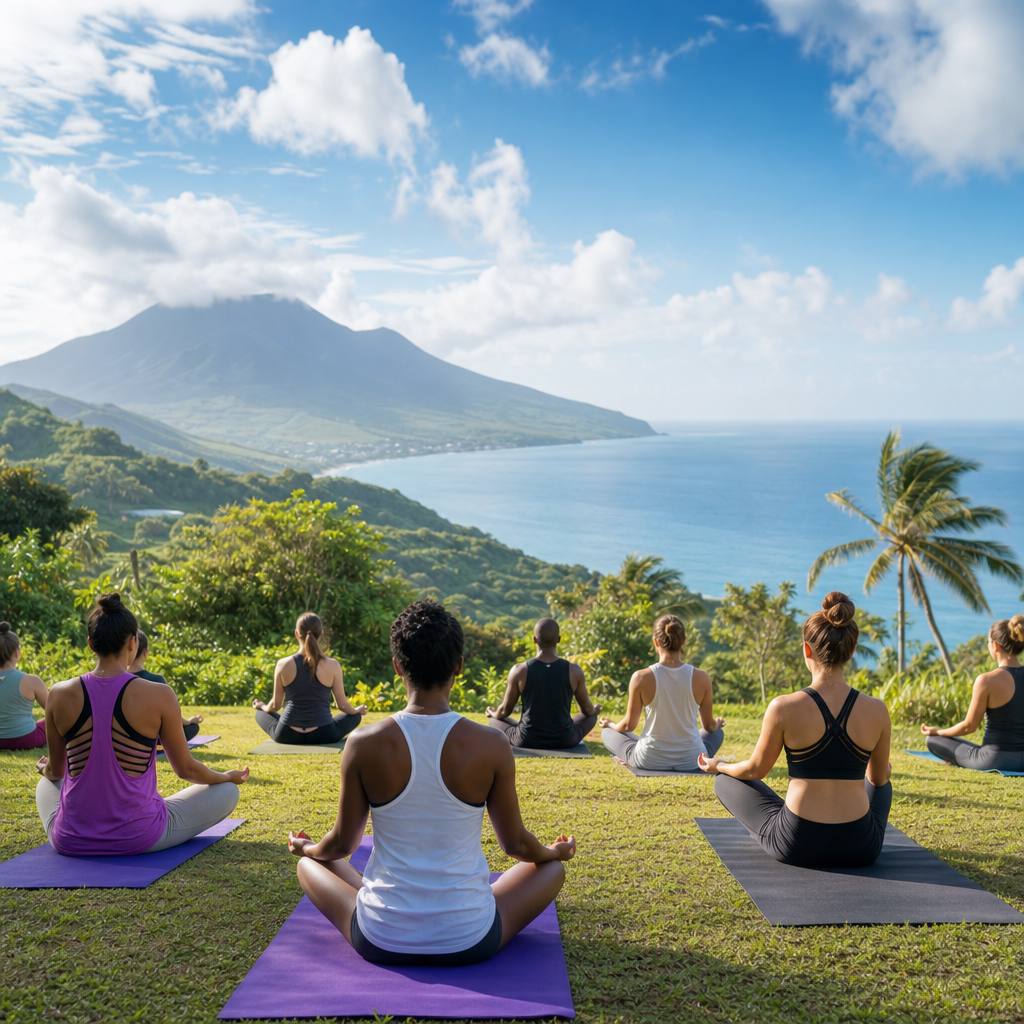
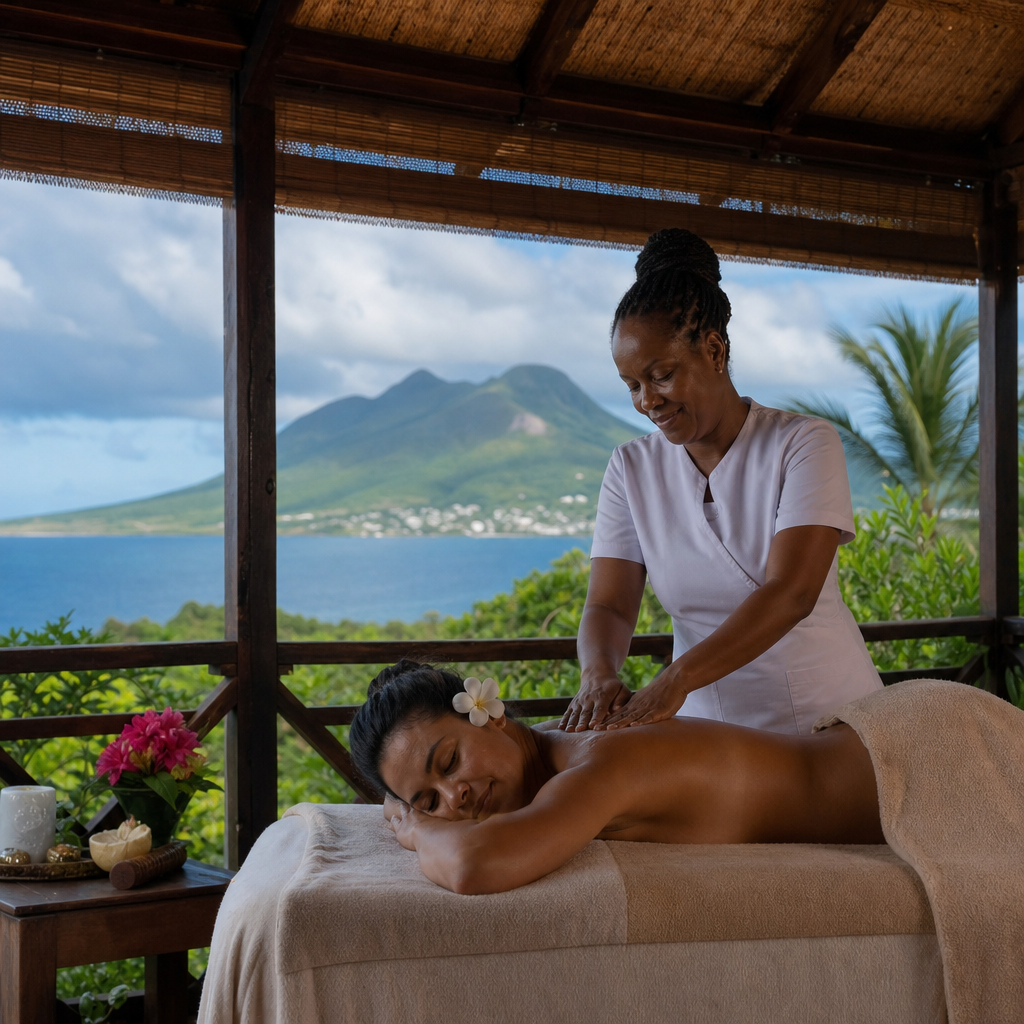
Pinney’s Beach is the obvious starting point because it offers long views, easy access, and a reliable sense of openness that helps people settle into steady breathing. The western side of the island also gives many visitors calm sunset conditions, which suit evening practice. Hotel gardens and wellness terraces add a more private option for travelers who want guided sessions or a quieter atmosphere than open beachfront spaces. Several properties on Nevis already integrate yoga, massage, and movement programming, making breathwork a natural extension rather than a separate activity.
Not every session needs to happen directly on sand. Shaded verandas, botanical areas, and hillside viewpoints can be excellent because posture is easier to maintain on stable ground and heat exposure is lower. If you are combining breathwork with movement, the area around Charlestown and the island’s quieter roads can support short mindful walks. For more ambitious visitors, post-hike breathing near the lower slopes of Nevis Peak can be deeply restorative, though intense mountain activity is not the right moment for long breath holds. Context matters. Technique should match exertion level, weather, and the individual’s baseline fitness.
What makes Nevis stand out is the ease of linking breath to a wider wellness itinerary. A morning session can lead into a swim, a healthy breakfast, spa recovery, or journaling. An afternoon reset can support digital detox and reduce the mental spillover from work messages. Because the island is not overwhelming in scale, people protect their routines more easily. Wellness habits survive when logistics are simple, and Nevis keeps them simple.
Practical Tips, Safety, and Long-Term Benefits
Breathing exercises are low-cost and accessible, but they still require common sense. Anyone with asthma, chronic obstructive pulmonary disease, cardiovascular disease, panic disorder, or recent respiratory illness should use gentle techniques and consult a qualified clinician when needed. Avoid aggressive hyperventilation methods in hot outdoor conditions, and never practice prolonged breath retention in water. Hydration matters in tropical climates, and so does timing. Early morning or late afternoon usually offers the best combination of comfort, lower heat stress, and consistent adherence.
Good technique starts with posture. Keep the ribs stacked over the pelvis, relax the jaw, and let the shoulders drop. If dizziness appears, return to normal breathing immediately. Progress should be gradual. I usually advise visitors to begin with five minutes once or twice daily for three days, then increase toward ten minutes if the practice feels easy and grounding. A simple note on a phone or travel journal can track what works: beach sessions for mood, walking breaths for stamina, evening resonance breathing for sleep. Those observations help turn a pleasant experience into a durable personal routine.
The long-term benefit of breathing exercises in Nevis is not limited to the trip itself. The island teaches a transferable skill. Once someone learns how sea air, pace, posture, and deliberate exhalation work together, that routine can continue at home in a park, on a balcony, or before a stressful meeting. That is why this topic anchors a miscellaneous health and wellness hub. Breath intersects with fitness, recovery, emotional resilience, and everyday self-care in ways few interventions can match. Use your time in Nevis to test which practice fits your life, then keep it going after the flight home. The simplest next step is the most effective one: choose one coastal session, do it tomorrow morning, and repeat it for the rest of your stay.
Frequently Asked Questions
What makes sea air in Nevis especially appealing for breathing exercises?
Sea air in Nevis is appealing because it is shaped by a combination of clean coastal breezes, steady trade winds, warm temperatures, and the island’s naturally unhurried pace. When people talk about sea air, they are usually referring to the atmosphere created where saltwater, moving wind, and open shoreline meet. In Nevis, that environment can feel especially refreshing because the island is relatively small, less congested than many urban destinations, and surrounded by constant ocean influence. This creates an ideal backdrop for slow, mindful breathing practices that help people notice the rhythm of inhaling and exhaling without as many of the distractions that come with busier settings.
Nevis also offers a rare sensory balance. The sound of waves, the warmth of the air, and the sight of volcanic landscapes and open water can support a calmer nervous system, which is important for effective breathwork. Breathing exercises are often most beneficial when the body feels safe and relaxed enough to slow down. In that sense, Nevis is not just a scenic place to practice; it is a setting that encourages deeper attention to posture, breath depth, and recovery from stress. For many visitors and residents, that combination of climate, scenery, and atmosphere makes breathing exercises feel more natural and more sustainable.
How can breathing exercises in Nevis help with stress and mental clarity?
Breathing exercises can help reduce stress by shifting attention away from racing thoughts and back toward the body’s natural rhythms. On Nevis, that process is often easier because the environment itself supports slowing down. A calmer daily pace, less noise, and access to beaches, coastal paths, and quiet outdoor spaces make it easier to practice intentional breathing without feeling rushed. Techniques such as diaphragmatic breathing, box breathing, or simple extended exhales can signal the body to move out of a more activated stress response and into a steadier, more grounded state.
Mental clarity often improves when breathing becomes slower and more deliberate. Many people under stress tend to take short, shallow breaths, which can reinforce feelings of tension and restlessness. In contrast, mindful breathing encourages fuller, more controlled breaths that can help create a sense of steadiness and focus. In Nevis, this can be enhanced by practicing near the shore, where natural sounds and moving air make it easier to anchor attention in the present moment. While breathing exercises are not a cure-all, they can be a powerful everyday tool for clearing mental clutter, improving emotional regulation, and helping people feel more centered and energized.
What types of breathing exercises work best in a coastal environment like Nevis?
A coastal environment like Nevis works well for breathing exercises that emphasize relaxation, rhythm, and awareness. One of the most accessible options is diaphragmatic breathing, sometimes called belly breathing, in which you inhale deeply through the nose, allow the abdomen to expand, and then exhale slowly and fully. This style of breathing is effective because it encourages efficient use of the lungs and can help release tension in the shoulders, chest, and jaw. It is especially useful when practiced in a peaceful outdoor setting where the breath can naturally match the slower pace of the environment.
Other excellent choices include box breathing, counted breathing, and resonance breathing. Box breathing uses equal counts for inhaling, holding, exhaling, and holding again, which can help improve concentration and emotional control. Counted breathing, such as inhaling for four counts and exhaling for six, is helpful for calming the body and extending the exhale. Resonance breathing, often around five to six breaths per minute, is commonly used to support relaxation and balance. In Nevis, people may also benefit from walking breath practices along the coast, where steps are matched to the breath. The key is to choose a technique that feels comfortable in the warm climate and to avoid overexertion, especially during the hottest parts of the day.
Is there a best time or place in Nevis to practice mindful breathing?
Yes, and the best choice usually depends on comfort, weather, and personal preference. Early morning is often ideal because temperatures are gentler, the air feels fresh, and beaches or outdoor spaces tend to be quieter. This makes it easier to focus without interruption and to begin the day with a calm, steady breathing routine. Late afternoon can also work well, particularly when the heat softens and the light changes, creating a more restful atmosphere. In both cases, the goal is to find a time when the body feels comfortable enough to breathe deeply without strain.
As for location, many people prefer waterfront areas where they can benefit from open air, sea breezes, and the naturally repetitive sound of waves. Beaches, shaded coastal benches, quiet hotel gardens, verandas with ocean views, and peaceful walking paths can all be excellent settings. Some may even prefer elevated spots with views of both sea and volcanic terrain, since broad landscapes can encourage a sense of spaciousness and ease. The most important factor is choosing a place where you feel safe, relaxed, and able to maintain attention. If the sun is strong or the wind feels too intense, moving into light shade or a sheltered outdoor area is often the best adjustment.
Are breathing exercises in Nevis suitable for beginners and wellness travelers?
Absolutely. Breathing exercises in Nevis are highly suitable for beginners because they require very little equipment, can be adapted to different fitness levels, and fit naturally into a wellness-focused trip. A beginner can start with just a few minutes of slow nasal breathing while seated comfortably near the beach or in a quiet garden. There is no need for advanced technique at the beginning. The most effective approach is usually simple consistency: short sessions practiced regularly, with attention to comfort and ease rather than performance. This makes breathwork approachable for solo travelers, couples, retreat participants, and anyone looking to add a restorative element to their stay.
For wellness travelers, breathing exercises can complement activities such as yoga, walking, spa treatments, meditation, and time spent in nature. They are especially valuable on Nevis because the island’s atmosphere supports a less hurried mindset, making it easier to build small restorative rituals into each day. Beginners should still listen to their bodies and avoid forcing deep breaths, long breath holds, or rapid techniques if those feel uncomfortable. People with asthma, respiratory conditions, cardiovascular concerns, or anxiety around breath retention may want to start gently or consult a qualified health professional. In most cases, however, simple guided breathing in Nevis can be a practical and rewarding way to feel calmer, more present, and more connected to the island’s coastal setting.