Saint Kitts may be small in land area, but its surrounding seas hold one of the Eastern Caribbean’s richest natural assets: marine parks that protect coral reefs, seagrass beds, mangroves, fish nurseries, and the livelihoods tied to them. In practical terms, a marine park is a defined coastal or offshore area managed to conserve ecosystems while guiding activities such as fishing, diving, boating, and tourism. Around Saint Kitts, these protected waters matter because the island’s economy, food security, shoreline stability, and visitor appeal all depend on healthy aquatic life. I have worked on coastal content and reviewed Caribbean conservation plans for years, and the pattern is consistent: when reef habitats are left unmanaged, fish stocks fall, corals weaken, and beaches erode faster. When marine areas are protected and enforcement is credible, biodiversity rebounds, tourism improves, and local communities gain a stronger long-term resource base.
The marine parks of Saint Kitts sit within a wider network of coastal stewardship across the federation of Saint Kitts and Nevis. They are not only scenic dive sites. They are living systems shaped by currents, volcanic geology, tropical storms, reef-building corals, and the daily pressure of anchoring, runoff, overfishing, and warming seas. Key terms help clarify the discussion. Coral reefs are calcium carbonate structures built by coral polyps and symbiotic algae. Seagrass meadows are underwater flowering plants that shelter juvenile fish and stabilize sediment. Mangroves are salt-tolerant coastal trees whose roots act as nurseries and wave buffers. Marine protected areas use zoning, permits, education, and science-based rules to reduce damage while allowing sustainable use. Understanding these terms is essential because Saint Kitts does not protect nature for abstract reasons alone; it protects the ecological infrastructure that supports fisheries, coastal resilience, and the island’s reputation as a high-value nature destination.
What makes Saint Kitts’s marine parks ecologically important
The coastal waters around Saint Kitts support a mosaic of habitats packed into a relatively compact island shelf. Fringing reefs ring portions of the coast, especially where clear water and hard substrate allow coral recruitment. Seagrass beds extend through calmer bays, feeding green turtles and serving as nursery grounds for species that later populate reefs and open water. Mangrove pockets and sheltered inlets filter sediment and create refuge for juvenile snapper, grunts, and other commercially important fish. This habitat connectivity is the central reason marine parks work. Fish may spawn near reefs, drift as larvae, settle in seagrass, then move back to coral structures as adults. Protecting only one habitat type misses the life cycle. Effective marine conservation on Saint Kitts therefore depends on preserving ecological corridors, not just attractive snorkeling zones.
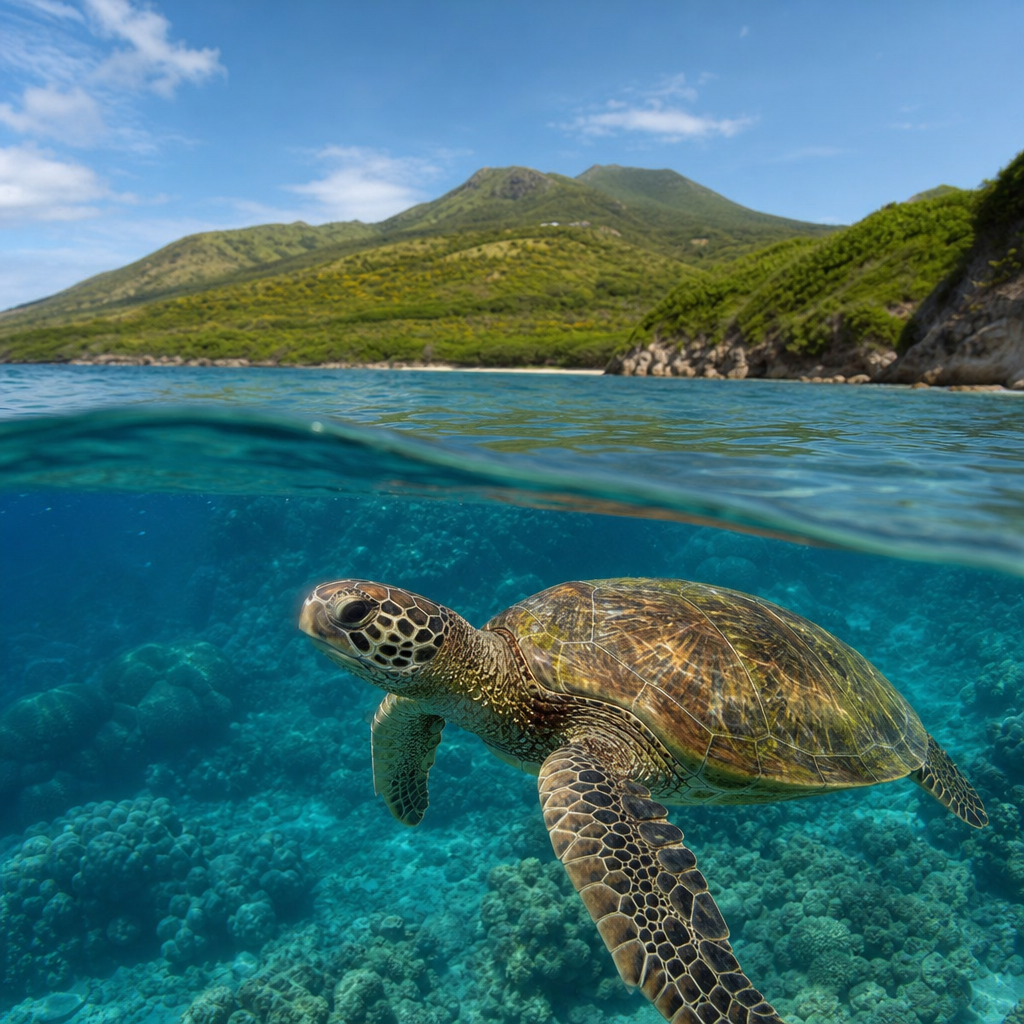
These waters also host species with ecological and cultural significance. Sea turtles, including hawksbill and green turtles, use nearshore feeding grounds and nesting beaches within the wider coastal landscape. Reef fish assemblages include parrotfish, surgeonfish, angelfish, wrasses, and predators such as barracuda. Invertebrates like sea urchins, lobsters, and conch contribute to food webs and local livelihoods. Coral species in the Caribbean, from elkhorn and staghorn to brain and star corals, create the three-dimensional structure that shelters smaller organisms. When I assess marine park descriptions, I look first at structural diversity because complexity predicts abundance. Flattened reefs support fewer niches. Healthy reefs with branching and massive corals, sponges, and crevices support more biomass, more tourism value, and better resilience after storms.
Protection matters because Caribbean marine ecosystems face cumulative pressure. Climate change drives coral bleaching through elevated sea temperatures. Ocean acidification reduces calcification rates. Heavy rainfall can wash sediment and nutrients from development sites into bays, smothering corals and fueling algal growth. Unregulated anchoring can break fragile reef frameworks in minutes. Poor waste management, illegal fishing gear, and souvenir collection create additional stress. Marine parks cannot stop global warming on their own, but they can reduce local pressures that make reefs less able to recover. That is a decisive management principle used across the Caribbean and supported by organizations such as the International Union for Conservation of Nature and UNEP’s Caribbean regional work.
How marine park protection works in practice
A marine park is only as effective as its management plan. In Saint Kitts, as in other small island states, good protection combines legal designation with zoning, monitoring, enforcement, and community buy-in. Zoning usually separates no-take areas, general conservation zones, recreation zones, and traditional use areas. The purpose is straightforward: put the strictest limits on the most sensitive habitats while channeling activities like diving, mooring, and line fishing into places where impacts can be controlled. Mooring buoys are one of the simplest and most important tools. By giving dive boats fixed tie-up points, managers reduce anchor damage to coral heads and seagrass beds. Clear markers, charts, and visitor briefings then turn rules into behavior on the water.
Monitoring provides the evidence behind those rules. Reef managers commonly track live coral cover, macroalgae, fish biomass, water clarity, and the presence of indicator species such as Diadema sea urchins or herbivorous parrotfish. In many Caribbean locations, the Atlantic and Gulf Rapid Reef Assessment framework and Reef Check methods have helped standardize observations. Managers in Saint Kitts can compare local trends against regional patterns, identify declines early, and adjust use restrictions if needed. Enforcement is often the hardest piece because islands must balance limited budgets, multiple agencies, and wide marine areas. Successful systems usually combine patrols with licensing, operator education, and visible penalties for illegal harvesting or anchoring. People comply more consistently when rules are understandable, fairly applied, and tied to benefits they can see.
| Management tool | Purpose | Example of benefit for aquatic life |
|---|---|---|
| Zoning | Separates high-protection areas from recreation or fishing zones | Allows breeding populations of reef fish to recover and spill into nearby waters |
| Mooring buoys | Prevents anchor drops on reefs and seagrass | Reduces direct breakage of corals and sediment scarring |
| Catch controls | Limits harvest size, seasons, or gear types | Protects juveniles and herbivores that keep algae from overrunning corals |
| Water-quality management | Reduces sediment, sewage, and nutrient inputs | Improves coral survival, fish habitat quality, and seagrass health |
| Visitor education | Explains safe snorkeling, diving, and boating behavior | Lowers accidental touching, feeding, and wildlife disturbance |
Threats facing aquatic life around Saint Kitts
The biggest misconception about marine protection is that ocean damage is caused only by people in boats. In reality, some of the strongest pressures start on land. Construction runoff, poorly managed roads, hillside erosion, and wastewater discharge can cloud nearshore water and bury reef organisms in fine sediment. Corals need sunlight for the algae living in their tissues. When turbidity rises, that energy relationship weakens. Nutrient pollution also encourages macroalgae, which compete with juvenile corals for space. On an island where tourism infrastructure is concentrated along the coast, land-sea planning is inseparable from marine park success. Better drainage design, erosion control mats, vegetated buffers, and modern wastewater treatment can be as important as patrol boats.
Fishing pressure creates another complex challenge. Small-scale fisheries are culturally important and economically relevant, yet certain practices can undermine reef recovery. Removing too many herbivorous fish allows algae to dominate coral surfaces. Harvesting undersized lobster or conch reduces future breeding stock. Ghost gear from lost traps or lines can continue catching marine life for months. A balanced approach does not treat fishers as the problem; it treats depleted ecosystems as the problem and brings fishers into the solution. Seasonal closures, escape gaps in traps, nursery habitat protection, and co-management meetings often work better than purely top-down restrictions. Across the Caribbean, protected areas that exclude local knowledge tend to struggle, while areas that engage users earn stronger compliance.
Climate impacts raise the stakes further. The Caribbean has experienced repeated marine heatwaves that trigger bleaching events, and stronger storms can physically damage reefs already weakened by disease. Stony coral tissue loss disease has devastated reefs in many regional locations, showing how quickly losses can spread once corals are stressed. Saint Kitts’s marine parks therefore need adaptive management, not static boundaries on a map. Resilience-based approaches prioritize herbivore protection, water quality, and refugia sites that may better survive temperature extremes. That strategy does not guarantee immunity, but it improves the odds that reefs retain enough living coral and fish diversity to recover after shocks.
Benefits for communities, tourism, and education
Protecting aquatic life is often framed as a tradeoff against development, but on Saint Kitts the stronger argument is that marine parks underpin smarter development. Coral reefs and seagrass reduce wave energy, helping shield shorelines from erosion and storm surge. Fish nurseries support future catches outside protected boundaries through spillover and larval export. Dive and snorkel tourism depend on water clarity, visible marine life, and intact reef structure. Visitors do not travel to the Caribbean to see broken corals, algae-covered rubble, or littered bays. They pay for the experience of abundance. That economic reality gives conservation real weight in national planning.
I have seen destinations lose market appeal after neglecting basic marine management. Conversely, islands that maintain moorings, train guides, restrict damaging behavior, and promote marine interpretation build a more durable tourism product. Saint Kitts benefits when visitors leave with a clear understanding that its waters are not generic tropical scenery but carefully managed ecosystems. Good guides explain fish behavior, coral growth rates, and turtle etiquette in plain language. Schools can use marine parks as outdoor classrooms for biology, geography, and climate education. Citizen science programs, beach cleanups, and reef surveys give residents a stake in monitoring change. This educational value matters because long-term protection depends on a public that recognizes the sea as infrastructure, not just recreation.
Marine parks also strengthen national identity. For an island federation known for volcanic landscapes and rainforest, coastal biodiversity broadens the story. It connects terrestrial conservation with fisheries heritage, public health, and disaster resilience. Businesses benefit too. Hotels, charter operators, dive shops, restaurants, and transport providers all gain from healthy marine ecosystems, even if the link is indirect. That is why the best conservation messaging does not rely on sentiment alone. It shows the chain of value from coral polyp to reef fish, from reef fish to visitor experience, and from visitor experience to jobs and public revenue.
How Saint Kitts can strengthen marine conservation going forward
The most effective next step for Saint Kitts is integrated coastal and marine management that matches protection with measurable outcomes. That means clear park boundaries, public maps, habitat baselines, routine reef surveys, and transparent reporting on coral cover, fish biomass, and water quality. It also means stronger links between marine agencies, planning departments, tourism stakeholders, and watershed managers. If sediment from an upland project damages a bay, marine staff alone cannot solve it. Cross-agency accountability is essential. Technology can help: satellite imagery, drone shoreline mapping, GIS habitat layers, and electronic reporting from tour operators all improve oversight when budgets are tight.
Financing matters just as much as policy. User fees from dive permits, cruise-linked environmental charges, concession agreements, and conservation partnerships can fund moorings, wardens, signage, and monitoring. The key is ring-fencing revenue so it returns to marine management rather than disappearing into general budgets. Training is another priority. Rangers need enforcement authority and ecological literacy. Boat captains and dive professionals need standardized environmental briefings. Fishers need access to transition support where new rules affect income. Finally, marine parks should be treated as the hub for wider nature and wildlife content: reefs connect to seabirds, turtles connect to nesting beaches, mangroves connect to wetland ecology, and ocean health connects to climate adaptation. That hub approach reflects how nature actually works—through linked systems, not isolated attractions.
The marine parks of Saint Kitts protect far more than underwater scenery. They safeguard coral reefs, seagrass meadows, mangroves, fisheries, coastal stability, and the economic value of a healthy island seascape. The core lesson is simple: aquatic life thrives when habitats stay connected, local pressures are reduced, and management is consistent enough to earn public trust. Saint Kitts has the natural assets to lead by example in the Eastern Caribbean, but success depends on steady enforcement, land-sea planning, community involvement, and reliable funding. For readers exploring nature and wildlife in Saint Kitts, these marine parks should be the starting point because they link nearly every other conservation story on the island. Learn which protected areas you can visit responsibly, follow marine life guidelines, and support operators who treat the sea as a resource to steward, not merely to sell.
Frequently Asked Questions
What is a marine park, and why is it important around Saint Kitts?
A marine park is a clearly defined section of coastal or offshore water that is managed to protect marine ecosystems while also setting rules for how people use the area. In Saint Kitts, that means safeguarding habitats such as coral reefs, seagrass beds, mangroves, rocky shorelines, and fish nursery grounds while still allowing carefully managed activities like fishing, diving, boating, and tourism. The goal is not simply to lock nature away, but to keep these waters healthy enough to support wildlife, coastal communities, and the island’s economy over the long term.
This matters greatly around Saint Kitts because the island’s marine environment does many jobs at once. Coral reefs and seagrass beds help support fish populations that local fishers depend on. Mangroves and nearshore habitats provide shelter for juvenile marine life before those species move into open waters or reef systems. Healthy reefs can also reduce wave energy, helping protect coastlines from erosion and storm damage. At the same time, clean, biodiverse waters attract divers, snorkelers, boaters, and visitors who contribute to tourism-related businesses.
In practical terms, marine parks help create a balance. Without protection, ecosystems can be degraded by overfishing, anchor damage, pollution, sediment runoff, careless boating, and unregulated coastal development. Once coral reefs are damaged or nursery habitats are lost, the effects spread quickly through the food web and local economy. Marine park management gives Saint Kitts a way to monitor these threats, establish zones, educate the public, and preserve marine resources so they remain productive and resilient for future generations.
What kinds of habitats and marine life do Saint Kitts’ marine parks help protect?
Marine parks around Saint Kitts are designed to protect a connected network of habitats rather than a single type of ecosystem. Coral reefs are among the most visible and important. They provide shelter and feeding grounds for many fish, invertebrates, and reef-associated species. Reefs also support tourism because they are among the island’s most appealing natural attractions for snorkeling and diving. However, coral systems are fragile and vulnerable to physical damage, warming seas, disease, and declining water quality, which is why protective management is so important.
Seagrass beds are another essential habitat often overlooked by visitors. These underwater meadows stabilize sediments, improve water clarity, store carbon, and provide feeding and nursery grounds for many species, including juvenile fish and invertebrates. Mangroves are equally valuable. Their root systems create sheltered zones where young marine life can grow with some protection from predators and strong currents. Mangroves also help filter runoff and protect shorelines, making them ecologically and economically important.
The marine life tied to these habitats can include reef fish, shellfish, crustaceans, sea urchins, sponges, sea turtles, and a wide range of smaller organisms that support the broader food chain. Even species that spend part of their lives in deeper or more open water often rely on shallow coastal habitats during crucial life stages. That is why marine park protection is most effective when it considers the full ecological relationship between reefs, seagrass, mangroves, and coastal waters instead of treating each habitat in isolation.
How do marine parks benefit local communities and the economy of Saint Kitts?
Marine parks are often discussed in environmental terms, but their value to local communities is just as important. In Saint Kitts, healthy marine ecosystems help support fisheries, tourism, shoreline protection, and cultural connections to the sea. For fishers, protected areas can improve long-term sustainability by preserving breeding populations and nursery habitats. When marine life is allowed to reproduce and grow in healthier conditions, nearby fishing grounds can benefit over time through spillover effects, where fish move beyond the protected zone into surrounding waters.
Tourism also depends heavily on well-managed marine environments. Visitors come to Saint Kitts for clear water, coral reefs, marine wildlife, sailing, snorkeling, and diving. If those ecosystems decline, the island risks losing part of the natural appeal that supports tour operators, hospitality businesses, boat charters, restaurants, and other local enterprises. Marine parks help maintain the quality of the experience that both visitors and residents value, which can translate into more stable economic opportunities.
Another major benefit is coastal resilience. Reefs, seagrass beds, and mangroves help reduce erosion, buffer wave action, and support more stable shorelines. For a small island, these natural defenses are especially important in the face of stronger storms and climate-related pressures. Marine parks therefore function not only as conservation tools but also as part of a practical strategy for protecting infrastructure, livelihoods, and food security. When managed well, they support a healthier relationship between environmental protection and economic development rather than forcing a choice between the two.
What rules or activities are typically managed within a marine park?
Marine parks usually operate through a management framework that guides what people can and cannot do in specific areas. This often includes zoning, where some parts of the park may allow recreational use, others may permit limited or seasonal fishing, and some may be designated as higher-protection zones where extraction or disturbance is restricted. The exact rules vary by location, but the purpose is always the same: to reduce harm to sensitive habitats while still allowing sustainable use wherever possible.
In the context of Saint Kitts, activities that may be managed include fishing methods, anchoring, boat traffic, diving practices, snorkeling access, wildlife interaction, and coastal development near protected waters. For example, anchors can break coral, so some marine parks use mooring buoys to prevent damage. Fishing restrictions may target gear types, catch limits, or no-take zones to help fish stocks recover. Diving and snorkeling operators may be asked to follow standards that prevent reef contact, feeding of marine life, or overcrowding at sensitive sites.
Education and enforcement are both essential. Rules only work when residents, fishers, tourism operators, and visitors understand why they exist and see that they are applied fairly. Effective management often includes signage, public awareness campaigns, scientific monitoring, community engagement, and ranger or officer presence. The strongest marine parks are not just sets of restrictions on paper; they are active systems of stewardship that combine science, local knowledge, and shared responsibility to keep the marine environment productive and healthy.
What are the biggest threats to aquatic life in Saint Kitts, and how do marine parks help address them?
Aquatic life around Saint Kitts faces a combination of local and global pressures. On the local side, threats can include overfishing, habitat destruction, pollution, sewage or runoff entering coastal waters, sediment from land disturbance, careless anchoring, and physical damage from heavy recreational use. These impacts can reduce water quality, stress coral reefs, smother seagrass beds, and disrupt breeding or nursery areas. Because many marine species depend on multiple habitats throughout their life cycle, damage in one area can quickly affect the broader ecosystem.
There are also larger-scale threats that marine parks cannot solve on their own but can help ecosystems better withstand. Climate change is a major example. Rising sea temperatures can contribute to coral bleaching, while stronger storms and changing ocean chemistry place additional stress on reefs and coastal habitats. Marine parks do not stop ocean warming, but they can improve ecosystem resilience by reducing other human pressures. A reef that is not already weakened by pollution, destructive fishing, or anchor damage has a better chance of recovery after environmental stress.
Marine parks address these threats through a mix of prevention, regulation, restoration, and monitoring. They can limit harmful activities, protect breeding grounds, improve compliance with sustainable practices, and generate data on ecosystem health over time. In some cases, management may also include habitat restoration, such as coral rehabilitation efforts or mangrove conservation. Perhaps most importantly, marine parks create a framework for long-term decision-making. Instead of reacting only after serious damage occurs, Saint Kitts can use protected marine areas as a proactive way to preserve biodiversity, strengthen coastal resilience, and protect the natural systems that support both aquatic life and human livelihoods.