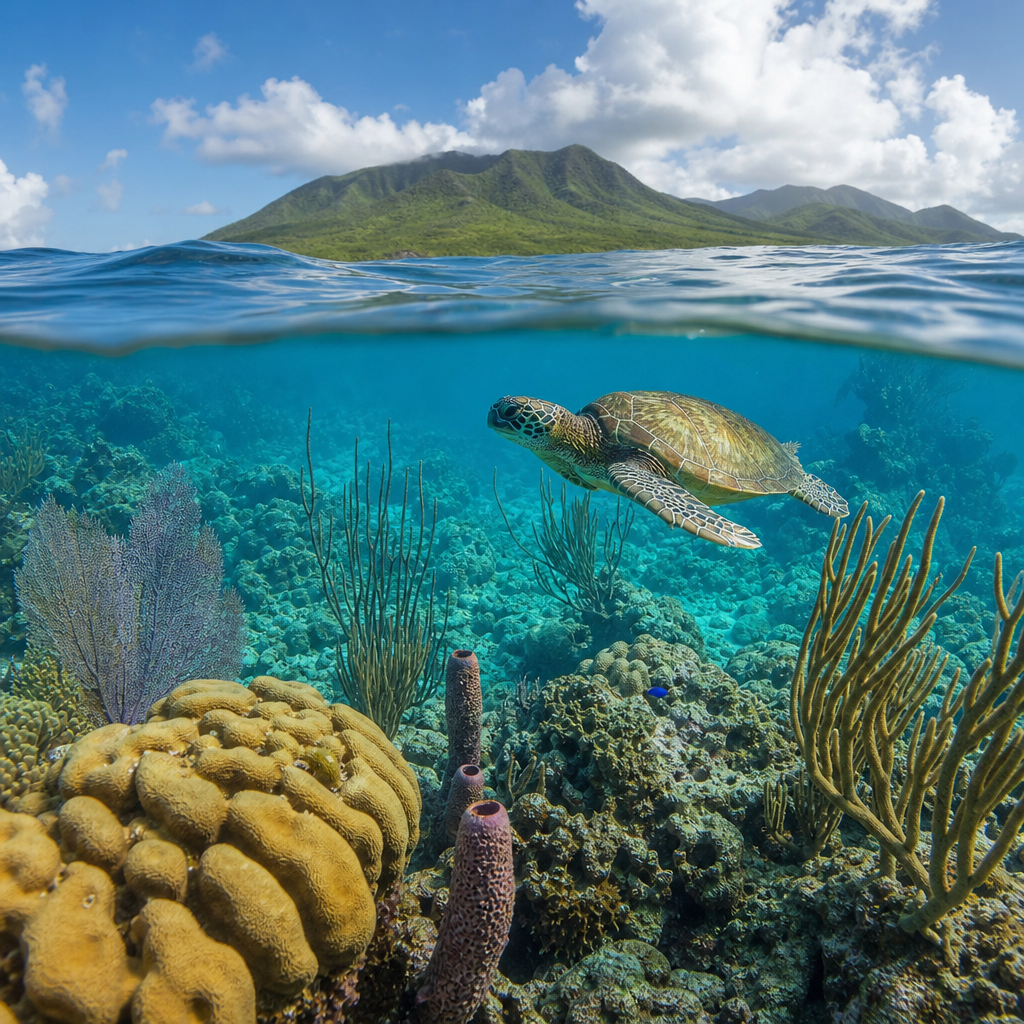
Spring in Saint Kitts arrives without the dramatic thaw familiar in temperate countries, yet the season brings distinct changes in light, rainfall, vegetation, wildlife behavior, and daily life that are easy to miss unless you know what to watch. On this Eastern Caribbean island, “spring” usually refers to the March through May transition from the drier opening of the year toward wetter, more humid months, when hillsides regain richer color, coastal conditions shift, and birds, insects, reptiles, and marine life respond in visible ways. Saint Kitts sits in the Lesser Antilles, with volcanic peaks, dry coastal scrub, ghauts, rainforest slopes around Mount Liamuiga, mangroves, beaches, and nearshore reefs packed into a relatively small land area. That variety creates many microclimates, so seasonal change is never uniform across the island. A shoreline that looks sun-baked in February can feel greener by late April, while upper elevations may already be collecting cloud moisture and showing fresh growth. Understanding these patterns matters for hikers, birders, photographers, gardeners, educators, and travelers because timing shapes what you see: flowering trees, nesting seabirds, clearer snorkeling conditions, migrating species, and even mosquito activity. As a hub for nature and wildlife coverage, this guide explains the practical signs of spring in Saint Kitts and connects the island’s landscapes, weather rhythms, and living systems into one clear seasonal picture.
How Spring Weather Changes Across Saint Kitts
The most important fact about spring weather in Saint Kitts is that it is transitional rather than extreme. Average temperatures stay warm year-round, commonly in the mid-20s to low-30s Celsius, but spring often brings slightly rising humidity, longer daylight, and a gradual increase in showers after the relatively drier months of winter. In practical terms, mornings can still start bright and breezy on the Caribbean coast, while afternoons become cloudier over the central mountains as moist air lifts and cools. I have seen visitors assume a sunny Basseterre forecast applies island-wide, then find mist, dripping leaves, and cooler air once they drive upslope toward the rainforest trails.
Trade winds remain a major influence, especially along exposed coasts and ridges. They moderate heat, move seeds and salt spray, and affect sea state for boat trips and snorkeling. During spring, short bursts of rain may arrive without signaling a whole day of bad weather. These showers are ecologically important because they trigger leaf flushes, flowering cycles, amphibian activity in wetter spots, and increased insect availability for birds and bats. Elevation matters too. Lower coastal areas, especially on the southeast peninsula, can remain relatively dry and scrubby, while higher zones around Olivees, Mansion, and the slopes of Mount Liamuiga capture more moisture and support denser vegetation. For anyone exploring nature in Saint Kitts, spring weather is best understood as a mosaic: warm beaches, greener foothills, and cloud-touched forest all at once.
What Happens to Forests, Scrublands, and Coastal Vegetation
Vegetation is where many of the island’s seasonal changes become most obvious. Saint Kitts contains dry forest remnants, thorn scrub, pasture, cultivated land, secondary woodland, ghauts lined with moisture-loving plants, and true rainforest at higher elevations. In spring, increased moisture and longer days encourage fresh leaf growth in many species, though the response differs by habitat. Dry coastal plants may only green modestly after showers, while mountain vegetation can change quickly, with ferns appearing fresher, understory plants thickening, and mossy surfaces holding more moisture.
Flowering trees are one of the season’s most rewarding signs. Depending on local rainfall and exact location, species such as flamboyant, poui, frangipani, and various acacias and ornamentals can bring bursts of color that also support pollinators. Even where landscapes appear rugged or dry, new blossoms draw hummingbirds, butterflies, and bees into concentrated feeding areas. In old sugar estate districts and village roadsides, cultivated fruit trees and garden plants add another layer to the seasonal story, blending human-managed and wild habitats. That matters because much of Saint Kitts is an ecological patchwork shaped by centuries of agriculture, especially sugar cane cultivation. Spring does not unfold only in untouched forest; it also appears in abandoned fields turning green, hedgerows thickening, and roadside verges attracting insects and seed-eating birds. If you are planning related reading within a broader nature and wildlife guide, useful companion topics include rainforest trails, native and introduced plant species, coastal ecology, and the island’s historic estates as wildlife habitat.
Bird Activity Increases with Food, Light, and Movement
Spring is a strong season for birdwatching in Saint Kitts because food sources diversify and bird behavior becomes easier to observe. The island hosts resident species such as the brown pelican, magnificent frigatebird, Caribbean elaenia, bananaquit, zenaida dove, green-throated carib, purple-throated carib, and several herons and shorebirds, alongside migrants that pass through or spend part of the year in the region. Seasonal rain supports insect hatches and nectar production, which in turn increase feeding activity among insectivores and hummingbirds. Wetlands, ponds, salt flats, and mangrove-fringed areas can attract waders and migratory birds, while forest edges become livelier at dawn as birds defend feeding territories.
One practical pattern I recommend watching is habitat matching. Around the coast, pelicans dive where baitfish gather, frigatebirds cruise on thermals, and shorebirds probe tidelines. In gardens and flowering roadside trees, bananaquits and hummingbirds move rapidly among blossoms. In higher, greener areas, calls often reveal birds before you see them. Spring’s value is not just in species counts but in behavior: nest building, courtship displays, repeated feeding circuits, and vocal activity linked to longer days and better forage. Serious birders often pair early starts with multiple elevations in one morning because the island is compact enough to sample coast, village edge, and upland habitat without a long transfer. That efficiency makes Saint Kitts particularly rewarding for visitors who want broad ecological exposure in a short stay.
Marine Life, Beaches, and Nearshore Waters in Spring
Spring affects marine nature in Saint Kitts as much as terrestrial landscapes. Water clarity can be excellent during calmer periods, especially before heavier summer rainfall increases runoff, though conditions vary by wind exposure and local weather. Seagrass beds, reef patches, rocky shorelines, and sandy bays support fish nurseries, sea urchins, rays, crustaceans, and coral communities that are sensitive to sediment, temperature, and wave action. On the Caribbean side, sheltered areas may offer gentler snorkeling conditions, while Atlantic-facing zones on the southeast peninsula often show more wind and chop.
Sea turtles are one of the most searched wildlife topics tied to seasonal change. In the wider Caribbean, nesting activity for species such as hawksbill, green, and leatherback turtles generally rises later in spring and into summer, so March to May is best seen as the buildup period when beach protection, low-light practices, and awareness become increasingly important. Birdlife also shifts around the coast as baitfish movements, surf conditions, and human beach use change. Intertidal zones become especially interesting for families and educators because spring tides, rock pools, and wrack lines reveal small-scale marine ecosystems in plain view. This is also the season when responsible marine tourism matters most: using reef-safe sun protection, avoiding contact with corals, giving turtles and nesting birds space, and choosing operators who follow local conservation norms.
| Habitat | Typical Spring Changes | What Visitors Often Notice |
|---|---|---|
| Rainforest slopes | More cloud moisture, fresher foliage, active insects | Cooler air, dripping leaves, louder bird calls |
| Dry coastal scrub | Patchy greening after showers, flowering shrubs | Sharper contrast between brown and new green growth |
| Mangroves and ponds | Increased bird feeding activity, fluctuating water levels | Herons, egrets, and shorebirds gathering at edges |
| Beaches and nearshore waters | Variable clarity, rising turtle-season awareness | Calmer snorkeling windows and more seabird activity |
Insects, Reptiles, and Small Wildlife Respond Quickly
Smaller animals often provide the clearest evidence that spring has advanced. After light rains, insect numbers can increase rapidly, especially mosquitoes in standing water, but also butterflies, moths, bees, beetles, and other invertebrates that pollinate plants or feed birds, lizards, and bats. On Saint Kitts, garden spaces, ghauts, and forest margins are especially active because they combine moisture, flowering plants, and shelter. For photographers, the best results usually come in the first bright period after rain, when butterflies and dragonflies become active and leaves still hold droplets.
Reptiles, including anoles and larger ground lizards such as iguanas in suitable habitats, often become more conspicuous in warm, bright weather following showers. They use open rocks, walls, and branches for basking, then retreat into vegetation during peak heat or disturbance. The island’s famous vervet monkeys are not seasonal in the same dramatic way as migratory birds, but spring food availability can influence where troops forage, especially near fruiting trees, farms, and edge habitats. Small mammals, bats, frogs in wetter niches, and countless invertebrates form the hidden foundation of the food web. When these organisms increase in activity, the whole island feels louder and more animated at dawn and dusk. That is why spring nature walks are often richest when guides focus on sounds, tracks, feeding signs, and plant-animal interactions rather than only headline species.
Best Places and Best Practices for Experiencing the Season
If your goal is to experience spring in Saint Kitts well, match your outing to the habitat and time of day. For rainforest change, choose early hikes on the slopes of Mount Liamuiga or other upland trails, where cloud cover and birdsong are strongest before midday heat builds. For coastal contrast, explore the southeast peninsula, where dry scrub, salt ponds, and ocean views make subtle greening easier to spot. For bird diversity, combine a garden or village edge at sunrise with a wetland stop and then a higher-elevation lookout. For marine life, pick a calm day and ask local operators which side of the island has the best current visibility rather than assuming one beach always wins.
Practical field habits make a difference. Carry water, light rain protection, binoculars, and shoes that handle mud and loose volcanic stone. Use insect repellent carefully, especially near wetter habitats. Keep distance from nesting birds, avoid handling shells or marine animals, and stay on established paths where erosion is a concern. Local knowledge is invaluable. Rangers, dive guides, birding guides, and long-time residents can tell you whether a ghaut is flowing, which trees are flowering, or where seabirds have been active that week. That real-time context matters more than generic island descriptions because spring conditions change quickly with each shower and windy spell. For a complete nature and wildlife hub, readers should also branch into focused guides on hiking routes, marine reserves, birdwatching sites, turtle conservation, and seasonal photography tips.
Why Spring Matters for Conservation, Agriculture, and Everyday Life
Seasonal change in Saint Kitts is not only scenic; it affects conservation planning, farming decisions, public health, and community routines. Land managers monitor rainfall patterns because early wetting influences erosion risk on slopes, vegetation recovery in disturbed areas, and freshwater availability for wildlife and agriculture. Gardeners and farmers pay close attention to timing because spring showers can support vegetable planting, pasture growth, and fruit development, but irregular rain can also stress crops or encourage pests. Mosquito control becomes more important as standing water increases, linking seasonal nature directly to household management and public health.
From a conservation standpoint, spring is when awareness can prevent damage before sensitive periods intensify. Beach users who reduce nighttime light and keep distance from marked areas help protect turtles. Hikers who respect trails prevent soil loss in newly softened ground. Boaters who anchor responsibly reduce avoidable harm to seagrass and coral. The larger lesson is simple: spring reveals how connected Saint Kitts is. Mountain cloud, roadside blossom, mangrove birdlife, reef health, and village gardens are part of one seasonal system. Welcoming spring in Saint Kitts means noticing those links and adjusting our behavior to support them. Start with one sunrise walk, one guided snorkel, or one upland trail visit, and use the season as your introduction to the island’s wider nature and wildlife story.
Frequently Asked Questions
What does “spring” look like in Saint Kitts if there is no dramatic change of season?
In Saint Kitts, spring is more subtle than the classic picture of melting snow, budding trees, and sudden warmth seen in temperate climates. The island is already warm year-round, so the seasonal shift is noticed less through temperature extremes and more through changes in light, moisture, landscape color, and daily patterns in nature. From roughly March through May, the drier early part of the year begins to give way to increasing humidity and a gradual return of more regular rainfall. As this happens, vegetation often looks fresher and fuller, especially in the hills and along less developed roadsides where grasses, shrubs, and tropical trees respond quickly to added moisture.
Many residents and observant visitors notice that the island’s scenery becomes richer in tone during this period. Slopes that may have looked somewhat faded after drier weeks can begin to regain deeper greens, while gardens and cultivated plots often respond with new growth. The atmosphere also starts to feel different. Mornings may still be bright and breezy, but the air can become heavier as the season progresses, and brief showers become more common. In that sense, spring in Saint Kitts is best understood as a transition season: not a complete transformation, but a steady reawakening in the landscape, skies, and living rhythms of the island.
How do rainfall and humidity change during spring in Saint Kitts?
Spring in Saint Kitts marks an important shift in moisture patterns. March often still reflects the relatively drier conditions associated with the opening months of the year, but by April and especially May, the island usually begins moving toward a wetter and more humid stretch. This does not mean constant rain. Instead, the change often appears as a gradual increase in passing showers, thicker clouds at certain times of day, and a more noticeable dampness in the air. These short rain events can be highly localized, with one area receiving a quick shower while another nearby remains sunny.
Humidity tends to build alongside these rainfall changes, and that can affect how the season feels on the ground. Even when temperatures remain fairly steady by tropical standards, a rise in humidity makes afternoons seem warmer and more intense. Plants respond quickly to this added moisture, and so do soils, roadside vegetation, and insects. For people living on or visiting the island, the practical signs of spring include carrying light rain protection, expecting more variable skies, and noticing how quickly the landscape revives after showers. These moisture shifts are a key reason spring feels distinct in Saint Kitts, even without a dramatic drop or rise in temperature.
What changes happen in plants and landscapes during spring on the island?
One of the clearest signs of spring in Saint Kitts is the changing appearance of the landscape. As the island transitions away from the drier start of the year, vegetation often becomes more vibrant and visibly active. Hillsides can begin to recover a richer green, especially where grasses and low-growing plants respond to returning moisture. Trees and shrubs may show fresh growth, and gardens often look more productive as rainfall and humidity support leaves, flowering, and general vigor. Because tropical ecosystems do not follow the same bloom-and-bare cycle seen in colder regions, these changes are easy to overlook unless you compare the landscape over several weeks.
Elevation and location matter as well. Higher slopes and interior areas may show these shifts differently from coastal zones, where salt exposure, wind, and drier conditions can shape what grows and how quickly it responds. In cultivated spaces, spring can also be a practical growing period, since increased moisture helps support ornamental plants, fruit trees, and household gardens. Overall, the season brings a sense of replenishment rather than rebirth from dormancy. The island does not wake from winter in the northern sense; instead, it subtly renews itself, becoming lusher, softer in color, and more visibly alive as the months progress.
How does wildlife behavior change in Saint Kitts during spring?
Spring in Saint Kitts can bring noticeable changes in wildlife activity, particularly for anyone paying attention to birds, insects, and reptiles. As rainfall becomes more frequent and vegetation thickens, food sources and shelter conditions improve in many habitats. Birds may become easier to notice through changes in calling, movement, and nesting-related behavior, especially in greener inland areas, around gardens, and near edges of scrub or farmland. The increase in insect activity that often comes with warmer, more humid, and wetter conditions can also influence bird behavior, since many species respond quickly when feeding opportunities improve.
Insects themselves are often among the most obvious signs of the seasonal transition. After rainfall, buzzing, chirping, and other insect sounds can become more pronounced, especially in the evening. Reptiles such as lizards may also seem more active in sunny intervals between showers, taking advantage of warmth while responding to changing moisture levels in their environment. Along coastal and lowland areas, subtle environmental shifts can alter where wildlife is easiest to observe at different times of day. While Saint Kitts does not experience the dramatic migration spectacles associated with some temperate regions, spring still brings a real change in ecological energy. The island’s wildlife becomes more dynamic, audible, and visible as conditions move toward the wetter part of the year.
How does spring affect everyday life and outdoor activities in Saint Kitts?
Spring in Saint Kitts influences daily life in practical, atmospheric ways rather than through major seasonal disruption. The main changes people notice are brighter or longer-feeling days, increasing humidity, and a growing chance of quick showers. Outdoor routines often adjust accordingly. Early mornings and later afternoons can be especially pleasant for walking, hiking, gardening, sightseeing, and beach visits, while midday may feel heavier as humidity rises. People who spend time outside often become more aware of the need for breathable clothing, hydration, sun protection, and flexibility in case weather conditions change quickly.
The season also affects how people experience the island’s natural and scenic spaces. Trails, hillsides, and roadside views may begin looking greener and more photogenic, while the sea and coastline can vary according to wind, cloud cover, and passing rain. For residents, spring may be felt in the maintenance of gardens, changes in household routines, and the simple awareness that wetter months are approaching. For visitors, it can be an excellent time to observe the island’s subtler natural rhythms, because the environment is actively shifting without becoming difficult to navigate. In short, spring in Saint Kitts is less about a single dramatic event and more about a gradual seasonal mood change that shapes comfort, planning, and appreciation of the island’s living landscape.