Protecting the forests of Saint Kitts is central to safeguarding the island’s biodiversity, water supply, climate resilience, and cultural heritage. Forest conservation on Saint Kitts involves preserving native vegetation, restoring damaged watersheds, managing invasive species, limiting erosion, and balancing tourism, agriculture, and development with ecological health. I have worked on Caribbean environmental content for years, and Saint Kitts stands out because its remaining forested uplands do far more than create scenic views: they stabilize soils on steep volcanic slopes, regulate stream flow after heavy rain, and provide habitat for wildlife found nowhere else in quite the same combination. When people ask why forest protection matters here, the direct answer is simple. Healthy forests reduce flood risk, support farming, protect drinking water sources, store carbon, and sustain the landscapes that make the island livable and economically attractive.
Saint Kitts is a small volcanic island in the eastern Caribbean, and that geography shapes every conservation decision. The island’s central mountain range, crowned by Mount Liamuiga, captures moisture and supports moist forest, rainforest, and elfin woodland at higher elevations, while lower slopes have experienced centuries of clearing for sugarcane and settlement. Key terms matter. A watershed is the area of land that drains rainwater into streams, aquifers, and coastal zones. Biodiversity means the variety of plant, animal, and microbial life in these habitats. Reforestation refers to planting trees on previously forested land, while restoration is broader, aiming to recover ecological function, native species balance, and soil stability. Conservation is not just locking land away; it is the active management of ecosystems so they continue to work under pressure from storms, heat, invasive plants, and human use.
This topic matters now because Saint Kitts faces a convergence of risks. Climate change is intensifying extreme rainfall, drought stress, and hurricane impacts across the Caribbean. Small islands have limited room to absorb land-use mistakes, so forest loss quickly translates into sediment-choked ghuts, damaged reefs, water shortages, and infrastructure costs downstream. At the same time, the island’s economy depends on the same natural assets conservation protects. Visitors come for hiking, scenic volcanic peaks, birdlife, and the wider environmental quality that healthy forests support. Residents depend on upland ecosystems for water regulation and disaster buffering. A strong hub page on the forests of Saint Kitts therefore has to connect ecology, land management, community livelihoods, and practical policy choices rather than treating nature as a separate issue.
Why Saint Kitts’ forests are ecologically important
The forests of Saint Kitts perform foundational ecological services. On steep volcanic terrain, tree roots bind friable soils and reduce landslide risk during intense rainfall. Leaf litter slows runoff, helping rain infiltrate the ground instead of rushing downhill with sediment. In practical terms, that means less flooding in low-lying communities, cleaner water moving through drainage systems, and lower sediment loads reaching coastal habitats. Caribbean islands with degraded uplands often pay for that damage twice: once in damaged roads and drains, and again in stressed coral reefs and seagrass beds offshore. Saint Kitts is no exception, because what happens in the forested interior eventually reaches the coast.
These forests also support a range of native and regionally important species. The island’s interior habitats shelter birds, reptiles, invertebrates, and plant communities adapted to elevational changes and high moisture levels. Vervet monkeys, although iconic and economically visible through tourism, are not native and complicate management in some areas by affecting crops and vegetation dynamics. Native ecological value lies more strongly in the overall forest system: tree ferns, understory plants, epiphytes, insects, and birds that depend on relatively intact canopy conditions. Forest protection in Saint Kitts is therefore not only about charismatic wildlife. It is about preserving habitat structure, moisture cycles, and ecological connectivity from lower slopes to cloud-affected uplands.
Forest types and key landscapes on the island
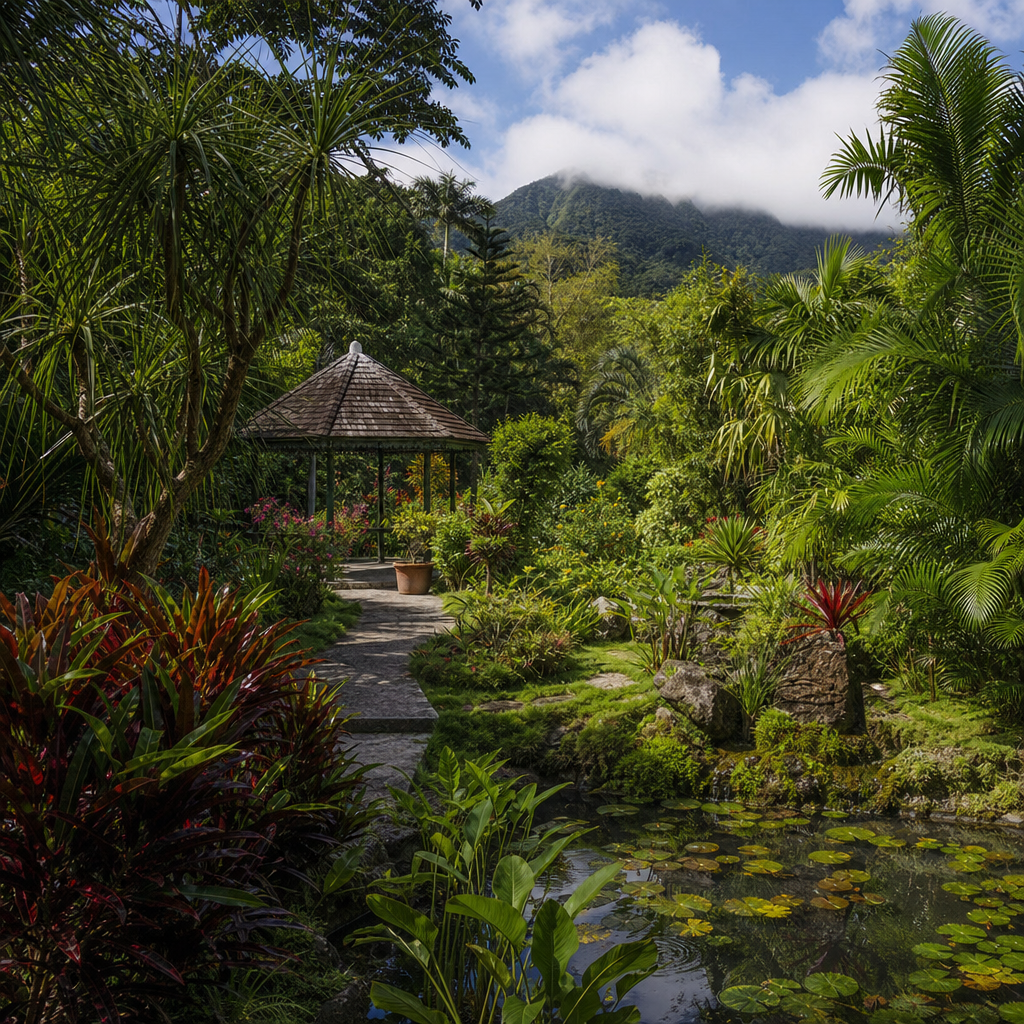
Saint Kitts contains several vegetation zones shaped by elevation, rainfall, and land-use history. Lower areas once heavily converted for sugar production now include secondary growth, agricultural land, settlements, and fragmented woodland. Mid-elevation slopes transition into denser moist forest, while the highest reaches around Mount Liamuiga support rainforest conditions and cloud-influenced vegetation. In the field, these transitions are visible in canopy height, tree species mix, vine abundance, and the presence of moisture-loving plants. Conservation planning must account for these differences because fire risk, invasive pressure, and restoration methods are not the same in dry lower hillsides as in wet upper catchments.
The island’s most sensitive landscapes are usually the upper watershed forests and steep ghauts that channel stormwater. When these areas are disturbed by clearing, trail erosion, or unmanaged grazing, downstream impacts appear quickly. One practical lesson from Caribbean island management is that protecting ridge-to-reef systems works better than isolated site protection. Saint Kitts’ forests are linked to farms, villages, freshwater systems, and marine environments. Any serious hub on nature and wildlife should treat the forest interior as the ecological engine that supports broader landscape health, including bird habitat, pollinator activity, and coastal resilience.
Major conservation efforts protecting the forests of Saint Kitts
Forest conservation on Saint Kitts combines legal protection, watershed management, environmental planning, research, and community engagement. Government agencies, regional institutions, local nonprofits, schools, and tourism operators all play roles, though capacity is often constrained on small islands. In practice, the strongest conservation measures usually focus on limiting destructive land conversion in upper elevations, maintaining forest cover in key catchments, and integrating environmental review into development decisions. The country has also benefited from wider Caribbean conservation frameworks, including biodiversity planning, climate adaptation initiatives, and disaster risk reduction programs that recognize the protective value of forests.
Protected and managed areas are part of the answer, but not the whole answer. Effective conservation depends on enforcement, mapping, trail management, and regular monitoring of changes in vegetation cover. I have seen many islands announce protected status without funding patrols, signage, or baseline surveys; the result is symbolic protection rather than real management. Saint Kitts needs practical systems: updated land-cover data, watershed restoration priorities, erosion control on disturbed slopes, and coordination between forestry, water, agriculture, and tourism stakeholders. Reforestation in degraded sites can help, especially when it uses suitable native or naturalized species for slope stabilization and canopy recovery, but planting without follow-up maintenance rarely succeeds in the Caribbean’s seasonal conditions.
| Conservation effort | Main purpose | Why it matters on Saint Kitts |
|---|---|---|
| Watershed protection | Maintain forest cover in upper catchments | Reduces runoff, erosion, and sediment reaching communities and reefs |
| Reforestation and restoration | Recover degraded slopes and habitat | Improves soil stability and supports biodiversity over time |
| Environmental impact assessment | Review development risks before approval | Helps prevent damaging road, housing, or tourism expansion in sensitive areas |
| Invasive species management | Limit ecological disruption from non-native organisms | Protects native regeneration and reduces pressure on forest ecosystems |
| Community education | Build public support for conservation practices | Creates local backing for stewardship, trail care, and fire prevention |
Challenges: development pressure, invasive species, and climate stress
The biggest challenges facing the forests of Saint Kitts are cumulative rather than singular. Development pressure can fragment habitat even when individual projects appear modest. A road cut here, a hillside clearing there, and a resort expansion farther downslope can combine to alter drainage, increase erosion, and open access to previously less disturbed areas. On small islands, fragmentation matters because forest patches are limited and edge effects spread quickly. More light, wind, and human intrusion at forest edges can change regeneration patterns and make it easier for invasive species to establish.
Invasive plants and animals are another persistent challenge. Across the Caribbean, species such as aggressive vines, shrubs, and escaped ornamentals can outcompete native regeneration, especially in disturbed areas. Non-native mammals may browse seedlings, spread seeds, or alter habitat use. Saint Kitts also has to manage the legacy of historical land use, including soils compacted or depleted by centuries of plantation agriculture. Restoration in such settings is slower than many people expect. It requires site preparation, species selection, maintenance, and realistic timelines measured in years, not months.
Climate change raises the stakes. Warmer temperatures, changing rainfall patterns, and stronger storm events can stress forests directly and undermine recovery after disturbance. Hurricanes can strip canopy, trigger landslides, and create openings that invasive species quickly exploit. Drought periods can weaken young plantings and increase fire risk in lower, drier areas. The essential point is that forest conservation on Saint Kitts is now inseparable from climate adaptation. Protecting upland cover is one of the island’s most cost-effective natural defenses against extreme weather.
The role of communities, tourism, and education
Local communities are not peripheral to forest conservation; they are decisive. Conservation works best when residents see direct benefits in cleaner water, safer hillsides, better recreation spaces, and stronger tourism income. Schools, hiking groups, farmers, tour guides, and village organizations can all contribute to monitoring, cleanup, trail maintenance, and public awareness. In my experience, outreach is most effective when it connects forest health to daily life rather than abstract biodiversity targets. A household understands muddy floodwater, blocked drains, and reduced spring flow immediately. Those are forest issues as much as infrastructure issues.
Tourism can either support or undermine conservation depending on management. Well-run hiking tourism around Mount Liamuiga and other natural areas can generate revenue and political support for forest protection. Poorly managed visitation can widen trails, increase litter, disturb wildlife, and accelerate erosion. The difference lies in basic standards: marked routes, trained guides, group-size control, waste rules, and maintenance after heavy rains. Eco-tourism is not automatically low impact. It becomes low impact only when operators and public agencies treat the forest as a living system with carrying limits.
Education also matters at the policy level. Public understanding shapes what governments can prioritize. If forests are seen merely as undeveloped land banks, short-term conversion will always have an advantage. If they are recognized as infrastructure for water security, disaster mitigation, and national identity, protection becomes easier to defend. Saint Kitts has an opportunity to frame forests this way and connect nature education with broader resilience planning.
What stronger forest protection should look like next
The next phase of forest conservation in Saint Kitts should focus on measurable management rather than broad aspiration. First, the island needs updated forest mapping and repeat monitoring using satellite imagery, drone surveys where appropriate, and field verification. You cannot manage slope instability, habitat fragmentation, or restoration success accurately without current data. Second, watershed priorities should guide investment. The most erosion-prone and hydrologically important uplands deserve early action, especially where damaged gullies or trails are sending sediment downhill.
Third, development controls need consistency. Environmental impact assessments should be rigorous for projects near steep slopes, ghauts, and upper catchments, with enforceable conditions on drainage, clearing limits, and post-construction stabilization. Fourth, restoration programs should use mixed approaches: natural regeneration where seed sources remain, assisted planting where degradation is severe, and long-term maintenance budgets from the start. Fifth, agencies and partners should track outcomes that matter: canopy recovery, sediment reduction, invasive cover, stream condition, and community participation. Small islands gain the most when limited conservation funds are tied to clear performance measures.
Readers looking for the core takeaway should remember this: protecting the forests of Saint Kitts is not only about saving trees. It is about securing water, reducing disaster risk, conserving wildlife, protecting reefs from sediment, and preserving the island’s distinctive natural character. The strongest conservation efforts combine protected uplands, restoration, invasive species control, responsible tourism, and public support. The biggest challenges are fragmented development, limited capacity, historical land degradation, and climate pressure, but none of those problems are beyond management when policy and community action align.
As a hub within the wider Nature and Wildlife topic, this subject connects to watershed health, bird habitats, hiking landscapes, coastal protection, and climate resilience across Saint Kitts. Forests sit at the center of that network. Support local conservation groups, choose responsible nature tourism, and pay attention to land-use decisions that affect the island’s uplands. Protecting the forests of Saint Kitts is one of the clearest, most practical ways to protect the future of the island itself.
Frequently Asked Questions
Why are the forests of Saint Kitts so important to the island’s future?
The forests of Saint Kitts are much more than scenic green slopes. They play a foundational role in protecting the island’s biodiversity, stabilizing soils, supporting freshwater systems, moderating local climate conditions, and preserving cultural and ecological heritage. The remaining forested uplands are especially important because they help capture rainfall, recharge watersheds, and reduce runoff that can otherwise lead to flooding, erosion, and sediment damage in downstream communities and coastal waters. On a small island, those ecosystem services are not abstract benefits; they directly affect agriculture, public infrastructure, tourism, and daily life.
These forests also provide habitat for native plants, birds, insects, and other wildlife that depend on intact ecological corridors. When forest cover is reduced or fragmented, species become more vulnerable to pressure from invasive plants and animals, changing weather patterns, and human encroachment. In addition, forests contribute to climate resilience by storing carbon, cooling landscapes, and helping buffer the effects of intense rainfall and drought. For Saint Kitts, protecting forests is not simply an environmental ideal. It is a practical strategy for securing water resources, reducing disaster risk, sustaining livelihoods, and maintaining the natural character that makes the island unique.
What are the biggest threats facing forest conservation in Saint Kitts today?
Forest conservation in Saint Kitts faces a combination of longstanding and emerging challenges. One of the most significant is land-use pressure from development, infrastructure expansion, and competing economic activities. As tourism, housing, and commercial uses grow, natural areas can become fragmented, especially where planning and enforcement are uneven. Even when clearing appears limited, roads, construction, and slope disturbance can weaken the ecological integrity of nearby forests and watersheds.
Another major issue is erosion and watershed degradation. When vegetation is removed from steep terrain, soils can wash away quickly during heavy rains, reducing land productivity and increasing sediment loads in rivers, ghauts, and coastal ecosystems. Invasive species add another layer of pressure by outcompeting native vegetation, altering forest structure, and complicating restoration efforts. Climate change intensifies all of these concerns through stronger storms, irregular rainfall, higher temperatures, and longer dry periods, each of which can stress already vulnerable habitats. Illegal dumping, uncontrolled grazing in some contexts, poorly managed agriculture near sensitive areas, and limited conservation funding can also undermine progress. Taken together, these threats show that forest protection on Saint Kitts requires not just preserving remaining trees, but managing the full landscape in a coordinated and forward-looking way.
How do healthy forests help protect Saint Kitts’ water supply and reduce erosion?
Healthy forests are essential to watershed function because they slow, store, and filter water across the landscape. Tree canopies soften the impact of rainfall, leaf litter helps absorb moisture, and root systems bind the soil together. This combination allows water to infiltrate gradually into the ground rather than rushing downhill all at once. On a mountainous island like Saint Kitts, that process is extremely important. It helps maintain more stable stream flows, supports groundwater recharge, and reduces the risk of sudden runoff that can damage roads, farms, homes, and public infrastructure.
Forest cover also plays a direct role in controlling erosion. Where slopes remain vegetated, soils are far less likely to be stripped away during heavy rainfall. When those soils are lost, the effects do not stop upslope. Sediment can clog waterways, degrade water quality, bury coastal habitats, and reduce the health of marine environments that are important for fisheries and tourism. This is why watershed restoration is often a central part of forest conservation planning. Replanting native species, protecting riparian areas, limiting disturbance on steep slopes, and managing drainage effectively all help strengthen the island’s natural defenses. In practical terms, conserving forests in Saint Kitts is one of the most cost-effective ways to protect both the quality and reliability of its water resources.
What conservation strategies are most effective for protecting the forests of Saint Kitts?
The most effective conservation strategies are the ones that treat forest protection as both an ecological and a land-management issue. First, safeguarding existing forested uplands is critical, because mature forests provide benefits that are difficult to replace quickly through replanting alone. Strong land-use planning, protected area management, and enforcement against harmful clearing are central to this effort. Preventing degradation is usually more effective and less expensive than trying to restore badly damaged landscapes later.
Second, restoration matters where forests and watersheds have already been disturbed. That includes replanting native vegetation, stabilizing vulnerable slopes, rehabilitating riparian corridors, and improving soil retention in erosion-prone areas. Invasive species management is also essential, since restoration can fail if aggressive non-native plants or animals continue to outcompete native species or disrupt habitat recovery. Equally important is integrating conservation with agriculture, tourism, and development rather than treating them as separate goals. Better hillside farming practices, buffer zones near sensitive habitats, responsible trail and site management, and environmental review for new projects can significantly reduce pressure on forests.
Public education and community participation strengthen all of these approaches. Conservation is more durable when residents, landowners, schools, businesses, and policymakers understand how forests support water security, disaster resilience, and economic stability. Long-term monitoring, local scientific research, and regional Caribbean collaboration can also improve outcomes by identifying what is working and where intervention is most urgent. In Saint Kitts, the strongest strategy is a balanced one: protect what remains intact, restore what has been damaged, and guide future development so it does not erode the island’s ecological foundation.
How can local communities, visitors, and policymakers support forest conservation in Saint Kitts?
Forest conservation works best when responsibility is shared. Local communities can make a major difference by supporting watershed protection, reporting illegal dumping or clearing, participating in tree-planting and restoration initiatives, and encouraging sustainable land-use practices in their own districts. Farmers and land managers can help by maintaining vegetation on steep slopes, reducing practices that leave soil exposed, and protecting streams and drainage channels with natural buffers. Schools and community groups also have an important role in building long-term stewardship, especially when conservation is framed not only as environmental protection but as protection of water, livelihoods, and national resilience.
Visitors can contribute by choosing eco-conscious operators, staying on designated trails, respecting protected areas, avoiding littering, and supporting businesses that value sustainability. Tourism has the potential to reinforce conservation when it depends on healthy landscapes and contributes to their upkeep rather than degrading them. Policymakers, meanwhile, have the broadest tools available. They can strengthen zoning, improve environmental enforcement, fund restoration projects, support scientific assessment, and ensure that development decisions account for watershed and biodiversity impacts. They can also encourage cross-sector coordination so that tourism, agriculture, infrastructure, and conservation goals are not working against one another.
Ultimately, protecting the forests of Saint Kitts requires a shared understanding that these ecosystems are not optional amenities. They are part of the island’s life-support system. When communities, visitors, institutions, and government agencies all contribute to that understanding through action, conservation becomes more than a policy objective. It becomes a practical, durable investment in Saint Kitts’ environmental health and long-term future.