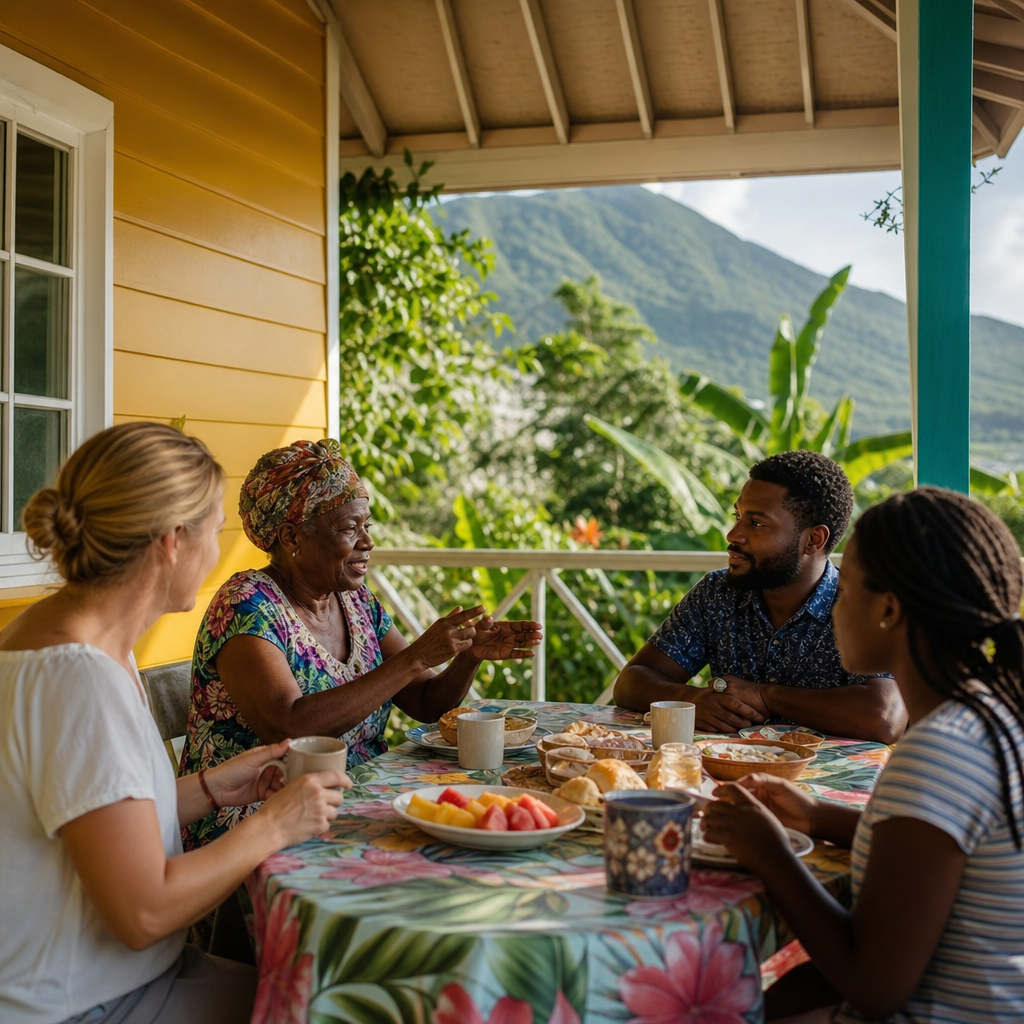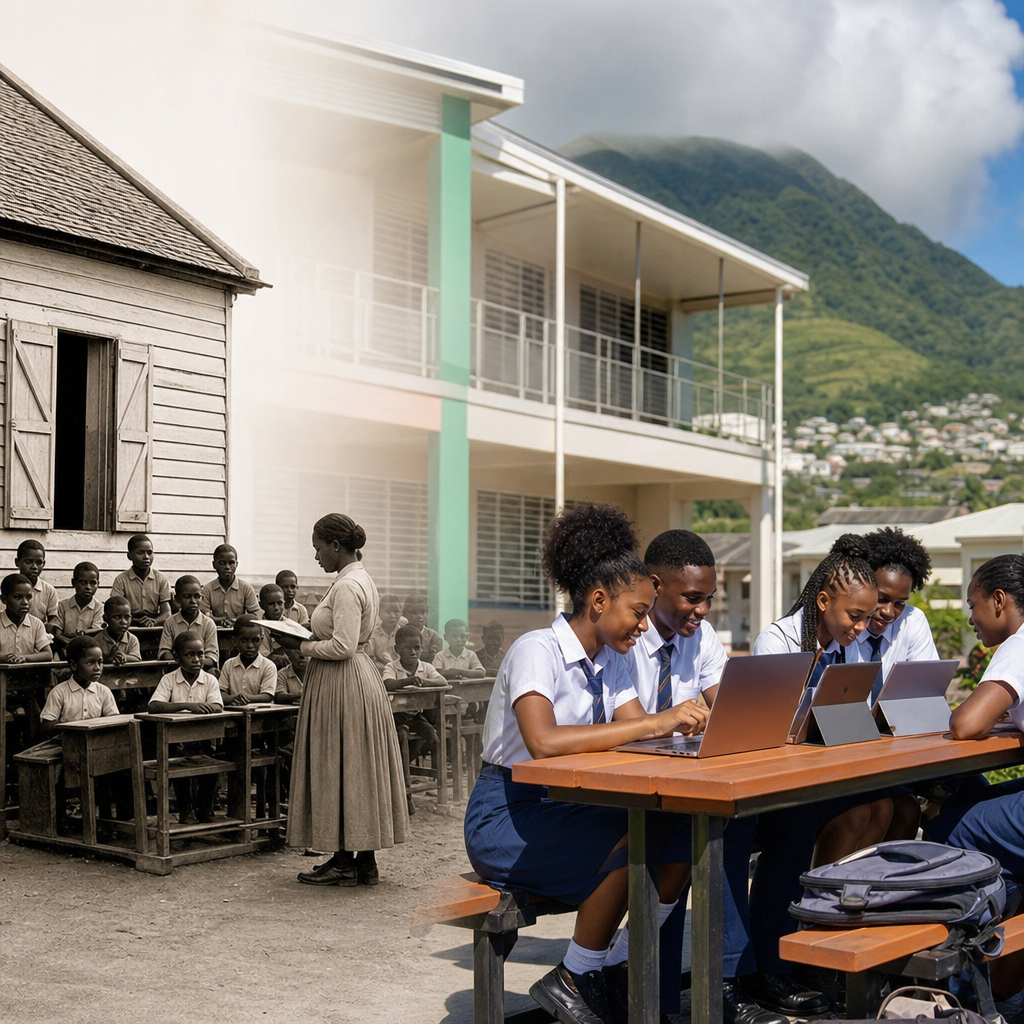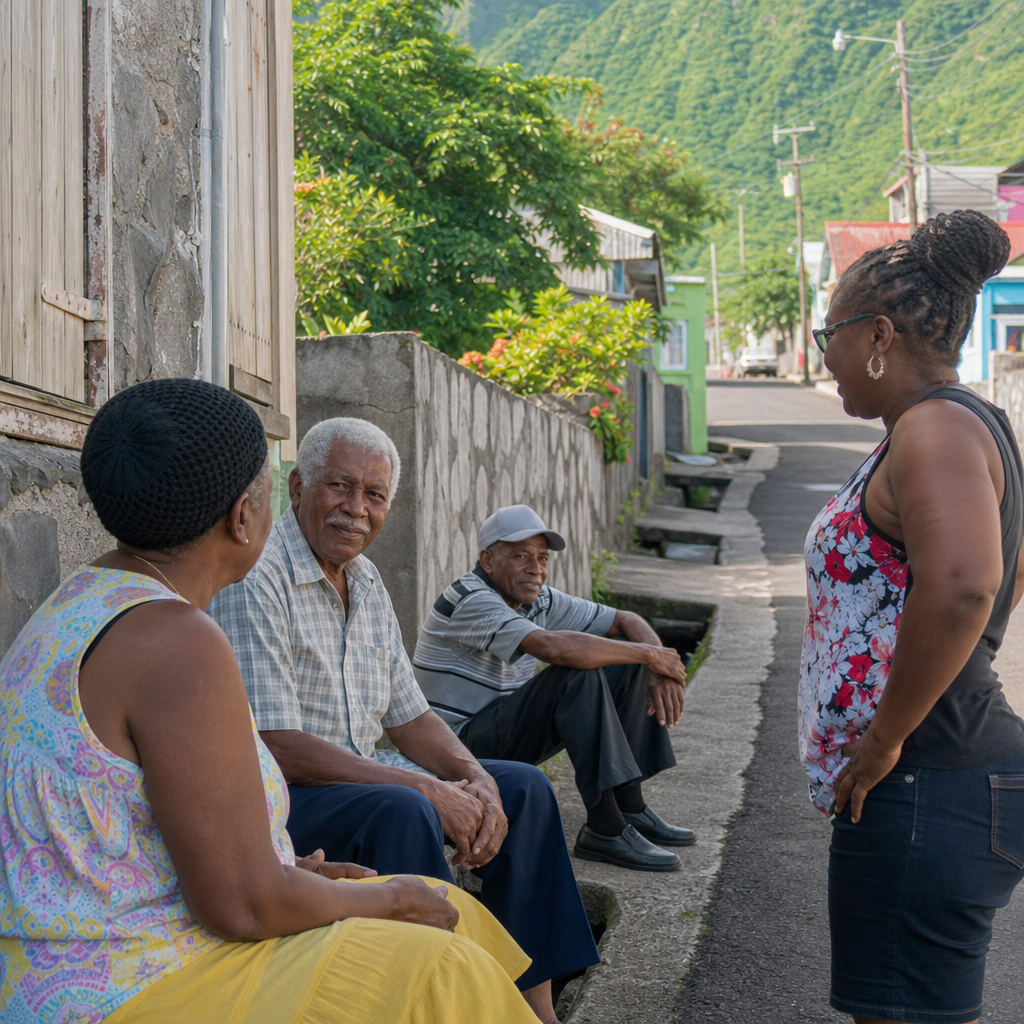
Saint Kitts’ village life is shaped by proximity, memory, and routine, creating a social fabric that feels distinctly different from resort districts and cruise-focused commercial zones. In this context, village life means the everyday experience of living in small communities across the island, where families know one another across generations, churches and schools act as anchors, and local shops, roadside vendors, and playing fields become the practical centers of social exchange. A close-knit community is not simply a place where people live near each other; it is a place where reputation matters, mutual help is expected, and daily life is tied to shared history.
That matters because anyone trying to understand Saint Kitts beyond beaches and tourism has to understand its villages. The island’s identity is carried as much by places like Cayon, Saddlers, Old Road, Dieppe Bay, Tabernacle, Sandy Point, and St. Paul’s as by Basseterre. I have spent time in these kinds of communities across the Eastern Caribbean, and the pattern is consistent: the village is where culture is maintained in ordinary ways. It is where you hear how people actually speak, how local politics are discussed, how food traditions survive, and how national events are interpreted at street level. For travelers, returning nationals, investors, and researchers alike, village life reveals how Saint Kitts works when nobody is performing for visitors.
Saint Kitts is a small island in the Federation of Saint Kitts and Nevis, and its scale is important. Distances are short, but social networks are dense. A school principal may know a student’s parents, grandparents, and cousins. A minibus driver may also coach cricket, help with a church fundraiser, and deliver neighborhood news before anyone sees it online. This kind of density produces both strength and pressure. It supports resilience during storms, funerals, illness, and unemployment, but it also means privacy is limited and social expectations can be high. To describe village life honestly, both sides have to be included.
This hub article covers the miscellaneous realities that define local life and experiences in Saint Kitts: housing patterns, religion, education, food, transport, safety, festivals, intergenerational ties, migration, and the tension between tradition and modernization. It is designed as a starting point for deeper articles within the broader local life and experiences topic, and it answers the practical question many readers have: what does day-to-day life in a Kittitian village actually feel like?
The social structure of a Kittitian village
The defining feature of village life in Saint Kitts is relationship-based living. Social capital, the value created by trust and repeated interaction, is visible everywhere. People borrow tools, pass rides, watch each other’s children, and organize support quickly when someone dies or falls ill. In larger countries, these actions may be handled by formal services. In a Kittitian village, they are often managed through kinship, friendship, church membership, and neighborhood obligation.
Most villages have recognizable centers of activity: a church, a school, a playing field, a rum shop, a small supermarket, a barbershop, a roadside food stall, and a community center if one is active. These are not interchangeable amenities. Each one plays a social role. The church organizes worship, youth groups, choirs, and charity. The school connects households through events, uniforms, sports, and parent networks. The rum shop, despite its mixed reputation, often functions as an informal forum for political debate and practical information. The playing field is where boys and girls build peer networks through football, cricket, and athletics.
Because Saint Kitts has a long history of plantation agriculture and later economic transition, villages also carry historical memory. Former estate settlements and worker communities still influence land use, family distribution, and local identity. Residents often identify strongly with their village, and that loyalty can be heard in sports rivalries, Carnival troupes, and debates about development priorities. Ask where someone is from, and the answer may carry immediate social meaning.
Daily rhythms, work, and getting around
Daily life starts early. In many villages, mornings are marked by school runs, minibuses collecting passengers, shopkeepers opening shutters, and workers heading toward Basseterre, industrial sites, construction jobs, tourism employment, or government offices. While some residents work locally, many commute, which means village life often has a pulse: quiet after the morning rush, active again in late afternoon when school ends and workers return.
Transport shapes everything. The public minibus system is one of the most important connectors between villages and the capital. It is affordable and widely used, though not always predictable by the standards of large-city transit systems. People plan around known driver habits, traffic, and weather. Car ownership changes mobility, but many households still rely on shared rides or minibuses for part of the week. For older residents, reliable transport can determine access to clinics, pensions, shopping, and church services.
Work is diverse but often precarious. Employment may involve tourism, hospitality, retail, government, port activity, education, healthcare, small-scale farming, fishing, security, and trades such as masonry, plumbing, and electrical work. Informal economic activity is significant. Residents sell cooked food, fruit, drinks, baked goods, crafts, and imported household items from small storefronts or home-based operations. These businesses are crucial to village economies because they circulate money locally and provide flexibility where formal jobs may be limited.
| Aspect of village life | What it looks like in practice | Why it matters |
|---|---|---|
| Transport | Minibuses, shared rides, family lifts | Connects villages to jobs, schools, clinics, and Basseterre |
| Local commerce | Small groceries, food stalls, barbers, home businesses | Keeps spending local and supports household income |
| Community support | Church collections, funeral help, neighbor check-ins | Reduces hardship when formal systems are stretched |
| Youth activity | Sports clubs, school events, music, church groups | Builds identity, discipline, and social belonging |
| Communication | Word of mouth, WhatsApp, radio, roadside conversations | Spreads news faster than many official channels |
One practical truth about Saint Kitts’ village life is that convenience depends on networks. If you miss the bus, know someone with a car, or need a recommendation for a mechanic, mason, or babysitter, your problem is often solved through people, not platforms. That social efficiency is one of the clearest advantages of a close-knit community.
Homes, family networks, and intergenerational living
Housing in Kittitian villages ranges from older chattel-style or concrete family homes to newer builds funded through remittances, salaried work, or overseas support. It is common to see family compounds or clusters of relatives living on adjoining lots. This arrangement is practical and cultural. Grandparents help with childcare, adult children assist aging parents, and property can remain within the family over decades.
Intergenerational living reduces some costs, but it also reflects values around care and belonging. Children often grow up with strong involvement from grandparents, aunts, uncles, godparents, and older siblings. In my experience observing Caribbean community life, this wider caregiving circle is one of the strongest protections against isolation. It gives children multiple authority figures and often preserves oral history, recipes, local sayings, and family records that would otherwise disappear.
There are pressures too. Housing shortages, rising construction costs, imported material prices, and limited land in desirable areas can create overcrowding or delayed independence for younger adults. Migration adds another layer. Many families are transnational, with relatives in the United States, Canada, or the United Kingdom sending remittances or returning periodically. These links improve finances for some households, but they can also create emotional distance and uneven expectations about support, inheritance, and caregiving.
Food, faith, and the institutions that hold villages together
If you want to understand what keeps a Saint Kitts village cohesive, look at food and faith. Churches remain central institutions across denominations, including Anglican, Methodist, Catholic, Pentecostal, and others. Even residents who are not regular attendees often participate in church-linked events such as funerals, harvest celebrations, school ceremonies, or community outreach. Clergy can be influential moral voices, but so can long-serving lay leaders, choir directors, and women’s fellowship organizers.
Food binds people just as strongly. Village life includes bread from local bakeries, roadside barbecue, goat water, saltfish, cook-up style meals, ground provisions, and seasonal fruit sold from yards or stalls. Funerals, wakes, church anniversaries, sports events, and family reunions all rely on collective cooking and shared labor. A large pot on a fire, a tray line at a fundraiser, or neighbors sending a plate to someone who is sick are not small gestures. They are mechanisms of community maintenance.
Schools, clinics, and sports clubs also matter as stabilizing institutions. Teachers in village schools often carry responsibilities beyond the classroom, including pastoral support and community coordination. Nurses and clinic staff may know family histories that shape how care is delivered. Coaches are frequently role models who help teenagers manage discipline, teamwork, and ambition. In a small-island setting, these institutions overlap, and that overlap gives village life its coherence.
Culture, celebrations, and the sound of local identity
Village culture in Saint Kitts is not preserved in museums; it is performed in everyday life. Music, speech patterns, storytelling, Carnival traditions, and sports rivalries all express local identity. During Carnival season, community pride becomes especially visible through troupes, pageantry, street activity, and rehearsals. But culture is not only festival-based. It also lives in village nicknames, recollections of sugar industry days, and the way elders narrate storms, elections, and family lineage.
Cricket and football remain especially important markers of village identity. A match is rarely just a match. It is a public gathering where generations mix, food is sold, and local reputations are reinforced. The same is true of school sports days and community events. These occasions create structured social contact, which sociologists consistently identify as a foundation of social cohesion.
Language also matters. Standard English is used in formal settings, but local speech rhythms and Caribbean expressions signal belonging. For newcomers, learning how people actually speak is part of showing respect. You do not need to imitate local dialect, but you do need to listen carefully. In villages, cultural fluency often counts more than credentials.
Challenges facing modern village life
Close-knit communities are resilient, but they are not immune to change. Saint Kitts has experienced major economic shifts, especially since the closure of the sugar industry in 2005. That transition altered employment patterns and affected communities historically linked to cane production. Tourism, services, and construction created new opportunities, but not all villages benefited equally, and not every worker could transition smoothly.
Youth migration is another challenge. Many ambitious young Kittitians leave for study or work abroad, and some do not return permanently. This can drain skills from villages and leave older residents with thinner support networks. At the same time, return migration can bring investment, new expectations, and occasionally tension between residents who stayed and relatives who left.
Digital life is changing social behavior as well. WhatsApp groups, Facebook, and online marketplaces have made communication faster, but they can amplify rumor, conflict, and public shaming in places where everyone already knows everyone. Development pressure, short-term rentals, and changing land values may also affect traditional village patterns. The main risk is not that village life disappears overnight. It is that its support systems weaken gradually if institutions, housing affordability, and youth opportunity are not sustained.
What visitors and new residents should understand
For anyone engaging with local life in Saint Kitts, the first rule is simple: villages are living communities, not cultural backdrops. Respect means understanding pace, greeting people properly, asking before photographing private spaces, supporting local businesses, and recognizing that gossip travels quickly. If you are renting, buying property, researching, or staying long term, relationships matter as much as transactions.
The reward for approaching village life with humility is access to a richer version of the island. You notice who fixes things, who organizes events, who cooks for ten extra people without warning, and who remembers every family connection on the road. That is the real infrastructure of Saint Kitts’ close-knit communities. It cannot be replicated by resorts, and it explains why village life remains one of the island’s greatest strengths.
Saint Kitts’ village life offers a grounded view of the island: relational, resourceful, and deeply shaped by history. Its close-knit communities are held together by family compounds, churches, schools, playing fields, small businesses, minibuses, and the steady exchange of practical help. These villages are where local identity is lived, not staged. They preserve memory, support vulnerable residents, socialize children, and keep culture active through ordinary routines as much as through festivals and public celebrations.
At the same time, village life is not static or sentimental. It faces real pressures from migration, economic transition, housing costs, and digital change. Strong community ties can provide support, but they can also bring scrutiny and limit privacy. Understanding Saint Kitts honestly means seeing both the warmth and the complexity. That balance is what makes the island’s villages credible as places to live, study, visit, or reconnect with family roots.
For readers exploring local life and experiences in Saint Kitts, this miscellaneous hub is the essential starting point because it connects the major elements that shape day-to-day living. Use it as your guide to the subtopic, then go deeper into individual articles on food, transport, festivals, neighborhoods, family life, and community institutions. If you want to know the island beyond the postcard image, start with the villages and keep following the people who hold them together.
Frequently Asked Questions
What does “village life” in Saint Kitts actually look like on a daily basis?
In Saint Kitts, village life is less about a formal definition and more about a shared rhythm of everyday living. It is the experience of waking up in a community where people recognize one another, where family names carry history, and where daily routines unfold in familiar, public ways. Mornings may begin with school traffic, shopkeepers opening early, neighbors greeting each other on the roadside, and vendors setting up with fruit, cooked food, or household staples. Throughout the day, people move between home, work, church, school, local businesses, and playing fields, often crossing paths with relatives, old classmates, and family friends more than once.
What makes this setting distinctive is the closeness of social ties. In many villages, generations of the same families have lived within walking distance of one another, so memory is built into the landscape. A road, a corner shop, or a cricket field is not just a physical place; it is also a site of shared stories, personal milestones, and community identity. This creates a social environment where routines matter. People notice who is around, who needs help, who is celebrating, and who may be going through difficulty. Compared with resort districts or cruise-oriented areas, village life feels less transactional and more relational. The pace is shaped by familiarity, practical needs, and long-standing connection rather than by tourism schedules.
Why are churches, schools, and playing fields so important in Saint Kitts’ villages?
Churches, schools, and playing fields are important because they serve as community anchors in ways that go well beyond their official purpose. A church is often a spiritual center, but it is also a place where families maintain ties, traditions are reinforced, and support networks become visible. Weddings, funerals, youth programs, holiday services, and community events all help churches function as social institutions as much as religious ones. In a close-knit village setting, these gatherings strengthen the sense that people are connected not only by geography but also by shared obligation and belonging.
Schools play a similarly central role. They are places where children learn, but they also connect parents, grandparents, teachers, and neighbors in an ongoing web of relationships. Because communities are relatively small, school life often reflects the broader social fabric of the village. Families know each other through generations, and a child’s school experience is often shaped by those long-standing community ties. Events such as sports days, school performances, fundraisers, and graduations become village moments, not just private family ones.
Playing fields are equally significant because they provide a public space where community life remains visible and active. Cricket, football, and casual recreation bring together children, teens, and adults, while also creating opportunities for spectatorship, conversation, and intergenerational exchange. A field may be where young people build friendships, where elders gather to watch and talk, and where village pride is expressed through sport. Taken together, churches, schools, and playing fields help explain why Saint Kitts’ village life feels cohesive: they give routine social interaction a physical home.
How do local shops and roadside vendors shape the social fabric of village life?
Local shops and roadside vendors are practical centers of daily life, but they also serve an important social function in Saint Kitts’ villages. On the practical side, they provide convenient access to food, household items, snacks, drinks, and quick meals without requiring people to travel far. In smaller communities, that convenience matters. These businesses help support everyday routines and often operate with a strong understanding of local habits, preferences, and needs.
Socially, however, their role is even broader. A village shop is often a place where people exchange news, check in on one another, and maintain the informal conversations that hold communities together. A roadside fruit stand or cooked-food vendor may become a regular stopping point where customers are known by name, family connection, or routine order. These interactions may seem small, but repeated over time they reinforce familiarity and trust. In a close-knit environment, commerce is often layered with memory and relationship.
This is one of the clearest differences between village life and more tourism-centered spaces. In a cruise or resort area, transactions are often brief and anonymous. In a village, buying bread, fruit, lunch, or small household items can also be a moment of social exchange. People ask after relatives, hear about upcoming events, and stay connected through these ordinary encounters. That ongoing visibility helps create the sense that the village is not just a place where people live near one another, but a place where they actively participate in each other’s daily lives.
How is Saint Kitts’ village life different from the island’s resort and cruise-focused areas?
The biggest difference is that village life is rooted in continuity, while resort and cruise-focused areas are often shaped by short-term movement. In villages across Saint Kitts, people usually interact within long-established relationships. There is a strong awareness of family background, shared history, and community reputation. Social life is built through repetition: seeing the same people regularly at school, church, local businesses, roadside corners, and sporting events. That continuity creates a sense of accountability and belonging that feels very different from places designed mainly for visitors.
Resort districts and cruise-commercial zones tend to operate on a different rhythm. They are oriented toward service, mobility, and consumption, with businesses structured around visitor schedules, preferences, and expectations. Those spaces are important to the island’s economy, but they can feel more impersonal because interactions are often temporary. A visitor may have a pleasant exchange, but it is unlikely to be embedded in years of shared memory or family connection.
By contrast, village life reveals the island through everyday experience rather than curated hospitality. It is where social bonds are maintained through routine, where people are known in context, and where local institutions shape identity over time. That does not mean villages are isolated from tourism or modern life; rather, it means their core social logic remains community-based. For anyone trying to understand Saint Kitts beyond its beaches and visitor hubs, village life offers a more grounded view of how people actually live, relate, and support one another.
Why does Saint Kitts’ village life feel so close-knit across generations?
Saint Kitts’ village life feels close-knit because relationships are reinforced by proximity, memory, and repetition over long periods of time. In many communities, extended families live near one another, children grow up around people who knew their parents and grandparents, and local institutions create regular points of contact. This means that belonging is not built from occasional interaction alone. It is built from years of seeing the same faces, sharing the same spaces, and participating in the same milestones, celebrations, and hardships.
Generational continuity is especially important. Family names, community stories, and shared experiences often remain active in everyday conversation. People may refer to homes, roads, or neighborhoods through family associations, and elders frequently hold a living memory of how the village has changed over time. That memory helps younger generations understand themselves as part of an ongoing community story rather than as isolated individuals. It also creates a stronger sense of responsibility, since actions and reputations tend to carry social meaning in a place where connections are widely understood.
At the same time, closeness is maintained through routine social infrastructure. Churches, schools, local businesses, roadside gathering points, and playing fields keep people in regular contact. These are the places where practical life and social life overlap. When people repeatedly meet in those spaces, trust is reinforced and support networks remain active. That is why village life in Saint Kitts often feels distinctively warm and tightly woven: the community is sustained not by a single tradition or event, but by the steady accumulation of everyday relationships across generations.