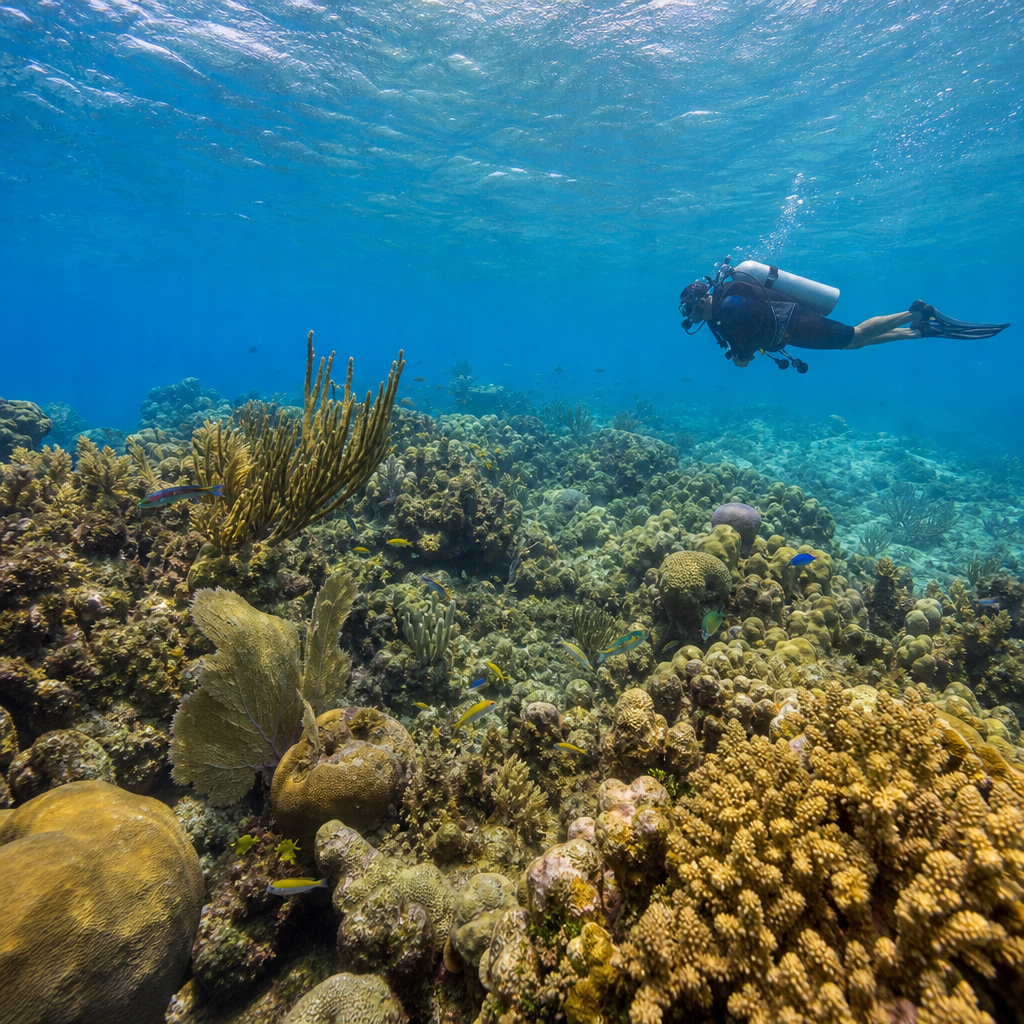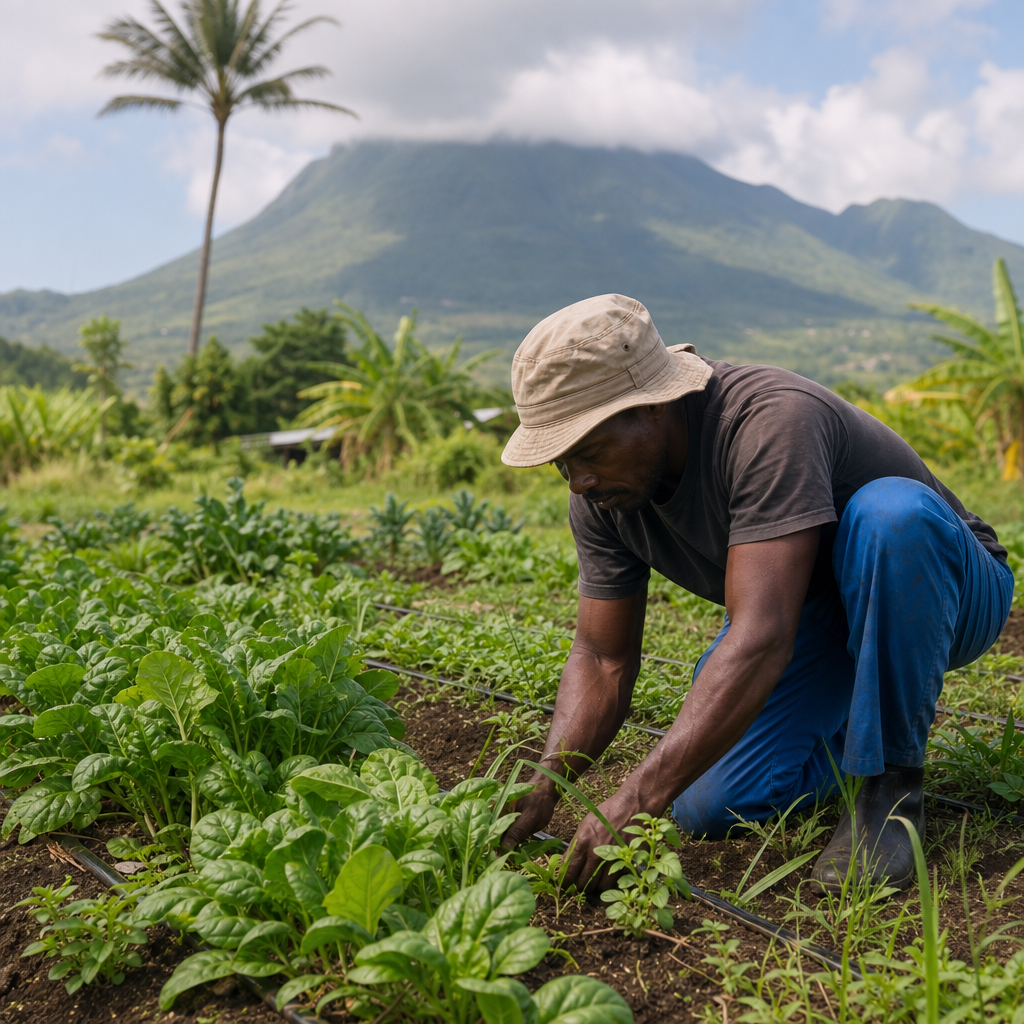
Nevis’ agriculture is changing from a narrow plantation legacy into a practical model of island sustainability, where farmers balance food production, soil health, water limits, biodiversity, and tourism demand on just thirty-six square miles of land. In this context, sustainable agriculture means producing crops and livestock in ways that protect natural resources, remain economically viable for farmers, strengthen local food security, and reduce vulnerability to climate shocks such as drought, intense rainfall, hurricanes, and coastal salinization. On Nevis, these goals matter more than they do in many larger countries because the island has limited arable land, expensive imported inputs, small domestic markets, and ecosystems that are tightly connected. A farming decision in the uplands can affect streams, reefs, pollinators, and hotel food supply within a short distance.
Having worked with Caribbean land use and farm planning, I have seen that sustainability on small islands is never an abstract slogan. It comes down to whether a farmer can hold topsoil after a cloudburst, whether irrigation water lasts through a dry spell, whether a crop mix can survive a bad season, and whether buyers will pay for local produce consistently enough to justify improvement. Nevis offers a strong case study because its agricultural sector sits at the intersection of history, ecology, and modern economic pressure. Sugar once dominated the island, but after the end of that era, agriculture diversified into vegetables, root crops, fruit, small ruminants, poultry, and niche products. That shift opened space for better land stewardship, but it also required new skills, new infrastructure, and new market links.
For readers exploring nature and wildlife topics, this hub matters because agriculture is one of the main forces shaping habitats outside protected areas. Farm boundaries often function as wildlife corridors. Shade trees can support birds and beneficial insects. Composting reduces waste that might otherwise strain landfills. Careful grazing can limit erosion, while poor grazing accelerates it. Sustainable practices in Nevis’ agriculture therefore influence not only yields and farm income, but also watershed health, scenic landscapes, and the resilience of native and migratory species. This article serves as a comprehensive overview of the island’s miscellaneous sustainability practices, the challenges behind them, and the methods that offer the most durable results.
Land, climate, and the realities of farming on Nevis
Nevis is a volcanic island with fertile soils in many areas, but fertility alone does not guarantee sustainable production. Slope, drainage, erosion risk, and access to water vary sharply from lowlands to foothills. Rainfall patterns can be generous in some periods and highly unreliable in others. Like much of the Eastern Caribbean, Nevis faces a distinct dry season, occasional drought, and the growing influence of climate variability. Farmers must manage for both water scarcity and sudden heavy rainfall, which means farm design matters as much as seed choice.
Small island agriculture also has cost disadvantages. Imported fertilizers, pesticides, feed, irrigation parts, and fuel are expensive. Labor is limited, and younger workers often choose tourism or overseas opportunities. That is why sustainable practices are not just environmentally sound; they are often the only realistic path to controlling costs. Mulching, composting, on-farm pest management, and crop diversification can reduce dependence on imported inputs. When those methods are combined with direct sales to households, restaurants, and hotels, they can improve margins even on small acreages.
Another reality is land fragmentation. Many farms are modest in size and operate on mixed tenure arrangements, including family land, leases, and informal use. Under those conditions, investments must be practical and scalable. A farmer may not build a large reservoir immediately, but can install drip irrigation on a quarter acre, contour a sloping bed, or plant windbreaks around a vegetable plot. Sustainable agriculture in Nevis succeeds when it fits the island’s fragmented landscapes and cash-flow constraints rather than assuming large mechanized systems.
Soil conservation and fertility management
Healthy soil is the foundation of sustainable farming in Nevis because tropical downpours can strip bare ground quickly, while heat can burn off organic matter fast. The most effective response is to keep the soil covered and biologically active. Farmers do this with mulches, cover crops, compost, manure, and reduced tillage where possible. Organic matter improves water infiltration, feeds soil organisms, lowers compaction, and helps crops withstand short dry periods. On island farms, these gains are visible. Beds with mulch stay cooler, weed pressure drops, and irrigation cycles can be stretched.
Contour planting is another core practice on sloping land. Instead of running rows up and down a hillside, farmers align beds across the slope to slow runoff. Grass strips, vetiver barriers, and live hedges can be added to trap sediment. In practical terms, this means a storm that would otherwise carry away topsoil is converted into water that infiltrates the root zone. I have seen simple contour barriers preserve productivity on Caribbean hillsides where neighboring unprotected plots lost fine soil after only a few hard rains.
Composting is especially useful on Nevis because organic materials are available from crop residues, grass cuttings, livestock manure, and some food waste streams. Well-managed compost returns nutrients to the field and reduces reliance on synthetic fertilizers. The key is quality control: compost must reach temperatures high enough to break down weed seeds and pathogens, then cure properly before application. Farmers who test pH and nutrient levels get better results than those who apply compost blindly. Balanced fertility matters. Too much nitrogen pushes leafy growth and pest pressure, while inadequate potassium can reduce fruit quality and stress tolerance.
Water management, drought resilience, and irrigation efficiency
Water management is one of the most important sustainable practices in Nevis’ agriculture because drought can erase profits quickly. The most efficient farms treat every gallon as a managed resource. Drip irrigation is the preferred system for vegetables, herbs, and orchard crops because it delivers water directly to the root zone with lower evaporation than sprinklers. Paired with mulch, drip lines can cut water waste significantly while improving uniformity. Timers, pressure regulators, and basic filtration further raise efficiency and protect equipment.
Rainwater harvesting also deserves attention on a small island where municipal and groundwater supplies face competing demands. Farm buildings, shade houses, and pack sheds can feed roof runoff into tanks for supplemental irrigation or washing. Even modest storage volumes help during dry weeks. Where budgets permit, lined ponds or small reservoirs provide additional buffering, though they require safe siting and maintenance. The goal is not total self-sufficiency in water on every farm; it is to reduce vulnerability and smooth out supply during critical crop stages.
Good irrigation management depends on scheduling, not just hardware. Many growers still overwater, which leaches nutrients, spreads disease, and wastes electricity or fuel. Sustainable farms monitor soil moisture manually or with simple sensors, then irrigate according to crop stage and weather. Leafy greens need steady moisture for quality, but sweet potatoes and some fruit crops tolerate different rhythms. Matching irrigation to crop physiology improves both yield and resource use.
| Practice | Main benefit | Typical Nevis use case |
|---|---|---|
| Drip irrigation | Reduces evaporation and directs water to roots | Vegetable plots, herbs, orchards |
| Mulching | Conserves soil moisture and lowers weed growth | Tomatoes, peppers, root crops |
| Rainwater harvesting | Buffers short dry periods and cuts pressure on supply | Pack sheds, greenhouses, livestock areas |
| Contour barriers | Slows runoff and improves infiltration | Sloping fields in foothill zones |
Crop diversity, agroforestry, and integrated farm design
Monoculture is risky on Nevis because pest outbreaks, market swings, and storms can wipe out a single enterprise. Diverse farms are more resilient. A mixed operation may combine vegetables for cash flow, root crops for food security, fruit trees for medium-term returns, and small livestock for manure and supplemental income. This approach spreads risk across seasons and buyers. It also creates biological synergies. Tree shade can protect understory crops in hot periods, while livestock can consume certain residues that would otherwise become waste.
Agroforestry is particularly promising. Integrating trees with crops or grazing can improve microclimates, anchor soil, provide fodder, and increase habitat value. On Nevis, suitable systems may include fruit trees around field margins, nitrogen-fixing trees in alley arrangements, or silvopasture where small ruminants graze beneath managed tree cover. These systems require planning, especially around spacing, light competition, and harvest logistics, but they fit island conditions well. They also support pollinators and birds, which matter to both agriculture and the wider nature landscape.
Crop rotation is another basic but powerful tool. Rotating families such as solanaceous crops, legumes, and brassicas interrupts pest and disease cycles while balancing nutrient demand. Legumes can contribute biologically fixed nitrogen, reducing fertilizer needs for the next crop. In practice, even a small farm can map beds and avoid planting the same crop family in the same place season after season. The benefit is not theoretical. Rotation commonly lowers nematode pressure, moderates soil fatigue, and supports steadier yields.
Livestock management, waste reduction, and circular resource use
Sustainable agriculture on Nevis is not limited to crops. Small ruminants, poultry, pigs, and cattle all shape land use and nutrient cycling. The main principle is to keep animal numbers aligned with forage, housing, labor, and manure management capacity. Overstocking quickly damages pasture, exposes soil, and increases runoff. Rotational grazing is a better model. By moving animals through paddocks and allowing rest periods, farmers maintain ground cover, improve forage regrowth, and distribute manure more evenly.
Feed costs are a major challenge because imported concentrates are expensive. That makes local forage production, fodder banks, and crop residue use strategically important. Gliricidia, moringa, and improved grasses can contribute to more resilient feeding systems if managed correctly. Farmers still need to balance rations carefully, especially for poultry and higher-producing animals, but partial substitution with local resources can reduce cost pressure. Water access, shade, and heat stress control are equally important on a warm island. Animal welfare is a production issue, not a luxury, because stressed animals grow poorly and become more disease-prone.
Manure management connects livestock directly to crop sustainability. When manure is composted or applied safely at appropriate rates, it builds soil fertility. When it is unmanaged, it contaminates water and attracts pests. Simple infrastructure such as covered storage, runoff diversion, and designated composting areas can make a major difference. Circular resource use is the ideal: crop residues feed animals, animal manure feeds compost, compost feeds fields, and healthy fields produce more reliable crops. On small islands, these loops strengthen self-reliance.
Pest management, biodiversity, and market connections
Sustainable pest management in Nevis depends on prevention first, chemicals second. Integrated pest management begins with resistant varieties, clean planting material, spacing for airflow, crop rotation, scouting, and sanitation. Farmers inspect leaves, stems, fruit, and soil regularly rather than spraying on habit. Sticky traps, pheromone tools, and field notes help identify patterns. When intervention is needed, selective products applied at the right time are better than broad routine spraying, which can harm beneficial insects and accelerate resistance.
Biodiversity on farms supports this approach. Flowering borders and mixed hedgerows provide habitat for predators and pollinators. Bees support fruit set in many crops, while lady beetles, lacewings, and parasitic wasps help suppress pests. These ecological services are valuable on Nevis, where every acre must work hard. They also connect agriculture to the island’s tourism identity. Visitors notice productive green landscapes, roadside fruit, and local farm-to-table menus. Hotels and restaurants that buy local produce help create demand for sustainably grown crops, especially fresh herbs, salad greens, tropical fruit, eggs, and specialty items.
Market connection is often the missing piece. Farmers adopt sustainable practices more readily when buyers reward consistency, quality, and traceability. Clear grading, delivery schedules, post-harvest handling, and basic food safety protocols matter. So do public institutions, extension services, and community education. The long-term opportunity for Nevis is to position sustainable local agriculture as part of national resilience and as a defining feature of the island experience. Readers can support that future by choosing local food, learning how farms shape wildlife habitats, and following related articles across this Nature and Wildlife hub.
Frequently Asked Questions
What does sustainable agriculture mean in Nevis specifically?
In Nevis, sustainable agriculture means growing crops and raising livestock in ways that fit the realities of a small island with limited land, finite freshwater supplies, fragile soils, and a strong dependence on both local markets and tourism. It is not simply about avoiding waste or using fewer chemicals. It is a practical approach to farming that protects soil fertility, conserves water, supports biodiversity, and helps farmers stay profitable over the long term. Because Nevis covers only about thirty-six square miles, every acre matters. Farmers cannot afford practices that degrade the land, increase erosion, or reduce productivity over time.
On the island, sustainability also means reducing dependence on imported food by strengthening local production where it makes economic and environmental sense. That includes diversifying beyond the historical plantation model, encouraging mixed farming systems, and matching crops to local conditions rather than forcing high-input production. It often involves composting, cover cropping, rotational grazing, integrated pest management, careful irrigation, and better land stewardship. Just as important, sustainable agriculture in Nevis must help farmers remain resilient in the face of drought, intense rainfall, shifting weather patterns, and market fluctuations. In short, it is about producing food in a way that keeps farms productive, landscapes healthy, and communities better prepared for the future.
Why is soil health so important to sustainable farming on Nevis?
Soil health is foundational to sustainable agriculture on Nevis because healthy soil does far more than hold plant roots in place. It stores water, cycles nutrients, supports beneficial microorganisms, reduces erosion, and helps crops withstand periods of heat and drought. On a small island, degraded soil can quickly become a major problem because there is limited room to expand onto new land if existing farmland loses fertility. Once topsoil is washed away or organic matter is depleted, farmers often face lower yields, higher input costs, and greater vulnerability to extreme weather.
Maintaining soil health in Nevis typically means adding organic matter through compost, animal manure, mulch, and crop residues; reducing unnecessary tillage; planting cover crops; and rotating crops to avoid nutrient depletion and pest buildup. These methods improve soil structure and help the ground absorb and retain moisture more effectively, which is especially valuable during dry periods. Healthy soils also reduce runoff during heavy rains, helping to protect nearby ecosystems and prevent nutrient loss. For Nevisian farmers, investing in soil health is not a secondary environmental concern. It is a direct strategy for improving productivity, lowering long-term costs, and preserving the island’s agricultural base for future generations.
How do water limitations affect sustainable agriculture in Nevis?
Water limitations are one of the most important factors shaping agriculture in Nevis. Farming on a small Caribbean island means producers must work within seasonal rainfall patterns, the risk of drought, and the reality that freshwater resources are not unlimited. When water is scarce or irregular, farmers need systems that make every gallon count. Sustainable agriculture responds to this challenge by emphasizing efficient irrigation, moisture retention in soils, crop selection suited to local conditions, and farming methods that reduce waste.
In practice, this can include drip irrigation instead of less efficient watering methods, mulching to reduce evaporation, rainwater harvesting where feasible, and improving soil organic matter so fields hold more moisture naturally. Farmers may also stagger planting schedules, diversify crops, and prioritize varieties that are more tolerant of dry conditions. These choices do more than conserve water. They lower production risks and make farms more resilient when rainfall becomes less predictable. In Nevis, good water management is inseparable from sustainable agriculture because a farm that cannot manage drought stress effectively is far more exposed to crop losses, rising costs, and disruptions to local food supply.
What role do biodiversity and mixed farming play in a sustainable agricultural system on Nevis?
Biodiversity and mixed farming are central to building a resilient agricultural system in Nevis. A farm that relies heavily on a single crop or a narrow production model is usually more vulnerable to pests, disease outbreaks, weather shocks, and market changes. By contrast, farms that integrate multiple crops, trees, pasture, and livestock often create more balanced and adaptable systems. On a small island, this matters greatly because limited land and ecological sensitivity mean that farming must work with nature rather than against it.
Mixed farming can improve nutrient cycling, reduce dependence on external inputs, and create multiple income streams. For example, livestock manure can support crop production through composting, while diversified planting can reduce pest pressure and improve pollination. Maintaining hedgerows, tree cover, and habitat for beneficial insects can strengthen natural pest control and support a healthier agroecosystem overall. Biodiversity also has economic value. It can help farms serve different markets, including households, restaurants, and hotels looking for a wider variety of fresh local produce. In Nevis, sustainable agriculture becomes stronger when farms are diverse enough to absorb shocks, protect ecological functions, and produce food in a way that is both practical and regenerative.
How can sustainable agriculture support both local food security and the tourism economy in Nevis?
Sustainable agriculture can support local food security and tourism at the same time by creating a more reliable supply of fresh, locally grown food while strengthening the island’s economy. Food security on Nevis is closely tied to reducing overreliance on imported products, especially during disruptions caused by shipping delays, price spikes, or extreme weather. When local farmers use sustainable methods that protect soil, manage water wisely, and maintain long-term productivity, they are better positioned to supply fruits, vegetables, herbs, eggs, and livestock products consistently over time.
This also connects directly to tourism. Hotels, restaurants, villas, and culinary businesses increasingly value fresh local ingredients, not only for quality and flavor but also because visitors are drawn to authentic island experiences. Sustainable agriculture helps meet that demand in a way that aligns with environmental stewardship and destination branding. A tourism sector that features locally sourced food can circulate more income within Nevis, support farmers, and reduce the carbon footprint associated with imports. At the same time, farmers benefit from steadier market opportunities and stronger relationships with buyers. The most effective model is one where agricultural planning supports both residents and visitors without exhausting land or water resources. In that sense, sustainable farming in Nevis is not just about environmental responsibility. It is an important part of economic resilience, food independence, and the island’s long-term development strategy.