Fishing shapes daily life in Nevis in ways that visitors often notice only at the shoreline, yet its influence reaches deep into food, work, identity, and community ties. On this small Caribbean island, fishing is more than an occupation; it is a practical system for feeding households, a source of informal knowledge passed between generations, and a visible marker of local resilience. When people ask about the role of fishing in Nevis’ community, they are really asking how one activity supports village economies, social traditions, coastal stewardship, and the island’s experience of change.
Nevis is part of the Federation of Saint Kitts and Nevis in the eastern Caribbean, with communities clustered around a coastline that has long supported small-scale fishing. In this context, small-scale fishing means local fishers using modest vessels, nearshore knowledge, handlines, fish pots, nets, and seasonal judgment rather than industrial fleets. Community, in turn, refers not only to fishers themselves but also to vendors, restaurant owners, mechanics, boat builders, market customers, families, and cultural organizers whose lives connect to the sea. Understanding fishing in Nevis requires looking at this wider network, because the catch is only the beginning of the story.
The topic matters because small islands depend heavily on systems that are local, adaptable, and rooted in place. Imported food, changing tourism patterns, fuel costs, hurricanes, reef pressure, and shifting fish stocks can all affect what lands on a dinner plate and what income reaches a household. I have seen across Caribbean coastal communities that when fishing remains viable, it does more than supply snapper, mahi-mahi, lobster, or conch. It helps preserve practical skills, supports social cohesion, and keeps spending circulating locally. In Nevis, that makes fishing an essential part of local life and a valuable lens for understanding the island beyond beaches and resorts.
Fishing as a Foundation of Everyday Life in Nevis
In Nevis, fishing remains woven into ordinary routines. Boats leave early, landings create brief but important moments of exchange, and the catch moves quickly from sea to homes, roadside vendors, village cookshops, and hotel kitchens. This immediacy matters. Fresh fish is not an abstract premium product on the island; it is a familiar food source that anchors meals and social habits. Households often buy according to what was landed that day, which keeps consumption closely tied to weather, season, and local ecological knowledge.
That pattern gives fishing a social role that reaches beyond economics. At landing sites, fishers share updates on currents, bait, engine problems, and market demand. Buyers ask what is fresh, how it was caught, and whether more will come in tomorrow. Those interactions build trust because local seafood markets on islands often rely on personal relationships rather than anonymous supply chains. In practical terms, many residents know who caught their fish, where it was likely taken, and what quality to expect. That level of familiarity strengthens confidence in the local food system.
Fishing also supports rhythms of reciprocity. Extra catch may be sold, exchanged, or shared with relatives and neighbors, especially after a strong day offshore. In small communities, that kind of distribution has real value. It helps older residents, spreads protein through family networks, and reinforces mutual obligation. Even people who never step onto a boat can therefore feel fishing’s contribution directly through meals, celebrations, and neighborhood exchange.
Economic Impact Beyond the Boat
The economic importance of fishing in Nevis is often underestimated because it is dispersed across many small transactions. Income does not stop with the fisher who lands the catch. Money flows to fuel suppliers, ice providers, gear shops, welders, outboard mechanics, trailer repair businesses, fish cleaners, cooks, taxi drivers delivering seafood, and market sellers handling retail sales. This is typical of artisanal fisheries worldwide: one fishing trip activates a chain of support services that is easy to miss if analysis focuses only on formal export figures.
For Nevis, that multiplier effect is especially important because the island economy depends on balancing tourism with durable local enterprise. Restaurants and hotels benefit when they can advertise freshly caught local fish, lobster, or seasonal specialties rather than relying entirely on imports. Visitors may come for beaches and heritage sites, but many remember a destination through taste. A grilled wahoo lunch, a fish stew at a family-run spot, or a beachside seafood dinner becomes part of the island’s value proposition. Fishing therefore contributes indirectly to the visitor economy while retaining a distinctly local character.
There is also a stabilizing effect in diversification. Tourism can fluctuate with global recessions, airline changes, storms, or public health disruptions. When that happens, local production sectors matter more. Fishing cannot replace all lost tourism revenue, but it can sustain household cash flow and food access during difficult periods. In island communities, resilience often comes from having several modest economic pillars rather than a single dominant industry. Fishing in Nevis fits that model by providing both direct earnings and flexible supplemental income.
| Community Role | How Fishing Contributes in Nevis | Plain-Term Example |
|---|---|---|
| Food supply | Provides fresh local protein for households and businesses | A family buys snapper landed that morning instead of imported frozen meat |
| Employment | Supports fishers and linked trades | An outboard mechanic earns income from servicing fishing boats |
| Tourism value | Enhances restaurant menus and visitor experiences | A hotel promotes a local seafood special caught off Nevis |
| Cultural continuity | Passes skills and traditions between generations | An older fisher teaches a younger crew member how to read weather signs |
| Community resilience | Adds local income and food access during disruptions | Residents rely more on local catch when imports become costly or delayed |
Culture, Identity, and Shared Knowledge
Fishing in Nevis carries cultural meaning because it preserves a lived relationship with the sea. Coastal knowledge is rarely learned only from manuals. Fishers build it through repetition: reading cloud buildup over the water, recognizing seasonal movement of species, understanding where reefs, drop-offs, and currents affect catch rates, and judging when conditions are turning unsafe. This kind of expertise forms part of local identity. It reflects patience, observation, and respect for natural limits.
Community memory is tied to these practices. Stories about exceptional catches, dangerous squalls, reliable grounds, and old boat engines become part of family history. Children grow up hearing names of species, bait methods, and fishing spots long before they participate directly. In many island communities, that storytelling function is as important as the catch itself because it teaches values: thrift, preparedness, discipline, and responsibility to others on the water.
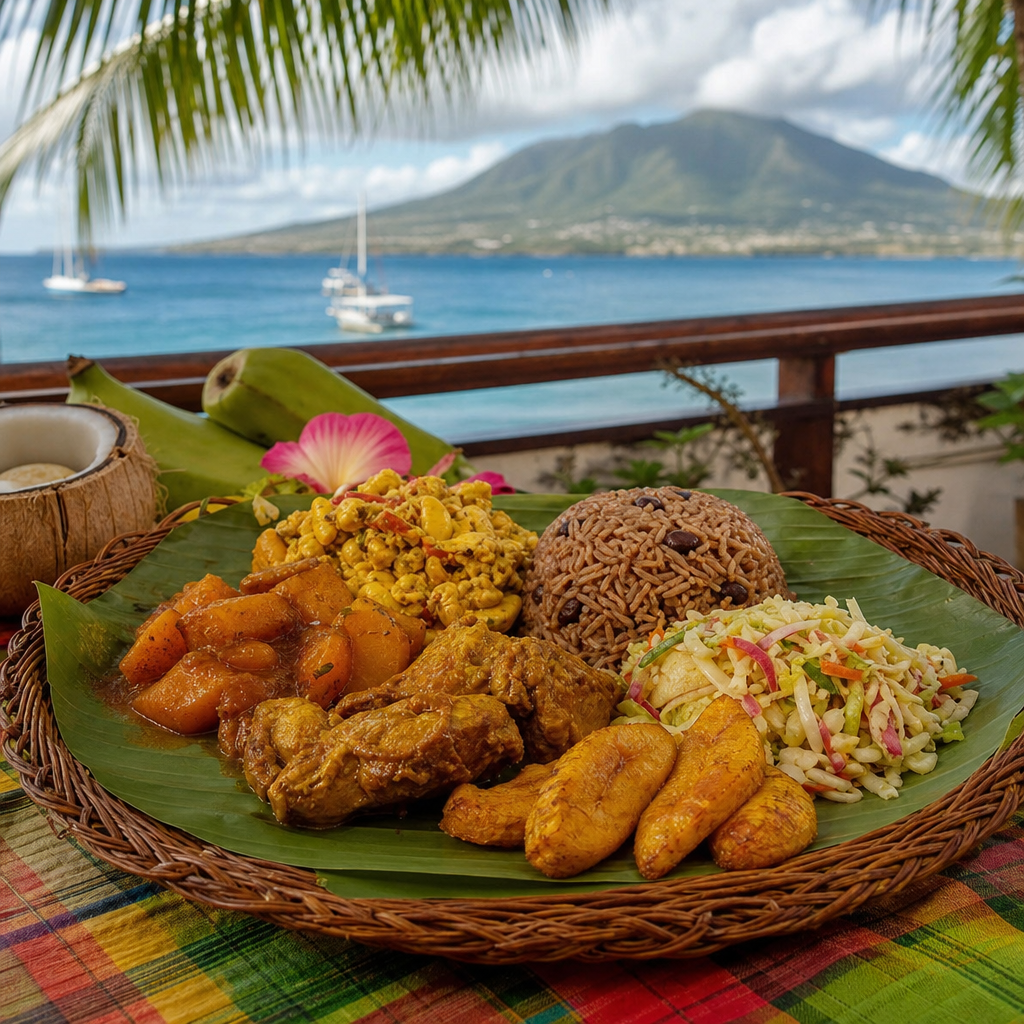
Food traditions deepen that identity. Local recipes and cooking methods often depend on species that fishers know well and that consumers recognize immediately. Grilled fish, stews, fried whole fish, fish cakes, and lobster dishes are not just menu items; they are forms of continuity. When communities can still source ingredients locally, traditional cooking stays grounded in place rather than becoming a performance for visitors. That authenticity matters for residents and strengthens cultural confidence.
Food Security and the Value of Local Catch
One of the clearest answers to why fishing matters in Nevis is food security. Small island states often import a large share of their food, leaving them exposed to shipping delays, higher freight costs, external price shocks, and currency pressure. Local fisheries help reduce that vulnerability by supplying protein that does not need to cross oceans or sit in long cold chains. Fresh local catch can reach consumers quickly, often with fewer intermediaries and lower storage demands than imported alternatives.
That does not mean fishing solves every food challenge. Landings vary by weather, season, equipment reliability, and stock health. Some species become less available at certain times, and severe storms can interrupt fishing for days. Still, from a planning perspective, local fisheries add an important buffer. They widen the island’s food options and keep at least part of the supply under local control. In my experience working on coastal content, this local control is one of the strongest but least celebrated benefits of small-scale fishing.
The nutritional aspect is equally significant. Fish provides high-quality protein and, depending on species, beneficial fatty acids and micronutrients. When local seafood remains affordable and accessible, communities gain a healthier alternative to heavily processed imported foods. That connection between fishing and public wellbeing deserves more attention, especially as many Caribbean societies address diet-related health concerns alongside rising food import bills.
Environmental Stewardship and Sustainable Fishing
Fishing supports community life in Nevis only if marine ecosystems remain productive. Sustainable fishing means harvesting at levels and with methods that allow fish populations and habitats to replenish. For a small island, that principle is not theoretical. Declining reef health, juvenile overharvest, poorly managed gear, pollution, and climate stress can quickly reduce local catches. Once that happens, the effects show up in household income, restaurant supply, and food prices almost immediately.
Good stewardship starts with practical management. Fishers and regulators need clear rules around closed seasons, size limits, species protection, gear restrictions, and marine habitat conservation. Across the Caribbean, spiny lobster and queen conch management provide familiar examples of why rules matter. Protecting breeding periods and minimum sizes improves the odds that stocks can reproduce before harvest. Enforcement is crucial, but so is community buy-in. Rules work best when fishers see that conservation today protects income tomorrow.
Habitat protection is another essential piece. Coral reefs, seagrass beds, and mangroves support juvenile fish, stabilize coastlines, and sustain biodiversity. Damage from sediment runoff, anchor scarring, coastal construction, and marine pollution weakens the same ecosystems that fisheries depend on. Nevis benefits when coastal planning treats fisheries as part of environmental policy, not as an afterthought. A healthy marine environment underpins both fishing and tourism, making stewardship a shared interest rather than a niche concern.
Challenges Facing Fishers in Nevis Today
Nevisian fishers operate under pressures that are familiar across small islands but feel intensely local in practice. Fuel costs can make offshore trips expensive, especially when catch rates are uncertain. Boat maintenance is continuous and often costly because saltwater, sun exposure, and rough conditions wear down engines, hulls, electronics, and trailers. Access to financing may be limited for upgrading vessels or safety equipment, and income can swing sharply from week to week depending on weather and season.
Climate change intensifies these existing challenges. Warmer seas can alter species distribution, coral bleaching can reduce habitat quality, and stronger storms can keep boats ashore or damage infrastructure. Even when fish stocks remain available, unpredictability increases business risk. Fishers must make more judgment calls about when to go out, how far to travel, and whether expected prices justify the trip. On a small island, one damaged engine or a few bad weather weeks can materially affect a household budget.
There is also a succession challenge. Younger people may see fishing as physically demanding, financially uncertain, and less prestigious than careers linked to tourism, government, or overseas migration. If fewer young residents enter the trade, valuable local knowledge can thin out. That does not mean the sector is doomed, but it does mean fishing in Nevis needs visible pathways for training, safety, profitability, and respect if communities want the practice to endure.
How Fishing Connects to the Wider Local Life Experience
As a hub within Local Life and Experiences, fishing links naturally to many other parts of Nevisian life. It connects to food culture through seafood dishes and market habits, to festivals and gatherings through communal meals, to heritage through oral history, and to everyday geography through villages shaped by access to the coast. Visitors who want a fuller understanding of Nevis should see fishing not as a side note under miscellaneous island activities, but as a thread tying together work, taste, tradition, and landscape.
This wider perspective is useful because community life on small islands is integrated. A morning landing affects what a restaurant serves at lunch. A good fishing season supports family spending in local shops. Knowledge of currents and weather overlaps with boating, beach use, and coastal safety. Environmental decisions about reefs and shoreline development influence both recreation and livelihoods. Fishing therefore acts as a practical entry point for exploring how Nevis functions as a living community rather than a purely scenic destination.
For residents, policymakers, and travelers alike, the main lesson is simple: fishing in Nevis remains valuable because it combines economic use with cultural meaning and local self-reliance. Supporting that role means buying responsibly sourced local catch, respecting seasonal protections, investing in fisheries infrastructure, and listening to fishers as experts on coastal conditions. Anyone seeking to understand local life in Nevis should start at the shoreline, ask where today’s catch came from, and pay attention to the community built around it.
Frequently Asked Questions
Why is fishing so important to daily life in Nevis?
Fishing matters in Nevis because it supports everyday life at several levels at once. Most obviously, it helps feed households with fresh local seafood, giving families access to an important source of protein that is closely tied to the island’s food traditions. But its value goes beyond what ends up on the plate. Fishing also contributes to household income, supports small-scale trade, and helps people maintain a practical degree of independence in an island setting where imported goods can be expensive and vulnerable to disruption. In that sense, fishing is not just a job for a limited group of people at the coast; it is part of a wider community system that helps families manage costs, maintain routines, and stay connected to local resources.
Just as importantly, fishing shapes the rhythm of community life. People see it in the early-morning departures, the return of boats, the sale and sharing of the catch, and the conversations that happen around weather, tides, and seasonal changes. These repeated patterns create familiarity and continuity. On a small island like Nevis, where community relationships are highly visible, that continuity matters. Fishing becomes part of how people understand work, responsibility, and mutual support. Even residents who do not fish directly often feel its impact through family ties, local markets, restaurants, and neighborhood exchanges. That is why fishing remains such a central part of daily life: it links food, economy, routine, and social connection in a very direct way.
How does fishing support families and the local economy in Nevis?
Fishing supports families in Nevis through both direct and indirect economic benefits. Directly, fishers earn income from selling their catch to households, vendors, restaurants, and other local buyers. For some families, this is a primary source of earnings; for others, it is one part of a broader livelihood strategy that may also include farming, construction, tourism work, or transport. Because small-island economies often depend heavily on outside supply chains, locally caught fish can help keep more spending within the community. That local circulation matters. Money earned from fishing may be used for school costs, household bills, boat repairs, fuel, food, and other essentials, which in turn supports additional local businesses and services.
Fishing also contributes to the island economy by strengthening food security and reducing dependence on imports. When fresh seafood is available locally, the community benefits from a resource that is both culturally familiar and economically practical. Beyond the fishers themselves, the activity creates work and opportunity for people involved in cleaning, selling, transporting, cooking, and serving seafood. It also supports the visitor economy, since local cuisine is a meaningful part of how many travelers experience Nevis. Restaurants and hospitality businesses benefit from access to fresh catch, and that helps connect traditional livelihoods to modern economic activity. In short, fishing supports families not only by generating income, but by anchoring a wider network of small-scale commerce, food access, and community resilience.
What role does fishing play in Nevisian culture and identity?
Fishing plays a strong cultural role in Nevis because it represents continuity, local knowledge, and a lived relationship with the sea. In many island communities, identity is shaped not only by history and landscape, but by the practical skills people develop in response to both. Fishing reflects that clearly. It involves understanding coastal waters, weather patterns, seasonal movement of fish, and safe ways of working at sea. These are not abstract ideas; they are forms of knowledge built through repetition, observation, memory, and experience. When that knowledge is shared across generations, it becomes part of cultural inheritance. Children and younger adults learn not only techniques, but also values such as patience, discipline, self-reliance, and respect for nature.
It also serves as a visible symbol of local identity in a changing world. Nevis is known for its natural beauty and tourism appeal, but beneath that public image is a deeper community story about how people sustain themselves and remain connected to place. Fishing helps tell that story. It appears in food traditions, local conversation, family routines, and public memory. It reminds residents and visitors alike that island life is built on real labor, practical skill, and adaptation. For many people, fishing therefore represents more than economic activity; it expresses what it means to belong to Nevis, to understand its environment, and to take part in a community shaped by both tradition and resilience.
How is fishing knowledge passed down through generations in Nevis?
In Nevis, fishing knowledge is often passed down informally through family and community relationships rather than only through formal training. Younger people may learn by accompanying parents, grandparents, relatives, or experienced fishers, observing how they prepare gear, read the sea, judge weather conditions, choose fishing spots, and handle the catch. This kind of learning is practical and immersive. It happens through repeated exposure, conversation, correction, and trust. Over time, lessons that may seem simple on the surface—when to go out, what signs to watch for, how to respond to changes in wind or water—become part of a much deeper understanding of the marine environment and the responsibilities that come with working in it.
What makes this transfer of knowledge so important is that it preserves more than technique. It passes along local ways of thinking about stewardship, caution, effort, and community obligation. Experienced fishers often teach younger generations how to work safely, how to avoid waste, how to respect the sea’s limits, and how to recognize that fishing success depends on judgment as much as strength. In a place like Nevis, where community memory is powerful and practical knowledge has long-term value, this intergenerational exchange helps protect both livelihood and identity. It keeps skills alive while reinforcing the social bonds that make small communities function effectively.
Why does fishing remain a symbol of resilience in Nevis’ community?
Fishing is widely seen as a symbol of resilience in Nevis because it reflects the community’s ability to adapt, endure, and provide for itself under changing conditions. Island communities often face economic pressures, fluctuating markets, weather challenges, and dependence on imported goods. In that context, fishing represents a local resource that people can still draw upon through knowledge, effort, and cooperation. It demonstrates the capacity to respond practically to uncertainty. Even when broader economic conditions shift, the presence of fishers going out, returning with catch, and supplying households and businesses sends a clear message that local systems of support remain active and meaningful.
Resilience also appears in the social side of fishing. The activity depends on shared experience, mutual assistance, and the passing down of hard-earned knowledge. It ties people to one another through work, trade, and food. That interconnectedness strengthens a community’s ability to cope with challenges, because resilience is rarely only individual; it is collective. In Nevis, fishing shows how tradition can remain relevant without being frozen in the past. It continues to serve practical needs while reinforcing identity and community trust. That is why it carries such symbolic weight: fishing stands for endurance, self-reliance, and the enduring link between people, place, and shared responsibility.