Saint Kitts’ home-cooked meals tell the island’s history more honestly than any brochure. In family kitchens from Basseterre to the villages below Liamuiga, recipes passed down through generations preserve memory, thrift, celebration, and survival in one pot. When people talk about Kittitian food, they often mention roadside barbecue, beachside lobster, or rum punch first, but the daily table matters more. Home cooking is where salted meat, ground provisions, fresh herbs, breadfruit, peas, coconut, and local fish become the flavors that shape identity. These meals are not random “Caribbean dishes.” They are specific expressions of Saint Kitts, shaped by African heritage, British colonial history, neighboring island exchange, and the practical rhythm of market days, fishing trips, school schedules, church gatherings, and Sunday lunch.
Understanding Saint Kitts’ home-cooked meals means understanding a few key ideas. “Ground provisions” refers to staple starches such as yam, sweet potato, dasheen, cassava, and eddo. “Seasoning” is rarely just salt and pepper; it often means a blended or chopped base of onion, scallion, thyme, garlic, celery, hot pepper, and herbs. “Cook-up” can describe one-pot dishes where rice, peas, meat, and aromatics are simmered together. “Provision and fish” points to one of the island’s most durable meal patterns: boiled roots paired with stewed, fried, or salted seafood. In my experience working around Caribbean food writing and speaking with cooks across the Leeward Islands, the most revealing recipes are usually the ones people measure by eye, correct by smell, and explain through family stories rather than strict written instructions.
That is why this subject matters beyond nostalgia. Traditional home-cooked food connects younger Kittitians and visitors to agricultural habits, household economics, and cultural values that still influence local life. It also explains broader “miscellaneous” experiences that make up everyday Saint Kitts: village fêtes, funeral repasts, Christmas black cake sharing, mango season, market shopping, school lunches, and the way one household’s stewed saltfish can taste slightly different from another’s because one grandmother used more thyme while another insisted on tomato and sweet pepper. A hub article on this subtopic needs to cover those connections comprehensively, because recipes passed down are not isolated instructions. They sit at the center of local life, linking home gardens, fishing grounds, migration, religion, and hospitality.
The Foundations of a Kittitian Home Kitchen
The backbone of Saint Kitts’ home cooking is built on ingredients that are accessible, filling, and adaptable. Fresh fish appears when the catch is good, but saltfish remains important because it stores well and has anchored Caribbean home kitchens for centuries. Chicken is common for weekday meals; goat and pork appear often for gatherings; pig tail, salt beef, and smoked meats add flavor to soups and peas. On the vegetable side, cooks rely on pumpkin, cabbage, okra, eggplant, cucumber, callaloo, green banana, and the full range of ground provisions. Coconut is another quiet essential, used for milk, grated topping, sweets, and richness in rice dishes.
Seasoning technique is just as important as ingredients. In Saint Kitts, cooks usually build flavor in layers rather than relying on heavy packaged sauces. A pot starts with oil, onion, garlic, and thyme, then develops with tomato, pepper, celery, or browning. Meat is often washed with lime or vinegar, seasoned ahead, and rested before cooking. Salted meats are soaked and boiled to control salinity. Rice is not merely boiled plain; it may be cooked in coconut milk, infused with peas, or finished with butter and herbs. These methods sound simple, but they produce the deep, rounded taste people recognize instantly as “home food.”
Another defining trait is economy without blandness. Traditional recipes evolved in households that stretched ingredients carefully. A small amount of saltfish can season a whole pan of rice. Leftover stew becomes lunch the next day. Breadfruit can be boiled, fried, or turned into salad. Extra ripe plantain can go into porridge or fritters. This practical intelligence is part of what gets passed down. A recipe is not just a list; it is a way of making the most of what is available while feeding several people well.
Signature Meals Families Pass Down
Ask Kittitians about memorable home meals and certain dishes come up repeatedly. Stewed saltfish with dumplings and provisions is a classic because it balances savoriness, starch, and comfort. The fish is soaked, flaked, and simmered with onion, tomato, thyme, sweet pepper, and sometimes a touch of hot pepper. Dumplings, whether firm or softer depending on the cook, soak up the sauce. Boiled yam, green banana, or sweet potato complete the plate. It is affordable, deeply familiar, and linked to both weekday dinners and Saturday lunches.
Goat water deserves special attention because it is one of the most recognized dishes associated with Saint Kitts and Nevis. Despite the name, it is not a thin broth. Proper goat water is a dark, spicy, aromatic stew made with goat meat on the bone, bread or flour dumplings, and a seasoning base that often includes onion, thyme, scallion, clove, and pepper. The dish has ceremonial weight. It appears at parties, community events, and family gatherings because it can feed many people and tastes even better after slow simmering. In kitchens I have observed across the region, the best versions rely on patient browning and long cooking to extract gelatin and depth from the bones.
Pelau, though found throughout the Caribbean, takes on local personality in Saint Kitts through seasoning choices and side dishes. Chicken or pork is browned with sugar or browning, then cooked with rice, pigeon peas or other legumes, coconut milk, and herbs. A good pelau should not be mushy or greasy; each grain should hold flavor. Families differ on whether they add carrots, bell peppers, or ketchup, and those small differences are exactly how recipes become family signatures. Sunday rice and peas, stewed chicken, macaroni pie, and salad also sit high in the home-cooked canon, especially after church.
| Dish | Core Ingredients | When Families Commonly Serve It | What Gets Passed Down |
|---|---|---|---|
| Stewed saltfish and provisions | Saltfish, onion, tomato, thyme, dumplings, yam, banana | Weekday dinners, Saturday lunch | Soaking method, sauce balance, dumpling texture |
| Goat water | Goat meat, dumplings, herbs, spices, pepper | Parties, holidays, community gatherings | Browning technique, spice profile, simmer time |
| Pelau | Rice, peas, chicken or pork, coconut milk, browning | Sunday meals, potlucks, family lunches | Rice texture, meat seasoning, proportion of peas |
| Cook-up rice | Rice, peas, salted meat or fresh meat, herbs | Budget-conscious family meals | One-pot timing, use of leftovers, moisture control |
Breakfasts, Bakes, and Everyday Comfort Food
Home-cooked food in Saint Kitts is not limited to lunch and dinner. Breakfast carries many inherited recipes that still define local mornings. Porridge is one of the strongest examples. Cornmeal porridge, oats porridge, and plantain porridge are common, usually enriched with milk, cinnamon, nutmeg, and sometimes essence. The texture matters: it should be smooth, not lumpy, and substantial enough to keep someone full through school or work. Grandmothers often teach younger cooks how to whisk cornmeal with cold liquid first to prevent clumping, a small technique that says a lot about how culinary knowledge travels.
Johnny cakes, bakes, coconut dumplings, and fried plantains also belong to the home table. Saltfish paired with bakes is popular across the eastern Caribbean, and in Saint Kitts it remains a practical, satisfying meal. Breadfruit is another versatile staple. Boiled breadfruit with saltfish, fried breadfruit with stewed chicken, and breadfruit salad each show how one ingredient can move between simple weekday eating and festive plates. These are everyday foods, but they create the sensory memory people recall after years abroad: the smell of hot oil, thyme in the pan, and a pot cover rattling as breakfast finishes.
Comfort food often comes from repetition rather than extravagance. A child who grew up eating seasoned rice with leftover chicken gravy, or pumpkin soup on a rainy evening, tends to define “authentic” food through those repeated household flavors. That is why local life content should treat these dishes seriously. They are not side notes to tourism; they are the central texture of domestic experience on the island.
Holiday and Special-Occasion Recipes
Some recipes are passed down because they mark time. Christmas in Saint Kitts brings black cake, sorrel drink, ginger beer, ham, tarts, and richer meat dishes than families might cook on ordinary weekends. Black cake is especially important because it requires planning. Dried fruits are soaked, often for weeks or months, in wine and rum before baking. The resulting cake is dark, dense, fragrant, and closely tied to household pride. One family may prefer a wetter crumb, another more spice, another a heavier hand with burnt sugar. These distinctions are preserved carefully and discussed with surprising precision.
Easter and village events also shape the food calendar. Hot cross buns may appear, fish dishes can become more prominent, and gatherings call for large-format cooking: pots of goat water, trays of baked macaroni, coleslaw, rice and peas, and sweet drinks for sharing. Funerals and post-service meals are another under-discussed part of local food culture. In many Caribbean communities, food is one way care is organized quickly and practically. Recipes that can scale, travel, and comfort become socially important, which is one reason one-pot dishes endure so strongly.
Weddings, birthday parties, and church anniversaries create another layer of passed-down food knowledge. Quantity estimation, advance prep, and holding food safely are learned skills. Experienced home cooks know how many pounds of chicken feed fifty people, how early to season meat, and when to add fresh herbs so they survive transport without tasting dull. That expertise rarely appears in recipe cards, yet it is essential to Saint Kitts’ communal food traditions.
How Recipes Survive: Oral Tradition, Adaptation, and Modern Kitchens
Most Kittitian family recipes survive through demonstration rather than formal documentation. Someone watches an aunt knead dough, stir porridge, or taste a stew and adjust salt after adding provisions. Measurements like “a little” or “until it smell right” are meaningful inside that teaching system. They train judgment. In my experience, cooks who learn this way often develop stronger sensory control than cooks who rely only on written recipes, though the tradeoff is inconsistency when details are not recorded.
Modern life has changed how these recipes are preserved. Migration to the United Kingdom, the United States, Canada, and other Caribbean islands means many families now recreate Saint Kitts meals with substitute ingredients. Fresh breadfruit may become frozen breadfruit. Local thyme varieties may be replaced with supermarket thyme. Saltfish remains available, but certain peppers or provisions may not. Good cooks adapt without losing the dish’s structure: starch, seasoning base, protein, moisture level, and balance of salt and heat. That flexibility is one reason these recipes continue to live.
Technology also helps. Younger cooks ask for voice notes, photos, and video calls while making Sunday lunch abroad. Community cookbooks, church fundraisers, and local food blogs have captured some formulas, but oral instruction still dominates. The real lesson passed down is not rigid authenticity. It is understanding what absolutely must remain for a dish to taste like home and what can change without breaking the tradition.
Why These Meals Matter to Local Life and Visitors
For anyone exploring Saint Kitts beyond resort spaces, home-cooked food offers the clearest route into local life and experiences. A menu can show ingredients, but a household meal shows values: generosity, resourcefulness, patience, and the importance of feeding people properly. If you are researching miscellaneous aspects of Kittitian culture, recipes are a practical hub because they connect to farming, fishing, migration, religion, language, and celebration all at once. Even market behavior makes more sense when you know what people are cooking that week.
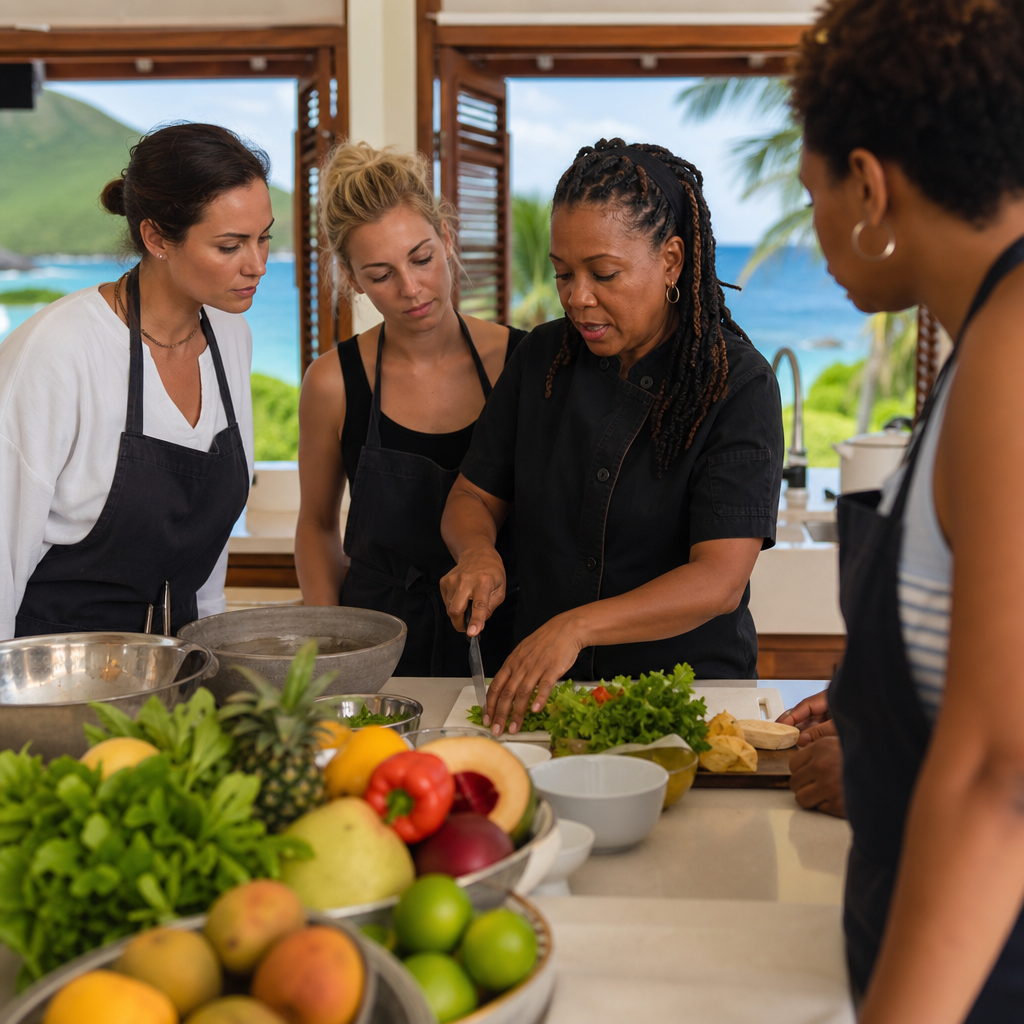
Visitors who want an authentic understanding of the island should look for guesthouses, community events, cooking classes, village eateries, and festival settings where traditional dishes are prepared in familiar ways. Ask what was cooked for Sunday lunch, which provision is in season, or how a family makes goat water differently from its neighbors. Those questions usually lead to stories, and the stories explain the food better than labels ever can. The same approach works for residents and diaspora families trying to reconnect with inherited recipes: start with the dish people miss most, then trace the techniques behind it.
Saint Kitts’ home-cooked meals endure because they are useful, delicious, and emotionally precise. They turn ordinary ingredients into markers of belonging. From porridge at breakfast to goat water at a gathering, these recipes passed down carry practical wisdom and family identity in equal measure. If you want to understand local life in Saint Kitts, begin in the kitchen, learn the names of the provisions, notice the seasoning in the pot, and preserve at least one family recipe before it disappears. Then cook it, share it, and keep the tradition moving forward.
Frequently Asked Questions
What makes Saint Kitts’ home-cooked meals so important to the island’s culture?
Saint Kitts’ home-cooked meals matter because they carry the island’s lived history in a way formal records rarely can. In Kittitian kitchens, recipes are not just instructions for feeding a family; they are a record of migration, colonial trade, agriculture, necessity, and celebration. Dishes built around salted meat, peas, breadfruit, dumplings, coconut, and ground provisions reflect generations of people making nourishing meals from what was available, affordable, and sustaining. These foods reveal how families adapted to hardship, honored the land, and turned simple ingredients into meals with real depth and character.
What makes these meals especially meaningful is the way they are taught. Many recipes are passed down by memory, observation, and repetition rather than through written measurements. A grandmother may say to season “until it smell right” or cook a pot “until the peas soften proper,” and that style of teaching preserves both flavor and family identity. From Basseterre to smaller communities below Mount Liamuiga, home cooking remains a place where values such as thrift, patience, hospitality, and resourcefulness are practiced every day. The result is a food tradition that feels deeply personal while also representing the wider story of Saint Kitts.
Which ingredients appear most often in traditional Kittitian home cooking?
Traditional Kittitian home cooking relies on a core group of ingredients that are practical, flavorful, and closely tied to the island’s farming and foodways. Ground provisions are central, including yam, sweet potato, eddoe, cassava, and dasheen, all of which provide substance and hold up well in soups, stews, and one-pot meals. Breadfruit is another staple, served boiled, roasted, fried, or mashed, and valued for its versatility and satisfying texture. Peas and beans, especially pigeon peas and red beans, also appear often, adding body and protein to rice dishes and stews.
Salted meats have long played an important role as well, particularly saltfish, salt beef, pig tail, and other preserved cuts that became essential because they lasted longer and stretched family budgets. Fresh seasonings give these dishes their unmistakable flavor: thyme, scallion, onion, garlic, hot pepper, parsley, and celery are common kitchen staples. Coconut, whether freshly grated, pressed into milk, or added in pieces, contributes richness to porridges, rice, and stewed dishes. Together, these ingredients create meals that are practical enough for everyday cooking but layered enough to feel memorable and deeply rooted in Kittitian tradition.
What are some classic home-cooked dishes families in Saint Kitts pass down through generations?
Several dishes stand out as classics in Saint Kitts because they appear regularly at family tables and are strongly associated with memory and tradition. Goat water is perhaps the best-known example: a deeply seasoned goat stew, often thickened naturally through long cooking and flavored with herbs, spices, and sometimes bread or dumplings. Although it is famous at gatherings and community events, it is also a dish many families prepare at home, with each household claiming its own best method. Cook-up rice is another important staple, bringing together rice, peas, coconut milk, herbs, and sometimes salted meat in a single pot that delivers comfort and economy.
Stewed saltfish, boiled ground provisions, and breadfruit are also foundational parts of the home table. These meals show how preserved fish can be transformed through soaking, sautéing, and seasoning into something fragrant and deeply satisfying. Green fig and saltfish may be more associated with neighboring islands in popular discussion, but Saint Kitts has its own versions of provision-based meals where boiled staples are paired with savory stews, gravies, or fish preparations. Coconut dumplings, provision soups, and Sunday meals centered on stewed chicken, peas, rice, and macaroni pie also reflect generational cooking traditions. What ties these dishes together is not luxury, but care, repetition, and the confidence that comes from long practice.
How are these family recipes usually passed down in Saint Kitts?
In Saint Kitts, family recipes are most often passed down through participation rather than formal documentation. Children and younger relatives learn by standing in the kitchen, peeling provisions, washing meat, grating coconut, stirring the pot, and watching closely. Measurements are often approximate, and timing is judged by texture, smell, sound, and experience. That means learning a recipe involves more than copying ingredients; it requires understanding how food should look, feel, and taste at each stage. This method creates cooks who are adaptable and intuitive, able to work with what is on hand while still preserving the spirit of the dish.
These recipes are also passed down through occasions. A person may first learn a dish at Christmas, on a Sunday, during a funeral gathering, or while helping prepare food for a community lime or family celebration. Repetition over the years turns these moments into living instruction. Even when younger generations now write recipes down or record videos on their phones, the authority still often rests with the elder who knows when the coconut milk is rich enough, when the peas are cooked enough, or when the seasoning has settled properly into the pot. That blend of memory, practice, and oral tradition is one reason Kittitian home cooking remains so resilient and distinctive.
Why do one-pot meals and simple ingredients play such a big role in Kittitian home cooking?
One-pot meals and simple ingredients are central to Kittitian home cooking because they reflect both historical necessity and culinary wisdom. For generations, families needed meals that could feed several people economically, make the most of limited ingredients, and provide real nourishment after long days of work. Combining peas, rice, provisions, herbs, coconut, and preserved meats in one pot was efficient, affordable, and practical. It also allowed flavors to develop together, creating dishes that taste fuller and more complex than their humble ingredient lists might suggest.
There is also a deeper cultural value in this style of cooking. Simple ingredients encourage resourcefulness, and Kittitian cooks have long understood how to build richness through seasoning, slow simmering, and careful balance rather than excess. A pot of cook-up rice, provision soup, or stewed saltfish with breadfruit can tell a story about frugality, agricultural knowledge, and family care all at once. These meals are not simple because they lack meaning; they are simple because they are refined by generations of practical cooking. That is exactly why they endure. They speak to survival, comfort, and identity in a way more polished restaurant dishes often cannot.